John Sellars
Over the last decade or so Stoicism has been having a cultural moment. When back in 2003 I published my first book, examining the idea that Stoicism might have been trying to offer some kind of guide to living well, I had no expectation that anyone would be interested in its contents beyond a dozen or so academics at most.
Things started to change when, in 2009, William Irvine published his A Guide to a Good Life which packaged Stoic ideas for a wider audience. In 2012 a small group of people – of which I was one – created Stoic Week, a free online experiment to see if ancient Stoic ideas might actually benefit people.[1] Then, in 2016, Ryan Holiday and Stephen Hanselman published The Daily Stoic, which has sold literally millions of copies. Over the decade since then, there has been seemingly no end to the number of popular books, blog posts, and online videos claiming to present the ancient philosophy of Stoicism.
Amid all this excitement and enthusiasm for these ancient ideas it is perhaps worth pausing to consider what we actually mean by ‘Stoicism’. What was Stoicism? My aim in what follows is not to try to set out the ‘key ideas’, but instead to reflect on whether such a set of key ideas can easily be identified. I shall raise questions, not offer answers.
Ancient sources often tell us that Stoicism was a system comprised of three parts – logic, physics, and ethics – and so presumably Stoicism is a system of ideas spanning these three core areas of philosophy.[2] What were those ideas? They are ideas preserved in ancient texts that report them. So far so good. But which texts and which ideas? And, just as importantly, whose ideas?
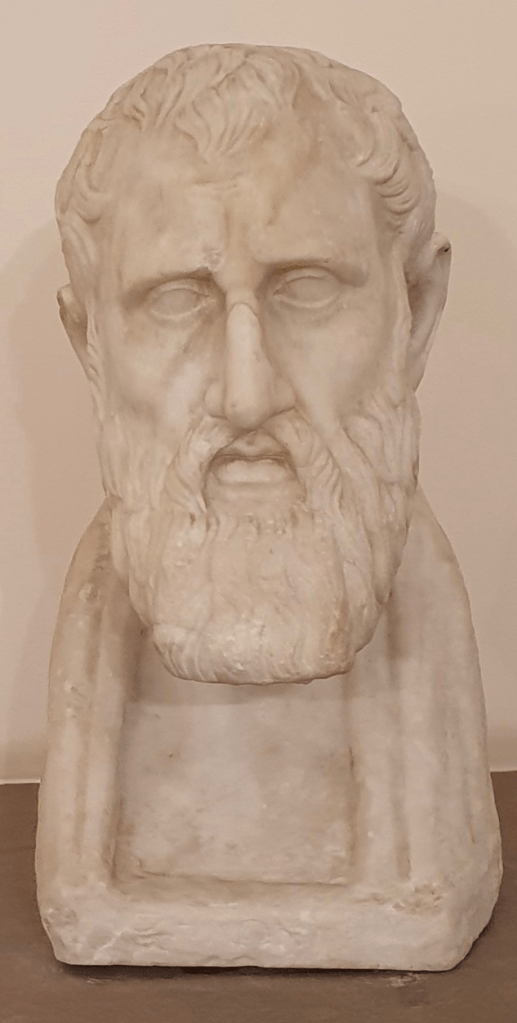
We are told that the founder of Stoicism was Zeno of Citium. He was followed by Cleanthes of Assos, who in turn was followed by Chrysippus of Soli. These are the three canonical early Stoics. They were all prolific authors – Chrysippus is reported to have written 705 books – but for the most part their works are lost.[3] What information we do have suggests that these three founding fathers did not always agree with one another.
To take just one example, the much later Platonist philosopher Calcidius reports in his commentary on Plato’s Timaeus that Cleanthes and Chrysippus disagreed about the relationship between fate and providence – a topic of no small importance in Stoic physics. Chrysippus claimed that they were the same thing, but Cleanthes had argued that they ought to be distinguished from one another (some things fated do not come from providence).[4] Which of these is the Stoic view?
Traditionally scholars have tended to prioritize Chrysippus’ view as the ‘orthodox’ position, although (as Stoic scholar Brad Inwood has noted) importing the theological categories of orthodoxy and heterodoxy into discussion of philosophy may not be very helpful. In any case, it would be difficult to claim that Cleanthes’ view was not a Stoic view. After all, in his day he was head of the Stoa.

Another key idea in Stoic physics is the claim that the kosmos is a living being, rational and animate. Practically all Stoics seem to have subscribed to this view, from Zeno right through to Marcus Aurelius. Yet we do know of one dissenter: Boethus of Sidon.[5] It is tempting simply to dismiss Boethus as ‘heterodox’ – heretic! – but it is worth noting that he was no marginal figure in the history of Stoicism; in fact he was also head of the Stoa. What did his companion Stoics make of this ‘heterodoxy’? Did they care? Did it in any way hamper him in securing or carrying out his role as ‘head’ of the Stoa?
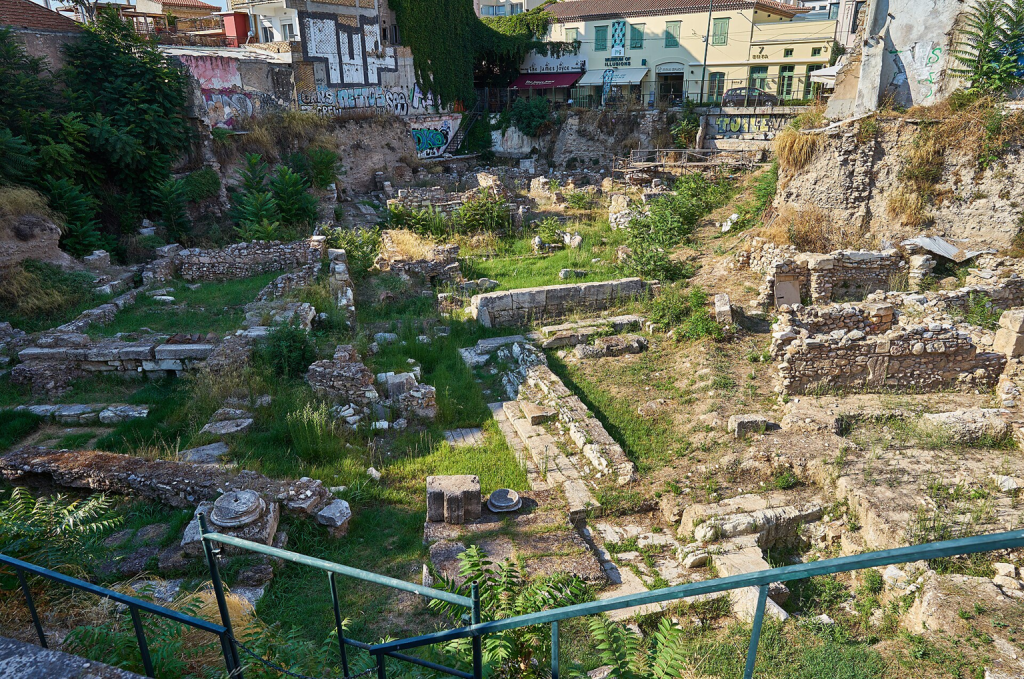
We know of other disagreements among members of the Stoic school in Athens. That seems right and proper; it’s what philosophers do. They argue with each other and think for themselves. But they remained members of a single ‘school’ with a ‘head’. The truth is that we know very little about what either of these terms actually meant in practice.[6] The Stoics were the people who gathered at the painted Stoa on the northern side of the Agora. There was no school property that we know of, no formal structure or organization, and Stoics sometimes taught and held conversations elsewhere in Athens too.
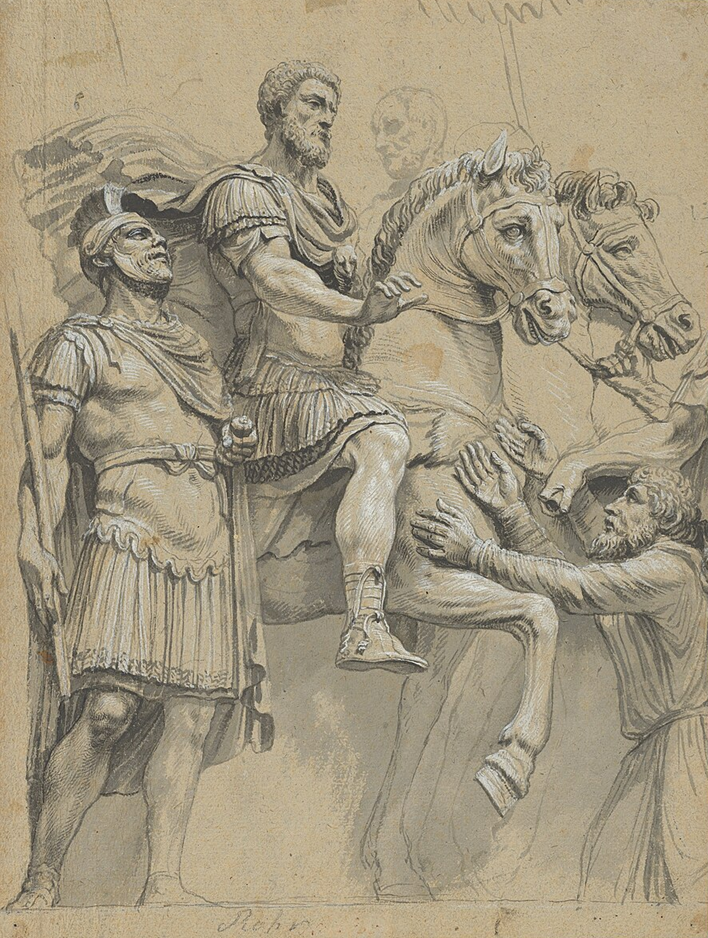
What was Stoicism? The ideas of the Stoics. Who were the Stoics? The people who gathered at the Stoa. Did they all agree with each other on every issue? No. So how do we decide what Stoicism was?
In the 1st century BC things changed dramatically. Teaching – if that’s what it was – came to an end at the Painted Stoa. After the protracted siege of Athens by the Roman general Sulla in 87–86 BC, Athens was no longer a desirable place to be. Many of the intellectuals in Athens at the time were immigrants, and many left just as easily as they had arrived. Posidonius, originally from Syria, relocated to the island of Rhodes; Antiochus, also from the eastern Mediterranean, headed to Alexandria; and so on.[7] From this point on, Stoics were no longer people who gathered at the Stoa.
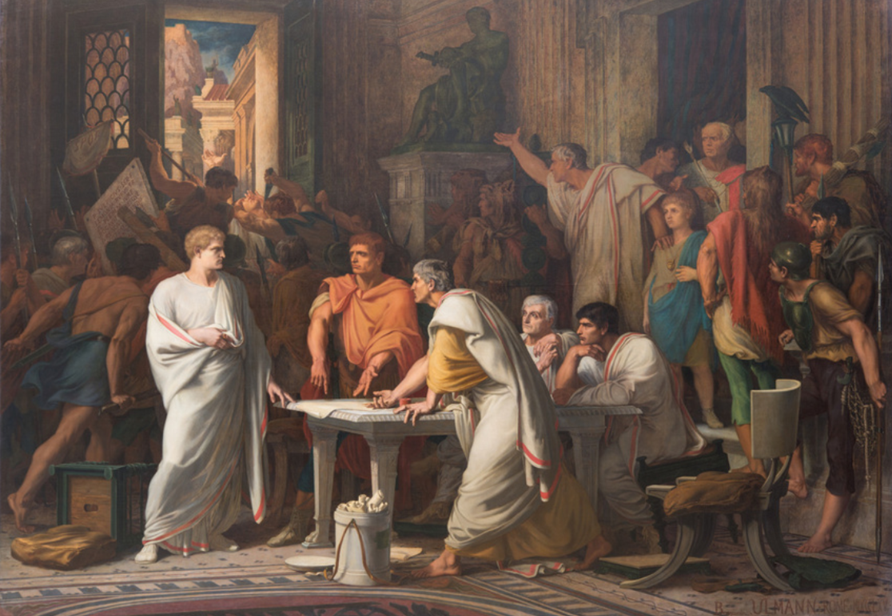
The Roman writer, dramatist, and political advisor Lucius Annaeus Seneca (c.4 BC–AD 65) identified as a Stoic. Famously he once wrote, “we [Stoics] are not subjects of a despot; each of us lays claim to his own freedom,”[8] highlighting one of the points I have tried to make above. In the early 1st century AD what did it mean to be a Stoic? I take it that it meant something fairly similar to what it would be for someone today to claim to be a Stoic: he had read a number of Stoic books and liked what he found inside.
Scholars have suggested that in the imperial period Stoicism was what might be called a “textual community” – a group of people scattered around the ancient Mediterranean all reading the same books. But which books? The traditional scholarly view has argued that by this time Chrysippus had become the authoritative voice and so his books had in effect become the party line. Yet recent work has both questioned the extent to which Chrysippus really was the dominant point of reference and highlighted the influence of Cleanthes and Posidonius on Roman Stoics during the 1st century AD. That complicates matters because, as we have already seen, Chrysippus and Cleanthes did not agree on every topic.
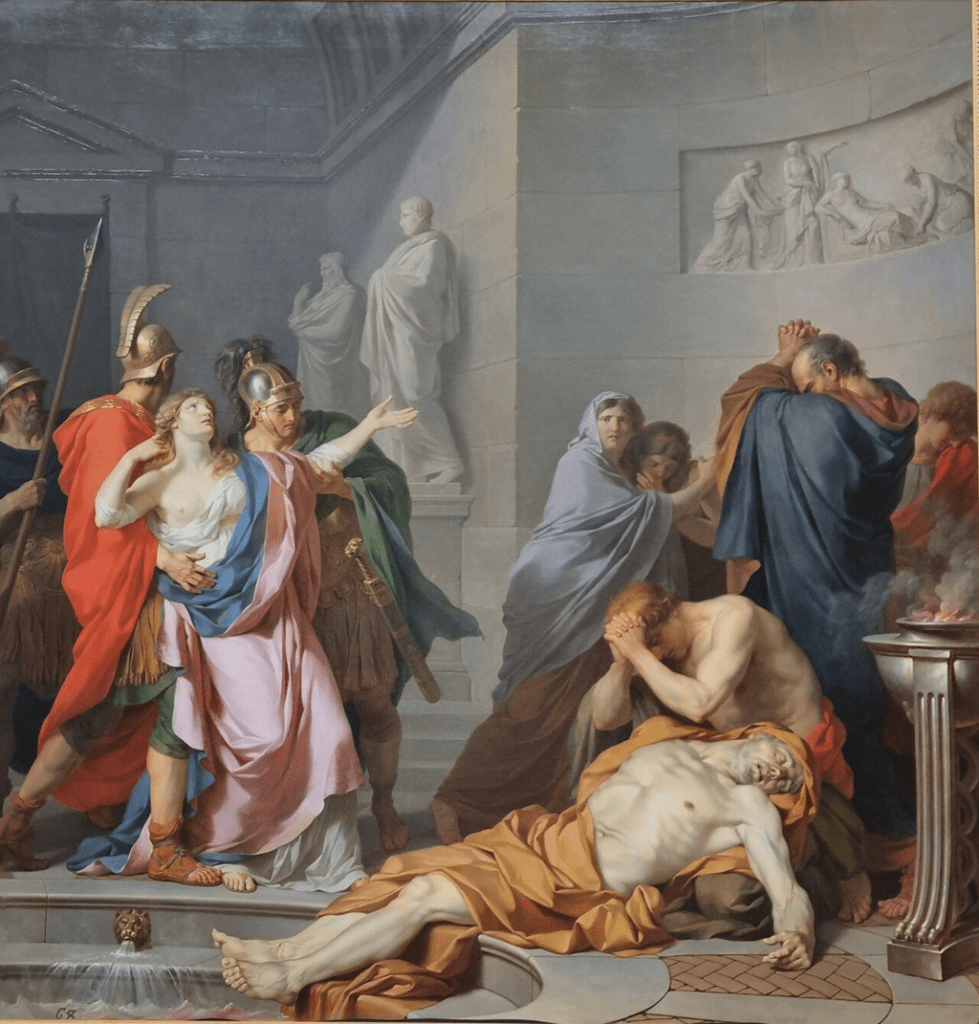
Critics of Stoicism in the 1st and 2nd centuries AD were keen to highlight what they saw as Stoic self-contradictions. Plutarch wrote a treatise with this title in which he opportunistically quoted passages from different works by Chrysippus that seemed to contradict one another. Plutarch was a Platonist, and it is worth noting that it would be incredibly easy to do exactly the same with Plato’s dialogues. We now tend to think that the fact Plato tackles philosophical problems from a variety of angles and subjects his tentative answers to further critical scrutiny is only to his credit as a philosopher.
Who knows what Chrysippus was doing in his now-lost works. And is it credible to expect someone writing over 700 books over a period of decades to hold exactly the same views all the way through? Therefore, even if we did limit Stoicism to the philosophy of Chrysippus, there is no guarantee that this would give us a single, coherent body of thought (think early and later Wittgenstein, or indeed early and later Plato).

Another ancient critic, the medic Galen of Pergamum (AD 129–216), argued that the Stoics Chrysippus and Posidonius disagreed over the nature of the soul. In the process he has become our most important source for both of their ideas on this topic. Recent scholarship has suggested that Galen may be an unreliable source here, quoting both of them out of context to make his point. Perhaps Posidonius was not so ‘heterodox’ after all. Yet what if they did disagree? Does this make Posidonius a bad Stoic or a good philosopher? That must surely be a false dichotomy.
Today when non-specialists talk about Stoicism they primarily have in mind the works of Seneca, Epictetus, and Marcus Aurelius. With the works of the earlier Athenian Stoics largely lost, the surviving works of these later Roman Stoics take on an additional importance. Yet none of them definitively set out Stoicism as a philosophical system; they all presuppose a range of Stoic ideas without fully telling us what they are.
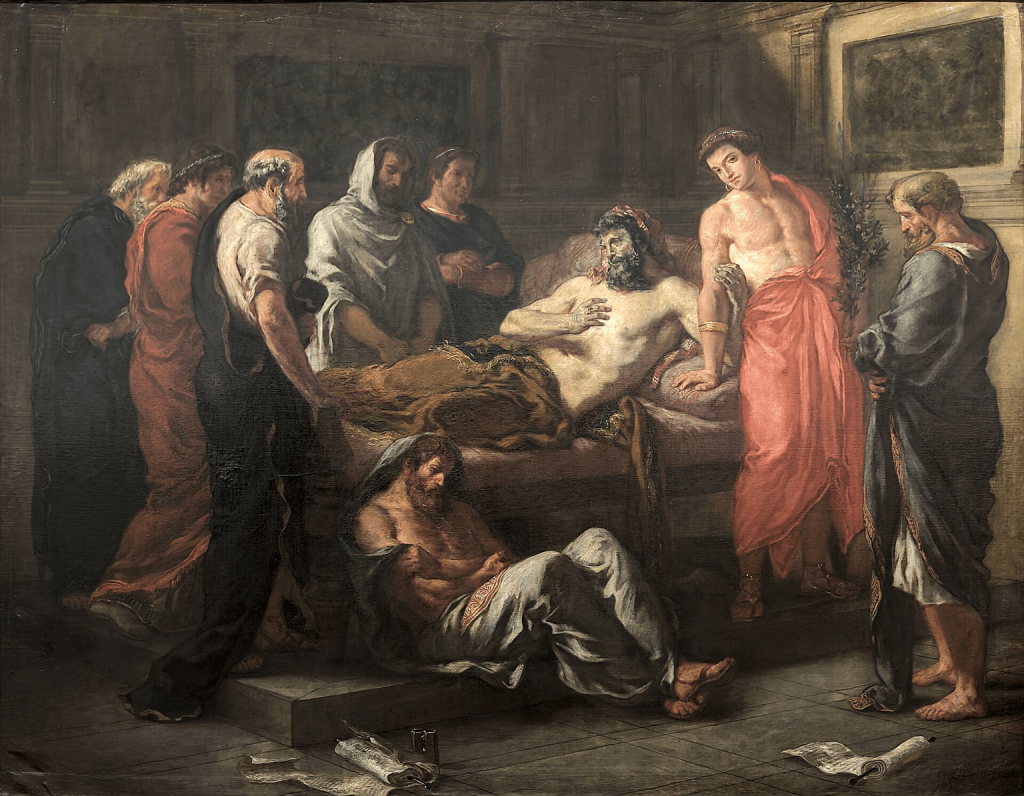
In order to appreciate fully the works of these later Roman Stoics there’s a sense in which you already need to know what Stoicism is. No one can learn Stoic ethics just from reading Marcus Aurelius’ Meditations. Indeed, Marcus says almost nothing about the details of the Stoic view, although if you already know it you can see the ways in which he is trying to put it into practice. He’s an interesting author – and one of my favourites – but he’s not the place to go if you want to learn about Stoicism. Many of the things that Marcus does seem to recommend and are often passed off as Stoic guidance today have no foundation in Stoic ideas; they are idiosyncratic to him. The same could be said for Seneca.
The text I’ve cited most often so far is the account of Stoicism in Book 7 of the Lives and Opinions of the Philosophers by Diogenes Laertius. This contains (appended to the life of Zeno) a detailed summary of Stoic philosophy. What’s striking about it is that Diogenes notes the particular views of different Stoics when they disagree, as we saw earlier with Boethus of Sidon. By doing this he is underlining the view that Stoicism was not a monolithic tradition in antiquity.
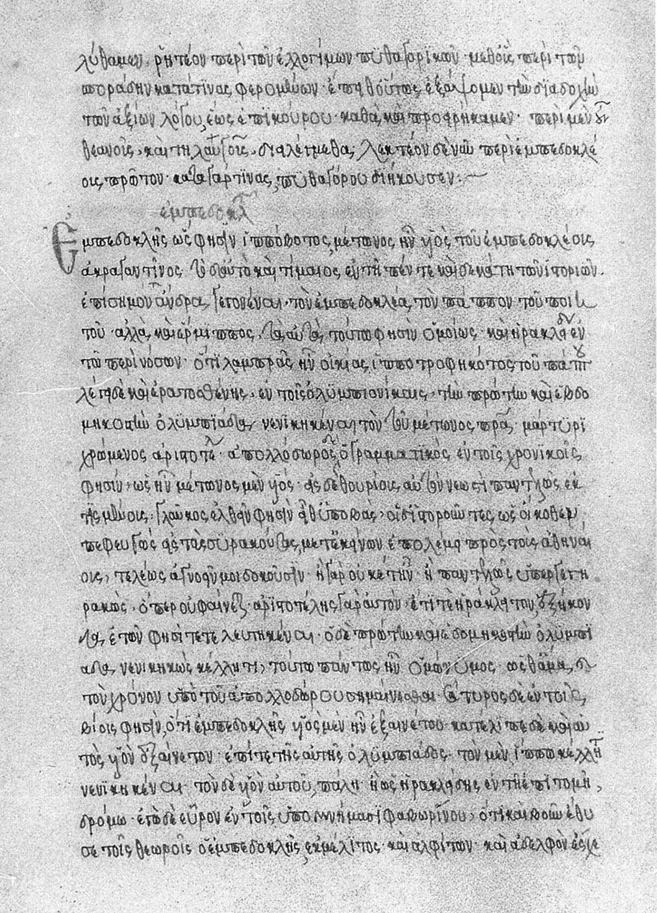
So, what should you do if you really want to learn more about Stoicism? You should delve into the vast and messy world of Stoic doxography – the quotations taken out of context and second-hand reports often by hostile polemicists such as Plutarch and Galen that scholars have assembled from a dizzying array of ancient authors. The standard modern collection for over a century has been Hans von Arnim’s Stoicorum Veterum Fragmenta, first published in 1903–5 (and there’s an invaluable fourth volume of indexes by M. Adler from 1924).[9] This collection is the foundation for the modern study of Stoicism, although it is now showing its age.
Happily, there is a new project well underway to replace it and, even more happily, the resulting volumes will be published open access and available to all.[10] For people not yet able to tackle all the sources in Greek and Latin, Brad Inwood and Lloyd Gerson’s The Stoics Reader gives a healthy selection in translation in an inexpensive paperback. This won’t tell you what Stoicism was, but it will induct you into the scholarly work of trying to make sense of the vast body of evidence we have for this rich and perennially fascinating philosophy.

John Sellars is Reader in the History of Philosophy at Royal Holloway, University of London, where he teaches ancient philosophy to students on both the Philosophy and Classics programmes. His upcoming book Stoicism is Not What You Think will be published by Penguin in October 2026. He has previously written for Antigone about the enduring legacy of the Stoics and how to be an Aristotelian.

Notes
| ⇧1 | This runs every October; for further information visit here. |
|---|---|
| ⇧2 | See e.g. Diogenes Laertius 7.39. |
| ⇧3 | For information about all three, and a substantial list of Chrysippus’ book titles see Book 7 of Diogenes Laertius, available online here. |
| ⇧4 | Calcidius, Commentary of Plato’s Timaeus § 144: nec tamen quae fataliter ex providentia. |
| ⇧5 | See Diogenes Laertius 7.143. |
| ⇧6 | For an interesting discussion of these issues see Ivor Ludlam, “Two long-running Stoic myths: a centralized orthodox Stoic school and Stoic scholarchs’, Elenchos 24 (2003) 33–55. |
| ⇧7 | In fact, Posidonius relocated for other reasons, but he is another example of what has been called the decentralization of philosophy in this period. |
| ⇧8 | This comes from Seneca, Ep. 33.4 (Gummere’s Loeb translation): non sumus sub rege; sibi quisque se vindicat. I am, of course, taking this out of its original context. |
| ⇧9 | These are freely available online here, here, here, and here. |
| ⇧10 | See the series information page here, with further information about the project here. |