Iván Parga Ornelas
Writing a letter to his friend Philip, Bishop of Cavaillon, the ever-inventive humanist and poet Francesco Petrarca (Petrarch, 1304–74), ran out of ideas – if only for a moment. As one does, he listlessly tapped the paper with the back of his pen (papirum vacuam inverso calamo feriebam) as he waited for new thoughts to form in his mind. He then focused his attention on the tapping itself and on the intervals of time between one motion and the next, and a thought that surely was never far from his mind occurred to him:
Res ipsa materiam obtulit cogitanti inter dimensionis morulas tempus labi, meque interim collabi abire deficere et, ut proprie dicam, mori. Continue morimur, ego dum hec scribo, tu dum leges, alii dum audient dumque non audient; ego quoque dum hec leges moriar, tu morieris dum hec scribo, ambo morimur, omnes morimur, semper morimur, nunquam vivimus dum hic sumus (Familiares 24.1.6).
The tapping itself suggested the subject for my writing, as I considered that time slips between the brief spaces and I myself go with it, I depart, I cease to be and, to say it with all its letters, I die. We die constantly: I, as I write this; you, as you read it; others, as they listen or don’t listen. I myself will be dying while you read this, you are dying while I write this. We both die, we all die, we always die, we never live, while we are here. (All translations are my own.)
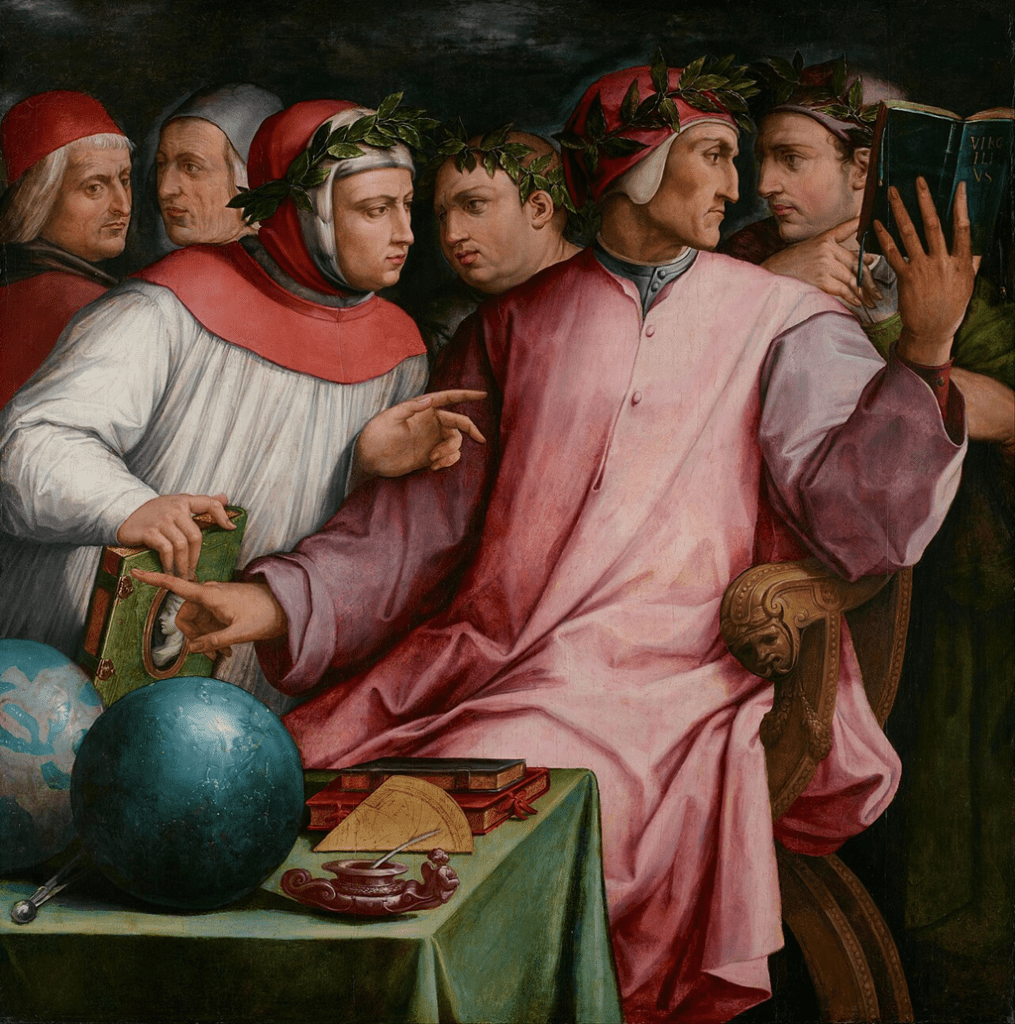
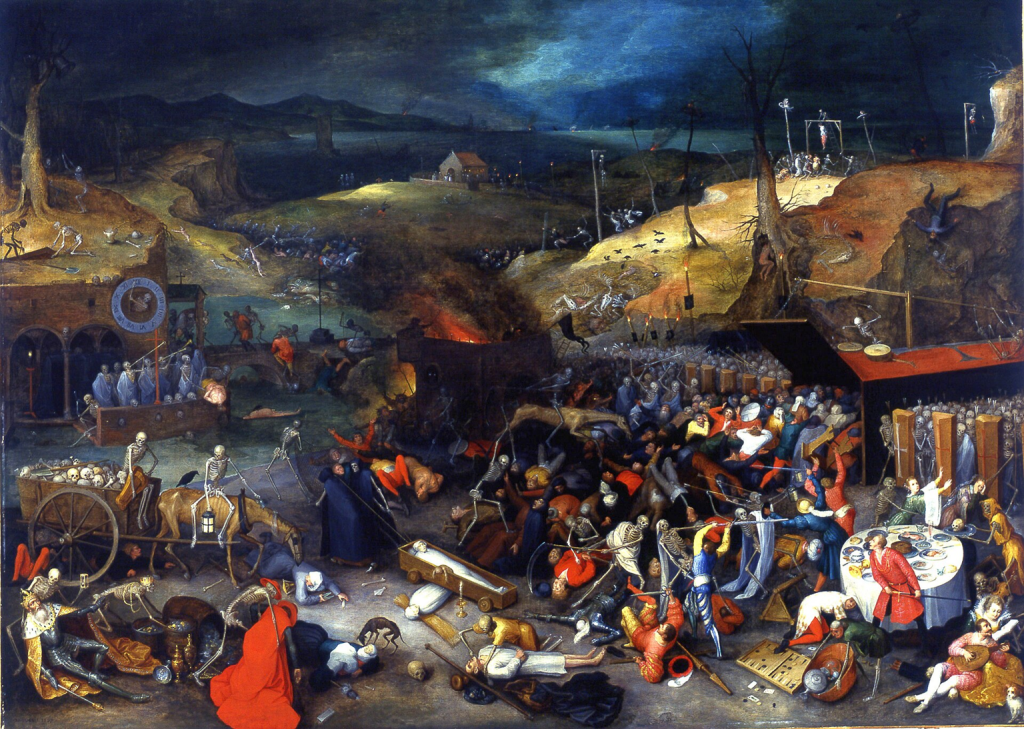
Throughout Petrarch’s oeuvre, the subject of time and its effects recurs with obsessive insistence. Time destroys cities and ends empires, but it also changes and fragments us. Time transforms our appearance, feelings and ideas, to the point that it leaves nothing solid and stable that we could truly call ours. There is only one antidote to the ravages of time – the letter continues: nunquam vivimus dum hic sumus, nisi quamdiu virtuosum aliquid agentes sternimus iter nobis ad veram vitam (we never live while we are here, except when, by performing some virtuous action, we pave our own road to the real life).
Time changes us, and change is death, non-being, since what truly is is eternal and unchanging. The crucial corollary of this thought is that, for Petrarch, to truly live and to truly be,one must flee places that change us because they themselves are in constant change. Busy cities are naturally such places, where the constant influx of stimuli threatens not just our moral conduct but our very identity.
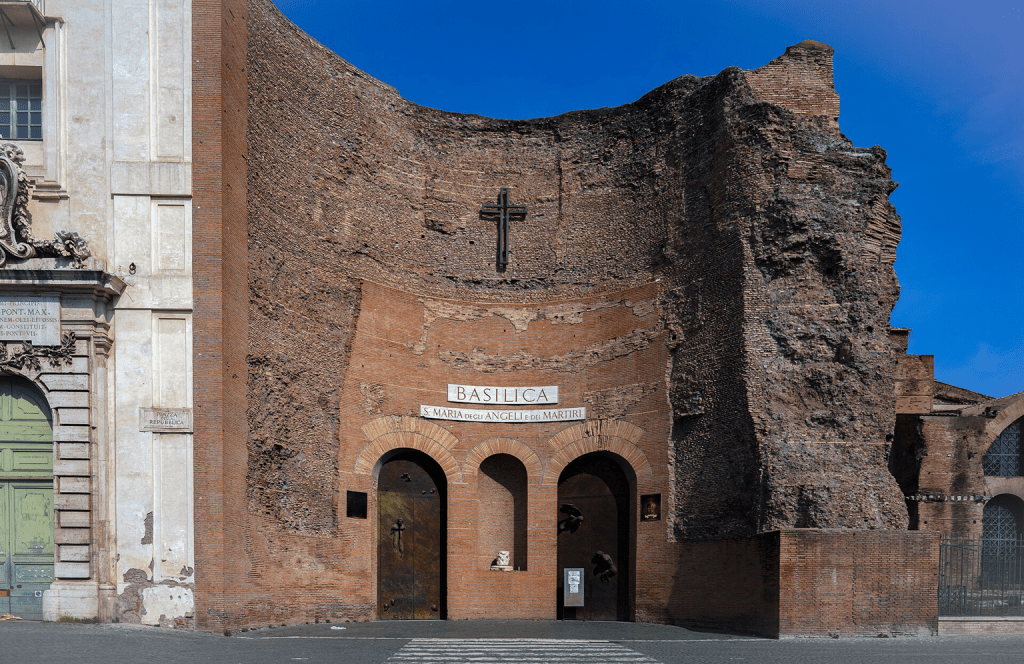
Petrarch witnessed the shattering effects of time in full force by examining the ruins of Rome. In another letter he describes his frequent strolls through the city with his friend and patron Giovanni Colonna. Petrarch would explain what the ruins were, recount the events that took place in them and reconstruct for his listener the lost glory of Rome. Finally, exhausted from their walk, the two friends would sit and rest on top of the cupula of Diocletian’s baths.
Rome in the 14th century looked nothing like the city we know. The familiar Renaissance-era Basilica of Saint Peter would not be built for another two centuries; in its place the old Romanesque basilica (‘Old St Peter’s’) lay in disrepair, abandoned even by the Pope who had moved with the entire Curia to Avignon in the south of France in 1309. Today, Diocletian’s baths have been partially reconstructed, and house the National Museum of Rome, as well as two churches: Santa Maria degli Angeli e dei Martiri, designed by Michelangelo, and San Bernardo alle Terme. If we could climb to the roof like Petrarch did, we would see the colonnades of the Piazza della Repubblica, which is busy with booksellers, tobacconists, and crowds rushing out of the metro station. But when Petrarch sat there, what he saw were the walls of a broken city (moenia fractae Urbis) and fragments of ruins (ruinarum fragmenta sub oculis erant).
Giovanni asked Petrarch to make a record of the conversations they had while sitting there, but Petrarch was unable to do that. His reason: mutata sunt omnia – everything has changed. Just like the ruined city of Rome, which stands as a testament to the transitory nature of all things, Petrarch himself felt in a state of constant flux: “Give me back that place, that idle mood, that day, that attentiveness of yours, that particular frame of mind I had, and I could do what I did then. But everything has changed” (Redde mihi illum locum, illud otium, illam diem, illam attentionem tuam, illam ingenii mei venam: potero quod unquam potui. Sed mutata sunt omnia, 6.2.18). In a typical Petrarchan move, he shifts his attention from the ruined cityscape to the state of his own mind and discovers that time has changed him as much as it has changed the so-called Urbs Aeterna.
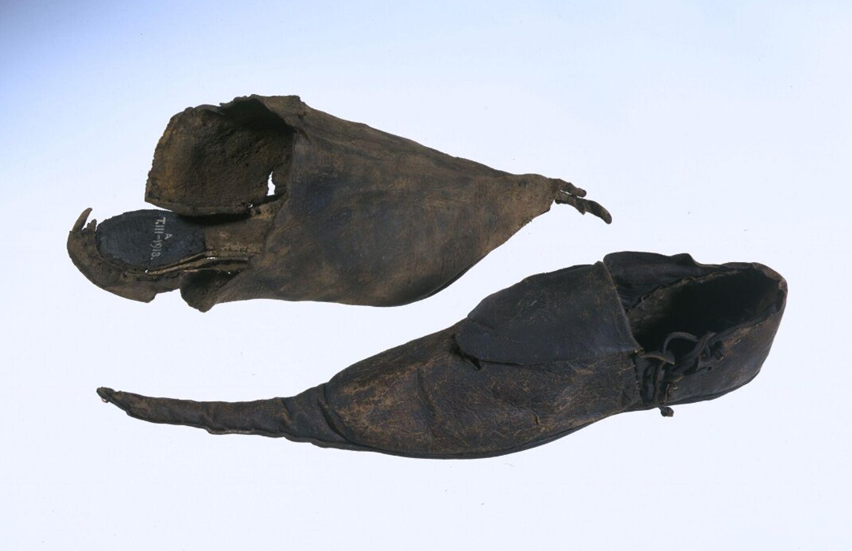
The ruins of a once great city led Petrarch to reflect on his own instability, but so did the hustle and bustle of a different, flourishing city. Petrarch’s father, an exiled notary from Florence, had moved to Avignon when Petrarch was a young boy. Petrarch initially led the life of a vain and morally dissolute youth: when he was not reading Cicero or Virgil (against his father’s wishes), he would go around chasing girls with his brother Gherardo (who would later become a Carthusian monk), wearing shoes that were too tight and curling his hair with a hot iron:
Quid de calceis loquar? pedes quos protegere videbantur, quam gravi et quam continuo premebant bello! meos, fateor, inutiles reddidissent, nisi extremis necessitatibus admonitus offendere paululum aliorum lumina quam nervos et articulos meos conterere maluissem. Quid de calamistris et come studio dixerim? quotiens somnum quem labor ille distulerat, dolor abrupit! (Familiares 10.3.18)
What shall I say about those shoes? How they besieged the feet they were supposed to protect in a never-ending war! I confess that these shoes would have rendered my feet useless had I not finally decided, compelled by the utmost need, that it was better to offend the sight of others a little than to destroy my sinews and joints. What could I say about the curling irons and the care we devoted to our hair? How often pain interrupted the little sleep that curling had already delayed.
When his hair-curling days were over, Petrarch came to hate Avignon with unrivalled passion. He often referred to the French city as Babylon and called the period of the Avignon papacy the Babylonian Captivity. It was here that Petrarch developed the notion that city life is a form of non-being where city-dwellers “are not what they are”. These people, he writes in De vita solitaria 1.8, cast aside their own nature, (naturam propriam exuunt); they change as often as they come across something they admire (totiens mutentur oportet, quotiens aliquid occurrerit quod mirentur); they like everything that is alien to them but dislike all that is theirs – they would rather be anything, other than what they are (cuncta illis aliena placent, sua omnia displicent, quidlibet esse malint quam quod sunt).
In his treatise on monastic life, De otio religioso, his descriptions of city life are filled with images of water that emphasize the state of flux and constant change of busy cities. Interpreting the line from Psalm 69: “Save me, O God, for the waters have come up to my neck,” he assimilates water to the earthly desires that drown city-dwellers. He adds that the rivers of Babylon (remember that for Petrarch this is Avignon) stand as a symbol of the instability and fluidity of city life: “These are the rivers of Babylon, which the Scriptures mention: the flow, instability, and flight of temporal things… For what else is Babylon, if not confusion” (De otio 1, p.56).
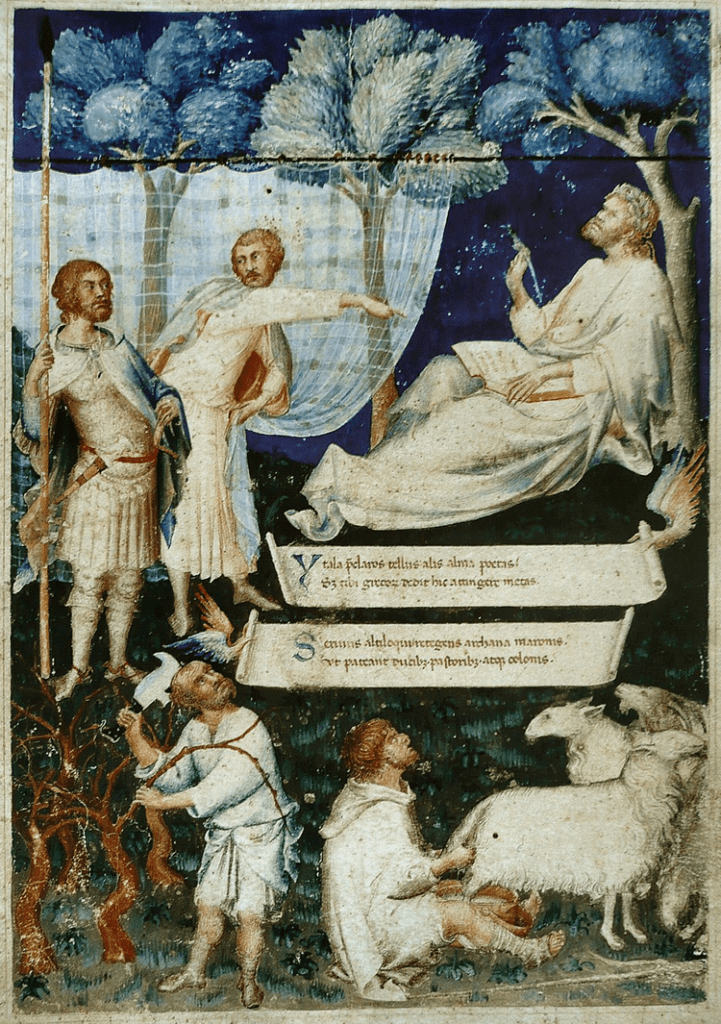
All this talk about flux, change, and rivers, might make readers wonder if Petrarch was familiar with Heraclitus’ famous maxim: ποταμοῖς τοῖς αὐτοῖς ἐμβαίνομεν τε καὶ οὐκ ἐμβαίνομεν, εἶμεν τε καὶ οὐκ εἶμεν τε (DK 49a), typically transmitted as “you cannot enter twice into the same river”. Petrarch had indeed read the Heraclitean fragment in Seneca, who quotes and interprets it in the following way (Ad Lucilium 6.58.22):
Quaecumque videmus aut tangimus, Plato in illis non numerat quae esse proprie putat; fluunt enim et in adsidua deminutione atque adiectione sunt. Nemo nostrum idem est in senectute qui fuit iuvenis; nemo nostrum est idem mane qui fuit pridie. Corpora nostra rapiuntur fluminum more. Quidquid vides currit cum tempore; nihil ex iis quae videmus manet; ego ipse, dum loquor mutari ista, mutatus sum. Hoc est quod ait Heraclitus: in idem flumen bis descendimus et non descendimus. Manet enim idem fluminis nomen, aqua transmissa est.
Plato does not count whatever we see or touch among those things that he thinks are in a proper sense, because they are in flux and are subjected to constant increase or decrease. No one is the same in old age as he was in youth; no one is the same in the morning as he was the previous evening. Our bodies are carried off like rivers. Whatever you see runs with time; nothing of these things we see remains; while I say that these things change, I myself have changed. This is what Heraclitus means when he says: in the same river we enter and we do not enter. The name of the river remains, but the water is gone.
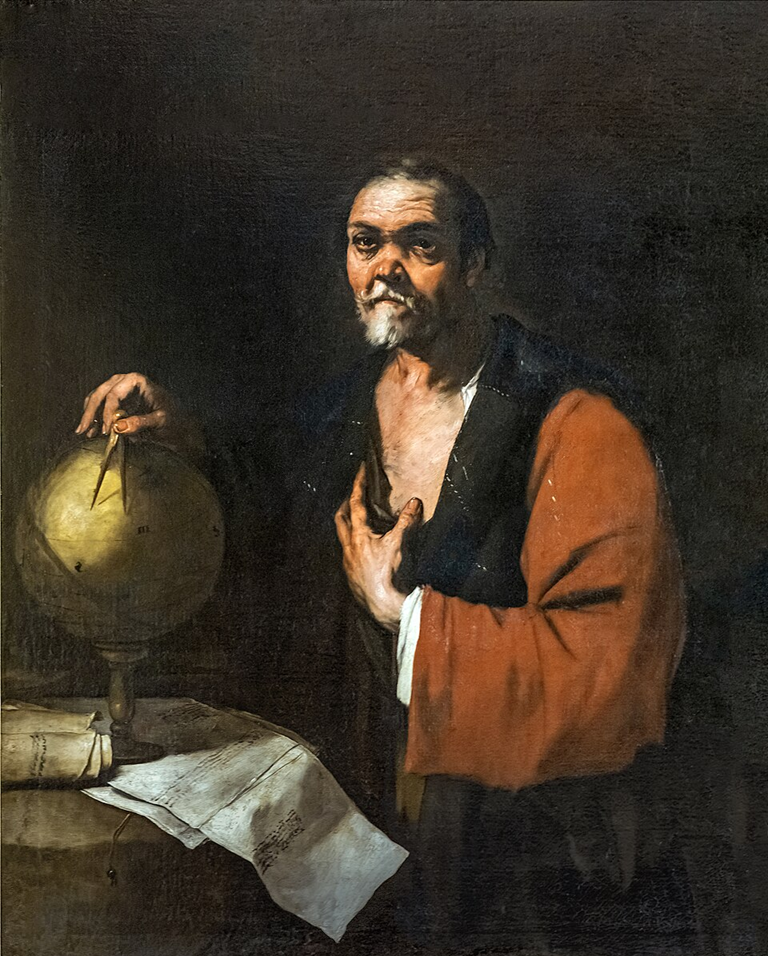
Petrarch knew this passage well. There are echoes of it in Familiares 24.1 (cited above) and he comments on it at length in De otio religioso. For Seneca, as for Petrarch, the realisation that everything, and even ourselves, is constantly changing, should lead us to detach ourselves from the corporeal and transitory: admiror dementiam nostram, quod tantopere amamus rem fugacissimam, corpus (I admire our folly, that we love so much a thing so fleeting: our body).
For Petrarch, however, this flow of change that threatens our very being is peculiar to cities, where the constant pull of desire accelerates change. Accordingly, after citing the Heraclitean fragment in the form given by Seneca, he then alters it to drive his point home: In eandem civitatem bis intramus et non intramus – We enter the same city twice, yet we do not enter the same city (De otio 1, p.58).
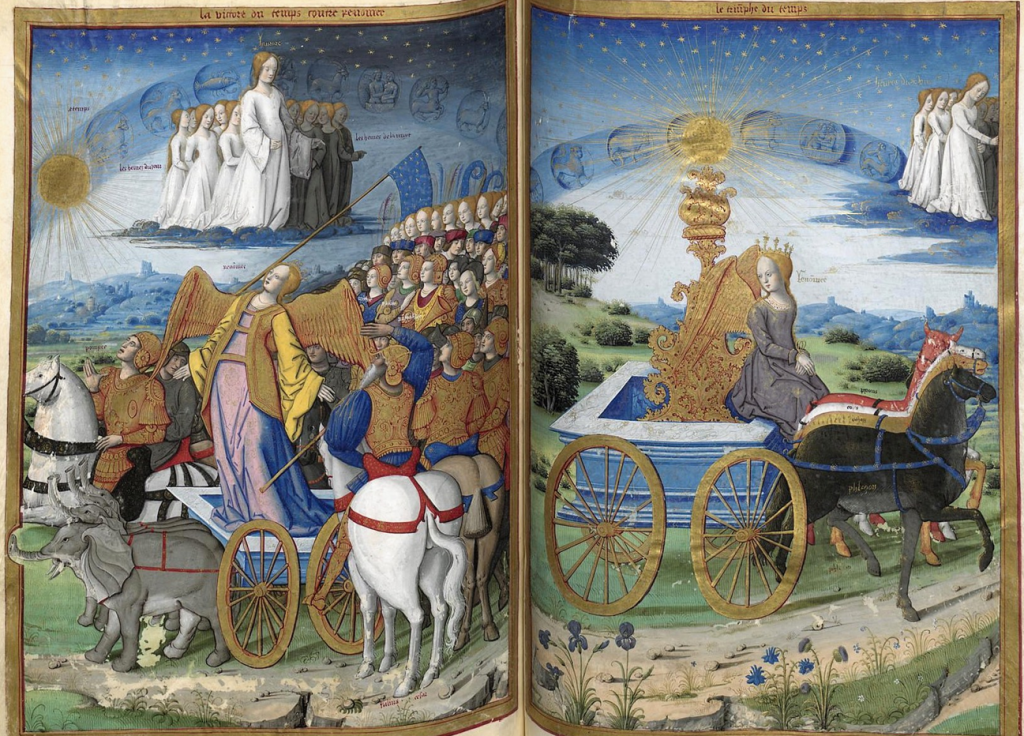
Petrarch’s Solitudo
The evils of worldly life led many medieval men and women to take refuge in the monastery. Petrarch gave serious thought to this, perhaps throughout his entire life, but he never took that step. Instead, he developed one of his most original notions: Solitudo, a form of lay contemplative life dedicated to the study of literature. Solitudo is a complex notion that deserves closer attention. Petrarch called his home in Vaucluse near the spring of the River Sorgue his solitudo iucundissima, but Petrarchan solitudo is more than a solitary place or the fact of being alone: it is a state of tranquillity of mind, of detachment from earthly things and of self-possession. Solitudo allows us to resist change and is therefore the only way to truly live.
This way of life is in stark contrast with that of the city-dwellers who possess nothing, not even their own minds or lives:
Aliena mens, aliena frons; non suo iudicio flent et rident, sed abiectis propriis alienos induunt affectus, denique alienum tractant, alienum cogitant, alieno vivunt (De vita solitaria 1.3).
Their minds are not their own, their face is not their own. They do not cry or laugh of their own accord, but they have thrown away their own emotions and put on alien ones. Finally, they deal with what is not theirs, they think thoughts that are not their own, they live for what is not theirs.
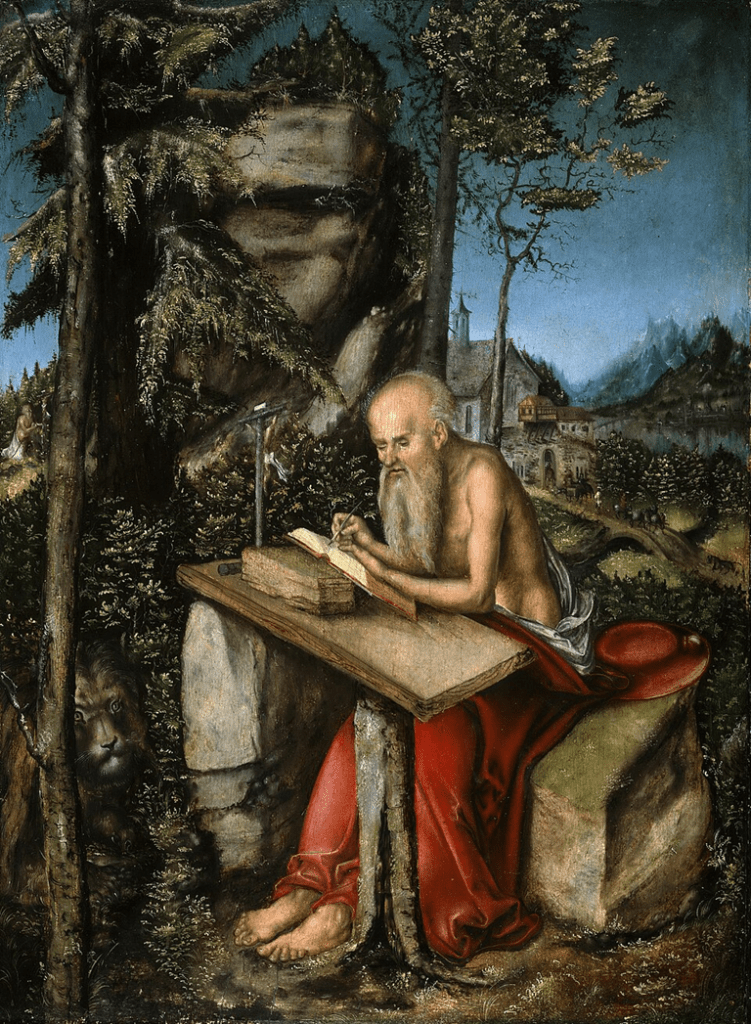
The idea of a solitary life in some field or forest has probably appealed to many of us. But Petrarch’s solitudo is demanding. One must not only abandon the city, but everything it represents: ambitions, desires and appetites, and the wish for recognition and personal gain through others. Petrarch, in other words, would not approve of the digital nomad, nor of your plan to retire into a cabin in the woods and spend the day reading and writing for Antigone, if your motivation was to gain recognition and applause. In fact, he censures himself for such a reason:
Antra, colles et nemora eque omnibus patent… Sed quid locorum solus introitus, quid ambiti vehunt amnes, quid lustrate iuvant silve, quid insessi prosunt montes, si quocunque iero, animus me meus insequitur, talis in silvis qualis erat in urbibus? (De vita solitaria 1.5).
Caves, hills, and forests are open to all… But what help is entering these places alone, what do the streams I walk around profit me, how do the forests I visit or the mountains I sit on help, if wherever I go, my own mind follows me, just the same in the forests as it was in the cities?
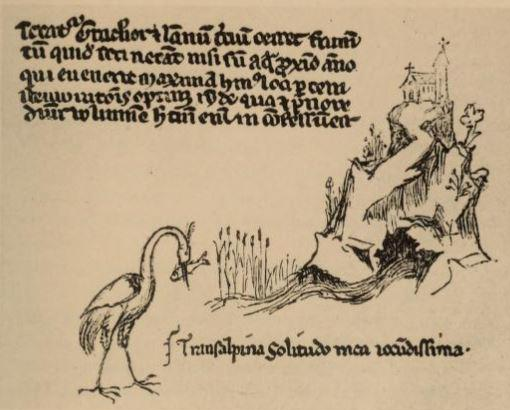
Solitudo requires many things. Fortunately, being alone is not one of them. Indeed, the state of detachment from desires needed to attain true solitudo is best reached together with a friend – not any friend, but one so close that they are no longer another, but one’s own duplicated self (non alium… sed me ipsum quodammodo duplicatum, De Vita solitaria 2.14). Petrarch, in fact, ends his long treatise on ‘solitary life’ with an invitation to his friend Philip, Bishop of Cavaillon, with whom we started this article. Philip’s company will not disturb, but complete his solitude:
Nec tantum solitudinis solamen, sed ipse quodammodo solitudo mea eris; tunc vere pleneque solitarius videbor, dum tecum ero.
Nor will you merely be a consolation of my solitude, but you yourself, in a way, will be my solitude. Only then will I seem truly solitary, when I am with you.
Only away from the cities, in this solitudo non sola, can Petrarch resist change and truly live.
Iván Parga Ornelas is Lecturer in Classics at Jesus College, Oxford, where, with his colleagues, he runs the Active Latin and Ancient Greek programme and teaches both languages. He also works with Oxford Latinitas. Iván tries to divide his time equally between the Greek and Roman Classics and Renaissance Literature, and has a monograph on the Neo-Latin poet Maffeo Vegio on the way.
Further Reading:
Petrarch, La vita solitaria, in Petrarca, Prose (G. Martellotti, P.G. Ricci, et al. edd., Riccardo Ricciardi, Milan/Naples, 1955) 286–593.
G. Rotondi & G. Martellotti (edd.), Il “De otio religioso” di Francesco Petrarca (Biblioteca Apostolica Vaticana, Vatican City, 1958).
Vittorio Rossi & Umberto Bosco (edd.), Le familiari (Edizione Nazionale delle Opere di Francesco Petrarca vols 10–13, Sansoni, Florence, 1942).
Z. Gur, Petrarch’s Humanism and the Care for the Self (Cambridge UP, 2010).
