Ioannes Chountis de Fabbri
Among the busts in the elegant Westminster townhouse of Philip Stanhope, 4th Earl of Chesterfield, Cicero had the best place, “very fine, and well preserved.” The earl told his son as much in 1746, in one of those unflagging daily letters with which he attempted, at long range, to turn a somewhat unpromising young man into a cultivated gentleman. This Whig lord sat for two portrait busts in the Roman manner, undraped, as an elder Cato. He urged his son to read De Oratore (“the best book in the world to finish one’s education”) and to keep close company with Horace and Cicero, as though they were still alive and accepting dinner invitations in Mayfair. One doubts that comparable advice is being offered today in any townhouse (or flat) in Westminster, elegant or otherwise.
Chesterfield was not eccentric, or at least not in this respect. For the politicians and thinkers of Georgian Britain were so thoroughly steeped in the Classical world from a very young age that they projected the ancient commonwealths of Athens and Rome onto London with considerable facility – and long before the French Revolutionaries attempted the same. When Voltaire visited England in the 1720s, he noted with dry amusement in his English Letters that “the Members of the English Parliament are fond of comparing themselves to the old Romans”. That led him to think that “there is a Senate in London”.

The Whigs would have agreed entirely, and with a grin. We tend now to treat this as decorative, a cultural affectation of men in wigs who liked to travel to Italy and Greece, buy antiquities at a bargain, put up columns and name their country houses after Roman villas. All that took place in the towns and countryside of Hanoverian Britain. Yet it was something considerably more important than that.
After the Glorious Revolution of 1688, with the Stuart pretension to Caesarean rule decisively rejected, the language of politics was drawn almost instinctively, and to a very large extent, from an idealised vision of Republican Rome – one that highlighted the patrician elements of that regime. The public schools and the universities saw to that. A gentleman’s education was, in large part, a Classical education, and the categories it furnished were not left behind at Cambridge or Oxford but carried into Parliament (the logical terminus of that education), into the pamphlet wars where authors assumed Roman pseudonyms, and into the drawing rooms where policy, such as it was, was actually decided by the members of the gentry and the aristocracy – for the 18th century was, above all else, an aristocratic century.
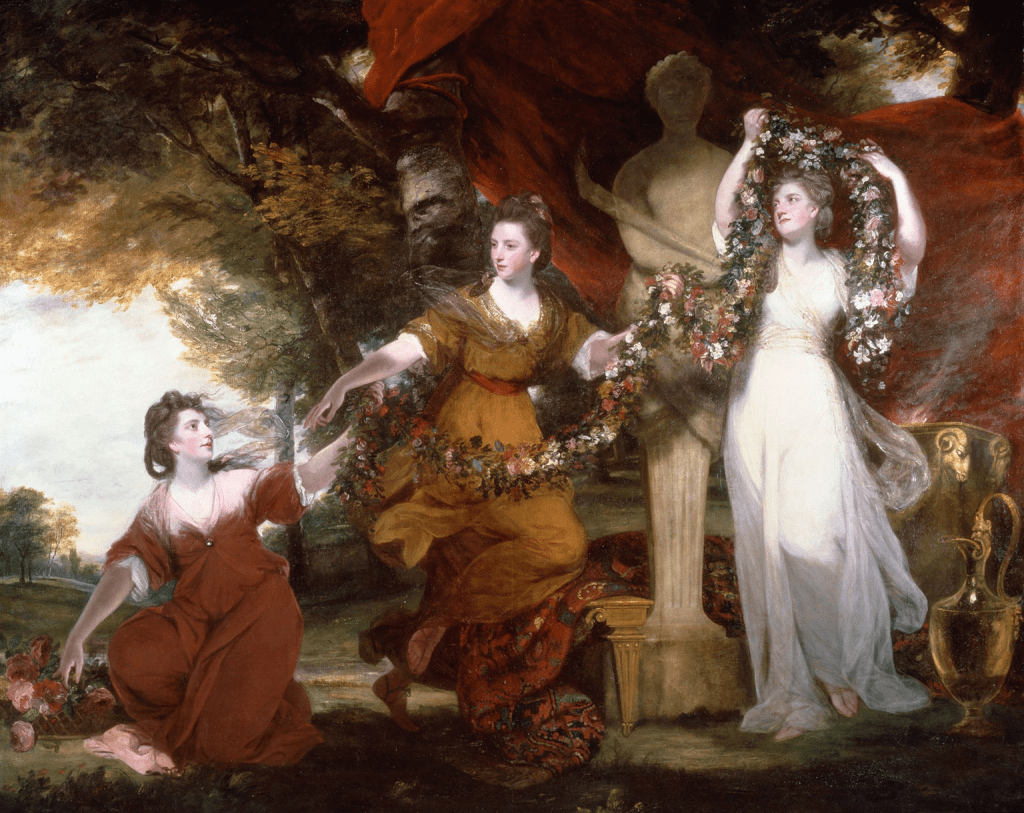
The Roman Republic offered the ready-made vocabulary for a propertied, governing but also embattled class that understood itself as the guardian of liberty, while fearing overreach from both royal forces above and democratic forces below: the struggle between the Optimates and Populares in Cicero’s time, the corruption of public virtue by the private ambition of a Clodius or a Catilina, the ever-present danger that a free constitution might be subverted from within. These had been absorbed as exam questions at an early age and were later translated in the terms in which living politicians understood their own circumstances; they recurred in parliamentary speeches, in the press, and in private correspondence with a frequency that surprises anyone encountering the material for the first time.
Take Joseph Addison’s Cato. First staged in 1713, this self-consciously Classical tragedy was performed more than twenty times in London in that year alone and was printed in 26 editions by the century’s end. Sir Robert Walpole’s Norfolk seat at Houghton Hall bore a statue of the Great Man in the guise of Cicero on its central pediment. The aesthete Earl of Burlington’s gardens at Chiswick attempted to recreate a garden of Ancient Rome; Daniel Defoe, visiting in the late 1720s, identified statues there speculatively as Caesar and Pompey facing a figure of Cicero. The Whig aristocracy admired antiquity; they inhabited it, or, just as importantly perhaps, believed they did.
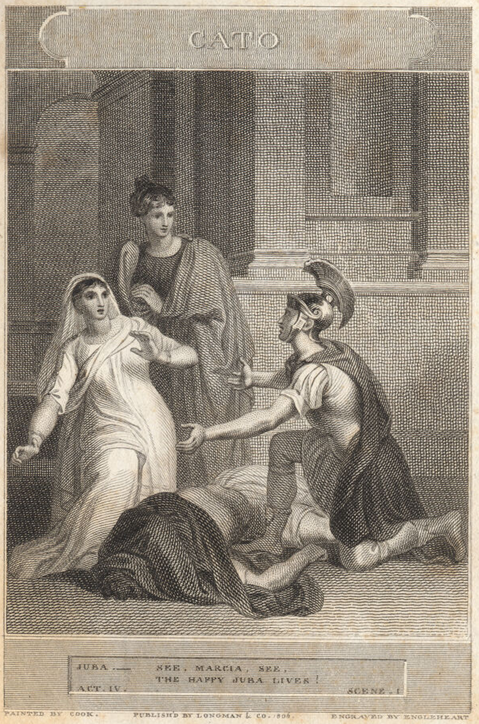
Why, then, was Cicero the towering figure amongst all the other ancient worthies? Why not Cato, whose rigid virtue had lent his name to John Trenchard and Thomas Gordon’s Letters, which circulated with such force in the early years of George I’s reign? The answer lies in the practical requirements of governing. Cato might offer purity, but Cicero, crucially, provided something more useful: purity tempered by a tolerance of political compromise and a sharper appreciation of circumstance. Known familiarly in the 18th century as ‘Tully’, his career combined philosophical seriousness with sustained, often messy participation in public life. For ministers responsible for the daily exercise of power, that combination mattered more than Catonian rigidity ever could.
Cicero’s De Officiis (On Duties), which held a position of particular prominence at England’s two ancient universities, offered what amounted to a handbook of moral conduct and public duty that seemed to speak directly to contemporary circumstances. It was for this reason that John Locke had advised that instruction in virtue should begin with the Bible and De Officiis, and Chesterfield recommended the same to his son. Cicero’s defence of private property, his warnings against the corrosive effects of faction, his insistence that the statesman must care for the whole body politic and not serve the interests of one party at the expense of the rest: all of this resonated powerfully with a governing elite that understood itself to be a propertied order and the natural custodian of civic virtue.
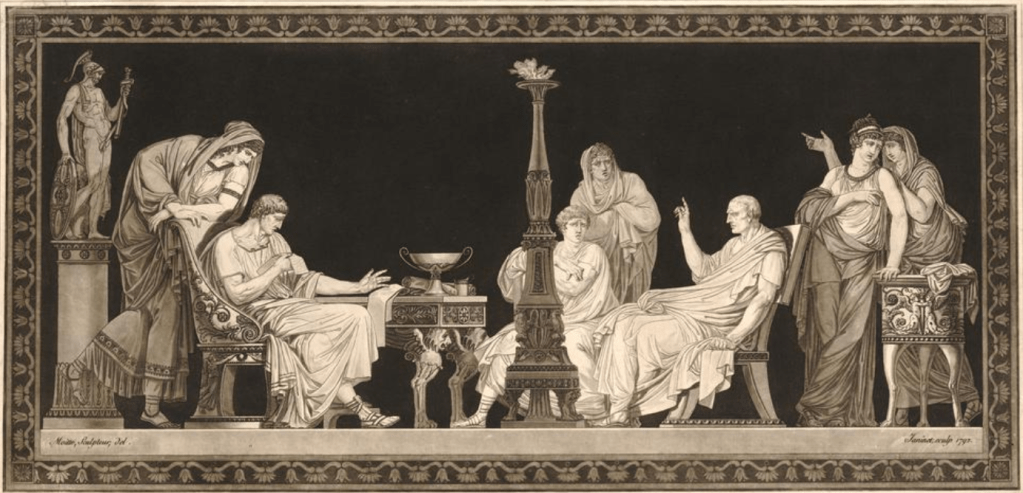
Cicero’s record could be read as an illustration of prudent adaptability in office, or, more conveniently for those in power, as evidence that inevitable misjudgments did not, in themselves, justify the condemnation of a minister. For the Court Whigs around Walpole, increasingly confronted through the 1730s by an opposing constellation of disgruntled radicals and Tories, this was a paradigm worth clinging to. Cicero had survived the Catiline affair, the enmity of Clodius, and the collapse of senatorial authority; a minister beset by pamphleteers and country gentlemen could surely manage the same.
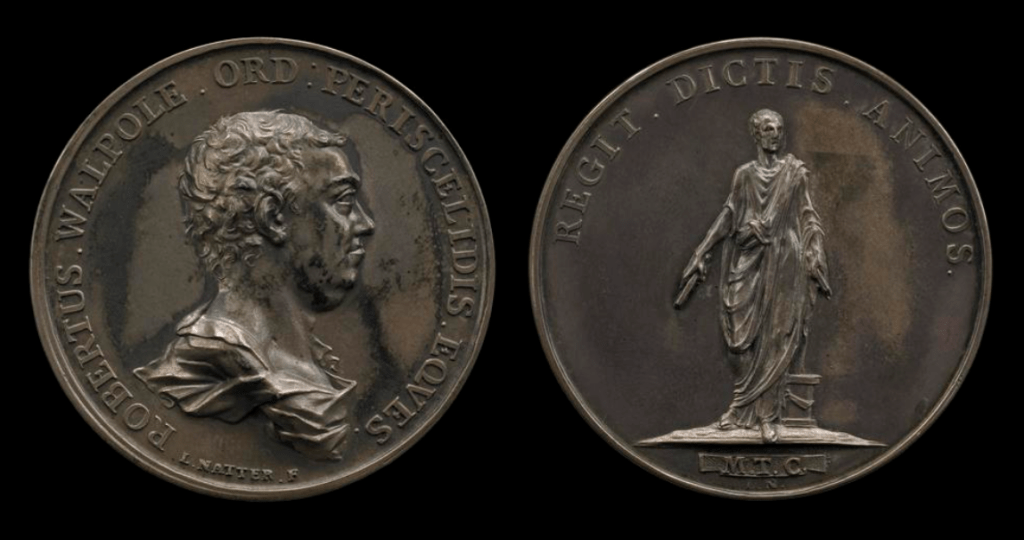
The parallel was pressed sometimes with remarkable specificity. When a Jacobite conspiracy implicating Bishop Atterbury was uncovered in 1722, Walpole’s propagandists cast the Prime Minister as a modern Cicero who had saved the constitution from a modern Catiline. The pamphlet Clodius and Cicero presented the former as William Pultney, the latter as Walpole, and Roman factionalism stood for the politics of opposition. Between 1739 and 1740, the London Magazine published accounts of parliamentary debates with participants assigned Roman names. In 1741, the medallist Johann Lorenz Natter struck a medal bearing Walpole’s image on the obverse and Cicero’s on the reverse; the same year, Conyers Middleton published his two-volume Life of Cicero, under the patronage of the arch-courtier Lord Hervey, which attracted more than 1,800 subscribers and the crème de la crème of Georgian society. Hervey had urged Middleton to frame Cicero’s career against a wider narrative of the “conversion of a free Government into a despotic one”, which tells us something about the seriousness with which these men took the analogy.
It was classicism beyond window-dressing, classicism as political argument, conducted in real time, with real consequences, in a language that every educated participant understood. One struggles to identify a comparable shared frame of reference in our own parliamentary culture, unless one counts the language of management consultancy, which rather fails to rise to the same level.
The Classical anxieties of the period ran deeper than party politics, and they were not the exclusive property of Walpole’s friends – the opposition thought in Roman categories too. His enemies reached for the same repertoire with equal fluency; Bolingbroke devoted entire letters in his works to holding out for England the fate of Rome: her grandeur had endured as long as she preserved her virtue, and when virtue failed, so did liberty. British writers drew repeatedly on the history of the late Republic and its fall to articulate fears about the trajectory of their own polity, and the parallels they reached for were not comforting ones.
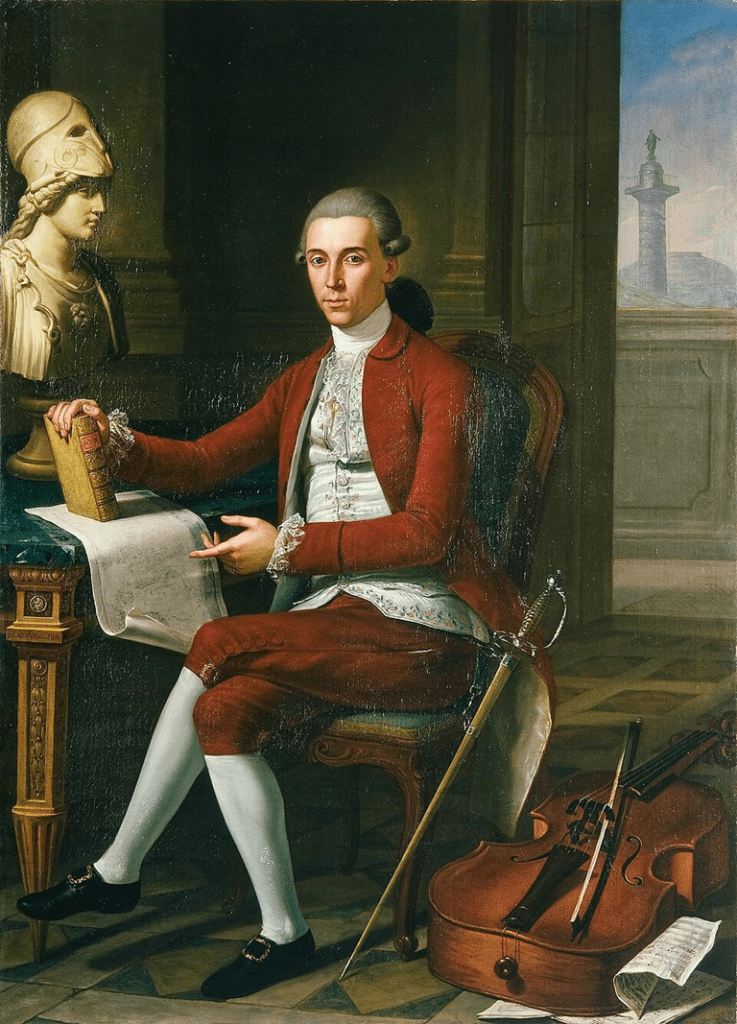
In February 1721, a few months into the aftermath of the South Sea Bubble, the pseudonymous ‘Cato’ opened a letter in the London Journal with a slightly paraphrased version of Sallust’s famous judgment – in the mouth of the Numidian king Jugurtha – on Roman corruption: Abi, venalis civitas mox peritura, si emptorem invenias (Be gone, mercenary city, soon destined to perish, should you find a buyer). The application to a nation still reeling from a speculative mania that had ruined thousands was left implicit but unmistakeable. If Rome had fallen through the corruption attendant upon imperial expansion, what fate awaited a commercial nation whose wealth was growing just as fast as its moral vigilance appeared to be diminishing?
This question haunted the entire century. It spurred Walpole’s opposition, drove the anxieties about standing armies and national debt, and fed the persistent fear, inherited from Machiavelli through James Harrington and Algernon Sidney, that luxury and commerce would corrode the civic virtue on which a free constitution depended. These were the central preoccupations of Georgian political thought, and they were conducted, almost entirely, in a Classical idiom that we have since mislaid.

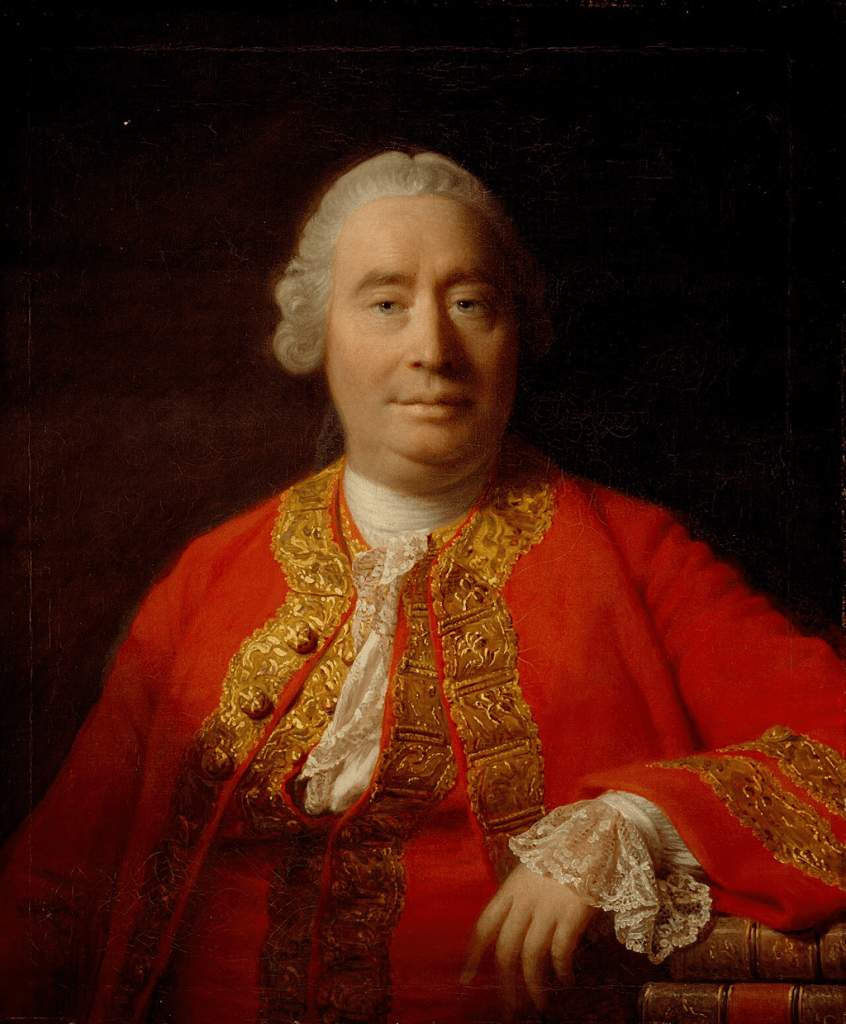
By the middle of the century, David Hume could observe that “the fame of Cicero flourishes at present”. Yet this Ciceronian ascendancy did not survive the Hanoverian era intact. From the 1760s the broad consensus that had sustained the oligarchic governance of the Court Whig began to fragment, giving way to a rougher, more factional politics in which the old Classical pieties sat less comfortably. But the categories themselves did not disappear. They were inherited, reworked, and in Edmund Burke’s hands transformed to meet the demands of a different age: imperial crises in America, India, Ireland, and eventually France.
Burke, like Cicero, was a novus homo (new man) who had risen through intellectual distinction rather than birth, and who regarded the law as the keystone of political order. He absorbed the Ciceronian tradition not as ornamental learning but as a living resource for the exercise of political judgement.
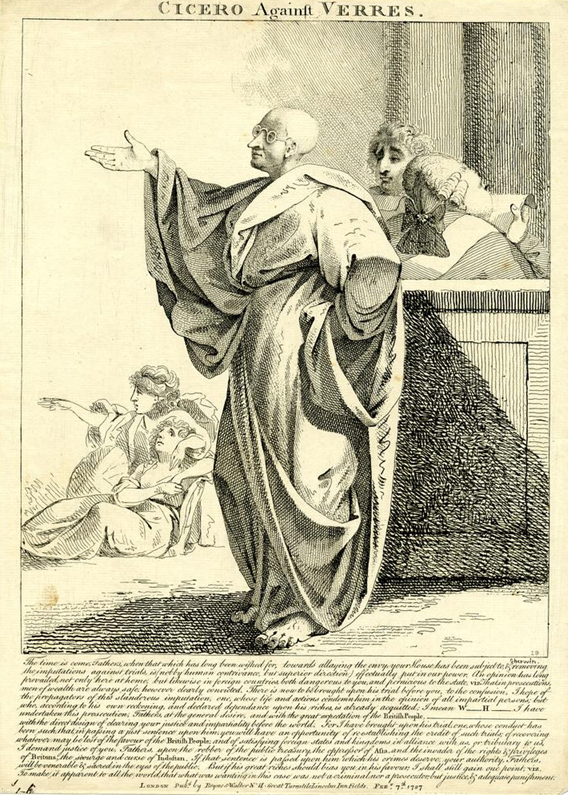
When Burke rose in 1788 to open the prosecution of East India Company man Warren Hastings for his conduct as Governor-General of Bengal, he was reaching back through Middleton and Chesterfield to Cicero’s own prosecution of Verres, the corrupt governor of Sicily, in 70 BC. The structural parallels were deliberate and would have been immediately legible to his audience: a provincial outsider, who had risen through eloquence and legal distinction, prosecuting a powerful man for the abuse of imperial trust, before a tribunal that understood itself as the guardian of constitutional order.
Burke’s speeches against Hastings are saturated with Ciceronian language, Ciceronian fury at the misuse of power over subject peoples, and the Ciceronian insistence that empire, if it is to be legitimate, must be governed by law and not by base appetite. It was the most consequential act of Classical inheritance in 18th-century British politics. It was also, perhaps, the last moment at which a British statesman could assume that his audience in the Lords and the Commons would follow him, sentence by sentence, through an argument built on Roman foundations.
We have too readily assumed that the Classical cosplay of the 18th century was an affectation, a wig atop a wig. It was not. The Roman categories that Chesterfield absorbed in his library and Burke deployed in Westminster Hall were not decorative. They gave Georgian politicians a way of thinking about power, corruption, liberty, and the obligations of empire that was rigorous, historically informed, and morally serious. That we have largely lost this inheritance is not, in itself, a novel observation.
What may be less obvious is the cost. Without the Classical framing, we struggle to read the 18th century on its own terms, mistaking the depth of its political culture for the superficiality of its architectural and horticultural taste. And without it, our own political discourse is conducted in a thinner, more impoverished language than the one Burke spoke, or Chesterfield wrote, or Walpole’s enemies used against him. The busts may have gathered dust, the ideas have not. But to recover them, one must first know that they were there.

Ioannes Chountis de Fabbri is a political historian and Honorary Research Fellow at the University of Aberdeen. He is completing his next book on Edmund Burke and the British Empire for Boydell & Brewer.
