Anand Mangal
And greater honour yet they did me – yea,
into their fellowship they deigned invite
and make me sixth among such minds as they.
Dante Alighieri, Inferno, Canto 4.100–2 (tr. Dorothy L. Sayers)
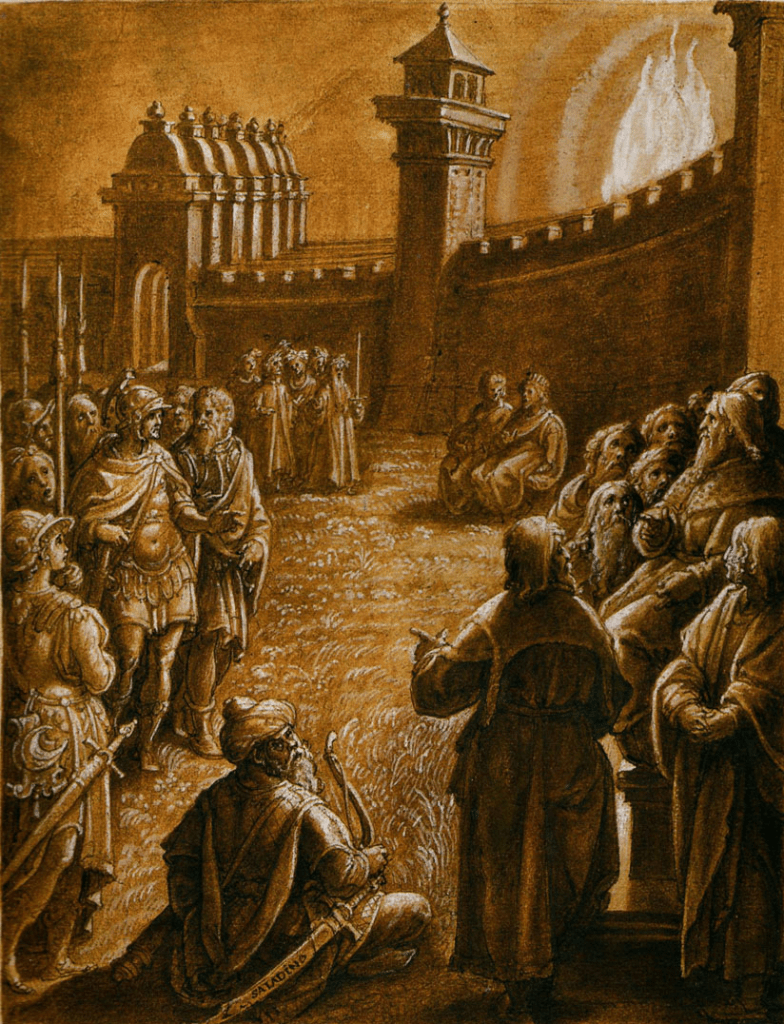
After seeing Virgil take his place beside Homer, Horace, Ovid, and Lucan, Dante’s vision of Limbo culminates in an invitation to join these literary greats as they walk together. The awestruck Italian poet silently accepts. To be invited into fellowship with such minds as these is a gift of inestimable value, and ever since I began reading literature as a boy, I yearned to receive just such an invitation.
But who was I? I was not Aeneas, or Paul, or even Dante; instead, like so many who grew up in the Silicon Valley, I had become a software engineer. My days were spent communicating with computers in their native languages, not with the ancients in Greek or Latin. I felt separated from Virgil’s company by an impassable distance, destined to languish in the digital doldrums of the modern day.
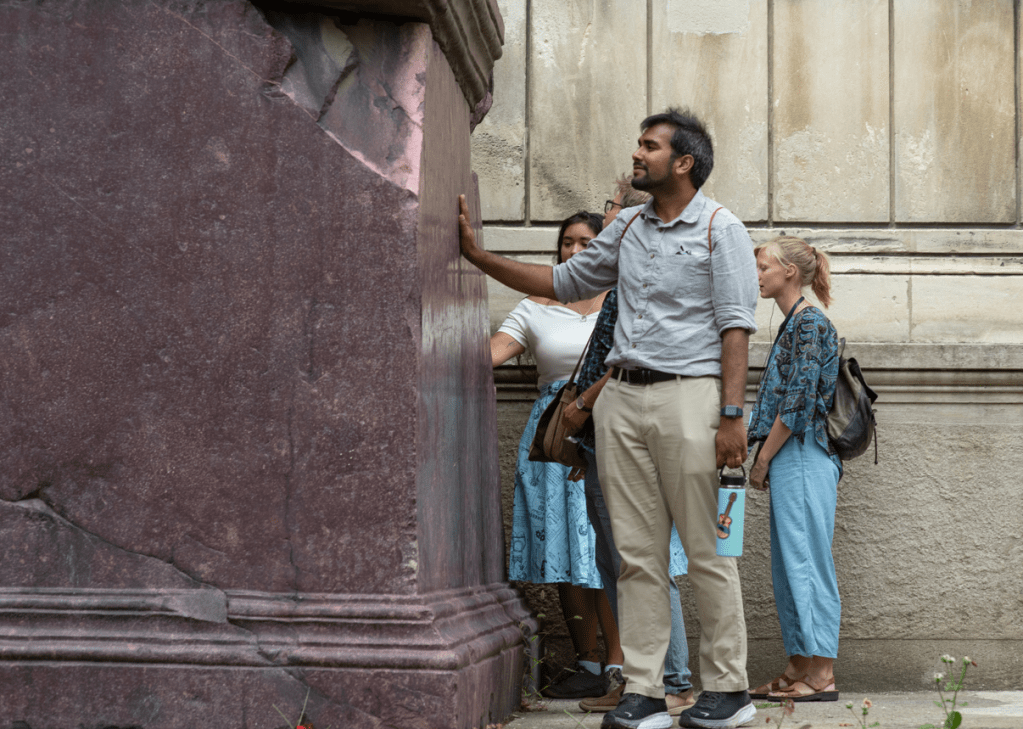
I will pass over the process by which a software engineer, working in a field where new discoveries become outdated almost immediately, decides to pursue the ancient languages, which have remained unchanged for centuries. But I saw them as non-negotiable prerequisites for the pursuit of Literature – my true passion – and once I had made my decision, my objective was clear, as were the skills I needed to acquire.
The obvious question was one of means – just how was I to do this? While I availed myself of excellent resources, such as Hillsdale College’s Great Books courses, and podcasts such as Spencer Klavan’s Young Heretics, I believed in the necessity of attending university to reach the highest level of scholarship. But I had heard troubling things about the state of Classics in academia, things that made me skeptical as to whether I would be able to find unfettered access to the sort of training I needed. I yearned for an immersive, transformative experience in an environment that reflected the nobility of the academic pursuit. I wanted to have my abilities – and my resolve – sharpened to prepare me for my newly-chosen path.

This immersive experience, this invitation to commune with the ancients, was providentially extended to me. In June of 2022, my younger brother sent me a video announcing a one-year MA in the Humanities at a new university in Savannah, Georgia. A month later, I was one of 24 students accepted into the inaugural class of Ralston College.
The program was a broad sweep through the Western literary and philosophical tradition, through the reading of the primary texts of the ancient, Medieval, and modern periods, complemented by a robust Greek language component. In short, it was the fulfillment of all my academic yearnings. I quickly realized that I would have to trade in my software engineer garb (standard-issue hoodie-and-jeans) for jacket and tie.
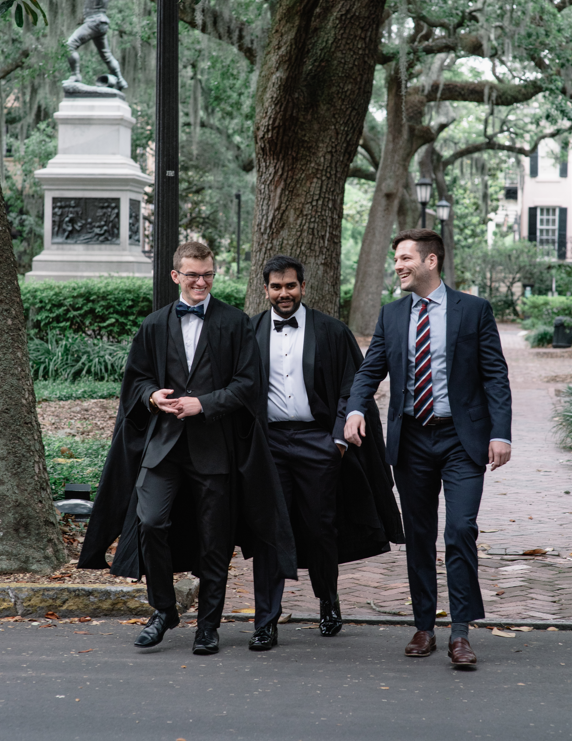
The substance of my education more than matched the sophisticated setting: I was treated to lectures by over 30 scholars from the world’s most prestigious institutions. The extra-curricular experiences I had with some of these visitors – pondering the Ephesian coastline late at night with Dr Michael Hurley (of Cambridge), receiving career advice in a crowded café from Dr Neil Robertson (of King’s College, Halifax), being handed a hidden gem at a used bookstore by Dr Richard Rankin Russell (of Baylor in Texas) – were even more memorable than their lectures: they solidified my sense of having joined a true community, a respublica litterarum.
As I marched through the litterae of the Western canon, the curriculum brought me to the figures that loom large – such as Plato, Augustine, Dante, and Descartes – as well as hugely influential figures who were new to me – such as Plotinus, Boethius, Pseudo-Dionysius, Ficino, and the Cambridge Platonists. I was particularly fascinated by our study of the Middle Ages, as it was the time period about which I knew the least; the comprehensive nature of the curriculum introduced me to the full development of that respublica across time.

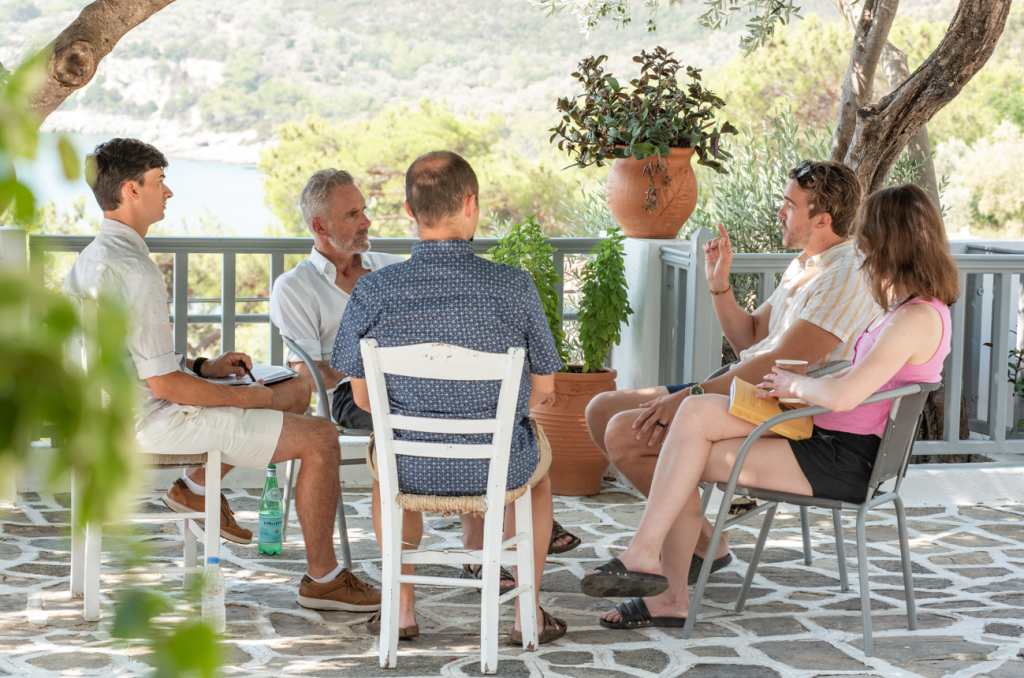
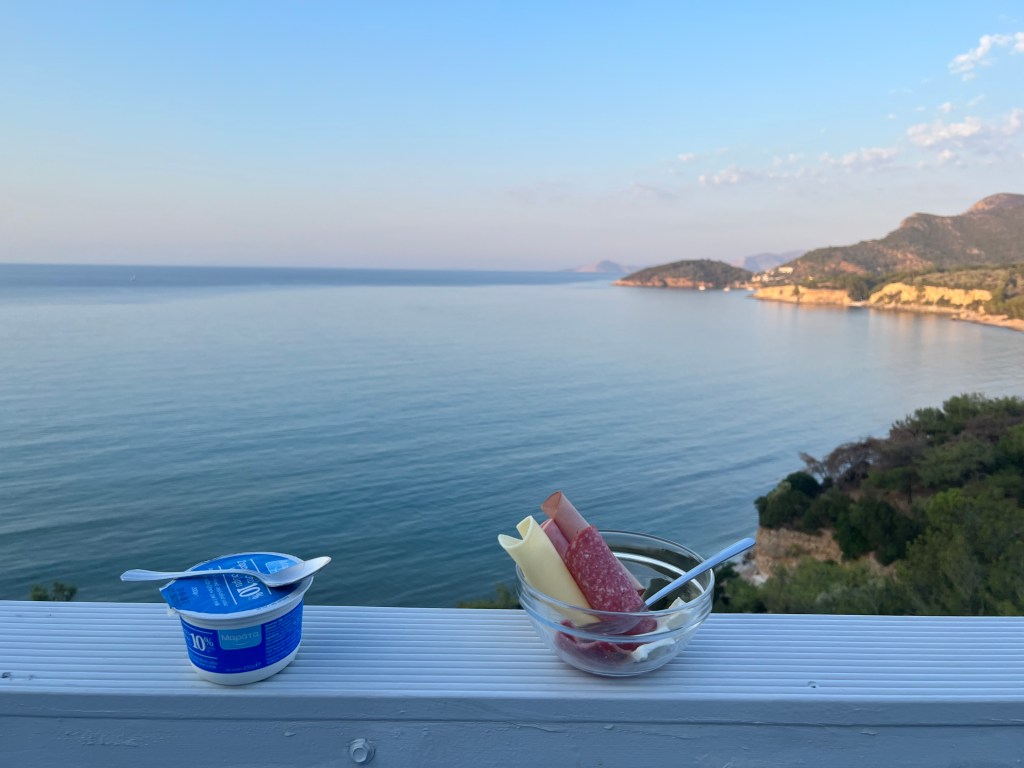
This period of wide-ranging study was preceded by something even more remarkable: the first two months of the program took place not in Georgia but in Greece, where all of my attention was devoted to learning Homer’s language. Our cohort spent our first month in relative seclusion on the island of Samos, birthplace of Pythagoras and Epicurus. We were treated to a gloriously intense class schedule: eight hours a day, five days a week.
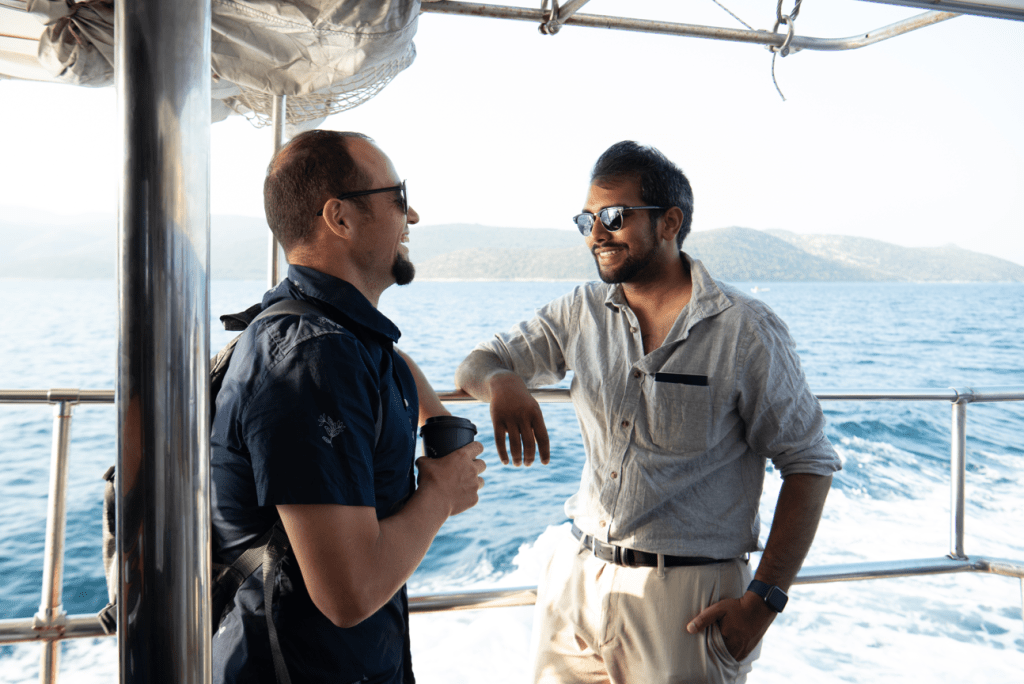
The teaching was genuinely immersive: the overwhelming majority of this class time was conducted in Greek, starting from the very first day. Not only that, but instruction was split evenly between Attic Greek in the morning and Modern Greek in the afternoon. Our Classics professor, Dr Joseph Conlon, encouraged us to think of Greek as one language, emphasizing its continuity throughout history, despite the changes of dialect and register that one encounters between the poems of Homer, the epistles of Paul, and the spoken vernacular I heard during our excursions to Patmos, Ephesus, Arcadia, and Epidaurus.
As the first month concluded, I found myself sitting in front of the opening of John’s Gospel in unadapted Greek. As I started piecing the meaning of the text together, I suddenly imagined the aged apostle writing these words with a trembling hand, rolling the papyrus up, and handing it over to me. I was reading his exact words. One month’s worth of Greek had allowed me to tunnel through 2,000 years – θαῦμα ἰδέσθαι (a wonder to behold) – so that I could receive these words from John’s own hands.

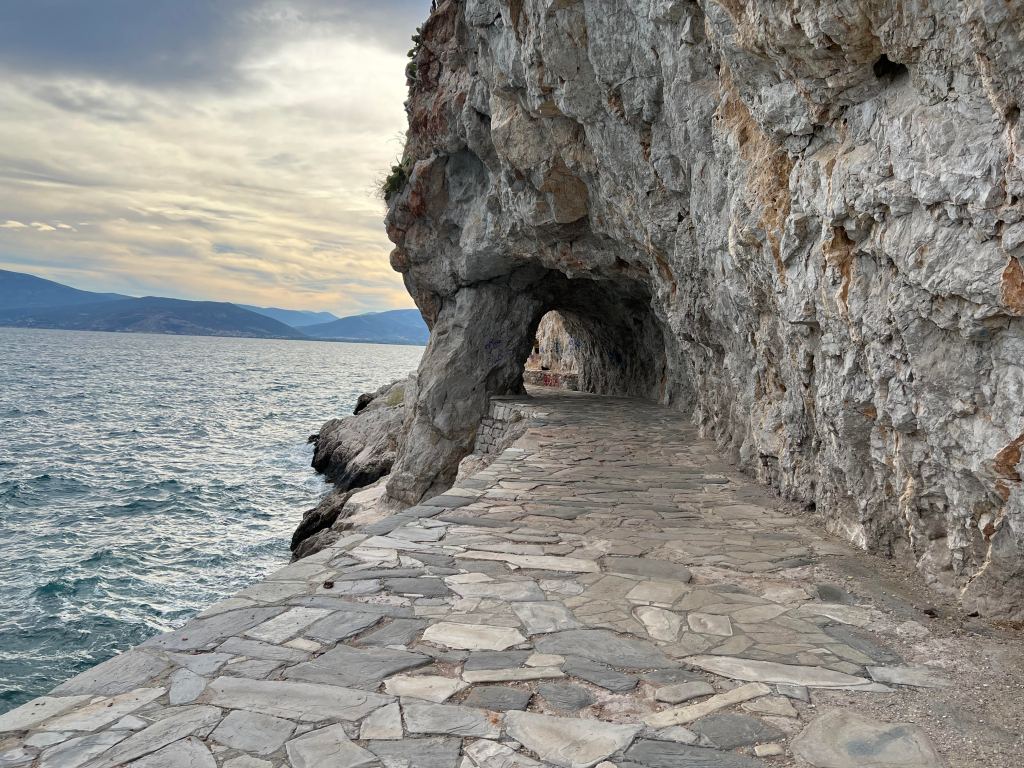
The second month was spent in Nafplio, a coastal city in the Peloponnese, where the Harvard Center for Hellenic Studies graciously hosted my fellow students and me. Our class time had been halved to allow for more independent study, but I also took the opportunity to explore the city, reveling in my ability to converse with the locals in Modern Greek; I would occasionally sprinkle in a bit of Attic vocabulary to see them react in amazement. By the end of those two months, I felt at home in Greece.
The naturalistic teaching style, strong emphasis on vocabulary, use of speaking and listening, and the conception of Greek as one language unified across time were all distinctive ingredients in what made learning the Classics at Ralston so potent. By the end of the year, I had read all of John’s Gospel, Plato’s Phaedo, Penelope Delta’s 1909 novel Για την Πατρίδα (For the Fatherland), and Books 6 to 8 of Homer’s Odyssey in the original. I had produced over 20 pages of Greek composition, summarizing each of these texts in their own style and diction.
My fellow students and I even held Greek-only dinners, freely switching between Ancient and Modern Greek in our conversation. This sort of engagement with the language helped me to celebrate the way that the Greek spirit continues to live, and this vital spirit beckons me into deeper fellowship with the ancient texts, and their authors, as I struggle through them.
I was already convinced that this struggle was worth the effort, for I had seen that a major commonality among the canonical authors was the magnitude of their debt to classical antiquity. I knew that I could never fully appreciate – let alone attempt to emulate – the works of Dante, Tennyson, or C.S. Lewis without going through Greek and Latin first. Yet, before Ralston, the prospect of learning these languages seemed equivalent to building a rocket ship in my backyard – theoretically possible, but practically impossible. I simply had no concept for language learning.

After Ralston, however, not only did I make considerable progress in Greek, but I truly felt capable of learning as many languages as I wanted (which complemented the necessity I now felt of reading all foreign literature in its original language). Since Ralston, I have taken an intensive summer Latin course, begun an MA in Classics at the University of Dallas, and started to learn French as well. I plan to take Italian this summer, and I am searching for a doctoral program that will help me marshal these languages for the study of Literature. Ralston has given me a trustworthy method for language-learning: heavy vocabulary practice, an emphasis on listening and speaking, and reinforcing grammatical study by reading large quantities of the target language.
“There are three reasons that anyone learns Greek,” Dr Conlon began a class by saying one morning. (Here I am translating his Greek into English.) “These are: Homer, Plato, and John.” Memorable hyperboles are one of Dr Conlon’s charming idiosyncrasies, but this particular specimen demanded further consideration. For which one of these reasons was I learning Greek? The answer came immediately: Homer, of course. “As a Christian, I find reading the New Testament in Greek to be deeply fulfilling; however,” I thought to myself, “my vocation is to pursue Literature, not Theology, and certainly not Philosophy.”

This was my attitude when I came to Ralston: I thought of the disciplines as essentially separate. But it became obvious to me, from a linguistic perspective, that the Greek of Plato is heavily influenced by that of Homer, and that John in his Gospel is quite aware of the previous ways in which the word λόγος (logos) has been used before him. In The Discarded Image, C.S. Lewis posits that behind every great work of art, there lies a matrix of philosophical, theological, and otherwise ontological views, which are held (unquestioningly) by the artist and his culture. In learning Greek, I was beginning to perceive – and so, to appreciate – this matrix: the innumerable threads of interdisciplinary thought, woven together, which form the canvas upon which the master artist does his work.
As I learned more about these artists – their languages, cultures, influences, and legacies – I began to change the way I related to them. Before I had been invited to walk with Homer, Virgil, and Dante, I had thought of them as distant from me; not only as people from another country or time, but as ideals of artistic perfection, as unapproachable standards of mastery and beauty. At our very first college event, a magnificent dinner at the foot of the Acropolis in Athens, Dr Conlon – this time, in English – said, “The ancients wrote these texts so that you could befriend them.” I was challenged to reconsider my relationship with the ancients: in my love for their works, I had fallen into the mistake of thinking of them as museum pieces, to be viewed from a distance, wholly separated from daily life.
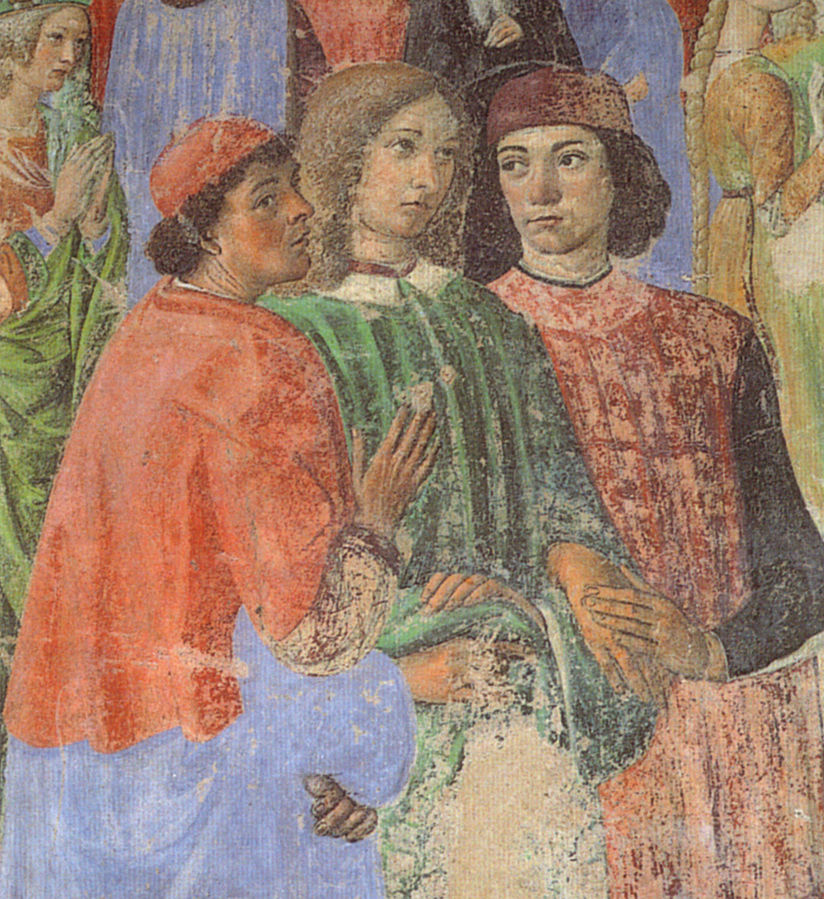
But my time at Ralston encouraged me to help Homer out of his display case, and simply speak to him. Dr Conlon’s words exemplified an ideal found throughout Ralston, and throughout history: that the proper way to orient oneself to the ancients is to befriend them. I see this attitude in the obvious affection for Plato in the writings of Plotinus and of Ficino, grounding the significant way in which each of them interprets and expands on Plato’s work. I see it again in Petrarch’s fond vision of Augustine, as dear to him as Lady Philosophy is to Boethius. And it is hard to miss it in the way that Dante often clings to Virgil.
These authors, in the process of learning from their ancient masters, grew to love them; this love even blossomed into good-natured rivalry. As Leonardo da Vinci warns, “Poor is the pupil that does not surpass his master.” Having accepted the invitation of the ancients, I walk alongside them in fellowship, in apprenticeship, and in friendship. I hope that I, too, will be a good pupil.
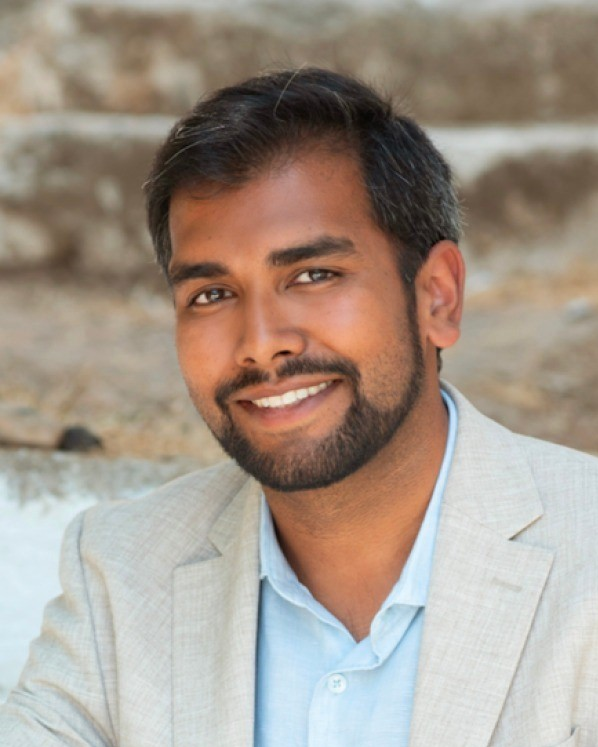
Anand Mangal graduated from Ralston College in June 2023 after working in software for six years. He is currently pursuing an M.A. in Classics at the University of Dallas. Aside from studying languages, he enjoys reading the Inklings, rummaging through used bookstores, and collecting fountain pens.
For further information about applying to the MA in the Humanities at Ralston College, visit here. For those interested in joining Ralston’s growing faculty, details about vacancies may be found here. An Antigone essay on staging Euripides’ Bacchae at Ralston can be read here.
