Isabella Zeltser
In 63 BC, a Hellenistic king on the Black Sea attempted suicide by poison and failed. The closing chapters of Appian’s Mithridatic Wars (111–13) recount how Mithridates VI of Pontus (ruled 120–63 BC), betrayed by his own son, found himself cornered as his forces and allies dissolved after three decades of fighting Rome. Though his daughters had willingly taken the same poison shortly beforehand and died, Mithridates, allegedly unsuccessful in the act, ultimately turned to Bituitus, a loyal retainer, to finish the job with a sword. Appian explains this failure through the king’s long practice of taking drugs as protection against poisoners.
This episode underscores Mithridates’ later reputation as the ruler who had “poison-proofed” himself. It also offers a useful starting point for asking where the historical Mithridates ends and the apocryphal account of daily poison-dosing begins.
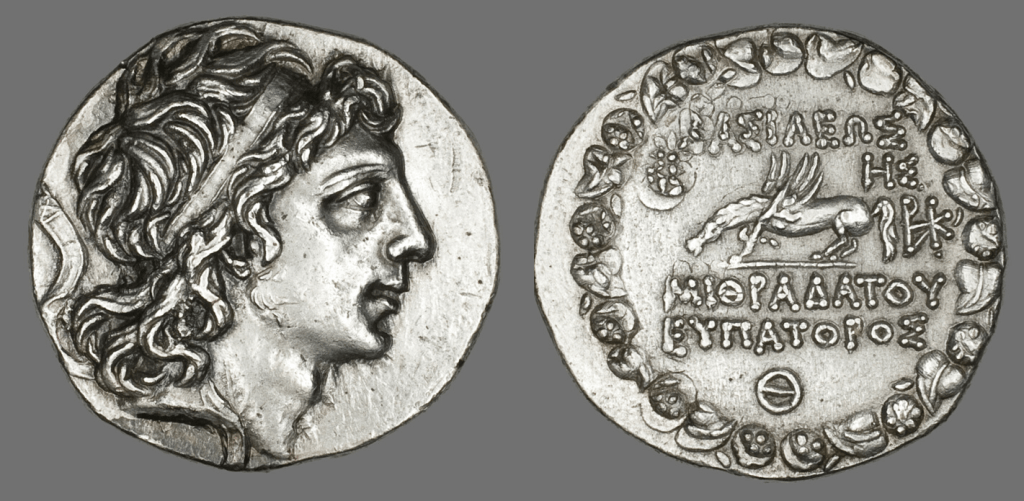
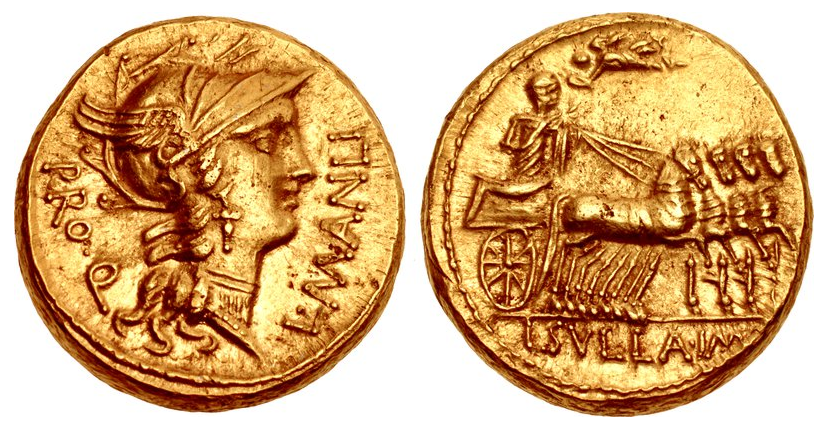
Mithridates VI Eupator (often referred to as “Mithridates the Great”) was an indomitable foe of Rome. In three wars, which spanned 26 years (88–85, 83–81, 74–63 BC), he faced Sulla, Lucullus, and Pompey respectively, fighting from Anatolia to Greece to the Caucasus before his ultimate defeat and death in Panticapaeum in modern-day Crimea.[1] His early gambit, a coordinated order in 88 BC for the Hellenic cities of Asia Minor to kill their roughly 80,000 to 150,000 Roman and Italian residents – an event later known as the “Asiatic Vespers” – served as a strategy to bind those communities to him: once they had participated in the massacre, they were openly, irrevocably, and unforgivably in rebellion against Rome.[2] Appian also reports that Mithridates offered freedom to the slaves who informed on Italian masters, as well as debt cancellation and a half share of the property to those who killed their creditors.[3] Thus, their complicity was clearly engineered.
Appian’s account does not treat Mithridates as just one of Rome’s numerous and ordinary provincial opponents, but as a king whose death closed a long and painful Eastern crisis. In short, he was the late Roman Republic’s most durable enemy and a ruler who benefited from his reputation for invulnerability.
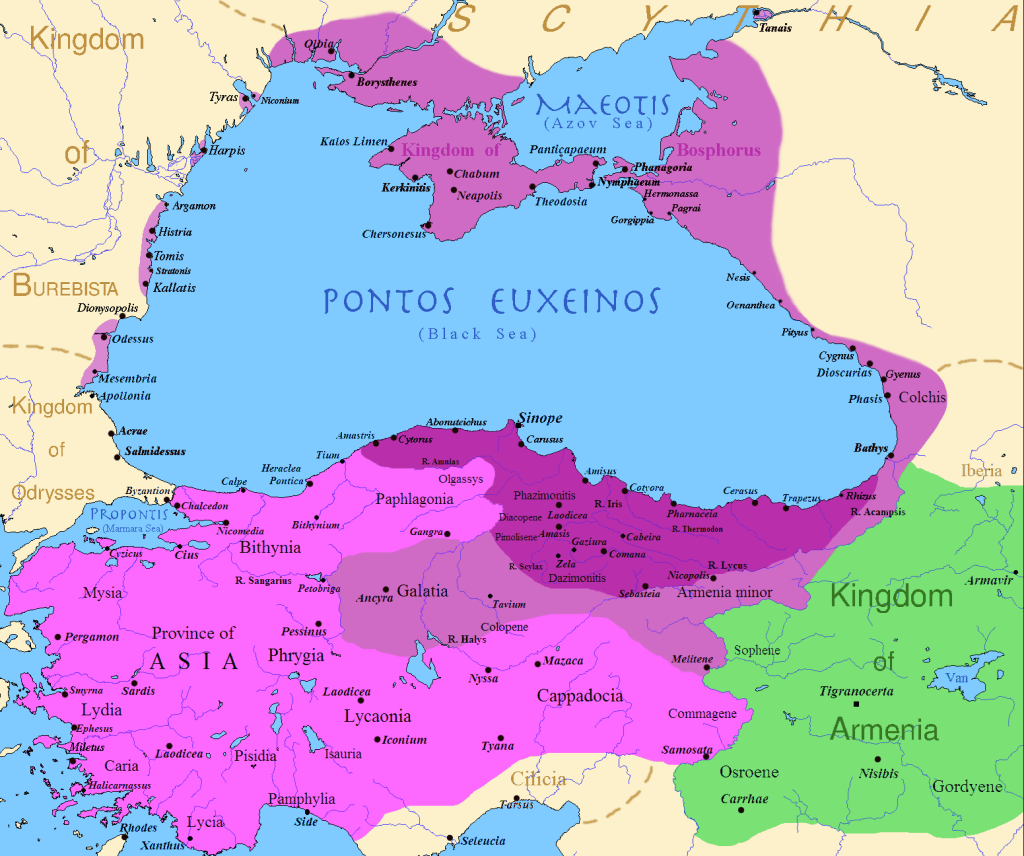
The Roman legacy of Mithridates did not end with his defeat. After describing his failed poisoning, Appian places Mithridates in a grand historical frame, tracing his descent back to Darius the Great and then measures his career through the peoples, regions, and commanders who defined Rome’s Eastern wars: the Macedonians, the Scythians, Greece, Sulla, Lucullus, and Pompey.[4] Furthermore, in Sallust’s Histories, a surviving letter has Mithridates appeal to Arsaces, the Parthian king, urging him to ally against Rome. [5] Mithridates warns Arsaces that Rome does not stop after defeating one king, because every surviving kingdom becomes the next object of Roman suspicion. In this account, the Eastern enemy becomes a mirror for the Roman empire itself. The letter is probably not a neutral transcript of Mithridates’ own words, but that is precisely why it matters.[6]
Sallust uses the voice of Rome’s enemy to say what a Roman narrator could not say as directly: that Rome’s wars were not always defensive or civilizing, but driven by domination. Sallust’s Mithridates is dangerous, but he is also perceptive. He understands Rome as a power that subsumes its rivals, first through conquest and then through the rewriting of their stories. Per Sallust’s pen, Mithridates is menacing not only because he resisted Rome militarily but because he seemed to understand the logic of Roman expansion. Even Pompey’s treatment of Mithridates’ body is telling: the corpse of Rome’s enemy was sent to the Roman commander and honored with a royal burial, possibly to magnify his victory.[7]
The same pattern appears in the fate of Mithridates’ pharmaka (φάρμακα) – an Ancient Greek multifaceted concept describing the intertwining of healing potions and poisons. Roman writers and physicians transformed this into proof of his pernicious Eastern knowledge and, eventually, into the tradition of mithridatium, an antidote recipe preserved by Celsus and later medical writers.[8]
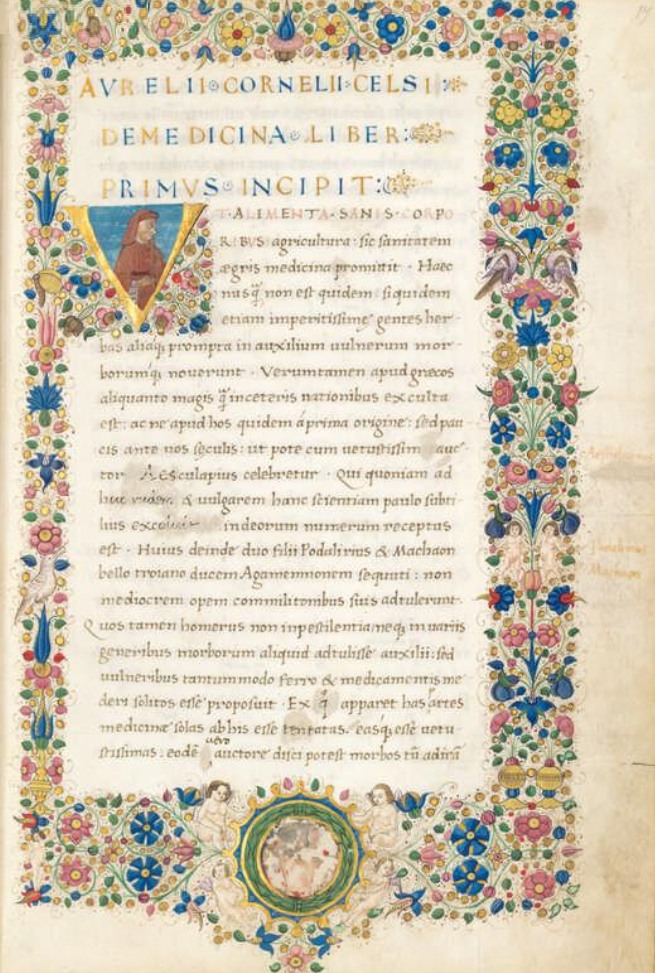
Ancient sources depict Mithridates as a collector of antidotes. Pliny the Elder even notes that among a collection of Mithridates’ documents, Pompey discovered a daily “prophylactic” written in the king’s own hand: two walnuts, two figs, twenty leaves of rue, and a pinch of salt, taken fasting. [9] Pliny also reports that Mithridates himself devised the practice of drinking small doses of poison each day after taking his series of protective remedies so that the toxin might become harmless through sheer habituation. He further credits Mithridates with adding to these concoctions the blood of Pontic ducks, which were believed to feed on poisonous plants without harm.
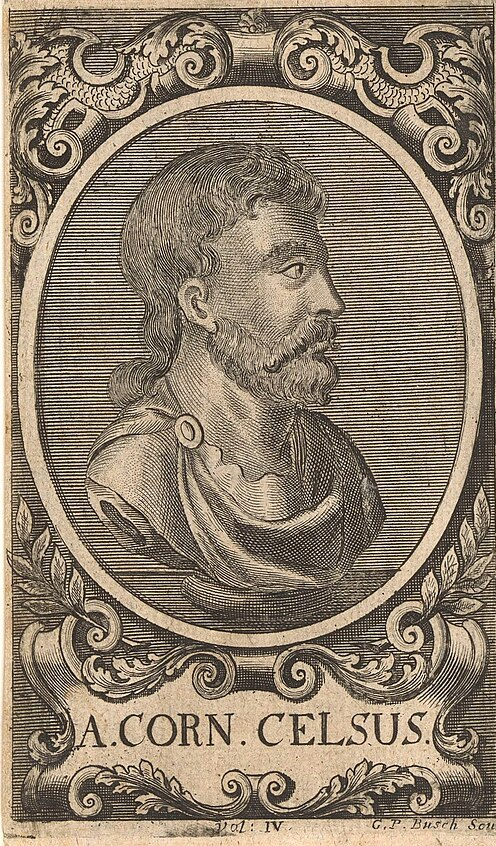
A more complex “universal” antidote (mithridatium) attributed to him reportedly combined up to 54 ingredients and eventually became part of both Roman pharmacology and imperial medical practice.[10] Celsus, writing in the 1st century AD, describes “the most famous antidote of Mithridates (nobilissimum [antidotum] autem est Mithridatis, 5.23.3).” By Galen’s time two centuries later, the term (Μιθραδάτειον) had come to describe a variety of antidotes that were continuously expanded by Roman physicians, cementing its place in Roman medicinal tradition. Galen himself devoted an entire treatise, De antidotis, to such complex remedies. Even centuries later, jars labeled “MITHRIDATUM” could be found in apothecaries across early modern Europe.[11]
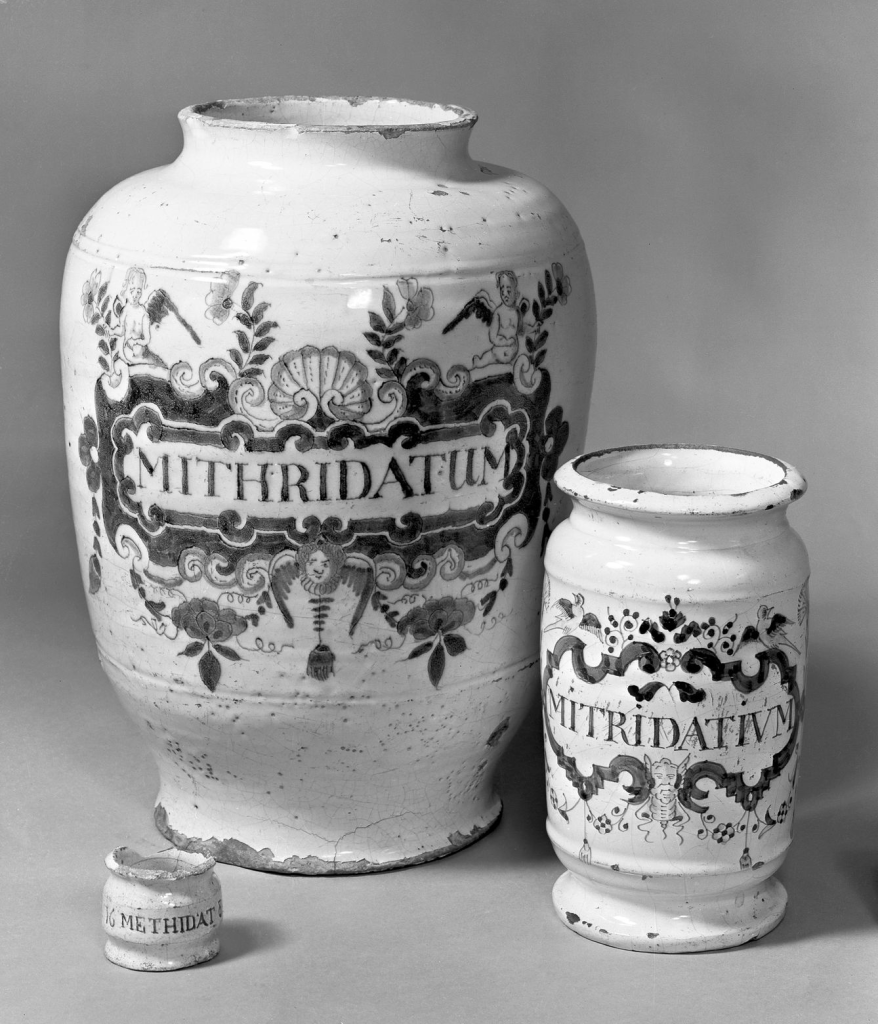
The concept attached to Mithridates’ name has survived, even though the specific preparations have been lost.[12] According to the current edition of Merriam-Webster, mithridatism is “tolerance to a poison acquired by taking gradually increased doses of it.” Yet these traditions raise a scientific question: can any real regimen of antidotes or controlled dosing actually make sense of the story in which the same poison killed Mithridates’ daughters but not him?
To understand what mithridatism could have meant beyond legend, we first have to ask what poisons existed in Mithridates’ world. The natural environment of Pontus offered an extensive concentration of plants and minerals with potent physiological effects. [13] Much of the Anatolian general pharmacopeia is preserved in the De materia medica of the 1st-century AD Cilician physician Dioscorides. Asia Minor’s physicians were familiar with aconite, hemlock, hellebores, mandrake, and colchicum[14], the source of colchicine, an FDA-approved drug.[15] Naturally occurring mineral agents included arsenic sulfide, known to be powerful and dangerous.
The region also had a notorious natural hazard of “mad honey”. Xenophon reports that, near Trapezus (modern Trabzon on the southeastern Black Sea coast) in 401 BC, his soldiers feasted on local honeycombs and collapsed with vomiting, confusion, and near-paralysis before recovering the next day.[16] Roman writers tell similar stories from Pompey’s campaign, describing valleys where the local honey incapacitated entire units.[17] Modern toxicology identifies the culprit as grayanotoxins – neurotoxins produced in the nectar of Rhododendron species that are common in the region.[18]

Pliny and other contemporaries also claimed that the Scythians, living on the northern shores of the Black Sea (some of whom were even part of the Pontic kingdom), used arrow poisons containing viper venom as well as animal and human putrefied matter.[19] Formulas vary by source, and the chemistry is imprecise; however, the reputation of Scythicon (Scythian [poison]) as a poison for missiles is well-documented. The word “toxin” itself reflects this history: the etymology stems from the Greek toxon (bow) → toxikon pharmakon (poison for arrows), possibly in reference to the Scythian practice.[20] Appian even notes that Scythian physicians familiar with such preparations served in Mithridates’ retinue, linking their expertise directly to his court.[21]
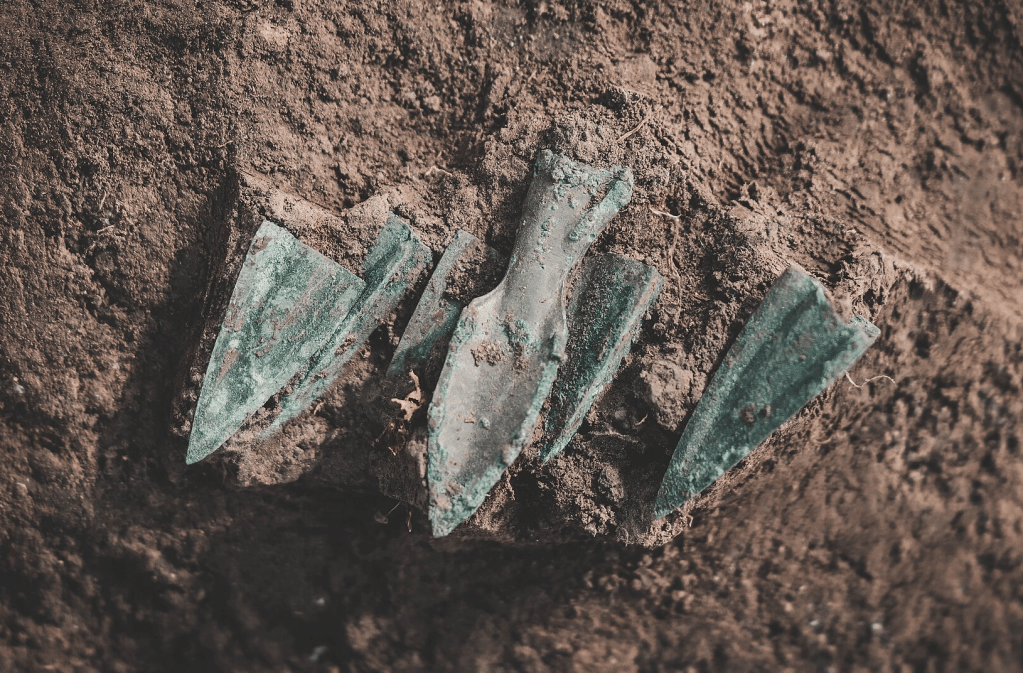
Interestingly, not unlike modern science, ancient pharmacology often treated the distinction between remedy and poison as one of dose rather than substance.[22] For example, mandrake was used as a sedative in small amounts (but dangerous at higher quantities), hellebore as a purgative (lethal in overdose), and arsenic sulfide as a remedy against skin ulcers and warts but toxic if ingested.
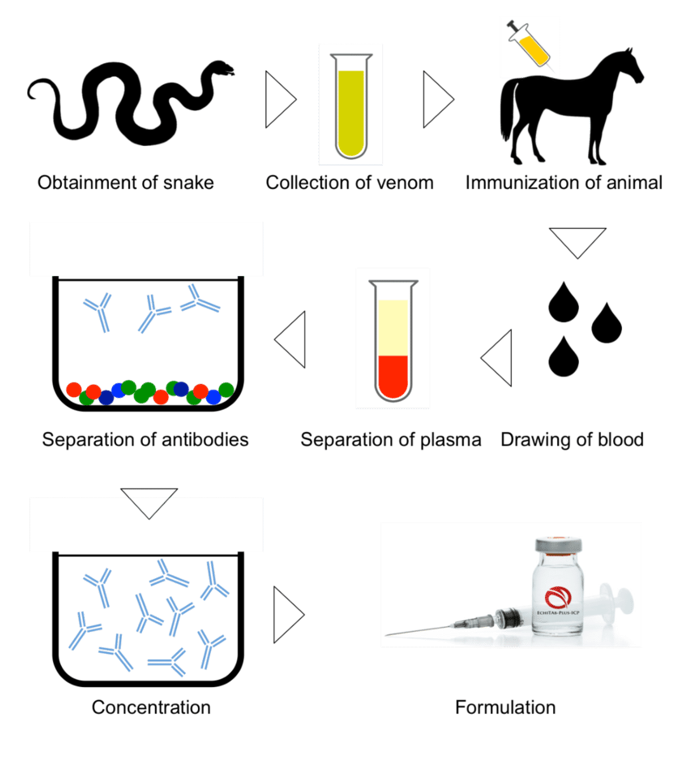
At the heart of this story lies a scientific question: could Mithridates’ daily regimen or other antidotes have rendered him immune to poison? Perhaps so, in extremely limited circumstances, but not in the way the legends imply.[23] Understanding what kinds of substances Mithridates might have encountered requires considering all aforementioned venoms (peptides and complex proteins) and metalloids and plant alkaloids (elements and small molecules).[24] Blocking proteins generally relies on neutralizing antibodies, which is the principle underlying modern antivenoms. If swallowed, rather than being absorbed, these toxins are typically inactivated and digested without eliciting antibodies; thus, they predominantly become dangerous when delivered parenterally (from the Greek para, “outside,” and enteron, “intestine”), for example, by injection or bite.[25]
The notion of gaining protection through repeated “micro-envenomation” (such as skin pricking) in Mithridates’ time is theoretically imaginable but not plausible.[26] Modern antivenom production illustrates why this is the case: these are most commonly manufactured by “hyper-immunizing” horses under strict laboratory controls and then isolating the antibody-rich serum. Even now, translating this process to humans would be both unpredictable and dangerous: parenteral human – unlike horse – micro-dosing with venom strongly skews towards allergy (and even anaphylaxis), rather than immunity, and does not predictably produce neutralizing antibodies.
By contrast, the most iconic and common poisons known in antiquity, such as the plant-derived compounds aconitine, coniine (from hemlock), atropine, and colchicine, as well as mineral toxicants such as arsenic, are ‘small molecules’, which do not reliably elicit an antibody response via microdosing.[27] What one might experience, however, is tolerance, where higher doses are required to consistently experience the same effect.[28] This works through two mechanisms, neither of which provides reliable broad protection: pharmacokinetics, in which the body induces metabolizing enzymes or transporters, so that less of the drug reaches its target, and pharmacodynamics, in which changes at the target receptor blunt the drug’s effect.[29] A classic example of this tolerance occurs with opioids, where repeated use alters receptors and signaling. However, any ‘protection’ gained is limited to that one compound, develops unevenly, and usually comes at the cost of harmful effects, sometimes severe, rather than conferring general immunity.
For metals (lead and mercury), cells do produce buffers that bind ions and mitigate a portion of this damage.[30] Separately, metalloid arsenic offers a clear human model of partial metabolic adaptation.[31] Chronic low exposure can somewhat upregulate inactivation pathways and arsenic-binding proteins so that some people may tolerate higher acute doses; however, they pay for it with cumulative toxicity (nerve damage, skin changes, heart disease, cancers) and can die if the dose is misjudged. [32] Microdosing here is not practical, as arsenic’s toxicity exacts too high a price. People also differ in their capacity to metabolize arsenic because of genetic variation, but chronic exposure remains harmful.
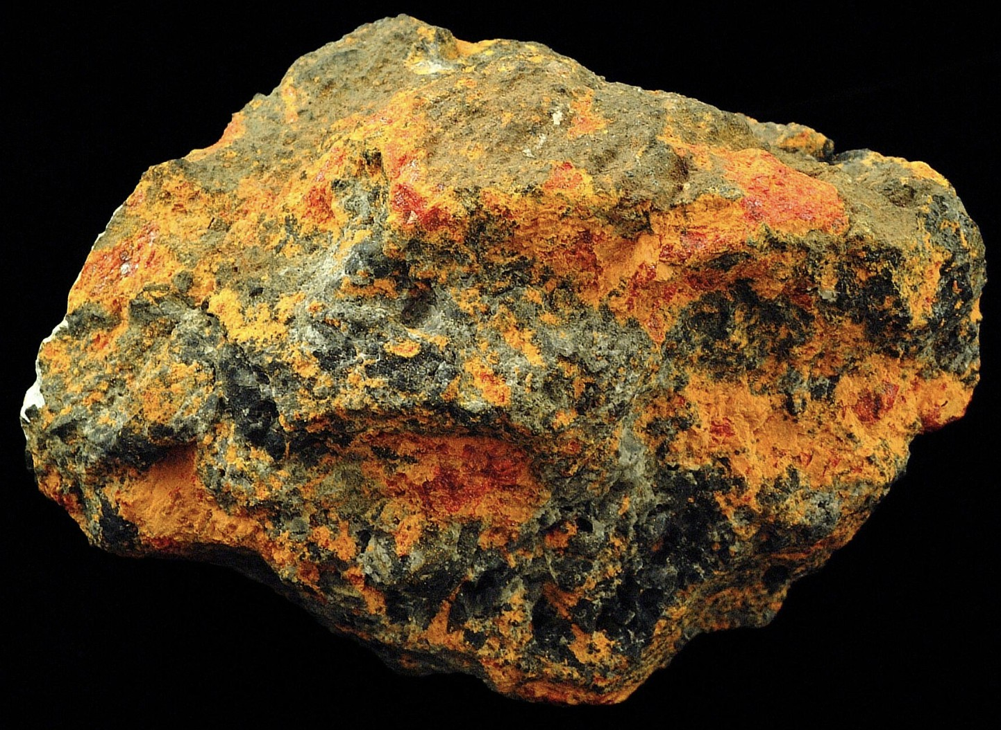
Arsenic also enters the Mithridatic story through later historical reconstruction: historian Adrienne Mayor argues that the poison used against Mithridates’ father, Mithridates V Euergetes, and the poison Mithridates himself allegedly used against enemies may have been arsenic derived from heated realgar, a red arsenic sulfide.[33] If Mithridates ever ingested arsenic, therefore, it would not be absolutely impossible for him to have developed some tolerance to otherwise lethal doses. However, it is still highly unlikely that Mithridates relied on sustained arsenic exposure: he lived to roughly seventy years old, a lifespan hardly consistent with decades of cumulative metalloid toxicity.
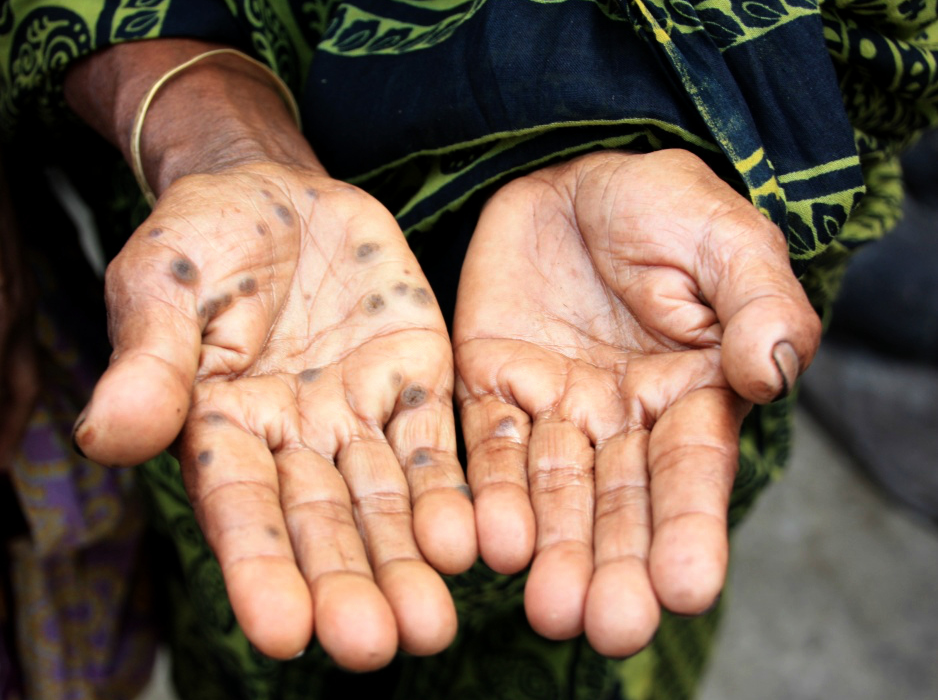
Because arsenic is still so central to the Mithridatic story, modern researchers have asked whether regional genetic variants might have made Pontic populations unusually arsenic‑resistant.[34] There is a textbook case of population-level adaptation to arsenic: in parts of the Andes, millennia-long exposure to arsenic-rich groundwater has driven a selection for variants of the AS3MT gene with more efficient arsenic metabolism. Individuals with ‘protective’ mutations suffer fewer ill effects at a given dose.[35] However, no such mutations have been observed on a population-wide scale in Anatolia, thus giving us no evidence for the theory’s applicability Mithridates.[36]
Plant-derived poisons offer only a slightly kinder picture. Many of the agents in the Anatolian pharmacopeia – aconite, hemlock (the agent of Socrates’ execution), hellebore, mandrake, and colchicum – are alkaloids or other small molecules, and repeat exposure may alter the body’s response to some of them. [37] But this ‘tolerance’ is likewise compound-specific, narrow and costly, bringing sedation, dependence, and organ damage, and it does not prevent overdose once a certain threshold is crossed.[38] For more potent neurotoxins such as aconitine or coniine, or cell division inhibitors such as colchicine, therapeutic windows are so tight that any attempt to ‘train’ the body by microdosing risks multi-organ failure long before any meaningful protection could even theoretically be achieved.
In Mithridates’ case, it is therefore conceivable that long-term exposure to low doses of particular plant compounds in his concoctions might have nudged his personal tolerance to those specific agents. However, such adaptations would have been limited, toxin-specific, and – similarly to arsenic – physiologically ‘expensive’.[39] They cannot realistically account for the reliable immunity to “poison” of the sort implied by Appian’s legend of his final day. What, then, could have been true in the Mithridatic story of “poison-proofing”? One possibility is simply a daily tonic of aromatics, resins, and honey, which might have improved digestion and modestly reduced anxiety. [40] Roman physicians subsequently systematized similar compound remedies as mithridatum and, later, theriac (a particularly influential formulation of which was produced by Nero’s physician Andromachus).[41] Both preparations became durably associated with elite and imperial medicine.[42]
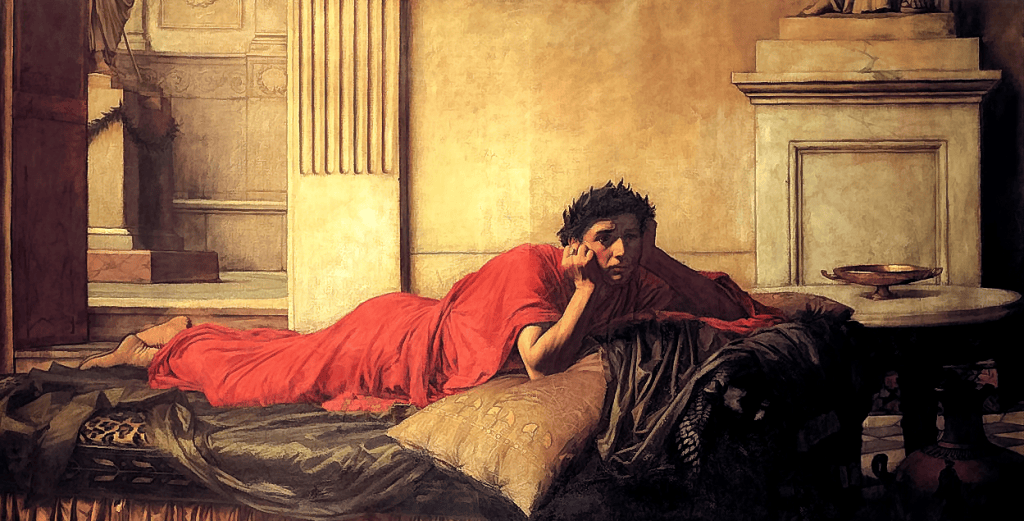
Targeted habituation to a single toxin such as arsenic could theoretically mitigate the effects of a later episode of acute poisoning (although no human studies confirming this theory exist), but it would have been difficult and dangerous, as discussed above. It is possible that a court laboratory might have experimented with post-exposure remedies, such as adsorbents or purgatives, testing them on animals or captive humans and potentially improving outcomes after known exposures, though without offering protection against unknown ones.[43]
Another important factor could have been expertise: deep familiarity with Pontic pharmaka – poisonous honey, dangerous plants, and mineral toxins – could have helped Mithridates avoid certain exposures or respond more intelligently to known ones. Taken together, these possibilities suggest not a king magically immune to all poisons, but a ruler with somewhat better protection, remedies, and local knowledge than his enemies. A simpler possibility does not require acquired resistance at all. Appian describes Mithridates’ daughters as korai (maidens) and gives no details that would allow comparison of their age, body size, health, or amount ingested with Mithridates himself. The same poison may therefore have affected them differently for ordinary toxicological reasons rather than because Mithridates had acquired true immunity.[44]
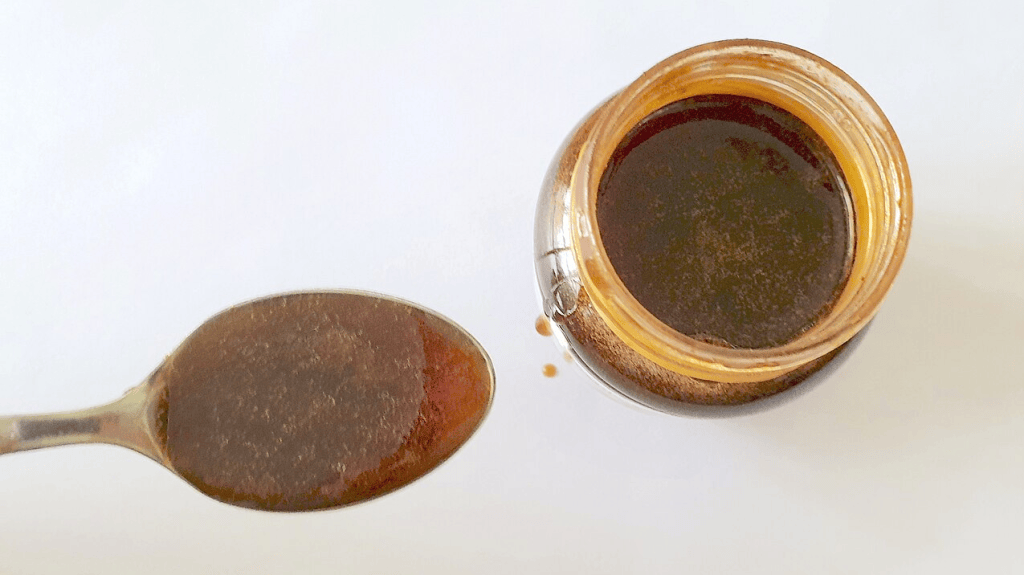
Yet the Roman legacy of Mithridates’ pharmaka did not depend on whether the claim of poison immunity was biologically credible. It depended on what Rome did with the knowledge after his defeat. Pliny’s writing illuminates this: according to him, Mithridates left behind a private archive of medical notes hidden among his royal possessions.[45] After Pompey took control of the king’s property, he ordered his freedman Lenaeus to translate these materials into Latin. Pliny presents this not as a curiosity but as one of the achievements of Rome’s victory. Pompey, he claims, served human welfare no less than the Roman state by making Mithridates’ medical knowledge accessible. In this sense, Rome not only defeated Mithridates, but it also subsumed him: Sallust’s Mithridates, warning Arsaces, would hardly have been surprised.[46]
The same poisons and antidotes that had helped make Mithridates frightening were recast as useful knowledge, and the king who had resisted Roman expansion became part of the empire’s intellectual inheritance. By the time Celsus recorded the recipe for Mithridates’ antidote, the story had already changed shape: it was no longer only the private regimen of a Pontic monarch, but a Roman medical formula preserved, copied, and attributed to the very enemy Rome had destroyed.[47]
What larger purpose, then, did the myth of poison-proofing serve for Mithridates? For the king, the narrative of mithridatism served as a weapon in its own right, casting him as the master of pharmaka. In a time and place where poisoning was a (commonly alleged) tool of court intrigue, a rumor that the king could not be poisoned could very well deter conspirators and demoralize his enemies. Even the death scene immortalized by Appian, with its failed suicide by poison, strengthens the myth. In this sense, mithridatism functioned extremely well as propaganda even if it did not necessarily work as pharmacology: not a failure of evidence but the success of Mithridates’ brand.
After his defeat, however, the same myth served a different purpose in Roman hands. It no longer worked primarily to protect Mithridates’ power; instead, it helped Roman writers define the kind of enemy Rome had overcome. In Roman legal and rhetorical culture, poison was treated as a particularly subversive and heinous form of violence.[48] Without modern toxicological testing, Roman accusations and investigations depended heavily on inference and circumstance. Sulla’s Lex Cornelia de sicariis et veneficis of 81 BC even placed poisoners in the same legal framework as assassins, suggesting that Rome understood poisoning as a threat to both private trust and public order.[49]
Roman history already contained poisoning panics, including Livy’s account of the 331 BC investigation in which elite women were accused of brewing deadly medicamenta during a plague and 170 matrons were condemned.[50] Pliny’s language reveals the same unease. In the very book where he praises herbal knowledge, he makes special note of veneficia (poison-magic), Colchis, Medea, and Circe, treating plants as a field where medicine, magic, and danger repeatedly converge.[51] This legal and literary background helps explain why poison carried such force in Roman representations of Mithridates: it had strong connotations of secrecy, suspicion, and hidden intent.[52]
Against that background, Mithridates’ pharmaka was politically useful because it made him seem especially difficult for Rome to read or control. He was not merely a king with remedies, but a ruler whose body had supposedly been trained against the most secret form of attack and whose court could turn the Pontic landscape itself – honey, herbs, ducks, minerals, and Scythian arrows – into a source of power. This also explains why Appian’s death scene is so important to Mithridates’ Roman reception. Poison, the weapon associated with Eastern secrecy and court intrigue, fails; the sword, the weapon of Roman open force, finally succeeds.
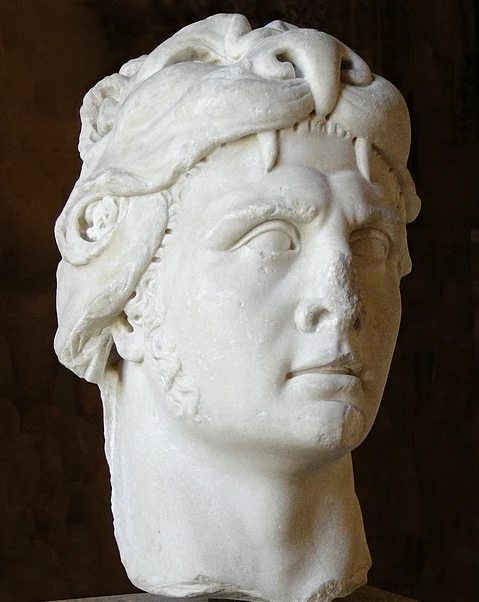
The story most probably allowed Roman readers to imagine that Mithridates’ hidden knowledge was real and menacing, but also that it had reassuring limits. He could be represented as resistant to poison, but not to the political collapse that left him abandoned by his army, betrayed by his son, and dependent on a retainer’s blade. In that sense, Appian’s account helps turn Mithridates’ death into a Roman explanation of his career: a dangerous Eastern king whose mastery of poison made him formidable, but whose defeat proved that even this kind of knowledge could ultimately be absorbed into Rome’s victory.
Mithridates almost certainly practised something called mithridatism. It may have offered marginal protection against a very limited list of substances. However, the biological premise of a daily, universal antidote is not supported by modern science. Where he ultimately succeeded was not in inventing immunity to poisons but rather a legend persuasive enough to be bottled as medicine for two millennia. Rome appropriated that story, physicians systematized it, and apothecaries sold it. In that sense, mithridatium worked perfectly.

Isabella Zeltser is a senior at Hackley School in Tarrytown, New York, with interests in Latin literature, classical myth, and classical reception. She founded FindClassics, an online hub that compiles Classics summer programs, competitions, scholarships, and other beginner resources for middle and high school students, which aims to broaden access to Classics education and funding opportunities outside established academic networks. She has also interned with the Paideia Institute’s Elementa team and co-founded a branch of its Aequora program, introducing younger students to Latin through mythology and games. Beyond Classics, she is a competitive dancer and enjoys mentoring younger students.
Further Reading
For an engaging modern account of Mithridates’ experiments with poisons and antidotes, see Adrienne Mayor, “Mithridates of Pontus and his universal antidote,” in Toxicology in Antiquity (2nd ed., Academic Press, London, 2019) 161–74.
Laurence M.V. Totelin’s “Mithridates’ antidote – a pharmacological ghost,” Early Science and Medicine 9 (2004) 1–19, explains why it is impossible to recover one authentic original recipe for mithridatium.
For the wider history of Mithridates and his wars against Rome, a useful modern study is Duane W. Roller’s Empire of the Black Sea: The Rise and Fall of the Mithridatic World (Oxford UP, 2020).
Readers interested in the later history of complex antidotes may enjoy Nils-Otto Ahnfelt, Hjalmar Fors & Karin Wendin, “Making and taking theriac,” BJHS Themes 7 (2022) 39–62.
The principal ancient account of Mithridates’ death and supposed resistance to poison is Appian’s Mithridatic Wars, especially sections 88 and 111–13. Pliny the Elder’s Natural History 23.149, 25.5–7, and 29.24–25 preserve the most important ancient evidence for his remedies and the later antidote tradition.

.jpg)
Notes
| ⇧1 | Appian, Mithridatic Wars, 22–3. |
|---|---|
| ⇧2 | See further Memnon 31, Plutarch, Sulla, 24.4, and Duane W. Roller, Empire of the Black Sea: The Rise and Fall of the Mithridatic World (Oxford UP, 2020) 148–9. Roller argues that Pontus was a powerful and enduring Hellenistic kingdom with its own political and cultural history rather than merely a peripheral enemy encountered during Rome’s eastward expansion. |
| ⇧3 | Ibid., 22–3. |
| ⇧4 | Ibid., 112. |
| ⇧5 | Sallust, Histories 4.67 Ramsey (=4.69 Maurenbrecher), especially §§5–17. |
| ⇧6 | Eric Adler, “Who’s Anti-Roman? Sallust and Pompeius Trogus on Mithridates,” Classical Journal 101.4 (2006) 383–407, available here. |
| ⇧7 | Appian, Mithridatic Wars, 113. |
| ⇧8 | Celsus, De medicina, 5.23.3, Galen, De antidotis, 1. |
| ⇧9 | Pliny the Elder, Natural History 23.149, 25.5–7, and 29.24–5. |
| ⇧10 | Galen, ibid. |
| ⇧11 | See for instance, Wellcome Collection, “Three Drug Jars for Mithridatum,” reference WT/D/1/20/1/179/55. |
| ⇧12 | Laurence M. V. Totelin, “Mithradates’ Antidote – A pharmacological ghost,” Early Science and Medicine 9.1 (2004) 1–19. Totelin argues that no original recipe for Mithridatium can be recovered and that Roman writers instead reshaped Mithridates’ legend and name to create a prestigious and distinctly Roman cure. |
| ⇧13 | Adrienne Mayor, “Mithridates of Pontus and his universal antidote,” in P. Wexler (ed.), Toxicology in Antiquity (2nd ed., Academic Press, London, 2019) 161–74. Mayor argues that Mithridates systematically studied the poisons and antidotes available around the Black Sea and suggests that arsenic made from realgar may have played a role in his family’s poisonings, his experiments, and the later story of his resistance to poison. |
| ⇧14 | See Dioscorides, De materia medica, 2–5, who covers aconite, hemlock, hellebore, mandrake, colchicum, arsenikon, and sandarach. |
| ⇧15 | U.S. Food and Drug Administration, Colcrys (colchicine), marketing approval July 29, 2009; available here. |
| ⇧16 | Xenophon, Anabasis, 4.8.20–1. |
| ⇧17 | Strabo, Geography, 12.3.18. |
| ⇧18 | Suze A. Jansen et al., “Grayanotoxin poisoning: ‘Mad Honey Disease’ and beyond,” Cardiovascular Toxicology 12.3 (2012) 208–15, available here. |
| ⇧19 | Pliny the Elder, Natural History, 11.279, and Ps.-Aristotle, On marvellous things heard, 141. |
| ⇧20 | T. E. Tzimas et al., “The ancient Greek roots of the term toxic,” Toxicology Reports 8 (2021) 977–9, available here. See also the LSJ entries for τοξικόν and τόξον. |
| ⇧21 | Appian, Mithridatic Wars, 88. |
| ⇧22 | Pliny the Elder, Natural History, 25.150. |
| ⇧23 | See further: World Health Organization, Guidelines for the Production, Control and Regulation of Snake Antivenom Immunoglobulins, WHO Technical Report Series 1004, Annex 5 (Geneva: WHO, 2017), available here; Emily O. Dumas & Gary M. Pollack, “Opioid tolerance development: a pharmacokinetic/pharmacodynamic perspective,” AAPS Journal 10.4 (2008) 537–51; available here; Carina M. Schlebusch et al., “Human adaptation to arsenic-rich environments,” Molecular Biology and Evolution 32.6 (2015) 1544–5, available here. |
| ⇧24, ⇧32 | World Health Organization, “Arsenic,” fact sheet, updated December 7, 2022, available here. |
| ⇧25 | Steven A. Seifert, James O. Armitage, & Elda E. Sanchez, “Snake envenomation,” New England Journal of Medicine 386.1 (2022) 68–78, available here. |
| ⇧26 | Jacob Glanville et al., “Snake venom protection by a cocktail of Varespladib and Broadly Neutralizing Human Antibodies,” Cell 188.12 (2025) 3117–34.e11, available here. |
| ⇧27 | Kenneth Murphy & Casey Weaver, Janeway’s Immunobiology (9th ed., Garland Science, New York, NY, 2017) Appendix I, “Haptens.” The relevant discussion explains that many small molecules cannot ordinarily provoke an antibody response by themselves, although they may become immunogenic when attached to a larger carrier protein. |
| ⇧28 | Emily O. Dumas & Gary M. Pollack, “Opioid tolerance development: a pharmacokinetic/pharmacodynamic perspective,” AAPS Journal 10.4 (2008) 537–51, available here. |
| ⇧29 | Jukka Hakkola et al., “Inhibition and onduction of CYP enzymes in humans: an update,” Archives of Toxicology 94.11 (2020) 3671–3722, available here. |
| ⇧30 | Daisy L. Wong, Maureen E. Merrifield-MacRae & Martin J. Stillman, “Lead(II) binding in metallothioneins,” in A. Sigel, H. Sigel & K.O. Sigel (edd.), Lead: Its Effects on Environment and Health (De Gruyter, Berlin, 2017) 241–70. The authors explain how lead enters, disrupts, and damages physiologically important protein systems. |
| ⇧31 | Schlesbuch et al. (as n.23), and Ray Antonelli et al., “AS3MT, GSTO, and PNP polymorphisms: impact on arsenic methylation and implications for disease susceptibility,” Environmental Research 132 (2014) 156–67. The review finds that differences in one gene, AS3MT, can affect how well a person’s body processes arsenic and may influence their risk of arsenic-related illness. |
| ⇧33 | Mayor (as n.13). |
| ⇧34 | Schlesbuch et al. (as n.23). |
| ⇧35 | Antonelli et al. (as n.31). |
| ⇧36 | Usama Alshana et al., “Evaluation of low-to-moderate arsenic exposure, metabolism and skin lesions in a Turkish rural population exposed through drinking water,” Chemosphere 304 (2022) 135277. This study concerns a modern Central Anatolian population; it does not test ancient Pontic ancestry; available here. |
| ⇧37 | James H. Diaz, “Poisoning by herbs and plants: rapid toxidromic classification and diagnosis,” Wilderness & Environmental Medicine 27.1 (2016) 136–52, available here. |
| ⇧38 | Y. T. Tai et al., “Cardiotoxicity after accidental herb-induced aconite poisoning,” Lancet 340.8830 (1992) 1254–6. The authors conclude that aconite-containing herbal preparations have an exceptionally narrow safety margin and require strict surveillance because they can cause fatal cardiac arrhythmias. See also Yaron Finkelstein et al., “Colchicine poisoning: the dark side of an ancient drug,” Clinical Toxicology 48.5 (2010) 407–14. The review argues that colchicine’s narrow and unpredictable therapeutic range makes both accidental and deliberate poisoning especially dangerous, with severe cases progressing rapidly from gastrointestinal illness to multiorgan failure and death. |
| ⇧39 | Diaz (as n.37). |
| ⇧40 | Nils-Otto Ahnfelt, Hjalmar Fors & Karin Wendin, “Making and taking theriac: an experimental and sensory approach to the history of medicine,” BJHS Themes 7 (2022) 39–62, available here. |
| ⇧41 | Galen, De antidotis, 1. |
| ⇧42 | See n.8. |
| ⇧43 | Alisha Rankin, The Poison Trials: Wonder Drugs, Experiment, and the Battle for Authority in Renaissance Science (Univ. of Chicago Press, Chicago, IL, 2021) 23–50. Rankin shows that antidotes were sometimes tested on condemned people in the Renaissance, providing a later historical parallel for the possibility that rulers or physicians might experiment with poisons and remedies on vulnerable subjects. |
| ⇧44 | Appian, Mithridatic Wars, 111. |
| ⇧45 | Pliny the Elder, Natural History, 25.5–7. |
| ⇧46 | See n.5. |
| ⇧47 | See n.12. |
| ⇧48 | Nephele Papakonstantinou, “Roman declamation, Roman law, and ancient legal medicine: the case of veneficium,” Rivista di Diritto Romano 23 (2023) 29–72, available here. |
| ⇧49 | Digest 48.8.3 pr.–3 and Cicero, Pro Cluentio, 148. |
| ⇧50 | See Livy, 8.18. |
| ⇧51 | Pliny the Elder, Natural History, 25.10–11. |
| ⇧52 | See Rankin (as n.43). |