Patrick J. Deneen
On July 4, 2026, Americans celebrated the 250th anniversary of the Declaration of Independence. Two weeks later, droves of moviegoers were immersed in a cinematic rendition of one of the foundational stories of the Western tradition, the Odyssey. That these two events—the observance of the American semiquincentennial and the premiere of a silver-screen version of Homer’s great epic—should follow one another in such short order was, of course, a coincidence. Yet the juxtaposition of these disparate events gives us an opportunity to note and explore the deep connections between them.
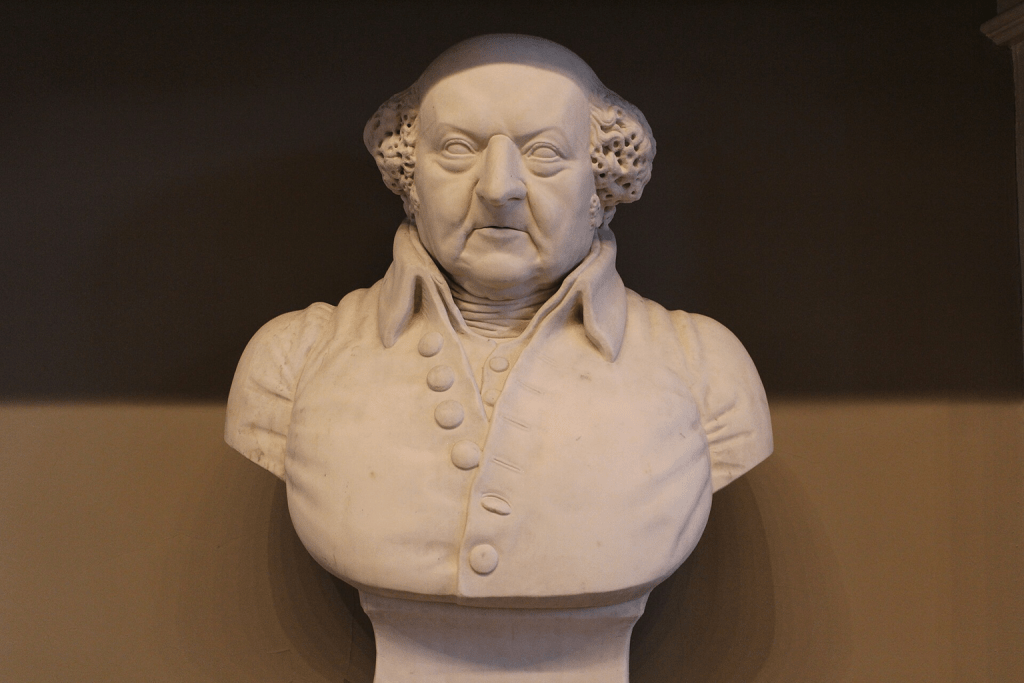
Let us begin by recalling the origins of the Declaration. That the celebration of Independence Day—in 2026 as in years previous—would be marked by fireworks, parades, picnics, and family and communal gatherings was predicted by John Adams, even if he was off by two days in marking the date:
The Second Day of July 1776, will be the most memorable Epoch in the History of America. I am apt to believe that it will be celebrated, by succeeding Generations, as the great anniversary Festival. It ought to be commemorated, as the Day of Deliverance by solemn Acts of Devotion to God Almighty. It ought to be solemnized with Pomp and Parade, with Shews, Games, Sports, Guns, Bells, Bonfires and Illuminations from one End of this Continent to the other from this Time forward forever more.[1]
In addition to many “shews, games, sports, guns, bells, bonfires, and illuminations,” the 250th commemoration of Independence Day provided an apposite occasion for reflection on the meaning and legacy of the American Founding, especially the philosophy expressed in the Declaration. That philosophy, it has been widely agreed and celebrated, was generally liberal and modeled in broad strokes on the political philosophy articulated by the English philosopher John Locke in his Second Treatise of Government (1690).
In that work, Locke rejected the longstanding form of political rule that had predominated in Europe throughout much of its history, in which rulers were designated based upon inherited status. According to Locke, such rule was illegitimate because it circumvented the consent of the governed. It therefore lent itself to various forms of self-serving despotism perpetrated by a perpetual aristocracy. Locke argued that genuine political legitimacy could only be achieved when people consented to a government that existed solely to secure individual natural rights. Such rights, he believed, preexisted politics. They are part of the natural inheritance of human beings, possessions with which they are “endowed by their Creator.” While Locke identified these rights repeatedly as “life, liberty, and estate [property],” the authors of the Declaration would famously alter the third term in that trinity to read “the pursuit of happiness.”
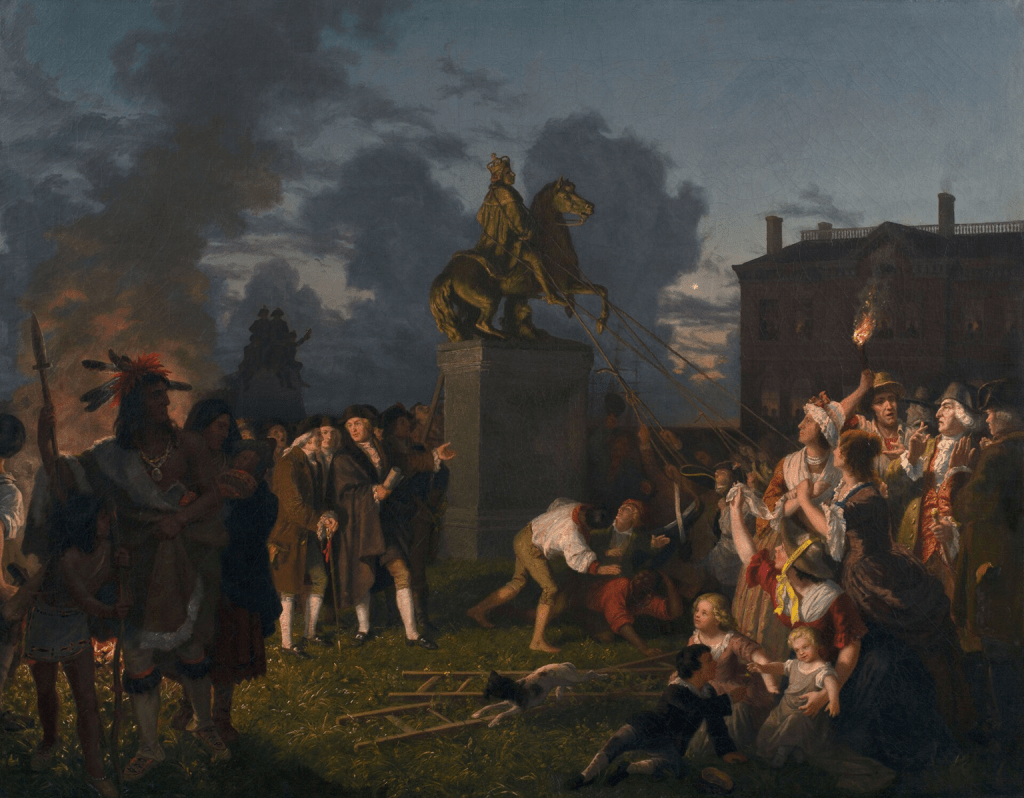
Philosophical reflections on the Founding proffered during the semiquincentennial year have tended to focus on these three rights—life, liberty, and the pursuit of happiness—and the liberal ideal of government that their protection entails. Few commentators have focused on another, unenumerated right lurking in the background of that ideal—a right that, arguably, is both the most “American” of rights as well as the most vexed among those natural rights recognized at the time of the Founding: the right of free movement. Indeed, it was because of his robust defense of this implied right that Thomas Jefferson was selected as the primary author of the Declaration in the first place.
On June 11, 1776, a “Committee of Five”—consisting of Jefferson, Adams, Benjamin Franklin, Robert R. Livingston, and Roger Sherman—was appointed by the Continental Congress to compose a Declaration of Independence. The duty of composing the first draft was given to Jefferson at the strong insistence of the respected senior statesman Adams. Why? That story has not often been told.
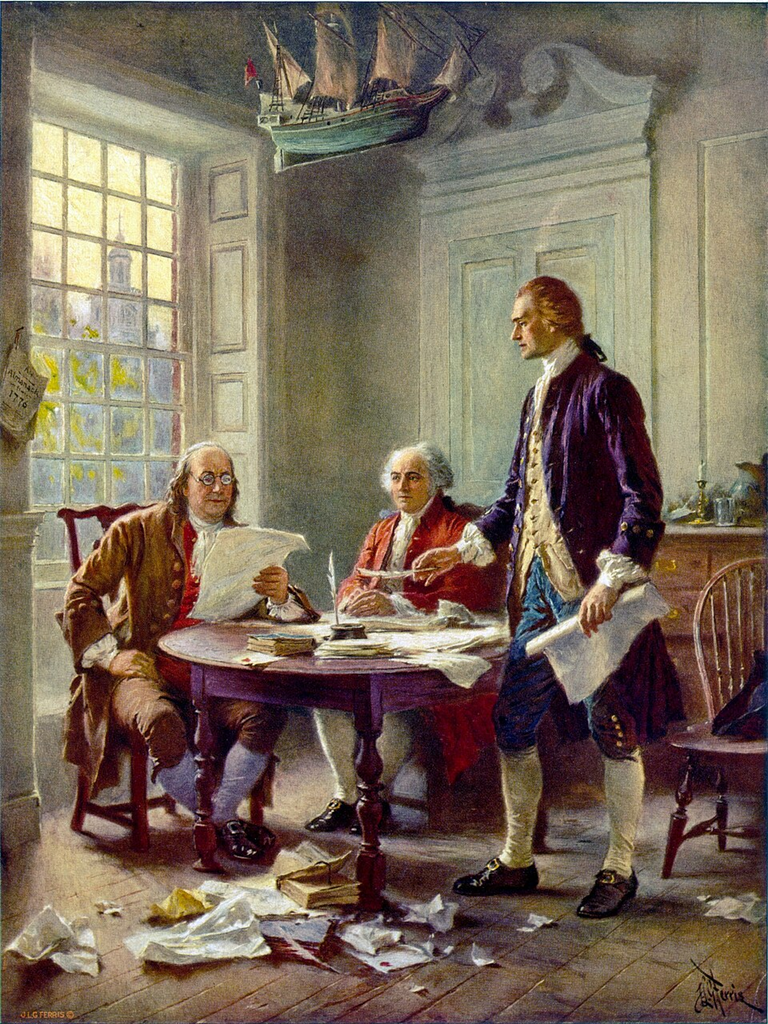
In the years preceding the decision to break with Great Britain, Jefferson had become well known throughout the colonies for his outspoken and radical views, his depth of learning, and his powerful rhetorical gifts—abilities noteworthy even among a generation of “demigods”. In particular, he had become celebrated throughout the colonies for the bold directness of his 1774 pamphlet A Summary View of the Rights of British America. Like the Declaration he would draft two years later, this earlier work argued that there existed inviolable political liberties based on a firm foundation of philosophical and theological principles, including the claim that “the God who gave us life, gave us liberty at the same time.”
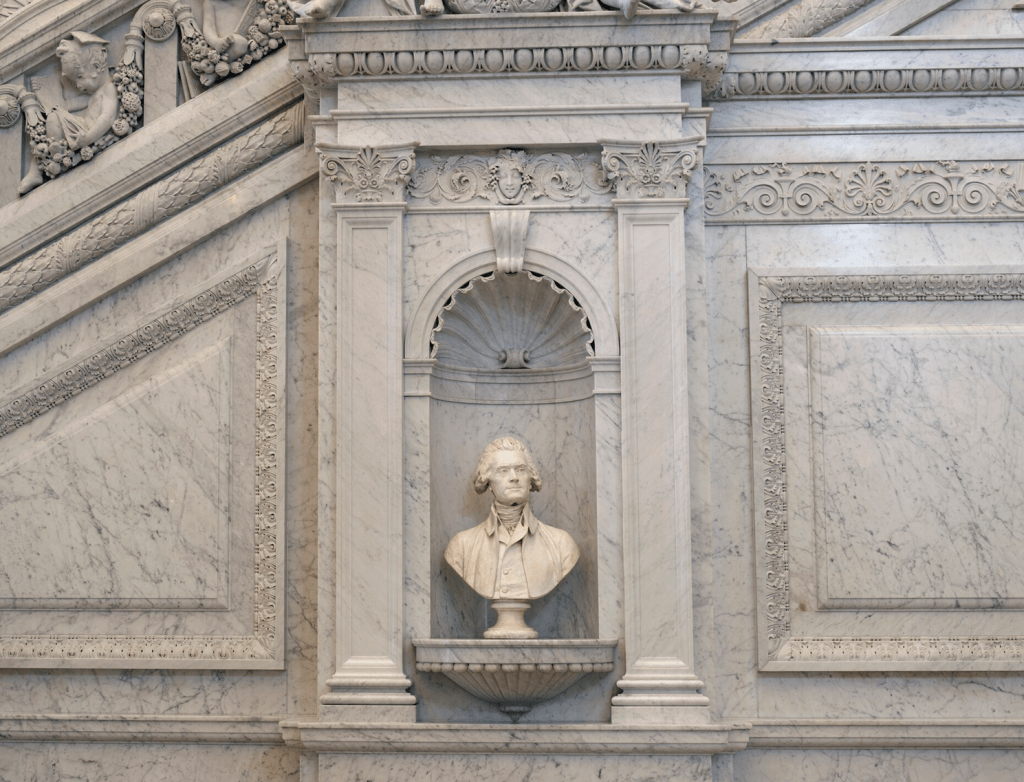
Along with these two of Locke’s three enumerated rights—life and liberty—Jefferson named an additional right in his 1774 document, a right that was implied but not named: the right to free movement. Jefferson focused on this right at length in order to persuade the British Crown of the grounds by which the new civilization in America should be considered fully its own distinct nation, possessed and governed by those who had emigrated to its shores. In this respect, Jefferson claimed, the Americans were no different than the British, who by this point unquestionably viewed the British Isles as their own abode—even though, long ago, their forbears had emigrated to its shores from elsewhere. Jefferson sought to remind King George III of this simple fact:
That our ancestors, before their emigration to America, were the free inhabitants of the British dominions in Europe, and possessed a right which nature has given to all men, of departing from the country in which chance, not choice, has placed them, of going in quest of new habitations, and of there establishing new societies, under such laws and regulations as to them shall seem most likely to promote public happiness. That their Saxon ancestors had, under this universal law, in like manner left their native wilds and woods in the north of Europe, had possessed themselves of the island of Britain, then less charged with inhabitants, and had established there that system of laws which has so long been the glory and protection of that country.[2]
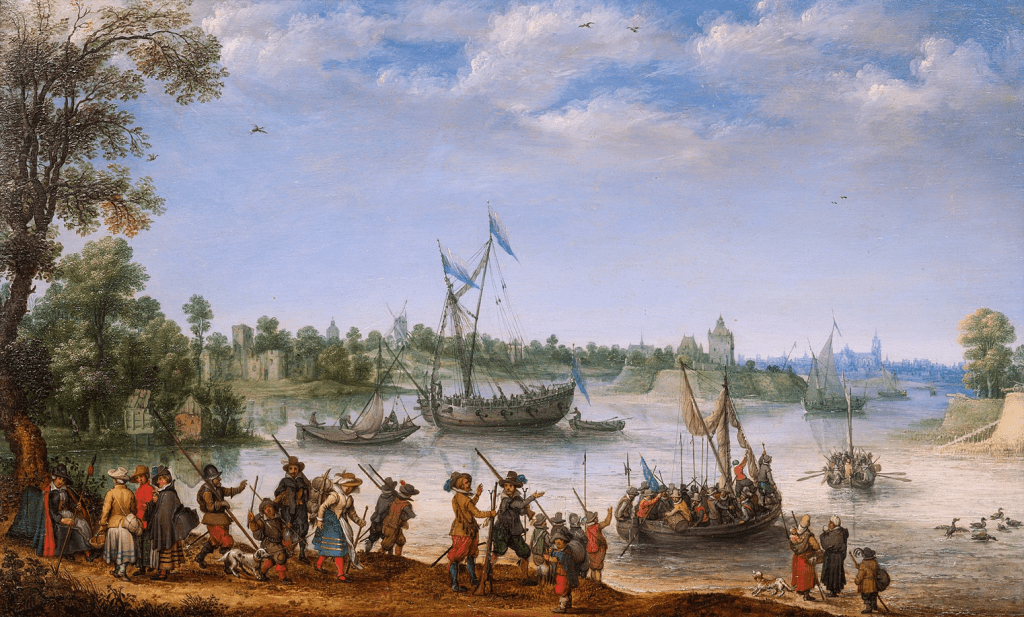
Jefferson’s claim was not only ingenious; it was empirically indisputable. His appeal to a “right possessed of all men” and a “universal law” underscored the basic fact that humans are a migratory species. We may have been settled in a particular place over a long period of time, but lying in the oft-forgotten historical background is the fact that our ancestors at some point arrived from somewhere else. Only over time did they come to understand this place where we, their descendants, live as their “own” historic land.
In America’s case, the European settlement of the New World had not yet become shrouded in the obscuring mists of time. Indeed, in 1774, the official political founding of the new nation still lay two years in the future, to be announced in the flowing script of a document that emanated from the nib of Jefferson’s pen. For the Americans of the Founders’ generation, the sheer fact that America was a nation born of a mobile people was obvious. While Europeans might believe their character arose from a settled condition, Jefferson’s “warm-up” act underscored how American self-understanding was bound up with the practices of a pioneering people. The invocation of a right to get out, to seek out new lands, to found a new nation on a sparsely settled continent, even, to quote a famous fictional American, “to boldly go where no man has gone before,” was therefore already highlighted in one of the incipient nation’s first documents as a basic and inextinguishable feature of the American character.
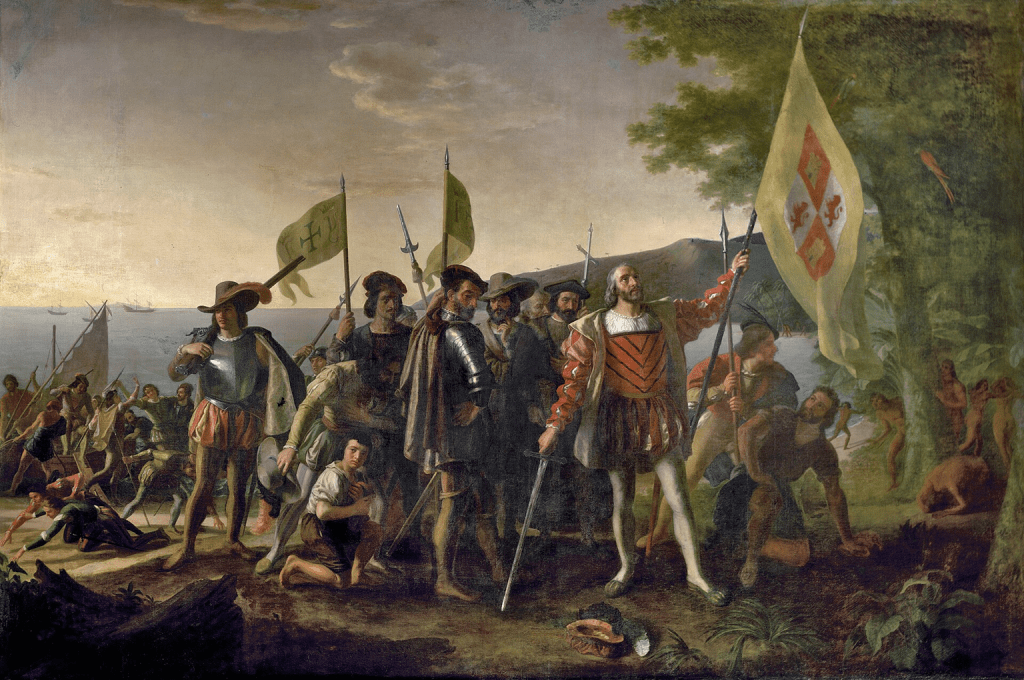
Nor was this self-understanding of Americans as wandering seekers a novel view that arose with the founding generation. Rather, it was present from the first moments that Europeans began their world-altering journeys to the west. It was a prominent self-conception among those who, centuries earlier, described the new lands they had found and explored amid their search for a faster route to the Indies. When explorers like Christopher Columbus and Amerigo Vespucci, fueled by religious fervor and dreams of lucre, set out for unknown destinations, they and many of their contemporaries appealed to various archetypes and paradigms by which to explain and comprehend these new ventures.
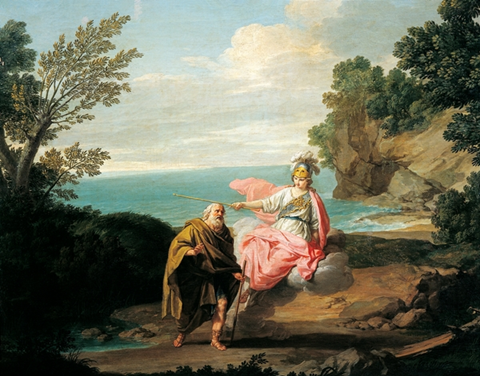
Tellingly, the figure that seemed to come almost automatically to their minds was that first and greatest wanderer of the Western tradition, Odysseus, he who traveled the known and unknown world for ten years before returning to his home of Ithaca after the conclusion of a war he helped to win.
A contemporary Italian scholar named Piero Boitani has written brilliantly and insightfully about the connection between Odysseus—or Ulysses, in Latin—and the European discoverers of the New World. The key figure in understanding this connection, he argues, is not the Ulysses of Homer, but the Ulysses of Dante, particularly as he is presented in Canto XXVI of the Inferno.
At that point in the great Italian epic, Virgil and Dante have descended to the eighth circle of Hell. There, amid those consigned to unquenchable flames for the sin of evil counsel, they encounter (among others) Ulysses. From the depths of one of the lowest circles of Hell, Ulysses relates how, after he had finally reached home after returning from Troy, he was again overtaken by the desire to explore new lands. Betraying what had appeared to be his heartfelt desire to return to his hearth, he left behind his wife and son in an attempt to ascend to Paradise by means of a path not sanctioned by God.

Ulysses says from the flames:
Not fondness for my son, nor reverence
For my aged father, nor Penelope’s claim
To the joys of love, could drive out of my mind
The lust to experience the far-flung world
And the failings and felicities of mankind.
Ulysses recalls that at the foot of a mountain believed to lead to Purgatory, and from which they might climb to Paradise itself, he had urged his men, “do not deny / to the brief remaining watch our senses stand / experience of the world beyond the sun. / Greeks! You were not born to live like brutes, / but to press on toward manhood and recognition!”[3]
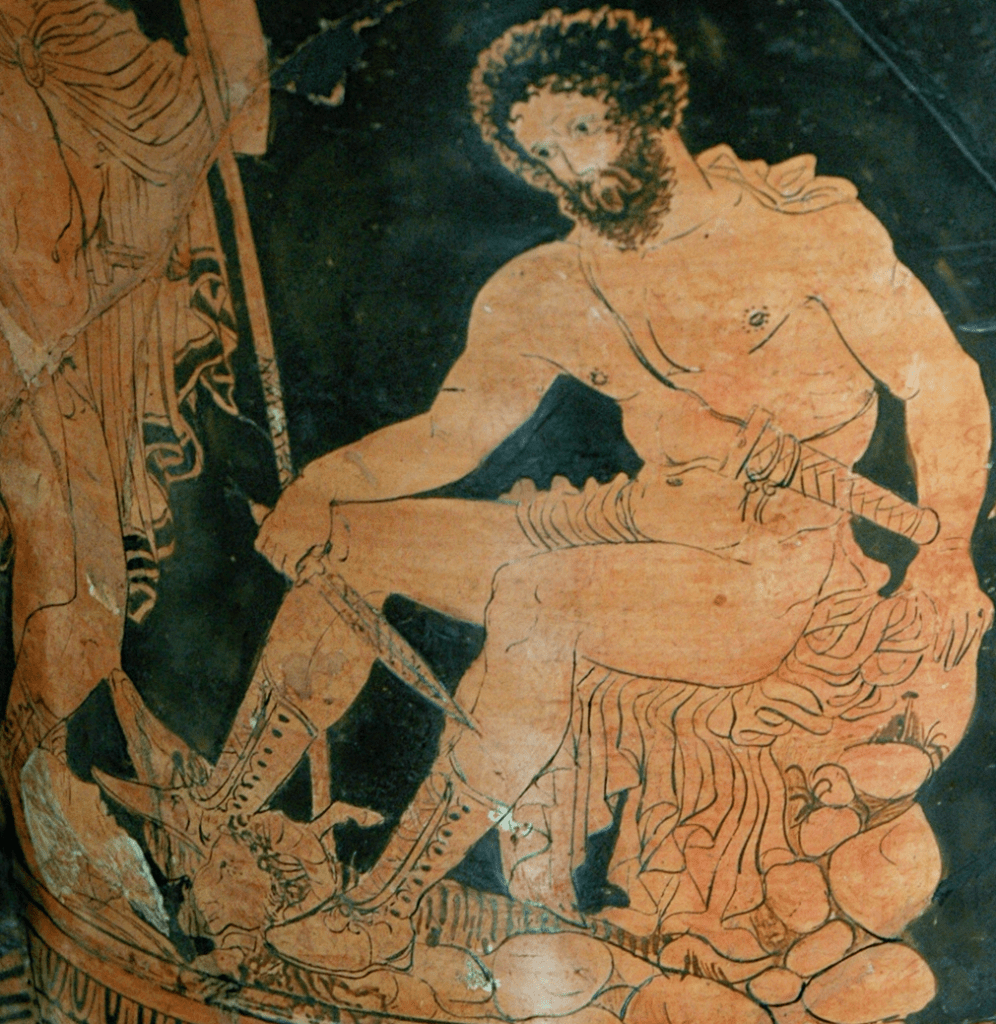
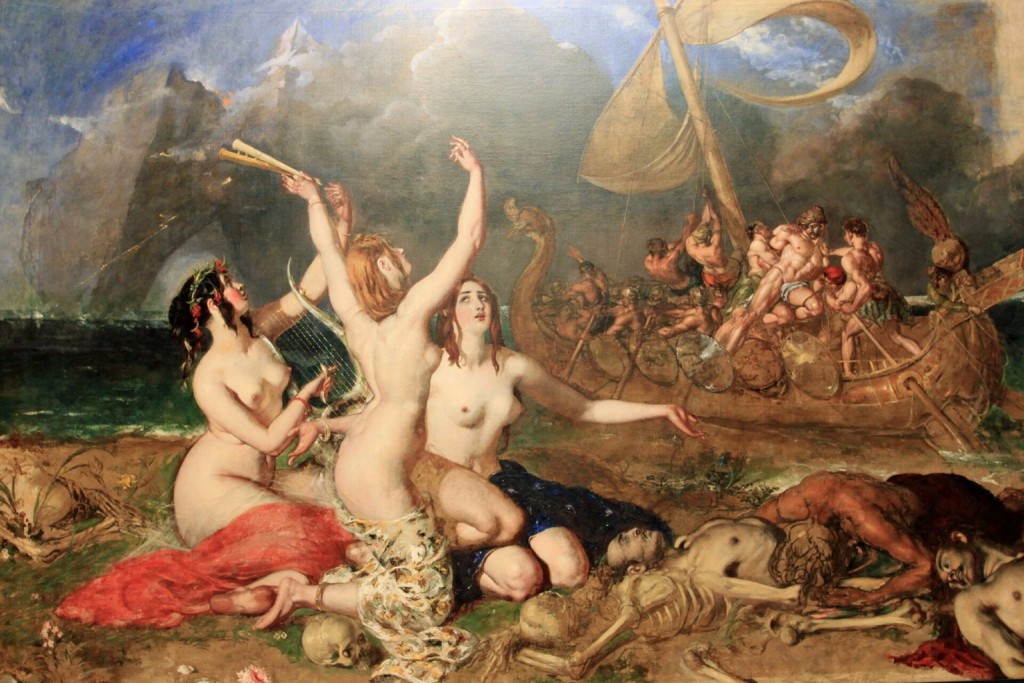
The reader might wonder: why would this effort lead to Ulysses’ banishment to the deepest recesses of Hell? At the time of the Inferno’s composition, Dante’s condemnation of Ulysses was shaped by, and further deepened, a commonly held sanction against humans striving for knowledge reserved for the gods. While purportedly condemned for the sin of “evil counsel”, most readers would have understood Ulysses’ deeper sin to be his hubristic desire for understanding and experience not permissible to human beings. Ulysses’ tragic yet predictable demise at sea was readily comprehended by being situated within a centuries-long tradition advising humans against attempts to acquire “forbidden knowledge”, a tradition that includes stories both from the Bible (the Garden of Eden, the Tower of Babel) and from classical mythology (Prometheus’ stealing fire from the gods, the Sirens’ deadly song). Readers of the Inferno, therefore, would have understood, and implicitly accepted, that Ulysses had deserved his fate, that his punishment reflected the depravity of his sinful desires, and that humans should not seek to go beyond the limits of what God has permitted.
Dante wrote in the early 14th century. By the late 15th century, when explorers like Columbus set forth to explore unknown lands, the story of Ulysses was being wholly reinterpreted. What Dante intended as a cautionary tale of hubris and sin was reconceived by the contemporaries of the Italian explorers as anticipating their bold and admirable explorations. What Dante had regarded as deserving condemnation to Hell now came to be regarded as godlike ambition worthy of praise. Boitani has gathered impressive evidence that Dante’s Ulysses came to be seen and understood as a commendable figure who pushed beyond the boundaries of the known world to seek out “new lands and a new world.” [4]

The Renaissance explorers who boldly sailed past the Pillars of Hercules (the rock of Gibraltar) into seemingly boundless seas, lacking foreknowledge of what might await them and having only the sun and stars to guide their course, were now perceived as praiseworthy imitators of Ulysses. They were seen as courageous seekers of new knowledge and better places. The medieval understanding of Dante’s Ulysses as a cautionary tale was effectively recast as an aspirational story of human adventurousness and nobility.
At first it was the Renaissance poets and songwriters who described the navigators’ journeys and discoveries as new versions of Ulysses’ final journey—now with a happy ending. But soon the explorers themselves adopted this perspective, viewing their voyages as new variants of the Odyssean quest. The explorer who would lend his first name to the land he claimed to be the first to see with European eyes—Amerigo Vespucci—would use the positive recasting of Dante’s Canto XXVI to describe his own discovery. A story that had been a warning about pride and excess was now adopted by a self-described Odyssean figure as a positive model.[5]
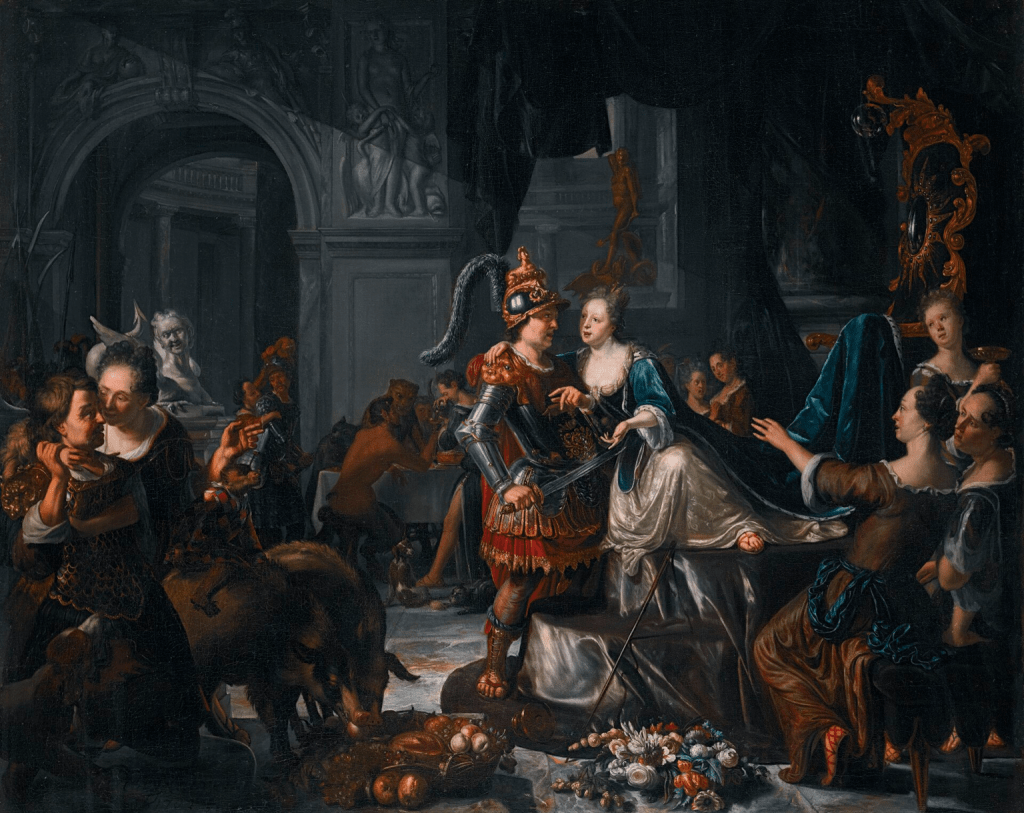
It wasn’t long before Dante’s Ulysses himself became, poetically speaking, the figure who had discovered America. As Boitani puts it, “Within two centuries [of the publication of Dante’s Inferno], European culture seemingly heals its wound and wipes all guilt at its own Ulyssean transgression out of its consciousness… The reality of the New World sinks Dante’s nightmare, silences the tragedy of myth, and extinguishes the flame of Ulysses speaking from the depths of Hell.”[6]
In short, Dante’s version of Odysseus’ continued wanderings, now reinterpreted in the Renaissance’s positive terms, became the typology by which the discovery of the New World was widely understood in Europe. “The poetry of the past already contains the modern world,” writes Boitani; “it invents America.” For both the explorers and those who heard about their discoveries, the existence of new lands was comprehended in Dantean terms as an encounter not with Hell but with an “earthly paradise”. A kind of striving that had been forbidden to Ulysses, and was thereby the cause of his descent to the depths, was now understood as a project that had led to a terrestrial heaven Europeans might rightly claim. By the time of Columbus’ later voyages, the transformation was complete. Boitani writes, “Passing the Pillars of Hercules, venturing into infinite seas, and reaching the Nova Terra is no longer a transgression carrying the penalty of death. On the contrary, it becomes a paradigm for humanity’s highest destiny, pursuing virtue and knowledge by the exclusive means of the human intellect, and on the planet Earth. Dante’s Ulysses is the typos of the pure Discoverer.”[7]

In sum, centuries before the official founding of America in 1776 with the Declaration of Independence, Europeans who settled there understood America figuratively as a land discovered by Odysseus. Through a poetic transmutation, a cautionary tale against abandoning home and seeking “forbidden knowledge” had become a positive story of intrepid human voyaging. By the time Jefferson wrote his audition for the Declaration and emphasized the “universal” feature of human mobility and the right of Americans to claim their share of the New World, the Odyssean theme had been implanted in the substratum of American self-comprehension. Ever since, we have continued to think of ourselves as a people defined above all by mobility and the call of the open road: as pilgrims, pioneers, explorers, cowboys, drifters, adventurers, hitchhikers, bikers, campers, drivers, dreamers, astronauts, colonizers of space. In other words, when we speak of America as a direct inheritor, even exemplar par excellence, of the “Western tradition”, we are more correct than we often suppose, for the American character has been deeply shaped by our civilization’s internalization of one of the West’s oldest works.
And yet there is more to it than that. Odysseus is a complicated character, and the navigators’ version is only one interpretation of his story that has shaped Americans’ self-understanding. From the very outset, our nation’s soul has been divided. Like Odysseus, Americans have questioned whether we are first and foremost a journeying people at all. Most of those Europeans who first traveled to these shores were not like the Columbine explorers. They did not think of themselves as bold adventurers, nor were they in search of an earthly paradise. Rather, they journeyed primarily in order to find and make a home. If there was an Odyssean model at play, it was the Odysseus who pined to see the smoke rising from above his house, the Odysseus who longed to be rejoined with his family, the Odysseus who sought to achieve his homecoming.
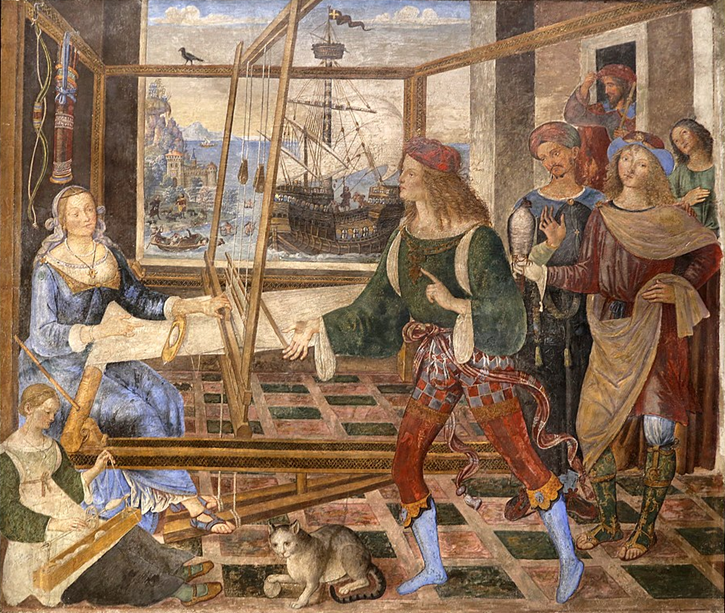
The early Puritans were drawn to these shores not by the call to adventure or a desire for godlike knowledge, but by visions of founding a new polity that might serve as a model for others—a “city on a hill,” as John Winthrop famously put it. If, in a sense, America was discovered by Odysseus the bold explorer and seeker of knowledge, it was settled by a different version of Odysseus, the mortal who seeks nostos, the man who journeys for the sake of homecoming and out of devotion to his family and community. In short, the Odyssey’s tensions are perhaps more present in the American soul than in any other. They continue to define the American character, if in an unreconciled and unreconcilable form.
Thus, in the summer of 2026 it was a happy coincidence that two texts central to the founding of the American people—the Declaration of Independence and the Odyssey—came into temporal contact. Considered together, they disclose a profound truth about Americans’ divided souls. We are at once creatures who settle and creatures who seek more. We are at once creatures who desire movement and creatures who seek rest. We are at once creatures who make homes and creatures who abandon them for new frontiers— and then, discovering the edges of the possible, make new homes. In this dualism, we Americans are like all humans. Yet in a particularly powerful way, this dualism is a constitutive aspect of the American character—of our divided national soul.

Patrick J. Deneen is the David A. Potenziani Memorial Chair of Constitutional Studies at the University of Notre Dame.
This essay is adapted from the preface to Patrick J. Deneen’s new book, American Odyssey: What an Ancient Story Reveals about Our Divided Souls. It is republished here by permission of the author and Creed & Culture.

Notes
| ⇧1 | Letter from John Adams to Abigail Adams, July 3, 1776, accessible here. |
|---|---|
| ⇧2 | Emphasis mine; Thomas Jefferson, A Summary View of the Rights of British America, available here. |
| ⇧3 | Dante Aligheri, Inferno, in The Divine Comedy, trans. John Ciardi (New American Library, New York, 2003), Canto 26, 88–93; 107–11; 206–7. |
| ⇧4 | Boitani’s emphasis; Piero Boitani, The Shadow of Ulysses: Figures of a Myth, trans. Anita Weston (Oxford UP, 1994) 49. Here, Boitani is citing Ariosto’s Orlando Furioso. |
| ⇧5 | “Amerigo Vespucci, then, liked to see himself as a Ulysses and a Dante, and to read his travels in light of the Commedia,” writes Boitani (as n.4) 56. |
| ⇧6 | Ibid., 53. |
| ⇧7 | Ibid., 56, 63, 68. |