Robin Douglas
Not many people today have heard of the Orphic Hymns. They stand apart from the rest of the surviving body of Ancient Greek literature: no other work is quite like them. They are obscure even among professional Classicists, although there has been something of a revival of interest in recent times.[1] The relative neglect of the Hymns is unfortunate, as they provide us with a glimpse into a fascinating area of ancient mystery religion.
The Hymns are a collection of 88 poems to gods and divine powers written in dactylic hexameters, the very same metre as is used for the Homeric epics and many other Ancient Greek poems. As we will see, they were probably used by the members of a small cult group who met in private to invoke the hidden powers of the cosmos.
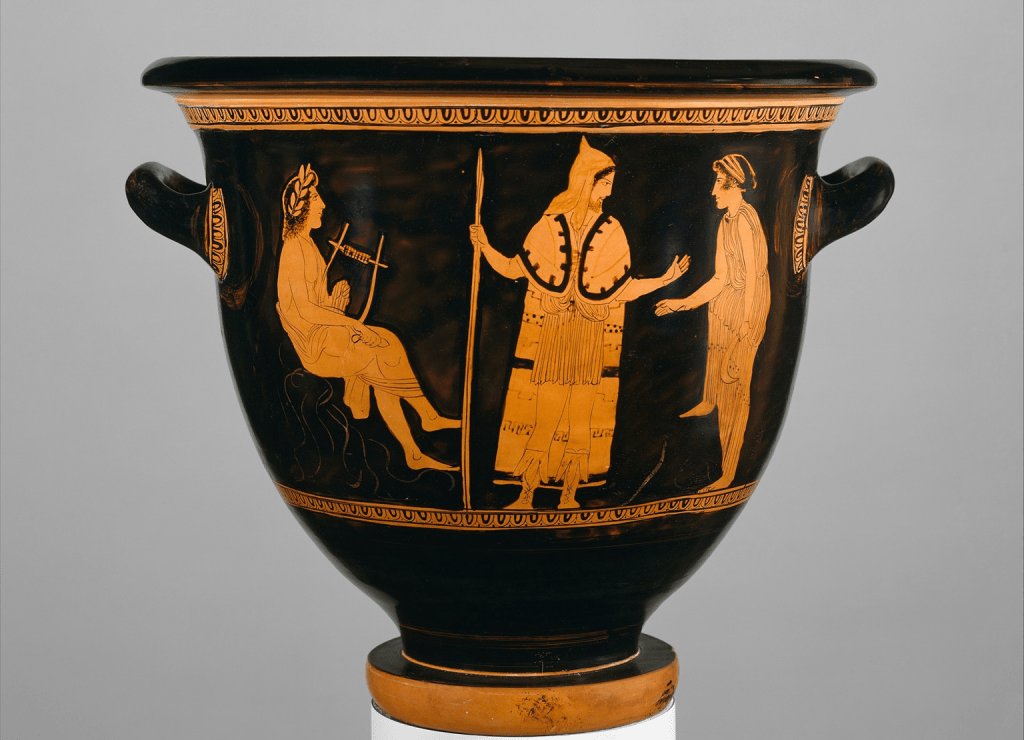
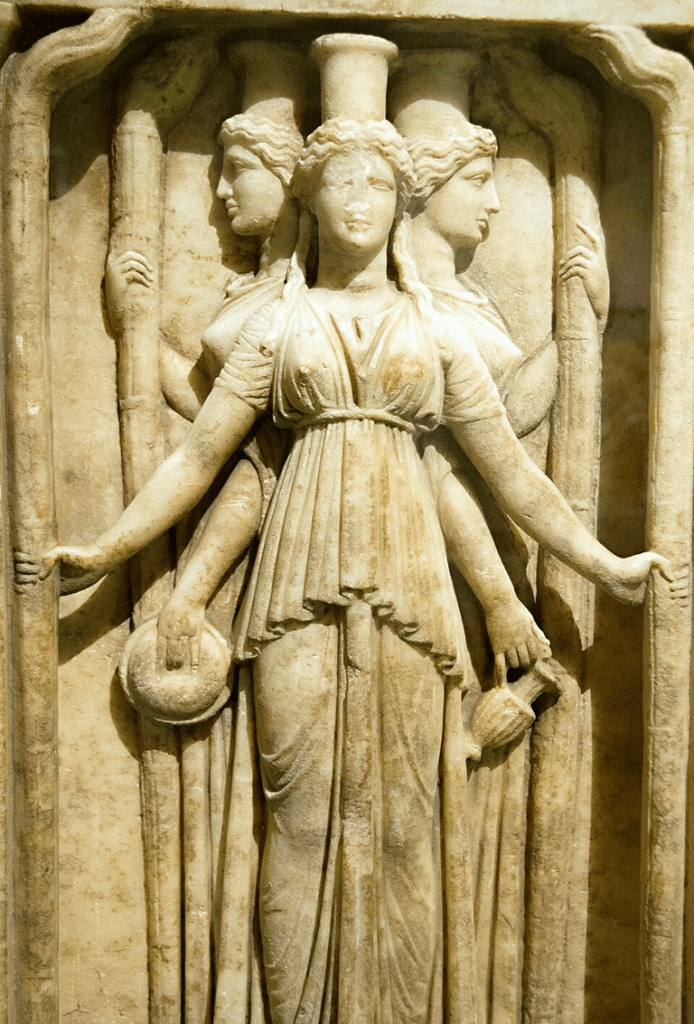
The text of the Hymns is divided into a prologue and 86 individual hymns. The number 88 mentioned above comes from a plausible theory that a hymn to Hecate has come to be wrongly merged into the prologue. It is likely that the hymn to Hecate is the first hymn in the main body of the collection.
Nobody knows who wrote the Hymns. The author of the collection will for ever remain anonymous – although we can at least say that it is probable that the collection is mostly the work of a single poet. (Some of the individual hymns may be later interpolations.)
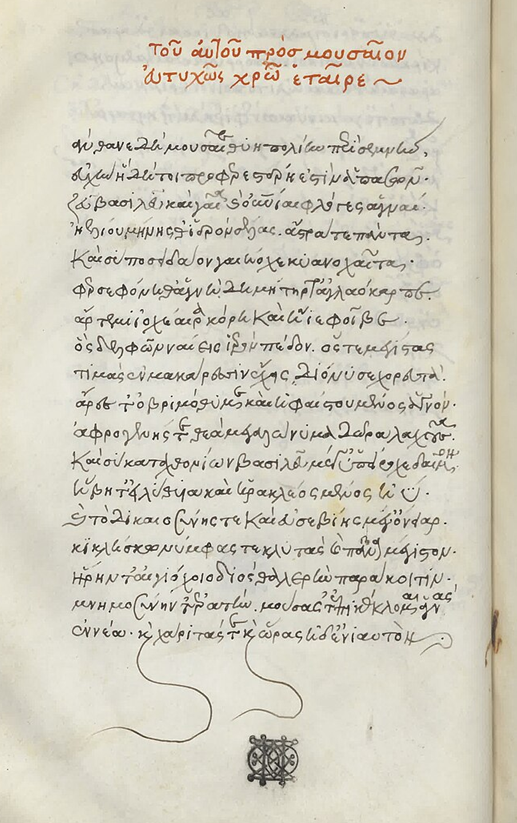
The Hymns were probably composed in western Anatolia (modern Turkey) in the 2nd or 3rd centuries AD. This became clear from the late 19th century, when archaeologists discovered inscriptions from that place and time containing unusual divine names mentioned in the Hymns.[2] The Hymns contain a significant number of intertexts (shared phrases and formulas) corresponding with authors of the 3rd to 5th centuries AD. This does not mean that they date from this period, however, as it is not clear who was borrowing from whom.[3]
Modern scholars have not always been kind to the Hymns. Ivan Linforth, a scholar of Orphic religion, wrote of their “inferior literary quality”. Ramsay MacMullen, a historian of ancient paganism, called them “rather sorry exercises”, and remarked, “Sophocles did better!”[4] As to the members of the group which used the Hymns, the great Oxford Classicist Martin West was famously patronising about them:
[The Hymns] were used by members of a private cult society who met at night in a house and prayed to all the gods they could think of, to the light of torches and the fragrances of eight varieties of incense. Occasionally their ceremonial activity went as far as a libation of milk. We get a picture of cheerful and inexpensive dabbling in religion by a literary-minded burgher and his friends…[5]
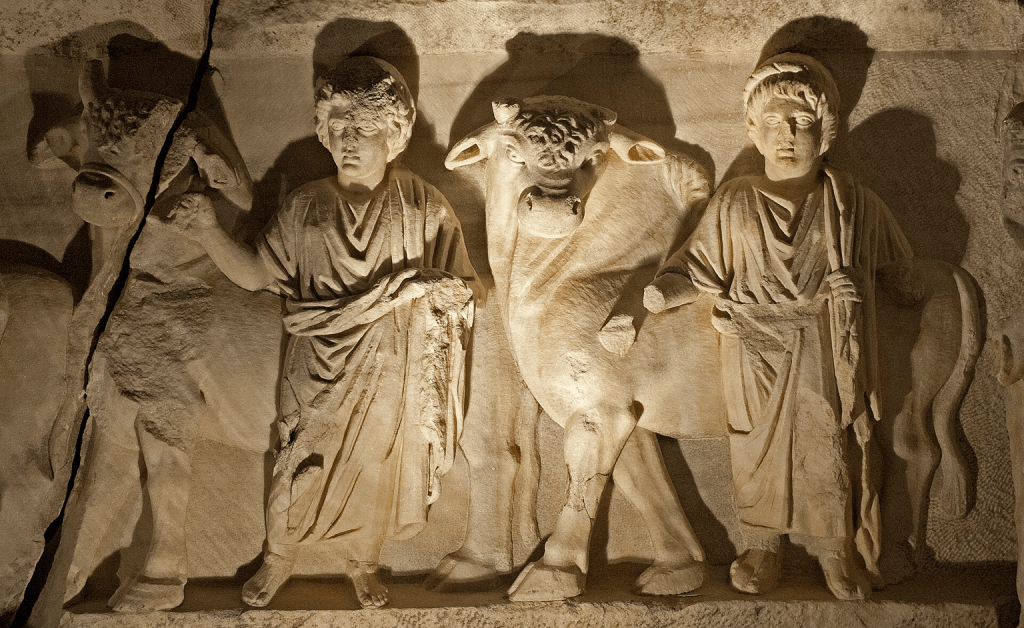
Another scholar, Fritz Graf, took issue with this view. He suggested that the text of the Hymns bears witness to a genuine fear that the worshippers might meet spiritual powers which are dangerous or which might not come to them in a benevolent guise.[6] This echoes sentiments among earlier scholars to the effect that the Hymns are something special and unsettling.
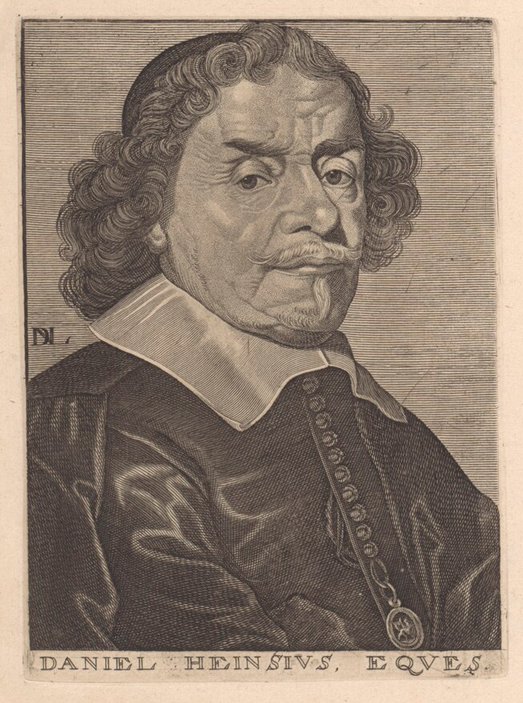
The Renaissance humanist Joseph Scaliger apparently shuddered while translating the Hymns “from the novelty and elevation of their sentiments”.[7] The early modern Dutch poet and scholar Daniel Heinsius called them a “true liturgy of Satan himself”.[8]
If the Hymns are ‘Orphic’, what was Orphism? This is a controversial topic on which there are sharply opposing views. For some, Orphism is a mirage: there was never any Orphic movement. For others, the movement was a coherent, unified whole. The truth probably lies somewhere in the middle.
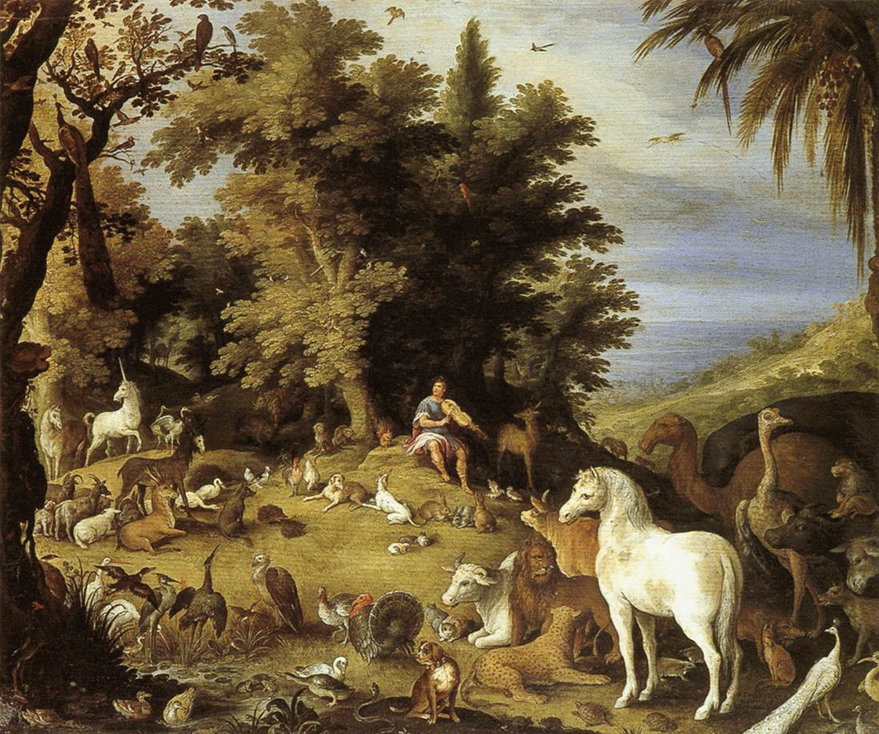
We might tentatively say that there is evidence that small initiatory groups existed in Greek-speaking areas which revered the legendary hero Orpheus. Orpheus was a poet and musician: he is said to have sung so captivatingly that he enchanted the animals, the trees and even the rocks. His greatest exploit was to go on an expedition to rescue his wife from the Underworld – although in at least some versions of the story he lost her because he disobeyed an instruction not to look back before they reached the land of the living. One Jewish text even presented Orpheus as a convert to monotheism; this was subsequently picked up by Christian writers. [9]
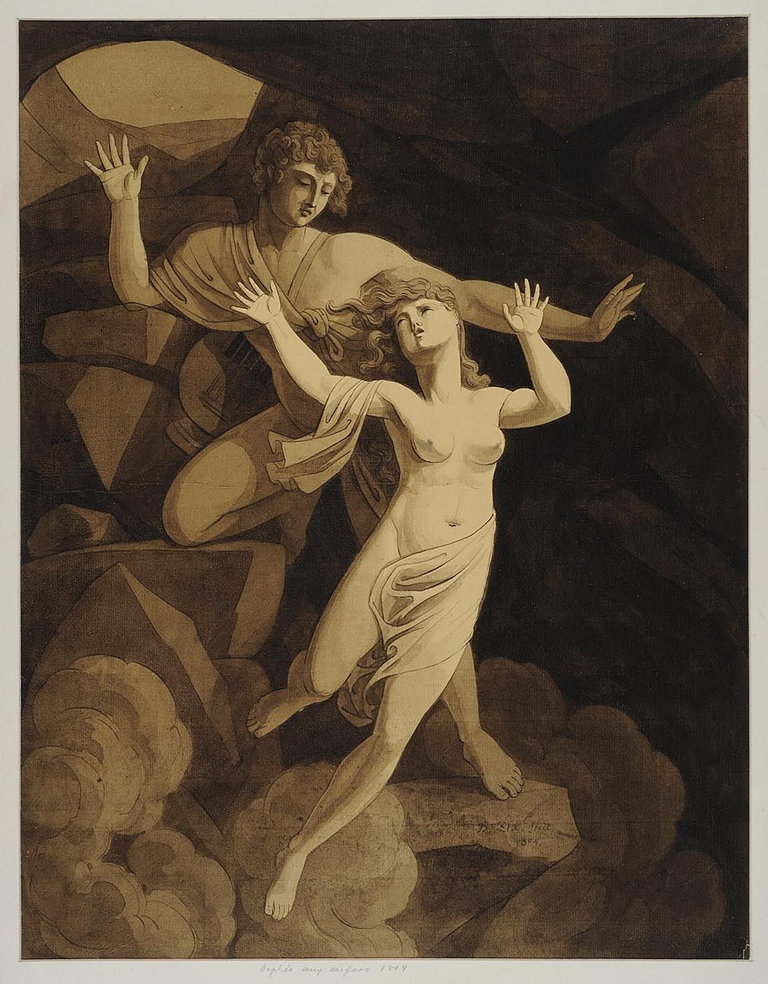
Orphism was not an organised religion, but a loose coalition of groups which must have changed and evolved over the centuries. In broad summary, themes which characterised Orphic religiosity seem to have included: the worship of Dionysus; a belief in purification from sin; and a desire to secure a better fate for the soul after death (perhaps in the context of reincarnation).
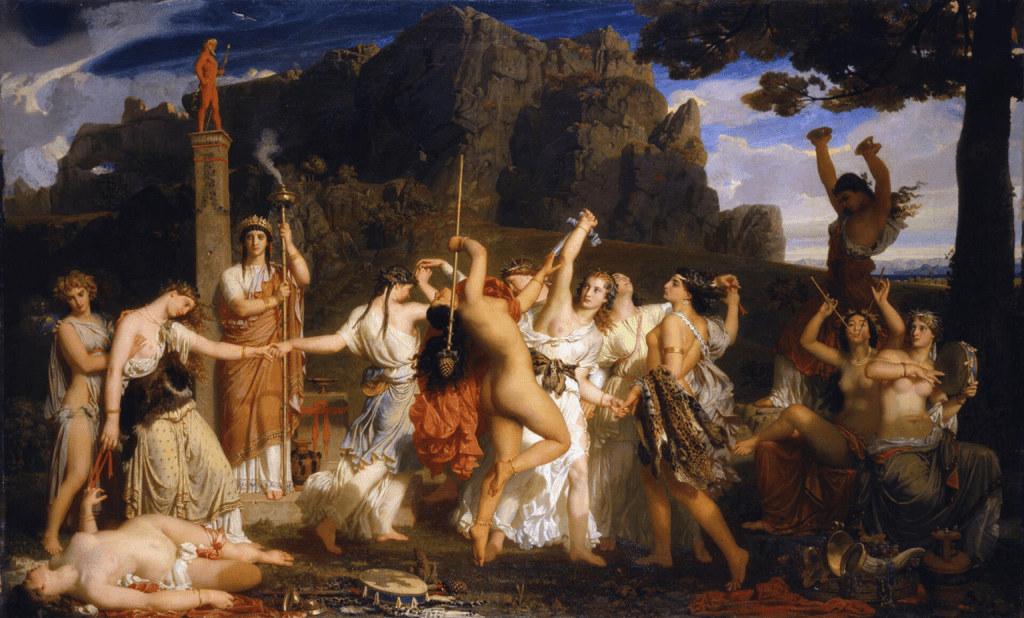
We might go a little further – although this is controversial – and say that the Orphics appear to have believed in a specific myth about the infant Dionysus. In this myth, the god was killed and eaten by the Titans; Zeus blasted the Titans with his thunderbolt; Dionysus was restored to life; and human beings were created from the ashes. This myth appears to be reflected in the Hymns, although it is nowhere presented clearly. What we can definitely say, however, is that Dionysus is the most frequently invoked deity in the collection. The collection also appears to attest that the group which used it considered itself to be a thiasos, or Dionysian cult-group.[10]
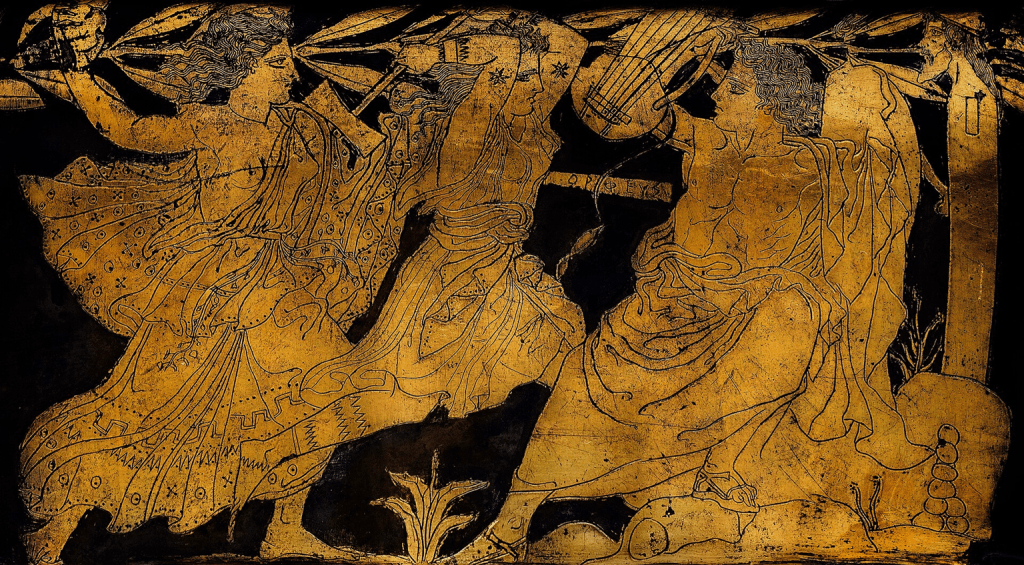
One consistent theme of Orphism seems to have been what we might call soft monotheism (or soft polytheism): behind the multiple gods of the pantheon there is one ultimate divine power. Divinity is both singular and plural. The contents of the Hymns seem to bear witness to this kind of theology. The gods are not sharply differentiated. Each hymn is addressed to a distinct divine entity or power; yet the boundaries between them are blurred. The eminent Cambridge Classicist Jane Harrison went so far as to write: “Anyone who reads [the Hymns] through will speedily be conscious that, save for the prooemium, and an occasional stereotyped epithet, it would usually be impossible to determine which hymn was addressed to what god.”[11]
The same words and phrases are used repeatedly across different hymns in reference to different divinities. On one count, there are 545 repeated formulas in the 1,108 verses of the text.[12] In similar vein, while individual gods retain their identities, they are also repeatedly described in transcendent terms, as the beginning and the end; male and female; hidden and manifest; and creative and destructive. They seem to be expressions of a single divine essence.
All this is consistent with a soft monotheism. The late Swiss scholar Jean Rudhardt suggested that the users of the Hymns had been inclined “to see… [the gods as] the diverse manifestations of one and the same divine power; better yet, to regard their names, their images, their myths and their worship as potential routes of access to that power, which mortals can neither depict to themselves nor conceive of.”[13]
The British scholar Richard Gordon went further. In an analysis of the Hymn to the Nymphs, he drew attention to the complex and diverse nature of the text: with its deliberate contrasts and inconsistencies, it corresponds with the divine reality that it presents. It would have created an experience in the initiates which was “brilliantly faceted, elusive and yet pregnant with possibility.” It is “a sort of Antonine Virtual Reality headset, at once super-real and totally phantasmagoric.” [14]
It seems reasonably clear that the Hymns were used in rituals. Some scholars have argued that theyare a philosophical composition which merely claims to be a ritual text. This is strictly impossible to disprove, but there is not much positive evidence to commend it. Since at least the mid-20th century, there has been a general consensus that the Hymns are a liturgical book.
The ritual character of the Hymns is clear on their face. The great majority of the individual hymns include an instruction specifying which offering should be made to the god when the hymn is sung. These offerings are almost invariably kinds of incense, although in one case it is a libation of milk.[15] (The Hymns contain no references to animal sacrifices, which is consistent with the evidence that Orphism involved vegetarianism.) As a more impressionistic observation, the alliteration and assonance found in the Hymns may be suggestive of spoken or sung performance.

The Hymns repeatedly use technical Greek vocabulary which relates to mystery rites and initiations (teletē/teletai, mystēria, orgia). There are also numerous references to mystery-worshippers (mystai, mystipoloi). Significantly, mention is made several times of one or more new mystery-worshippers (mystēi neophanti, neous hiketās, neomystais). An obvious assumption is that the Hymns were used in an initiation rite to induct new members into the group. It may also be noted that the Hymns use singular linguistic forms in a way that implies that a single cult-official presided over the rite. He may have been known as the boukolos (cattle-herd);[16] a term which was connected with the Orphic god Dionysus and was used in other contexts as the title of a cult-official. The Hymns repeatedly refer to a yearly festival (amphietēris) and a biennial festival (trietēris) linked with Dionysus. [17] It remains unclear how these relate to the rites for which the Hymns were composed.
It is worth noting that, while numerous deities are invoked in the Hymns – some well-known and some obscure – a disproportionate number of the texts are addressed to deities who were linked with mystery-cults. These include, in particular, Dionysus, but also Demeter and Persephone; Aphrodite and Adonis; and the Mother of the Gods.
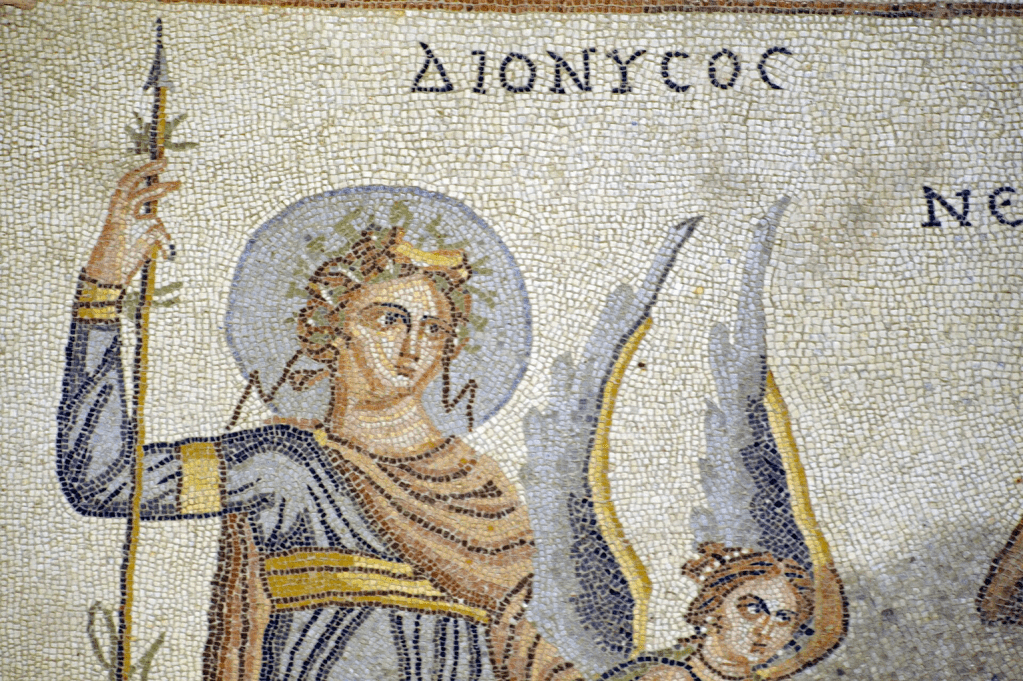
The Hymns were probably used at night. Indeed, the rite in which they were used may have taken up the whole night. This would explain why there is a hymn to Night near the beginning of the collection (3) and a hymn to Dawn near the end (78). As one translation of the Hymns puts it:
It might not be too much to suggest that people gathered in places that were sacred to them and that they did so as the softer colours of the evening were settling in on them. Candles provided gentle light. Wisps of incense smoke rose into the air. The magic of song, devotional, undulant, filled all of the sacred space and provoked the human heart to seek union with the divine.[18]

There appears to be an overall structure to the collection, consistent with the assumption that the Hymns were recited successively from beginning to end. The second hymn is addressed to a goddess of childbirth, and the final hymn is addressed to the god of death. The first hymn – the one which seems to have been wrongly merged into the preface – is, as we have said, addressed to Hecate. Shrines to Hecate (Hekateia) were sometimes situated outside the entrance to cult-places, and it may be that the rites started at a shrine to her (Hekataion) located just outside the group’s premises.
The collection seems to be divided into several parts, although where to make the divisions is a matter of debate. According to one theory, the Hymns fall into three sections. The first relates to deities who rule the universe. It is cosmological: it begins with primaeval powers and seems to deal with the unfolding of the different generations of gods (in a manner vaguely similar to Hesiod’s Theogony). The second section contains hymns to Dionysus, figures connected with him, and other mystery deities. The third section contains gods connected with human life.
What do the Hymns ask the deities for? Oddly enough, nothing particularly special. They sometimes ask for the goddess or god’s presence, attention or general favour. They may also ask for the benefits of health, peace, prosperity or piety. Some of the Hymns ask for a long life or for a good old age or death. Yet there is surprisingly little concern in the texts with a good afterlife – even though this seems to have been a particular concern of mystery cults.
The Hymns are the only extended Ancient Greek liturgical text to survive into modern times. For that reason, they hold particular interest for historians of Ancient Greek religion. They also hold particular interest for another category of people. As the Hymns were used by a sect of ancient mystics, there has been a recurring temptation for occultists and esotericists in later centuries to make use of them too.
In the Renaissance, the great Platonist scholar Marsilio Ficino made a translation of the Hymns – but he subsequently burned this, together with other translations of ancient religious texts, for fear that he would be suspected of pagan sympathies. Ficino believed that the individual can deepen the harmony between the human spirit and the heavenly spirit which pervades the world, “particularly if we make use of song and light, together with the odour that fits with the relevant divine power, as with the hymns that Orpheus dedicated to the cosmic powers.”[19] Ficino put this theory into practice. His biographer Giovanni Corsi reported that he “expounded the hymns of Orpheus, and sang them to the lyre in the ancient style, with (they say) a marvellous sweetness.”[20]
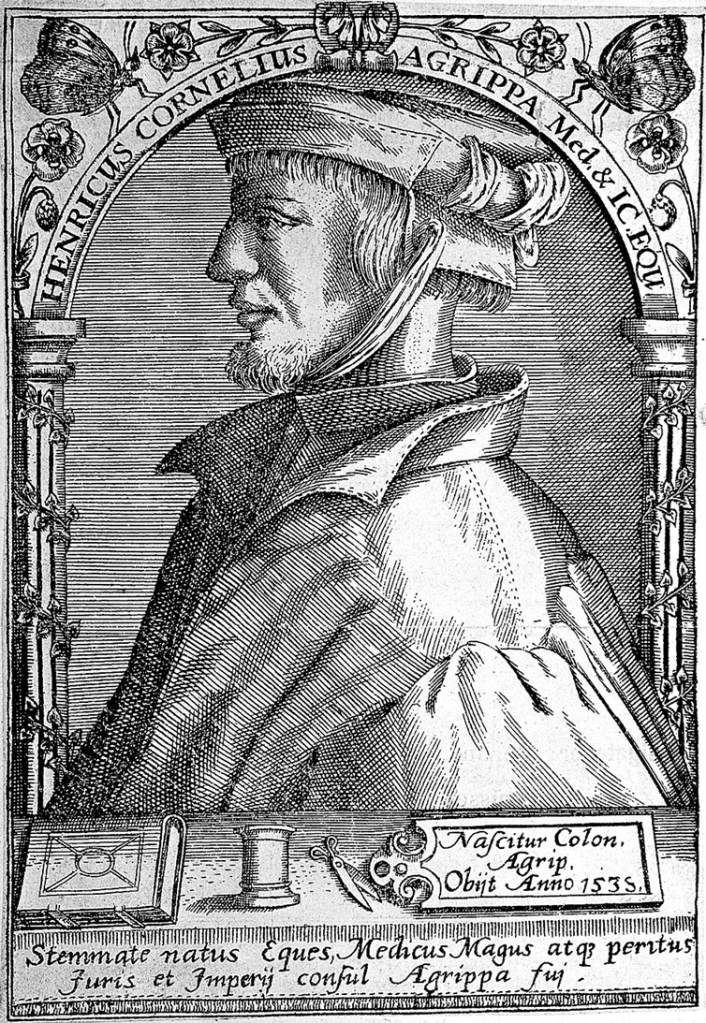
Others influenced by Ficino were also attracted by the Hymns. Giovanni Pico della Mirandola tried to reconcile the polytheism of the text with Catholic doctrine by affirming that the names of the gods in the Hymns refer, not to rivals to the true God, but to natural virtues which come from him. The 16th-century German Catholic esotericist Heinrich Cornelius Agrippa went further and advocated the use of the Hymns in practical magic, as opposed to the mystical quest for union with God.
In the 18th century, a leading figure of the modern pagan revival, the Platonist philosopher Thomas Taylor, made the first English translation of the Hymns. This was published in 1787, and subsequently republished in 1792, 1824 and 1896. What Taylor did with his translation remains obscure – we don’t know if he used the Hymns in ritual or devotion. The first modern liturgical use of the Hymns may have come at the funeral of the Baron de Palm, a Bavarian aristocrat and member of the Theosophical movement who died in New York in 1876. His funeral rites, which were held in a Masonic temple, were widely reported due to their seemingly pagan content. They included two “Orphic hymns”, although it appears that these were “compiled for the occasion” by the Theosophical Society, and it is not clear how close they were to the original Hymns. [21]
The Hymns were esteemed by other occultists in the late 19th and early 20th centuries, including Spyridon Nagos, the reviver of the modern Orphic tradition in Greece; G.R.S. Mead in Britain; and Léon Combes in France. In more recent years, a succession of translations and books relating to the Hymns have appeared from specialist publishers aimed explicitly at an audience of esotericists. There is Patrick Dunn’s The Orphic Hymns: A New Translation for the Occult Practitioner, the title of which speaks for itself.[22] The title of Tamra Lucid and Ronnie Pontiac’s The Magic of the Orphic Hymns: A New Translation for the Modern Mystic is equally clear, although it is perhaps less of a translation than a reinterpretation.[23]
Then there is Sara Mastros’ Orphic Hymns Grimoire, which includes not only translations of the Hymns but also commentaries and suggestions for practical magic to work with them.[24] Mention should also be made of Kristin Mathis, an Ivy League-educated writer who regularly publishes material about the Hymns on Substack from the perspective of a mystical practitioner. Last but not least, there are various musical performances of the Hymns on YouTube, at least some of which are produced from a devotional perspective.
It should by now be clear that the Orphic Hymns are a unique and enigmatic text. They will never be included in the first rank of Classical literature, but they embody a complex and subtle theology which merits careful reflection. The Hymns have been put to varying uses over the centuries by different people with esoteric interests; and they will continue to intrigue both scholars and mystics into the future.
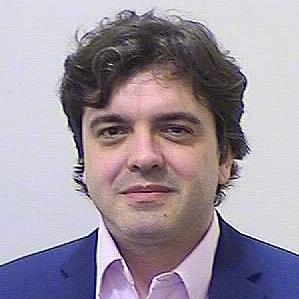
Robin Douglas is a writer based in London who specialises in the history of pagan, esoteric and other minority religious movements. His academic background is in Classics, and he has a PhD in History from the University of Cambridge. He has recently published a short book, Paganism Persisting, co-written with the historian Francis Young, to investigate the phenomenon of pagan revivals through European history; his previous articles for Antigone have been on the Chaldean Oracles and pagan revivalism.

Notes
| ⇧1 | Important publications include Anne-France Morand, Études sur les Hymnes Orphiques (Brill, Leiden, 2001) and Daniel Malamis, Orphic Hymns (Brill, Leiden, 2024). |
|---|---|
| ⇧2 | See Morand (as n.1), 173–4, 177–81, 185–8 and 193–4. |
| ⇧3 | See Malamis (as n.1), 379–82. |
| ⇧4 | Ivan M. Linforth, The Arts of Orpheus (Univ. of California Press, Berkeley, CA, 1941), 183; Ramsay MacMullen, Paganism in the Roman Empire (Yale UP, New Haven, CT, 1982), 16. |
| ⇧5 | M. L. West, The Orphic Poems (Oxford UP, 1983) 28–9. |
| ⇧6 | Fritz Graf, “Serious Singing: The Orphic Hymns as Religious Texts,” Kernos 22 (2009) 169–82. |
| ⇧7 | Joseph Ennemoser, The History of Magic, vol. 1 (H.G. Bohn, London, 1854) 359. |
| ⇧8 | “vera Satanae ipsius liturgia”: Daniel Heinsius, Aristarchus sacer (s.l., n.d. [1627]) 43. |
| ⇧9 | See Miguel Herrero de Ja’uregui, “Orphic God(s): Theogonies and Hymns as Vehicles of Monotheism,” in S. Mitchell and P. van Nuffelen (edd.), One God: Pagan Monotheism in the Roman Empire (Cambridge UP, 2010) 77–99. |
| ⇧10 | Orphic Hymn (OH) 54. Bacchic rites are also referred to at 79.8–10. |
| ⇧11 | Jane Ellen Harrison, Prolegomena to the Study of Greek Religion, 2nd ed. (Cambridge UP, 1908) 625. |
| ⇧12 | Malamis (as n.1), 342. |
| ⇧13 | “à voir… les manifestations diverses d’un même pouvoir divin; mieux encore, à tenir leurs noms, leurs images, leurs mythes et leurs cultes pour des voies d’accès possibles à ce pouvoir que les mortels ne peuvent ni se représenter ni concevoir”: Jean Rudhardt, Opera Inedita (Centre International d’Étude de la Religion Grecque Antique, Liège, 2008) 325. |
| ⇧14 | Richard L. Gordon, “(Re-)modelling religious experience: some experiments with hymnic form in the imperial period,” in V. Gasparini et al. (edd.), Lived Religion in the Ancient Mediterranean World (De Gruyter, Berlin, 2020), 23–48. |
| ⇧15 | OH 53. |
| ⇧16 | See OH 1.10, 31.7. |
| ⇧17 | OH 30.5, 44.6-9, 45, 54.3 (trietēris); 52, 53 (both). |
| ⇧18 | Apostolos N. Athanassakis and Benjamin M. Wolkow, The Orphic Hymns (Johns Hopkins UP, Baltimore, MD, 2013) xvii. |
| ⇧19 | F. Creuzer and G. H. Moser (eds.), Plotini Enneades cum Marsilii Ficini Interpretatione Castigata (Didot, Paris, 1855) 252. |
| ⇧20 | Giovanni Corsi, Vita Marsilii Ficini (1506) 6. |
| ⇧21 | Henry Steel Olcott, Old Diary Leaves, vol. 1 (G. P. Putman, New York 1895) 155. |
| ⇧22 | Patrick Dunn, The Orphic Hymns: A New Translation for the Occult Practitioner (Llewellyn, Woodbury, 2018). |
| ⇧23 | Tamra Lucid and Ronnie Pontiac, The Magic of the Orphic Hymns: A New Translation for the Modern Mystic (Inner Traditions, Rochester, VA, 2023). |
| ⇧24 | Sara Lianne Mastros, Orphic Hymns Grimoire (Mastros & Zealot, Braddock, PA, 2019). The book subsequently went into a second edition (Hadean Press, Keighley, 2022). |