Mateusz Stróżyński
East Coker IV is one of the most beautiful and intricately sophisticated sections of T.S. Eliot’s Four Quartets.
The wounded surgeon plies the steel
That questions the distempered part;
Beneath the bleeding hands we feel
The sharp compassion of the healer’s art
Resolving the enigma of the fever chart.
Our only health is the disease
If we obey the dying nurse
Whose constant care is not to please
But to remind of our, and Adam’s curse,
And that, to be restored, our sickness must grow worse.
The whole earth is our hospital
Endowed by the ruined millionaire,
Wherein, if we do well, we shall
Die of the absolute paternal care
That will not leave us, but prevents us everywhere.
The chill ascends from feet to knees,
The fever sings in mental wires.
If to be warmed, then I must freeze
And quake in frigid purgatorial fires
Of which the flame is roses, and the smoke is briars.
The dripping blood our only drink,
The bloody flesh our only food:
In spite of which we like to think
That we are sound, substantial flesh and blood—
Again, in spite of that, we call this Friday good.
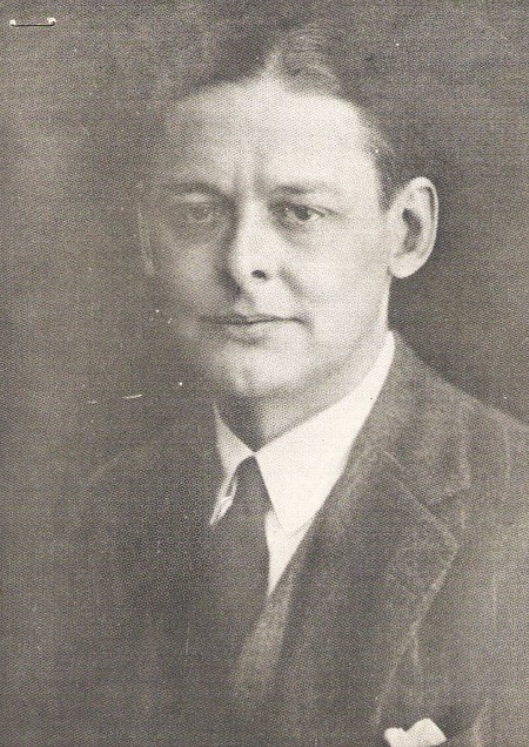
The images of disease, dying, healing, and purification particularly evoke the Christian imagery associated with Lent, the forty-day period of fasting and spiritual and bodily purification before Easter, which in the Middle Ages was called Quadragesima major. The practice of fasting during Lent is based on imitatio Christi and, in particular, on Christ’s forty-day period of fasting in the desert, as described in all the three synoptic Gospels, and culminates in the triple temptation of the Lord by the Enemy (Matt 4:1–11; Mark 1:12–13; Luke 4:1–13).
In a previous piece on Eliot’s Four Quartets I showed how Eliot, in Little Gidding IV, alludes to Seneca as part of his strategy for associating the Christian Saviour with the Greco-Roman figure of Hercules. I argued that he does this in order to invoke the ancient and medieval view that the Classics should not be rejected, but preserved and made Christian. In the present piece, I’m going to show exactly the same strategy employed by Eliot in an earlier instalment of the Quartets, namely, in East Coker. Both texts happen to be the fourth section of their respective Quartets; if Little Gidding IV focusses on Pentecost, East Coker IV evokes Lent and Good Friday.

Plato writes that after Socrates drank the hemlock administered to him by a prison porter, he walked around for a while (as the porter asked him to do) so that the poison could circulate through his bloodstream, and then he lay down:
καὶ ἅμα ἐφαπτόμενος αὐτοῦ οὗτος ὁ δοὺς τὸ φάρμακον, διαλιπὼν χρόνον ἐπεσκόπει τοὺς πόδας καὶ τὰ σκέλη, κἄπειτα σφόδρα πιέσας αὐτοῦ τὸν πόδα ἤρετο εἰ αἰσθάνοιτο, ὁ δ᾽ οὐκ ἔφη. καὶ μετὰ τοῦτο αὖθις τὰς κνήμας: καὶ ἐπανιὼν οὕτως ἡμῖν ἐπεδείκνυτο ὅτι ψύχοιτό τε καὶ πήγνυτο. καὶ αὐτὸς ἥπτετο καὶ εἶπεν ὅτι, ἐπειδὰν πρὸς τῇ καρδίᾳ γένηται αὐτῷ, τότε οἰχήσεται. ἤδη οὖν σχεδόν τι αὐτοῦ ἦν τὰ περὶ τὸ ἦτρον ψυχόμενα, καὶ ἐκκαλυψάμενος—ἐνεκεκάλυπτο γάρ—εἶπεν—ὃ δὴ τελευταῖον ἐφθέγξατο—‘ὦ Κρίτων, ἔφη, τῷ Ἀσκληπιῷ ὀφείλομεν ἀλεκτρυόνα: ἀλλὰ ἀπόδοτε καὶ μὴ ἀμελήσητε.’
The man who had administered the poison laid his hands on him and after a while examined his feet and legs, then pinched his foot hard and asked if he felt it. He said “No”; then after that, his thighs; and passing upwards in this way he showed us that he was growing cold and rigid. And again he touched him and said that when it reached his heart, he would be gone. The chill had now reached the region about the groin, and uncovering his face, which had been covered, he said—and these were his last words—“Crito, we owe a cock to Aesculapius. Pay it and do not neglect it.” (Phae. 117e–118a, trans. H.N. Fowler).
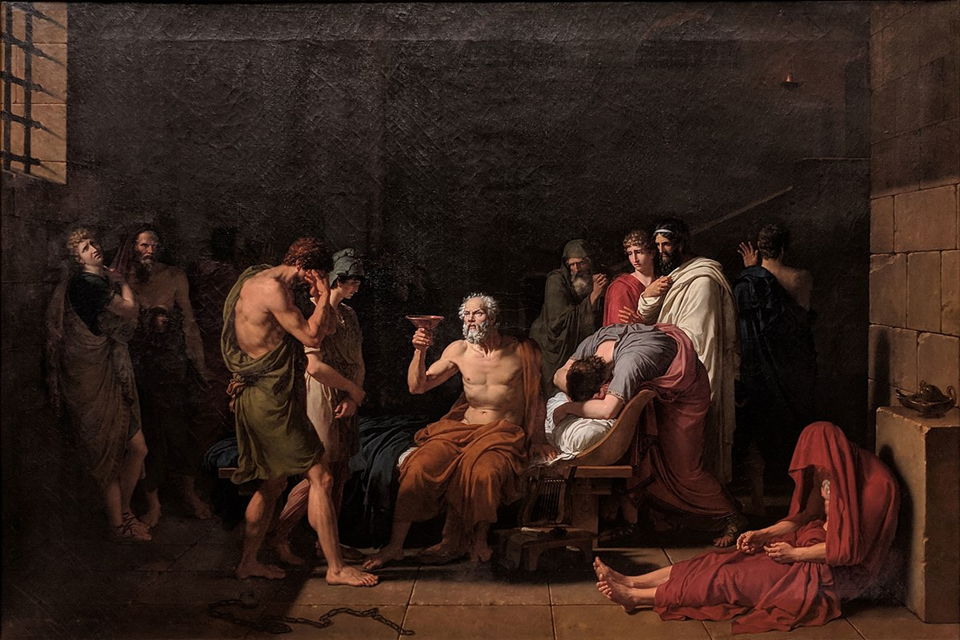
The phrase “the chill ascends from feet to knees”, which begins the fourth stanza of East Coker IV, seems to allude to precisely this scene. Interestingly, this allusion has not been recognized by many Eliot scholars. It seems that the phrase has attracted little attention.[1] Grover Smith, for instance, interpreted this as an allusion to the Falstaff’s death in Shakespeare’s Henry V (although it has to be said that he did mention Phaedo in a footnote).[2]
In the first stanza of this passage, Eliot mentions the Wounded Surgeon, whose steel “questions the distempered part”. Eliot’s Surgeon “questions”, not only in the sense that he touches and examines an ailing part of the body, but also in a more literal sense: he conducts his medical procedure by asking questions. These questions challenge the sick soul, destroy its illusory sense of security and self-regard, and awaken it from spiritual sleep and laziness through painful discussion. And this is exactly how Socrates was perceived both by himself and by his disciples. He describes the hatred that his questioning provoked in those who were convinced that they were experts in the fundamental matters of life (Apol. 21b–e).
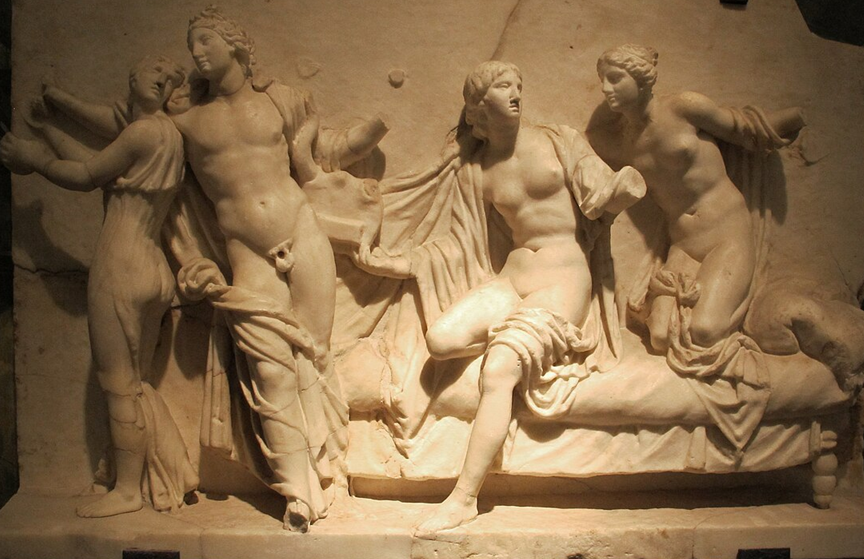
In the Symposium (215d–216c), Alcibiades reports a similar spiritual disturbance arising from his contact with Socrates. He is, in a way, in the middle of two extremes, being both, a bit like a diligent student who undergoes the painful procedure with the hope that it will cure him of his ignorance and at the same time, like the enemies of Socrates who try to escape his treatment at all cost. Alcibiades understands that Socrates is trying to cure his soul, but he doesn’t want to be cured, even though he admits the need for it.
Socrates himself calls his philosophical practice the therapy of the soul, and even refers to himself as a physician. In Gorgias he speaks about two parallel arts, one dealing with the health of the soul, and the other with that of the body (Gorg. 464b–c). In Protagoras Socrates associates philosophy with therapy by speaking about someone who happens “to have a doctor’s knowledge here also, but of the soul” (Prot. 313e). A similar theme is present in Crito, where Socrates argues that, both in medicine and in philosophical matters, yielding to the opinion of the multitude is harmful to health. He emphasizes that the first is much more important, since the soul is much more precious (Crit. 47d–48a).

Finally, in his Apology Socrates describes himself as the one who is able to cure souls. An image of a gadfly which is attached to “a horse, which, though large and well bred, is sluggish on account of his size and needs to be aroused by stinging” (Apol. 30e), expresses both the painful nature of Socrates’ treatment (as well as supposed negative reactions to it) and the need for it, on account of the Athenian people’s spiritual laziness. Socrates’ vocation is “the care of the soul” (Apol. 29d–30a). So Socrates (or a philosophical doctor in general) is one of the aspects of Eliot’s Surgeon who, by asking his puzzling and difficult questions, cures what is irrational and immoral in the soul. He also tries to “resolve enigma of the fever’s chart”, which evokes philosophical inquiry as well as Socratic curiosity, and the desire to penetrate to the essence of each thing in order to understand it.
The adjective that Eliot uses here, “distempered”, also recalls the ancient context. In Book Four of the Republic, Plato alludes to Hippocratic humoral theory, with its notion of the eukrasia and duskrasia of four humours, the key substances in the body (blood, phlegm, bile and black bile). Socrates compares justice and virtue in general to the equilibrium of the three parts of the soul, based on the fact that each one of them does what it is supposed to do by nature (Resp. 443d–445c). Injustice, on the other hand, is inner chaos, disorder and disharmony. “Distempered” of course calls to mind its opposite, “tempered”, and the entire Hippocratic/Platonic idea of inner balance or the lack thereof.

By alluding to the scene of Socrates’ death, Eliot wants the reader to think not only about philosophy as the therapy of the soul but also the main theme of Phaedo, which is the concept of philosophy as purification (κάθαρσις, katharsis) and exercise in dying (μελέτη θανάτου, meletē thanatou). Socrates argues that death is the greatest good for the soul, since it liberates it from the evil and disease caused by its excessive attachment to the body and the senses. In paragraph 340 of his book The Gay Science (1882; revised 1887), Friedrich Nietzsche interprets Socrates’ lasts words about Asclepius as a testament to an alleged Platonic hatred of life, because they imply that “O Crito, life is a long sickness!”… Socrates, Socrates has suffered from life! And he also took his revenge for it – with that veiled, fearful, pious, and blasphemous phrase!”[3]
However, for the Platonic Socrates, death is not an horrible abyss of nothingness; rather, it opens the door to a fuller life (Phae. 64c). The idea of purification (κάθαρσις) can be associated with the religious practices of the Orphics (Phae. 69c–d) that were supposed to open the door for the soul to eternal and divine life after death. At the same time, this also has something to do with Greek medical language. That is why a philosopher should practice dying every day by freeing his deepest self from enslavement to his senses and bodily desires, thus purifying his soul (Phae. 65a–c). The word for “exercise” (or “care”, μελέτη, meletē) used here is beautifully echoed in Socrates’ last words to his friends: “do not neglect!” (μὴ ἀ-μελήσητε, mē a-melēsēte); that is: exercise yourself in meditation with all the care that you can muster. As Eliot describes this μελέτη in another of his Lenten poems, his conversion-centred Ash Wednesday: “Teach us to care and not to care. Teach us to sit still.”
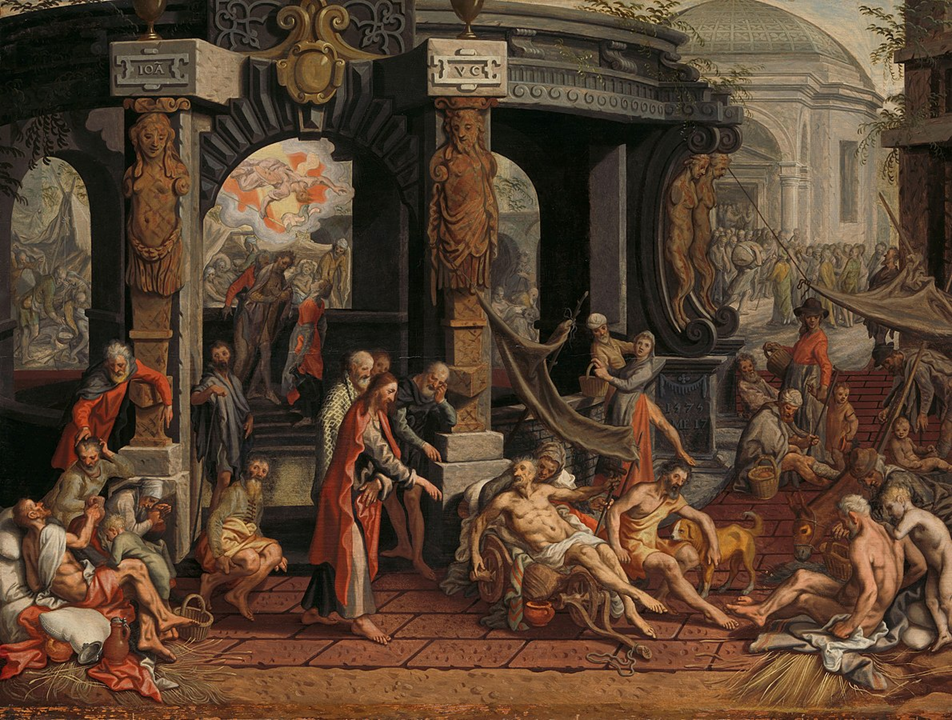
All of this is, however, much less obvious to the general reader of East Coker IV than the reference to Christ and His Passion. Eliot blends this with all the Socratic imagery, having been well aware of the popular image of Christus Medicus in the ancient Church. It can be found in Origen, Tertullian, St Cyprian of Carthage, St Ambrose of Milan, St Jerome, St John Chrysostom, and, above all, in St Augustine.
Christus Medicus derives from all the numerous Gospel scenes in which Jesus heals both physical and spiritual diseases (casting demons out), as well as his own declaration that he is a doctor: “They that are whole need not a physician; but they that are sick.” (Luke 5:31). Augustine in particular, in the image of Christ-the-Physician, fused the Gospels with the great Greco-Roman tradition of seeing philosophy as the therapy of the soul.
Eliot says in the second stanza:
Our only health is the disease
If we obey the dying nurse
Whose constant care is not to please
But to remind of our, and Adam’s curse,
And that, to be restored, our sickness must grow worse.
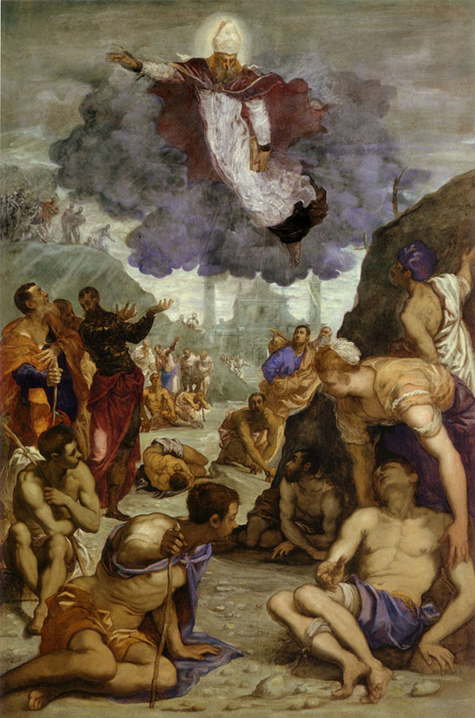
The dying nurse can have, naturally, various meanings, but one of them is the Church, whose “constant care is not to please”. Christian therapy is not what is today associated with psychotherapy – quick and easy elimination of pain, fear, and depression, and the increase of happiness and well-being. For Eliot, the Church’s mission is to remind her members of sin, which is depicted here, quite Platonically, as a disease of the soul. This recognition of our spiritual disease is the path to health, as in Seneca’s apophthegm: Initium est salutis notitia peccati (“The beginning of health is the awareness of sin”, Ep. 28.9). Even more, the ultimate cure is death itself, the Christian life being exercise in dying.
The mysterious figure of a “ruined millionaire” can be read as Christ (even though many scholars associate him also with Adam).[4] The figure of “bankruptcy” evokes kenosis, the self-emptying of the divine Logos (Phil 2:5–11), who “though he was rich, yet for your sakes he became poor, that ye through his poverty might be rich” (2 Cor 8:9). Christ turns the whole world into a hospital for sick souls and the therapy conducted in this hospital is paradoxical. The divine Doctor, assisted by the Dying Nurse, lets His patients slowly die “of the absolute paternal care”. Christ said: “For whosoever will save his life shall lose it: but whosoever will lose his life for my sake, the same shall save it.” (Luke 9:24; cf. also Matt 10:39, 16:25; Mark 8:35; John 12:25).

This Lenten therapy of purification by dying is described as a Platonic “ascent of the soul” (ἀναβάσις). The Socratic image of “the chill ascending from feet to knees” stands for the continuous turning away or con-versio from our excessive entanglement with the body and the senses (that is, the fragmentary and the transient) and our turning towards our deepest self – and God, who is present in it (that is, what is whole and eternal). And here Eliot finally departs from Classics, when, in the last stanza of East Coker IV, he raises the ultimate symbol of healing: the Cross, liturgically reenacted in the Sacrament of the Eucharist.
The dripping blood our only drink,
The bloody flesh our only food:
In spite of which we like to think
That we are sound, substantial flesh and blood –
Again, in spite of that, we call this Friday good.
The Platonic ascent is suddenly reversed by the descending movement of the Incarnation of the Logos. The images of drinking the blood and eating the flesh are shockingly concrete. But they, too, are Platonic exercises in dying, in purification, in ascent, only this time they are Christian Platonic practices, grounded in the faith in the Incarnation. The folly of the Cross, by which “we call this Friday good”, entails acceptance of suffering and, as Simone Weil said, “the extreme greatness of Christianity lies in the fact that it does not seek a supernatural remedy for suffering but a supernatural use for it.” This idea lies at the heart of Eliot’s Lenten vision of spiritual therapy, which so craftily weaves Classical motifs into the fundamentally Christian context of his Four Quartets.

Mateusz Stróżyński is a Classicist, philosopher, psychologist, and psychotherapist, working as an Associate Professor in the Institute of Classical Philology at Adam Mickiewicz University in Poznań, Poland. He is interested in ancient philosophy, especially the Platonic tradition. His most recent books are The Human Tragicomedy: the Reception of Apuleius’ Golden Ass in the Twentieth and Twenty-First Century (ed., Brill, Leiden, 2024) and Plotinus on the Contemplation of the Intelligible World: Faces of Being and Mirrors of Intellect (Cambridge UP, 2024).
Further Reading:
P.R. Kolbet, Augustine and the Cure of Souls: Revising a Classical Ideal (Univ. of Notre Dame Press, IN, 2009).
W.F.J. Knight, “T.S. Eliot as a Classical Scholar,” in N. Braybrooke (ed.). T.S. Eliot: A Symposium for His Seventieth Birthday (Rupert Hart-Davis, London, 1958).
Paul Murray, T.S. Eliot and Mysticism: The Secret History of Four Quartets (St Martin’s Press, New York, 1991).
Notes
| ⇧1 | Philip Headings writes more about this: “As infatuation with the life in time dies out, the chill ascends as it did for Socrates in Plato’s Phaedo ‘from feet to knees’ and the ‘fever sings’ as it did for Agatha and Harry in The Family Reunion ‘in mental wires.’ The sickness grows so bad that something must happen: the purgational suffering that leads to a new orientation must be not only accepted but sought, so that the Furies may be transmuted into the Eumenides of Sophocles’ Oedipus at Colonus, ‘the All-seeing Kindly Ones’.” (P.R. Headings, T.S. Eliot (New York, 1964) 128). The author recognizes the allusion, but does not discuss its meaning and function, making it seem a mere ornament. For whatever reason, he associates the transformation of the Erinyes into the Eumenides with the Oedipus at Colonus, not with Aeschylus’ Eumenides. |
|---|---|
| ⇧2 | In Act II, Scene III, the Hostess says that just before Falstaff died she felt his feet and then his knees, to find them “cold as any stone”. |
| ⇧3 | F. Nietzsche, The Joyful Wisdom, trans. T. Common (Macmillan, New York, 1924), available here. |
| ⇧4 | Sweeney and Smith, among others, identify the “millionaire” with Adam and the “dying sister” with the Church: J.J. Sweeney, “East Coker: A Reading,” in B. Bergonzi (ed.), T.S. Eliot: Four Quartets (Macmillan, London 1969) 52, and G. Smith, T.S. Eliot: Poetry and Plays: A Study in Sources and Meaning (Univ. of Chicago Press, Chicago, IL, 1956) 274–5. For Headings, however, Christ is the millionaire (P.R. Headings, T.S. Eliot, Twayne, New York, 1964, 128). Gardner criticizes those interpretations, arguing that all figures used by Eliot in this section represent Christ (H. Gardner The Composition of Four Quartets, Oxford Univ. Press, 1978). Donoghue responds in a slightly mocking tone that “The analogies of health and disease, surgeons, patients, and hospitals are marginally appropriate, and far too dependent upon our reading ‘the wounded surgeon’ as Christ, ‘the dying nurse’ as the Church, the hospital as the earth, ‘the ruined millionaire’ as God the Father, the briars as the thorns of Christ. When we have effected these translations little remains but the satisfaction of having done so.” (D. Donoghue “T.S. Eliot’s ‘Quartets’: A New Reading,” in B. Bergonzi (ed.), T.S. Eliot: Four Quartets (as above) 221). |