Mateusz Stróżyński
Leszek Kołakowski, in his book about Jansenism, famously speaks about “Pascal’s sad religion.[1] Certainly, the religion which raises the crucifix as its military standard may seem to outsiders to be obsessed with suffering and sorrow.
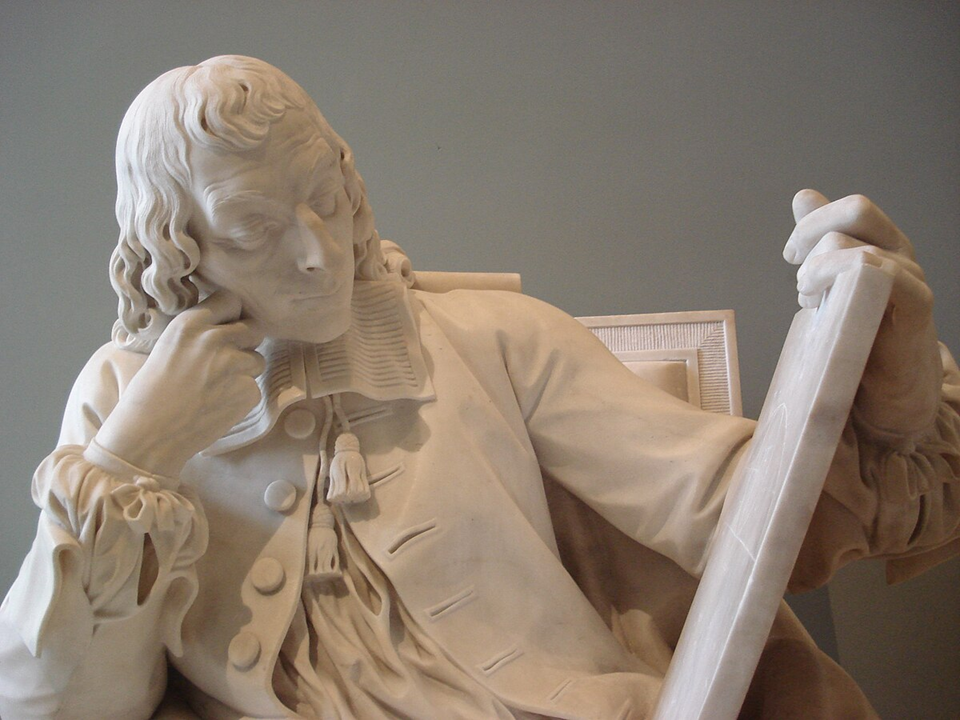
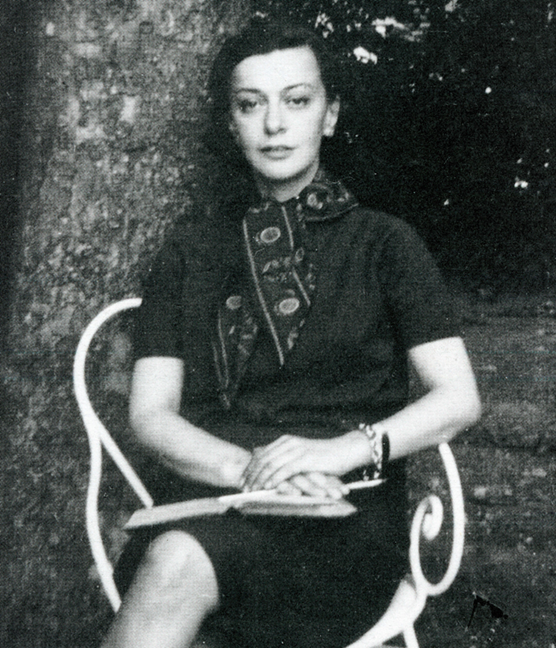
However, in antiquity and the Middle Ages Christianity was something quite different; not a merry religion, in a superficial sense, but one permeated with joy and laughter. Cristina Campo (born Vittoria Guerrini, 1923–77) observes:
It has been said that a smile never played on the Redeemer’s imperious lips, but with what other nuance at the corner of his mouth and between his brows could he have uttered certain phrases – certain remarks and questions, addressed to enemies and friends? “Will ye also go away?” (John 6:67); “Does this offend thee?” (John 6:61); “For which of my good works do you stone me?” (John 10:32); and the terrible: “Friend, wherefore art thou come?” (Matthew 26:50). Or: “Were there not ten cleansed? But where are the nine?” (Luke 17:17).[2]
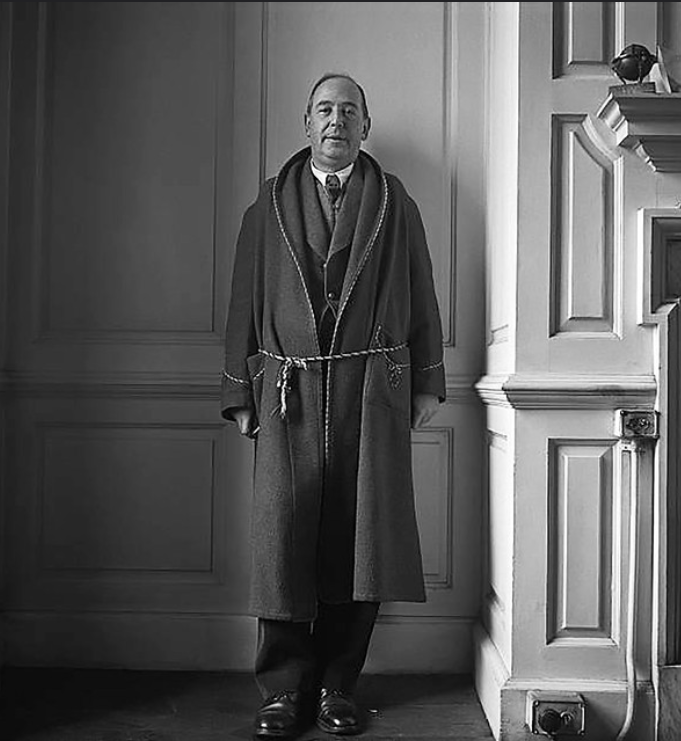
This playful or paradoxically light-hearted dimension of Christianity was particularly important also for C.S. Lewis (1898–1963) who, in a sermon delivered during the Second World War in Oxford, observed: “This does not mean that we are to be perpetually solemn. We must play. But our merriment must be of that kind (and it is, in fact, the merriest kind) which exists between people who have, from the outset, taken each other seriously – no flippancy, no superiority, no presumption.”[3]
In a later essay, Lewis emphasizes that reality as seen through a Christian lens isn’t merely a grave or tragic story: “The whole cosmic story though full of tragic elements yet fails of being a tragedy. Christianity offers the attractions neither of optimism nor of pessimism. It represents the life of the universe as being very like the mortal life of men on this planet – ‘of a mingled yarn, good and ill together’.”[4] And in a lecture inaugurating his fellowship at Magdalene College, Cambridge, Lewis concisely describes the history of mankind as belonging to the genre of “tragi-comedy”.[5]
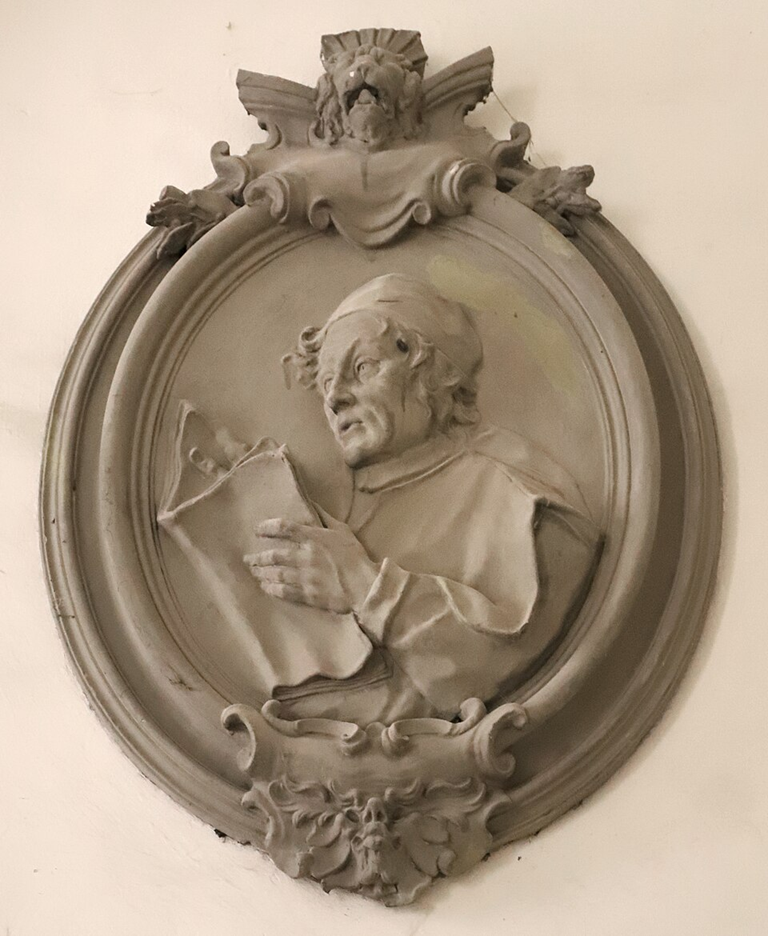
One of Lewis’ favourite Latin authors was Apuleius of Maudarus, whose novel The Golden Ass is a perfect example of the “tragi-comic”, or the genre of spoudogeloion (or joco-serium), which blends the serious and tragic with the playful and comic. Interestingly, Apuleius, being a Platonic philosopher, doesn’t set playfulness and comedy against the seriousness of Platonic metaphysics; on the contrary, he says: “But we of the family of Plato know naught save what is bright and joyous, majestic and heavenly and of the world above us.”[6]) And Marsilio Ficino (1433–99), a great Platonic philosopher and scholar of the Renaissance, quotes Apuleius’ words at least twice, in his Commentarium in Convivium Platonis as well as in De vita Platonis.[7]
No wonder Lewis, being a Christian Platonist to the core, recreated Apuleius’ novel (particularly the tale of Cupid and Psyche at its heart) in his last great work of fiction, Till We Have Faces (1956). He understood Christianity to be the perfect embodiment of a tragi-comic view of life. In his Protrepticus,[8] A contemporary of Apuleius, the Christian Platonic philosopher Clement of Alexandria reads Euripides’ Bacchae as an imperfect premonition and prefiguration of the Gospel drama. The Bacchae, of course, is a rather serious and terrifying play where Pentheus, a Theban king, is ripped to pieces at the climax by his own mother, Agave, as a punishment for his insolence against Dionysus.
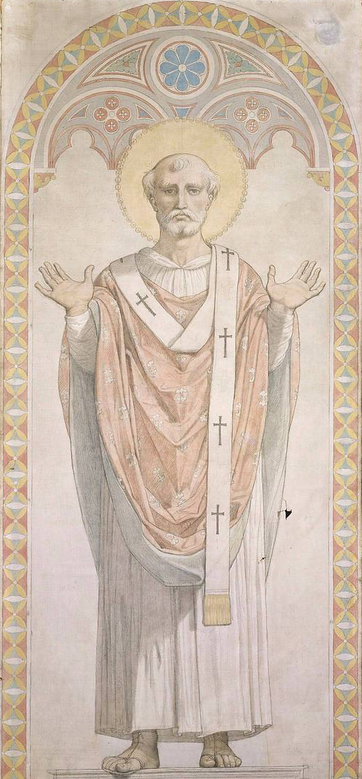
In suggesting this reading, Clement juxtaposes two mountains: Cithaeron, the mountain of Dionysian mysteries, and Zion, the holy mountain of Christian mysteries. In chapter twelve of the Protrepticus, Clement says: “This is the mountain beloved of God: not a subject of tragedies, like Cithaeron, but one devoted to the dramas of truth.”[9] Simone Weil believed that the Gospels are true tragedies, on par with Homer’s Iliad and the masterpieces of Aeschylus, Sophocles, and Euripides.[10]
However, Christianity is τὸ ἀληθείας δρᾶμα, “a drama of truth”, not a mere tragedy. Nor can it merely be comedy. The ‘Grand Miracle’ of Incarnation, as Lewis calls it,[11] seems to be the key element that combines the comic with the tragic in the Christian worldview, overcoming the tragic separations of heaven and earth, and God and mankind. Even more important is the Resurrection of Christ, which resolves the tragic plot of the Gospels into a happy ending beyond all imagining.

J.R.R. Tolkien (1892–1973) shared this Christian Platonic view with his close friend C.S. Lewis, in whose Lord of the Rings the evil Ring of Power is destroyed (and with it the entire kingdom of the Dark Lord Sauron) on 25th March. It is certainly not a coincidence that in the Christian calendar this date marks the Feast of the Annunciation, which celebrates the miracle of the Incarnation, when the Virgin Mary conceived the God-Man in her womb. When Frodo and Sam, the hobbits who brought the Ring of Power to its end in the flames of Mount Doom, wake up in a new world, in which the rule of evil has been broken, their friend Gandalf greets them with joyful laughter:
“A great Shadow has departed,” said Gandalf, and then he laughed, and the sound was like music, or like water in a parched land; and as he listened the thought came to Sam that he had not heard laughter, the pure sound of merriment, for days upon days without count. It fell upon his ears like the echo of all the joys he had ever known. [12]
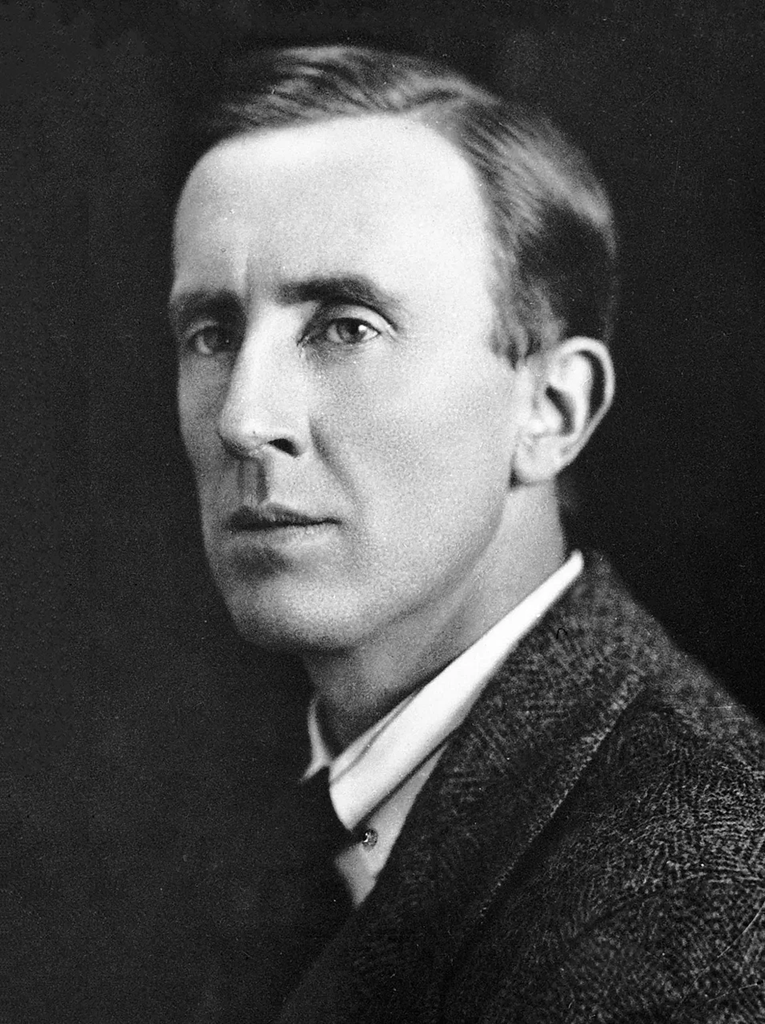
It is to be noted that both Frodo and Sam believed that Gandalf was dead. They saw him falling into the abyss of Moria, and were not aware that he was brought back to life to complete the task of destroying the Enemy. This detail gives Gandalf’s laughter a distinct context: it is the laughter of the Resurrection, the laughter of Easter, when, finally, absorpta est mors in victoria (1 Cor 15:54; cf. Isa 25:8).
Another of the Inklings, Charles Williams (1886–1945), also believed in Christianity as the religion of laughter, associating it with the forgiveness which Easter brings, as is powerfully depicted when the risen Jesus meets the disciples who had left him to die (including St Peter, who thrice denied him in a cowardly manner) with the words: “Peace be with you” (John 20:19). Williams, in an essay published before the end of the Second World War, says: “Forgiveness is a resolution of all into a kind of comedy, the happiness of reconciliation, the peace of love.”[13]
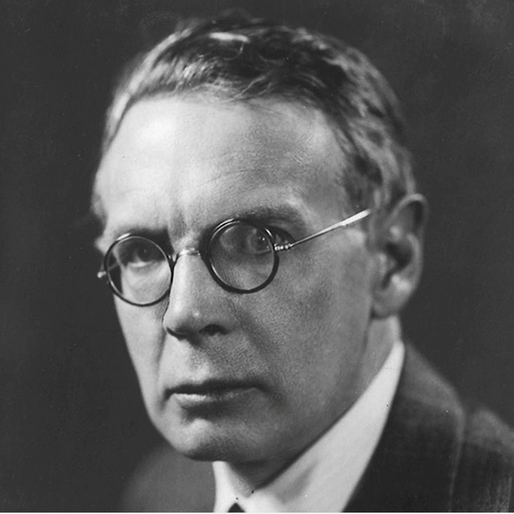
Tolkien, in his famous essay “On Fairy-stories” (1947), first published in a volume dedicated to Charles Williams after his untimely death in May 1945, introduces the concept of eucatastrophe as the core element of fairy-stories. He refers to the notion of catastrophe in Greek tragedy, the moment of the highest suffering and calamity with which many ancient plays culminate, and points out: “Tragedy is the true form of Drama, its highest function; but the opposite is true of Fairy-story. Since we do not appear to possess a word that expresses this opposite – I will call it Eucatastrophe. The eucatastrophic tale is the true form of fairy-tale, and its highest function.” [14]
Tolkien repeats the word “true” three times in this passage, because for him the Christian “drama of truth”, about which Clement of Alexandria speaks, must have a tragi-comic character precisely because it is true. Reality is tragi-comic, because of the grace of Easter. For Tolkien evil and suffering are like a tragic peripeteia, a plot twist, which leads not to catastrophe but to eucatastrophe, because God, the supreme Poet, manifests His goodness not in simply eliminating and abolishing evil, but in using evil to create even more good, as Thomas Aquinas points out in his famous discussion of the so-called problem of evil in Summa theologiae Iª q. 2 a. 3 ad 1.[15] Simone Weil puts it beautifully as well: “the extreme greatness of Christianity lies in the fact that it does not seek a supernatural remedy for suffering but a supernatural use for it.”[16] And this “supernatural use” is essentially the fact that the comic overcomes the tragic.

God’s supreme poetic skill is theosis, the transformation of us, humans, into gods, which has a profoundly comic character. Let’s be serious: us being gods? Yet this is the foundation of Dante’s Divine Comedy. Tolkien says that eucatastrophe is
a sudden and miraculous grace: never to be counted on to recur. It does not deny the existence of dyscatastrophe, of sorrow and failure: the possibility of these is necessary to the joy of deliverance; it denies (in the face of much evidence, if you will) universal final defeat and in so far is evangelium, giving a fleeting glimpse of Joy, Joy beyond the walls of the world, poignant as grief.[17]
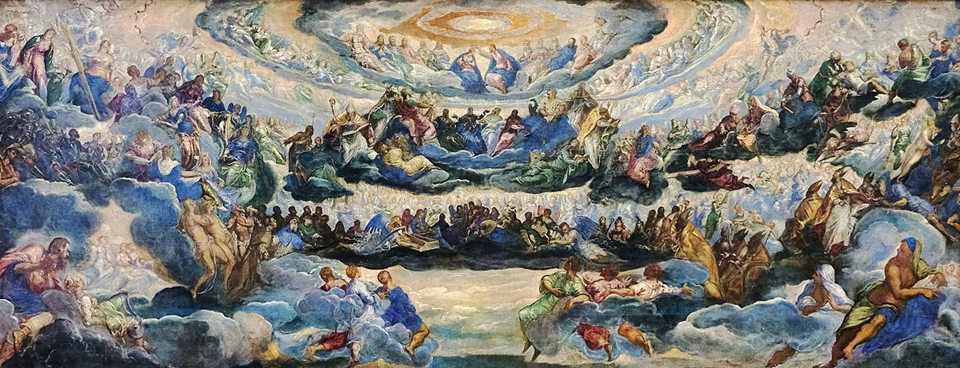
This “joy of deliverance” or “the sudden joyous ‘turn’” is both the gift of forgiveness, as Williams puts it, and Lewis’ “tragi-comic” resolution of the drama of truth. The literary critic Northrop Frye suggests that we should restore the view of tragedy and comedy as literary genres in their deeper unity and their ultimately religious meaning: “The ritual pattern behind the catharsis of comedy is the resurrection that follows the death, the epiphany or manifestation of the risen hero.… The sense of tragedy as a prelude to comedy seems almost inseparable from anything explicitly Christian.”[18]
The sudden surprise of eucatastrophe is the elusive καιρός (kairos), the moment of salvation, about which St Paul writes: “behold, now is the accepted time; behold, now is the day of salvation” (ἰδοὺ νῦν καιρὸς εὐπρόσδεκτος, ἰδοὺ νῦν ἡμέρα σωτερίας, 2 Cor 6:2). And the Inklings understand this moment as the great laughter of Easter, when we realize that evil is finally defeated and can never win.

But this is not something modernity would come up with. A medieval philosopher, Peter Abelard (1079–1142), in his hymn In Parasceve Domini,[19] written for the Good Friday nighttime prayers, says:
Solus ad victimam procedis, Domine,
morti te offerens quam venis tollere :
quid nos miserrimi possumus dicere
qui quae commisimus scimus te lucre ?
Nostra sunt, Domine, nostra sunt crimina :
quid tua criminum facis supplicia?
quibus sic compati fac nostra pectora,
ut vel compassio digna sit venia.
Nox ista flebilis praesensque triduum
quod demorabitur fletus sit vesperum,
donec laetitiae mane gratissimum
surgente Domino sit maestis redditum.
Tu tibi compati sic fac nos, Domine,
tuae participes ut simus gloriae ;
sic praesens triduum in luctu ducere,
ut risum tribuas paschalis gratiae.
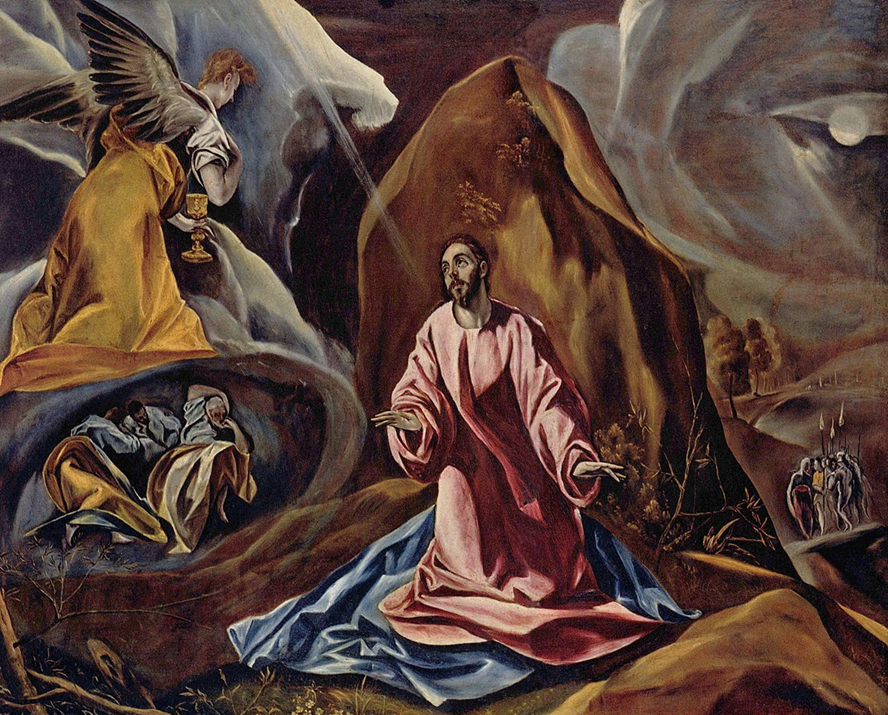
Gustav Holst (1874–1934), not long before his death, wrote music to the English translation of this poem by Helen Jane Waddell (1889–1965) that appeared in Waddell’s anthology Medieval Latin Lyrics as “Good Friday”:
Alone to sacrifice Thou goest, Lord,
Giving Thyself to death whom Thou wilt slay.
For us Thy wretched folk is any word,
Whose sins have brought Thee to this agony?
For they are ours, O Lord, our deeds, our deeds,
Why must Thou suffer torture for our sin?
Let our hearts suffer for Thy passion, Lord,
That very suffering may Thy mercy win.
This is that night of tears, the three days’ space,
Sorrow abiding of the eventide,
Until the day break with the risen Christ,
And hearts that sorrowed shall be satisfied.
So may our hearts share in Thine anguish, Lord,
That they may sharers of Thy glory be:
Heavy with weeping may the three days pass,
To win the laughter of Thine Easter Day.
Abelard speaks here about risus paschalis gratiae, “the laughter of the Paschal grace”, and Gandalf’s laughter in the Lord of the Rings or Williams’ laughter of forgiveness are precisely this. It is the laughter of the Easter morning, of eucatastrophe, when the “joy from beyond the walls of the world” has finally conquered the world and what we thought to be a tragedy turns out to be a comedy. If there is no God, the story ends and, however beautiful it has been, it must be sad that it has ended; whereas if there is a God and He became Man, the end is just a beginning and our laughter will be endless.

Mateusz Stróżyński is a Classicist, philosopher, psychologist, and psychotherapist, working as an Associate Professor in the Institute of Classical Philology at Adam Mickiewicz University in Poznań, Poland. He is interested in ancient philosophy, especially the Platonic tradition. His most recent books are The Human Tragicomedy: the Reception of Apuleius’ Golden Ass in the Twentieth and Twenty-First Century (ed., Brill, Leiden, 2024) and Plotinus on the Contemplation of the Intelligible World: Faces of Being and Mirrors of Intellect (Cambridge UP, 2024).
Further Reading:
E. Gilson, Heloise and Abelard (Hollis & Carter, London, 1953).
M. Stróżyński (ed.), The Human Tragicomedy: The Reception of Apuleius’ Golden Ass in the Twentieth and Twenty-First Century (Brill, Leiden, 2024), introduction accessible here.
J.R.R. Tolkien, “On Fairy-stories,” in Tree and Leaf (Unwin Hyman, London, 1988).

Notes
| ⇧1 | This is the title of the second part of Leszek Kołakowski’s book on Jansenism (L. Kołakowski, God Owes Us Nothing. A Brief Remark on Pascal’s Religion and on the Spirit of Jansenism, Univ. of Chicago Press, IL, 1998, 113). |
|---|---|
| ⇧2 | C. Campo, “With Light Hands,” in The Unforgivable and Other Writings (trans. A. Andriesse, New York Review of Books Classics, New York, 2024) 98–9). |
| ⇧3 | The quotation comes from “The Weight of Glory”, in C.S. Lewis, The Weight of Glory and Other Addresses (HarperOne, New York, 2001, 46). |
| ⇧4 | “Is Theology Poetry?,” in Lewis, The Weight of Glory (as n.3) 118. |
| ⇧5 | See his inaugural lecture from the Chair of Mediaeval and Renaissance Literature at Cambridge University, De descriptione temporum, 1954 (published in C.S. Lewis, They Asked for a Paper: Papers and Addresses, Geoffrey Bles, London, 1962, 12). |
| ⇧6 | Ceterum Platonica familia nihil novimus nisi festum et laetum et sollemne et superum et caeleste (Apol. 64). (English translation: The Apologia and Florida of Apuleius of Madaura, trans. H.E. Butler, Oxford Univ. Press, 1909. |
| ⇧7 | Commentarium in Convivium Platonis (1.4). De vita Platonis is contained in Book Four of Ficino’s letters: see Opera Omnia (Basel. 1576) II 770. Here, as in the Commentary on Symposium, the quotation reads “festum, laetum, caeleste, supernum”. I owe those Ficinian references to Anna Corrias. |
| ⇧8 | See D. Hedley, Sacrifice Imagined: Violence, Atonement, and the Sacred (Continuum, London/New York 2011) 189. |
| ⇧9 | ὄρος ἐστὶ τοῦτο θεῷ πεφιλημένον, οὐ τραγῳδίαις ὡς Κιθαιρὼν ὑποκείμενον, ἀλλὰ τοῖς ἀληθείας ἀνακείμενον δράμασιν (Clement of Alexandria, Protrepticus 12). |
| ⇧10 | S. Weil, Iliad or the Poem of Force: a Critical Edition (ed. J.P. Holoka, Peter Lang Inc., New York, 2006). See also my article on Weil. |
| ⇧11 | C.S. Lewis, Miracles (Geoffrey Bles, London, 1947) 131–58. |
| ⇧12 | J.R.R. Tolkien, The Lord of the Rings (vols. I-III) (Houghton Mifflin, New York, 2002) III 274. |
| ⇧13 | C. Williams, He Came Down: Forgiveness (Faber & Faber, London, 1961) 118. |
| ⇧14 | J.R.R. Tolkien, “On Fairy-stories,” in Tree and Leaf (Unwin Hyman, London, 1988) 62. |
| ⇧15 | Ad primum ergo dicendum quod, sicut dicit Augustinus in Enchiridio, “Deus, cum sit summe bonus, nullo modo sineret aliquid mali esse in operibus suis, nisi esset adeo omnipotens et bonus, ut bene faceret etiam de malo.” Hoc ergo ad infinitam Dei bonitatem pertinet, ut esse permittat mala, et ex eis eliciat bona. |
| ⇧16 | S. Weil, Gravity and Grace (trans. E. Craufurd & M. von der Ruhr, Routledge, London, 2002) 81. |
| ⇧17 | Tolkien, “On Fairy-stories” (as n.14) 62. |
| ⇧18 | N. Frye, The Anatomy of Criticism. Four Essays (Princeton Univ. Press, NJ, 1971) 215. |
| ⇧19 | Peter Abelard, In Parasceve Domini, III: Nocturno (Hymn XLII, in Hymnarius Paraclitensis). |