Shikhar Misra
Where does creation come from? The methodical hands of divine intervention or the chaotic motion of infinite atoms? Or does it arise at the intersection of chaos and structure? Written in the mid-first century BC by Titus Lucretius Carus, De rerum natura (“On the Nature of Things”) explores this question. Lucretius employs poetry to establish a framework for Epicurean physics that provides insight into the construction of reality. For Epicureans, everything is either matter – made up of indivisible atoms – or empty void; nothing can be created from nothing, and nothing can be something without being made of atoms.
Through metaphors, similes and personification, De rerum natura characterizes particles which we can loosely compare to modern atoms and their behavior. This piece will explore how the language Lucretius uses in this six-book poem can help us take a new perspective on modern atomic theory.
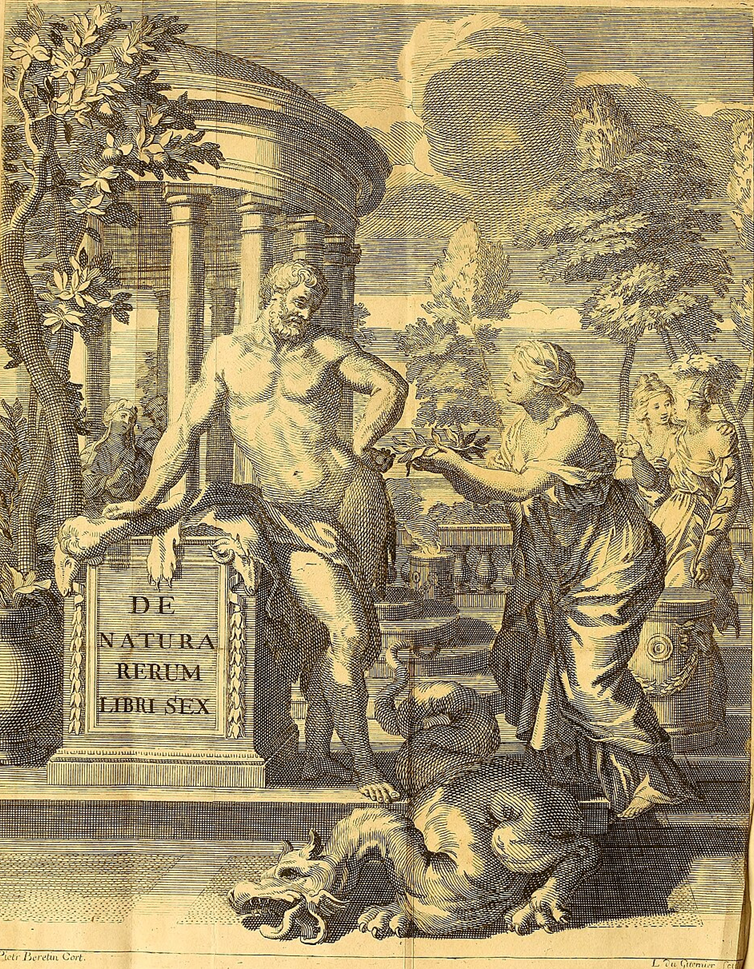
Throughout the work, Lucretius uses extended metaphors of organic growth, sensory prescription and free will to frame his own atomic theory, illustrating the invisible forces that create and shape the world around us and their consequential, inevitable effects. In so doing, he prefigures some of the most philosophically challenging questions in modern physics about observation, uncertainty, and emergence.
In Book 1, Lucretius introduces the rerum primordia (“the first elements”, 1.55) or atomic seeds. He does so by using imagery related to organic and biological processes: the phrases genitalia corpora and semina rerum (“generative bodies” and “seeds of things”, 1.58–9) characterize these elements as fertile and biological agents. The phrase unde natura creet res, auctet alatque (“[the first elements] from which nature builds all things, nourishes and sustains them”, 1.56) symbolizes a motherly life force, building and sustaining her offspring. This organic language has progressed to the idea of growth and life cycle: these seeds are not passive agents, but active ones of creation. Just as real seeds sprout into plants, bear fruit, and return to the soil, Lucretius’ atomic seeds give rise to the world and eventually absorb it back into their invisible form, before finally returning to their initial states.
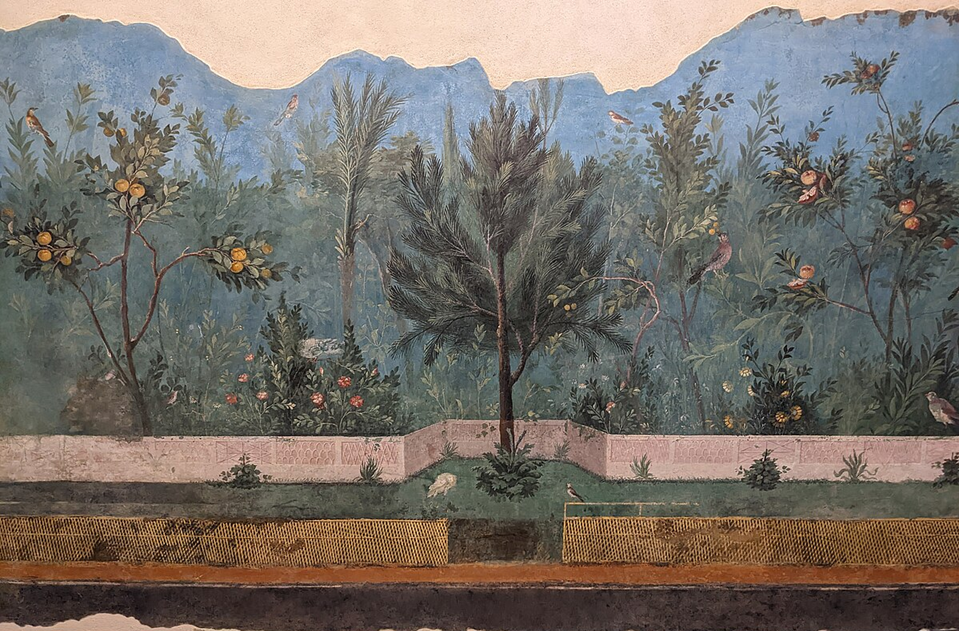
Early in Book 2, Lucretius further develops this organic metaphor by comparing the atomic cycle to a biological life cycle: illa senescere, at haec contra florescere cogunt / nec remorantur ibi; sic rerum summa novatur / semper (“Some things are forced to age, others to blossom in turn, and nothing stays still; so the sum of things is ever renewed”, 2.74–6). Such language describes the dynamic conservation of atomic seeds. The words senescere (“to age”) and florescere (“to blossom”) denote natural and predictable processes that Lucretius compares to the atomic cycle.
Atomic processes are not static; they evolve and grow. In addition, the metaphor emphasizes how atomic processes, just like natural ones, respond to stimuli; they do not change autonomously. Lucretius blurs the line between the natural life cycle and atomic cycle. This pushes the paradoxical perception that atoms have agency but simultaneously follow a predetermined natural path.
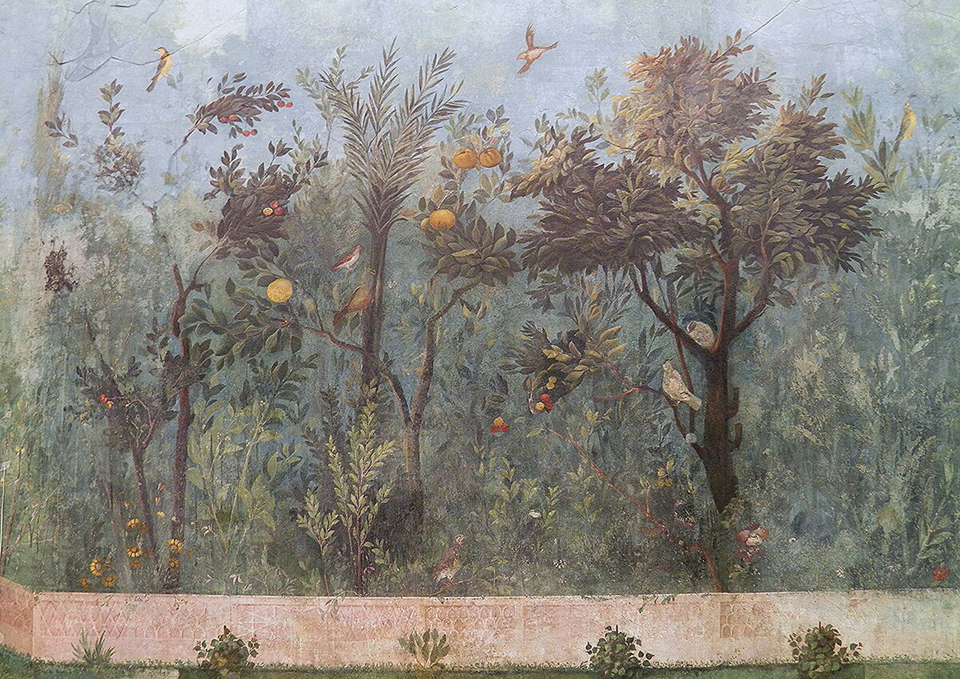
To help readers characterize the behavior of atoms, Lucretius turns to forces with sensory impact. In Book 1, he writes: sic igitur debent venti quoque flamina ferri / quae veluti validum cum flumen procubuere / quamlibet in partem, trudunt res ante ruuntque (“So therefore the gusts of wind must also be borne along, which, just like a powerful river when it overflows drives everything before it in whatever direction it likes”, 1.290–3). He addresses the motions of atoms by comparing their nature to that of wind (ventus), a metaphor he extends by likening the winds to rivers. Crucially, he suggests that winds and atoms choose where to flow: quamlibet in partem (“into whatever direction it likes”) emphasizes its own agency in motion. Yet, while rivers flow in the direction they choose, they are contained by riverbanks, which organize their movements. Rivers or winds or atoms have some random agency in their motion, but their indeterminacy can be contained by some structure.
Atomic interation is hard to grasp intellectually because it cannot be seen with the naked eye, so Lucretius compares atomic capabilities to the gusts produced by wind: quare etiam atque etiam sunt venti corpora caeca / quandoquidem factis et moribus aemula magnis / amnibus inveniuntur, aperto corpore qui sunt (“Therefore, again and again, winds must be unseen bodies, since in actions and behavior they rival great rivers, which are found to be visible bodies”, 1.295–7). How can one feel these gusts? Where did they come from? To resolve the apparent contradiction, winds must be “unseen bodies” (corpora caeca) that can affect our senses and our perception without being observed.
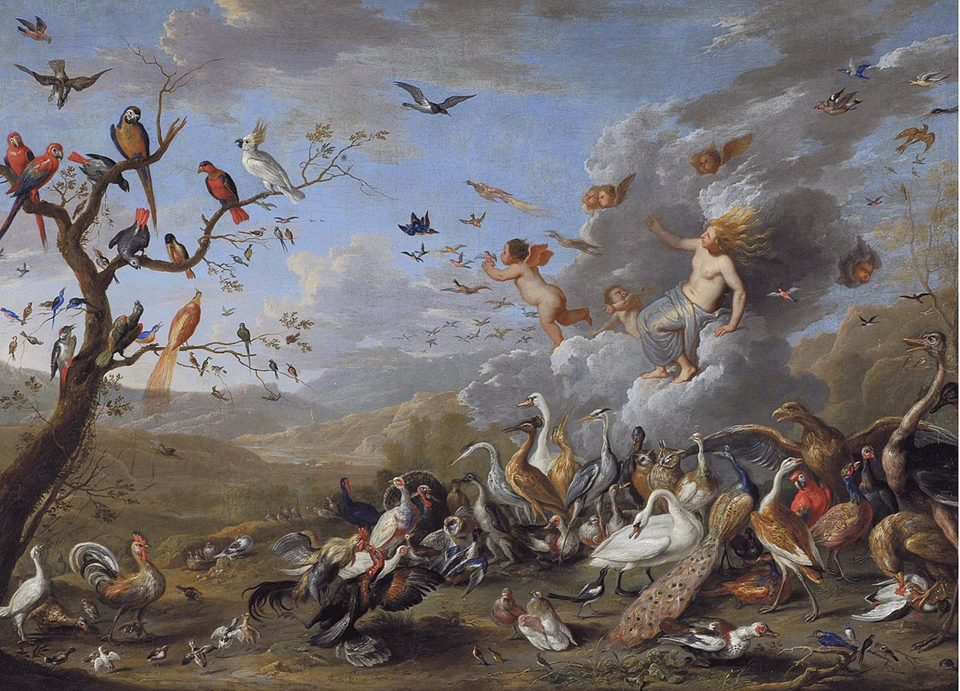
Lucretius argues that the behavior of atoms is intrinsic, but its effects can be observed regardless of human ability to perceive the atoms themselves. We can smell without seeing the atomic seeds come to our nose (tum porro varios rerum sentimus odores / nec tamen ad naris venientis cernimus umquam, 1.298–9). To Epicureans, who were committed to the empirical method, sensory impact validates material existence. Lucretius continues by noting how we cannot touch hot or cold, and cannot see voices (nec calidos aestus tuimur nec frigora quimus / usurpare oculis nec voces cernere suemus, 1.300–1). He demonstrates that even though some forms of matter are invisible, they must be real because they have sensory impact. By drawing on the different senses – smell, touch, hearing, taste and sight – Lucretius contends that existence is not defined by being seen but by producing tangible effects. This gives perspective to the relationship between atoms and the human senses, which do not define reality, but rather, detect and reveal parts of it.
Lucretius builds upon his atomic theory by linking the physical qualities of atoms to the existence of human agency and free will. In Book 2, he introduces the concept of the atomic clinamen (“swerve”): incertisque locis spatio depellere paulum… / quod nisi declinare solerent, omnia deorsum / imbris uti guttae caderent per inane profundum / nec foret offensus natus nec plaga creata (“and in uncertain places, they swerve slightly in space… If they did not swerve, everything would fall downward, like raindrops through the deep void, and there would be no collisions, no impacts would be produced”, 2.219–23). The swerve (depellere paulum, declinare) brings about uncertainty and change. For if atoms moved in predetermined and predictable lines, all action would be bound to what already existed. Nothing new and non-deterministic would occur; Lucretius claims that this slight (paulam) change in motion is the reason that there is creation and freedom within nature.
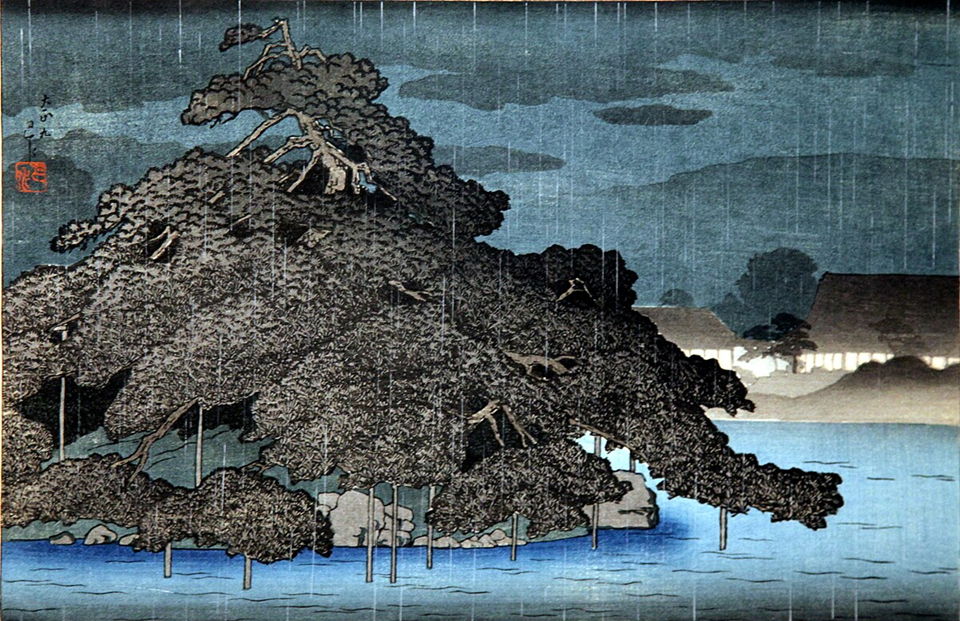
Atoms that do not swerve are compared to falling raindrops (imbris uti guttae caderent per inane profundum, 2.222). Raindrops in and of themselves are a product of nature, part of an endlessly self-renewing cycle, but will not inherently create anything tangible without deviation from this eternal fall in the void. Raindrops are governed by classical laws of physics in a deterministic system and must interact with external objects upon colliding with the ground. This reinforces the idea that nature without randomness is sterile, unproductive, and ultimately lifeless. Lucretius writes about the intimate connection of atomic movement with moral and human agency. He claims that, if all motion were deterministic, humans would be passive beings without any freedom or free will:
denique si semper motus conectitur omnis…
nec declinando faciunt primordia motus
principium quoddam quod fati foedera rumpat…
libera per terras unde haec animantibus exstat
unde est haec, inquam, fatis avolsa voluntas?
Finally, if all motion is always bound together… and the atoms do not produce a motion by swerving, a kind of beginning that breaks the bonds of fate… from where does this free will for living beings across the earth come, from where, I say, does this will come that has torn loose from fate? (2.251–7)
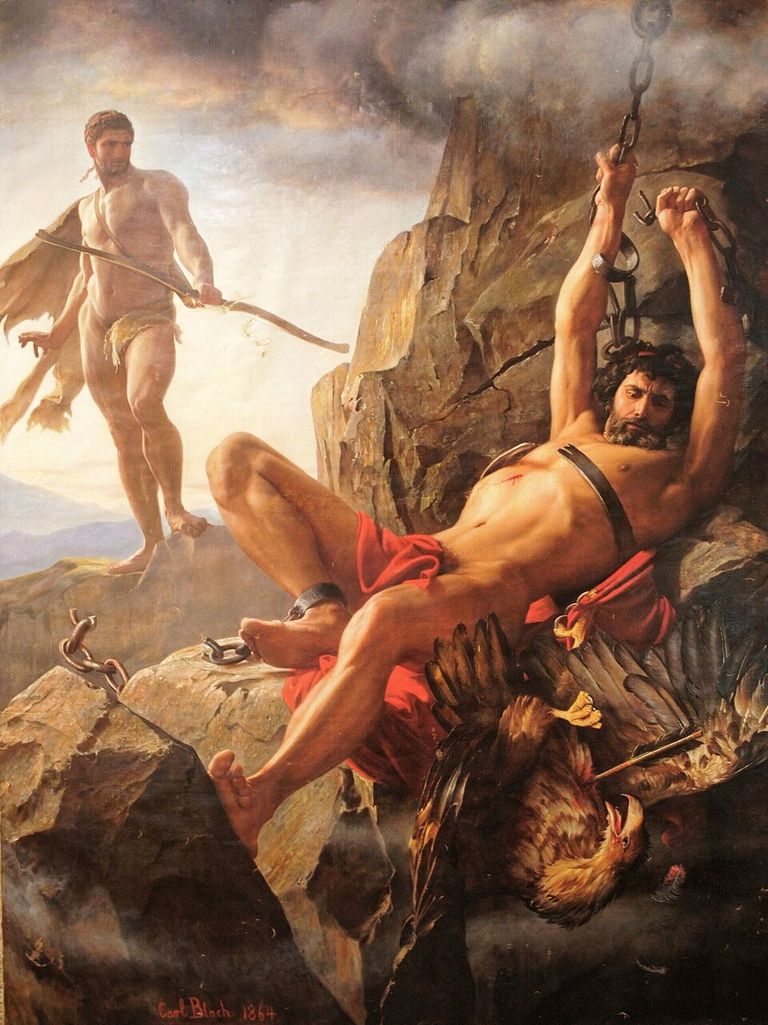
Lucretius states that their choices would be limited by physical laws within a linear chain of events. However, the swerve introduces the slightest of variables which in turn breaks that sequence. Thus he turns the swerve (declinare) from a slight physical deviation to the philosophical foundation for human agency. The words avolsa voluntas fatis (“torn loose from fate”, 2.257) alongside declinamus item motus… sed ubi ipsa tulit mens? ( “by which we likewise swerve our motions… but where the mind itself leads”, 2.259–60) suggests the almost violent image of our struggle against determinism. The image parallels the deviations of atoms with the choices made by the human mind.
Through this metaphor we gain insight into the beginnings of human free will: it comes from a break in casual behavior and is based on a fundamental idea constructed within reality – the swerve. The physical swerve and mental choice are held under the same principle: that freedom and creativity emerge from indeterminism.[1]

The language in De rerum natura surrounding nature gives a new outlook on atoms: they should be viewed as organic, emergent, random, and yet controllable. Lucretius’ universe is framed by uncertainty and invisible forces that offer tangible change. His concept of the atomic swerve gives rise to atomic and human freedom, novelty, and innovation.
Modern quantum theory currently grapples with some of the issues that Lucretius attempted to address over 2,000 years ago. In the Copenhagen Interpretation of quantum mechanics, quantum particles do not have a definite position until they are observed. These particles exist in a probabilistic potential function described as a ‘wavefunction’. The wavefunction of a given particle can be evolved deterministically and the particle exists in a ‘superposition’ (whereby it can exist in multiple states simultaneously) of locations governed by the wavefunction. Lucretius’ atoms, like quantum particles, are random and flowing, but there is some order to their disorder. When measurement is made and the wavefunction collapses, what is observed is a tangible “choice” of the particle with respect to its position.[2] This mirrors Lucretius’ idea that the swerve gives atoms freedom which leads to creation and novelty.
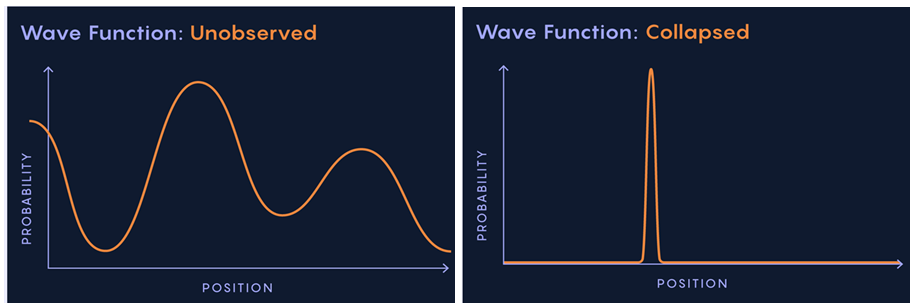
Both the Copenhagen Interpretation of quantum mechanics and Lucretius’ view of Epicurean physics suggest that emergence depends on uncertainty. In quantum theory, when the wavefunction collapses and a random outcome is chosen, one concrete event from a range of possibilities occurs. Likewise, Lucretius’ clinamen introduces enough randomness to allow creation, choice and free will to take place.
However, the Copenhagen Interpretation remains inconclusive about what is happening before observation. It relies on the superposition, in which observation is what defines outcome. Lucretius’ take on atomic behavior shows a universe where atoms are constantly in motion and swerving regardless of any observation, human or otherwise. According to Lucretius, the extent of observation is limited to partial sensory detection. Yet these sensory impressions, though incomplete, nevertheless point to a reality that exists independently of our perception.

Shikhar Misra is a senior at Hackley School in Tarrytown, New York. He is passionate about both physics and philosophy, where he is able to explore their intersection through Classical literature. By reading Lucretius’ De rerum natura he explores the ways in which ancient ideas about nature change the way modern scientific theory can be viewed. At Hackley, he is a co-leader of the Hackley Classics Club and a co-editor of the school’s Classics publication, The Concordia.
Further Reading
Cassius Amicus, “Epicurean physics,” NewEpicurean, 31 Mar. 2012, available here.
Jan Faye, “Copenhagen Interpretation of quantum mechanics.” Stanford Encyclopedia of Philosophy, 2024, available here.
Tim O’Keefe, Epicurus on Freedom (Cambridge UP, 2005).
Simon Trépanier, “Lucretius.” Stanford Encyclopedia of Philosophy, 2023, available here.
Natalie Wolchover et al., “What is a particle?” Quanta Magazine, 28 Aug. 2023, available here.

Notes
| ⇧1 | Although Lucretius sets out how humans can initiate their own movement at DRN 4.877–906, it remains a much-debated problem how precisely Epicurus and his follower Lucretius understood the mechanistic relationship of the atomic swerve and human agency. See O’Keefe in Further Reading. |
|---|---|
| ⇧2 | See further Jan Faye, “Copenhagen Interpretation of Quantum Mechanics,” Stanford Encyclopedia of Philosophy, 2024, available here. |