Another garland gathered
We enjoy turning up, now and then, poems and skits in Latin and Greek, original and translated. Here we have for you another little selection of playful pieces, all united by a connection with one of the great Classical schools: Eton College.
Tennyson in English and Latin Hendecasyllables
In the Cornhill Magazine for December 1863, Alfred Lord Tennyson (1809–92) took up Catullus’ favourite metre, the Phalaecian hendecasyllable, to show the oddity of how such a Classical verse form sounded in English – where a stress accent governs the metre, rather than the quantity or ‘weight’ of a syllable.[1] Tennyson provocatively addresses this skit, much as Catullus himself would have done, to all those “indolent reviewers” who might decide to express their haughty opinion:
O you chorus of indolent reviewers,
Irresponsible, indolent reviewers,
Look, I come to the test, a tiny poem
All composed in a metre of Catullus,
All in quantity, careful of my motion,
Like the skater on ice that hardly bears him,
Lest I fall unawares before the people,
Waking laughter in indolent reviewers.
Should I flounder awhile without a tumble
Thro’ this metrification of Catullus,
They should speak to me not without a welcome,
All that chorus of indolent reviewers.
Hard, hard, hard it is, only not to tumble,
So fantastical is the dainty meter.
Wherefore slight me not wholly, nor believe me
Too presumptuous, indolent reviewers.
O blatant Magazines, regard me rather –
Since I blush to belaud myself a moment –
As some rare little rose, a piece of inmost
Horticultural art, or half-coquette-like
Maiden, not to be greeted unbenignly.
A generation or so later, around the year 1896, John Arthur Godley (1847–1932), Under-Secretary of State for India and later 1st Baron Kilbracken, cousin of the Classicist and poet A.D. Godley, tried his hand at putting Tennyson’s verses into Catullian Latin:
Adeste, o critici otiosiores,
securum genus otiosiusque;
in ius en ego tantulum poema
afferor numeris Catullianis,
ictum legitimum pedemque servans
ut qui vix glacie labante fertur,
ne me plebe palam repente lapsum
rideant critici otiosiores.
sin gressu titubans parumper ibo
tuto per numeros Catullianos
sic me non inamabili salutent
affatu critici otiosiores;
est enim, est aliquid pede isse tuto,
vix tam difficili sinente Musa,
quare nec nihili admodum, nec audax
credar, o critici otiosiores;
immo, turba loquax librariorum
(ut me seposito pudore laudem,)
sim novus quasi flosculus, roseti
intimi specimen, procaciorve
virgo, non rigido vivenda vultu.
(Published in Lord Kilbracken‘s Translations into Greek and Latin Verse, pr. pr., 1924)

Doctor Deighton’s Bovril Bash, in Greek Iambics
Over four weeks, in Februrary to March 1904, the 61-year-old “Doctor” William Deighton of Durham undertook an audacious feat for the feet: to walk the length of Britain, from Lands End to John o’ Groats, on a route nearing 1,000 miles. Curiously, this endeavour of pedestrianism was sponsored by Bovril, the meat extract company. “The Indomitable Deighton”, as advertisements made clear, fuelled his endeavour solely with this brown paste.



Deighton had spent fifteen years as an athletic trainer for the University of Durham, where students had afforded him the affectionate nickname “Doctor”. The academics, for their part, were rather warier of this character. One such was the Classicist and poet Herbert Kynaston (1835–1910) – not to be confused with his uncle, the Classicist and poet Herbert Kynaston (1809–78)). Then Canon of Durham and Professor of Greek, Herbert Jr took a dig at Dr Deighton’s character and enterprise, albeit through the decorous mode of Greek iambic trimeters (on which topic he had, quite literally, written the textbook).
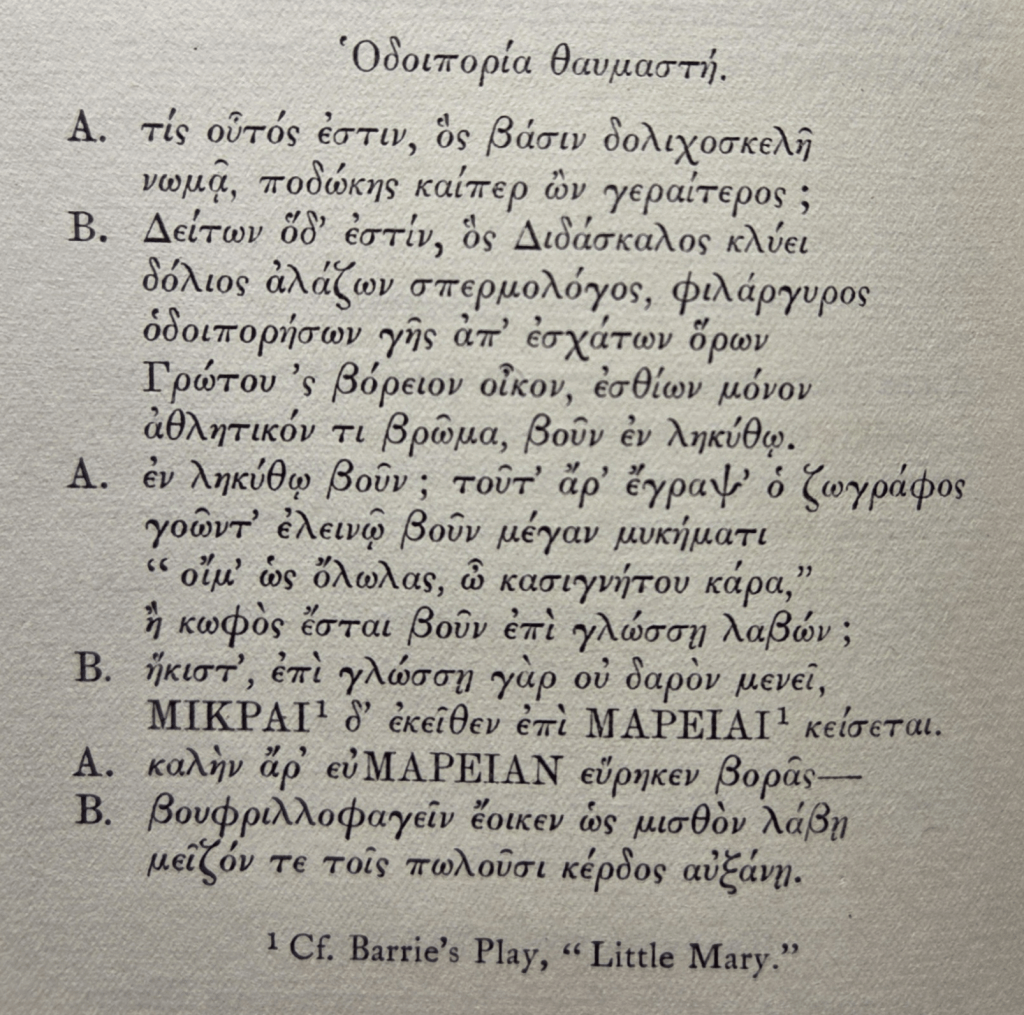
A: Who is this person who guides his long-striding step, swift of feet despite being an older man?
B: That’s Deighton, who is called a Doctor – a trickster, boaster, blabberer, money-grabber, who is to journey from the farthest fringes of the land to the northern home of Groat, eating only some athletic fodder: cow in a cup [bovril].
A: Cow in a cup eh? Is this what the artist depicted that great ox lowing with a pitiable moo, “Alas! You’ve died, my brother!” Or will he be dumb with an ox on his tongue?
B: Not at all, for it doesn’t stay long on the tongue but then will be staged in Little Mary / will be put in Marmite.[[Kynaston refers to J.M. Barrie’s play Little Mary, which had been staged the year earlier. Our assumption is that “Little Mary” is an indirect pun on “Mar-mite”, the rival meat-free paste that was launched in Britain in 1902. If anyone thinks more is going on, or knows the plot of Little Mary, please do get in touch!]
A: He’s found a good abundance of food then –
B: Eating Bovril seems to pay a wage and increase greater profit for those selling it.

Cross Words and Party Bags
The Interwar period was a time of great cultural change, but was still one which the unchanging media of Latin and Greek verse could capture. This is particularly evident in the poetry of Allen Beville “The Ram” Ramsay (1872–1955), who spent his days teaching at Eton and Cambridge. In 1935, just a couple of decades after the Liverpudlian Arthur Wynne introduced the crossword to the world in the New Yorker (21 Dec. 1913), Ramsay took to Latin verse to express his wonder at the ubiquity of the crossword craze:
Cross-words
Vndique nunc homines cruciformia verba resolvunt;
de solido partem mos capit ille die.
nec stulti faciunt; doctissima turba virorum
huic operi passim dedita tota sedet.
causidici cessant et rupta negotia linquunt;
utraque deserta est curia; castra silent.
credere si fas est, mediis sermonibus errant
pontifices, si vox forte petita subit.
saepe sedent nostri contracta fronte magistri
dum tacitos agimus, cauta caterva, iocos.
at, quales, rogitas? cocto properatius ovo
solvimus occultas nos quoque, Marce, cruces.
People everywhere are now solving cross-words; that habit takes up a good part of their day. And it’s not stupid people doing it: the cleverest crowd of men are sitting everywhere, entirely devoted to this task. Lawyers break off and leave their business unfinished; both chambers of parliament are empty; the military bases are silent. If it’s right to believe it, priests lose their thread in the middle of sermons, if perchance the word they were seeeking crops up. Often our teachers sit with furrowed brow while we – a wary bunch – are tackling our silent games. But of what kind are they, you ask? Marcus, we also solve hidden cruces [=textual problems, lit. “crosses”] faster than boiling an egg.
In this same collection of poems (Frondes Salicis, Cambridge UP, 1935), Ramsay also offered up his own list of Apophoreta (leaving gifts from a party), on the model of Martial Epigrams 14. These include:
Thermos [flask]
Sive premit frigus, de me, Torquate, calorem,
Sive calor vexat, frigora grata bibe.
If the cold is pressing, drink warmth from me, Torquatus, or if the heat is troubling you, drink some welcome cold.
Corkscrew
Ad vinum sitiens presso sub cortice clausum
non sine me certam scis aperire viam.
You who are thirsting for wine contained beneath a compressed cork don’t know how to open up a true path without me.
Shaving-soap
Spuma decet pulcros iuvenes – procul este, Catones;
diligit hirsutas nulla puella genas.
Foam is the thing for handsome chaps – stay far away, Cato and co.! No girl loves hairy cheeks.
Paper-knife
Quo prius in silvis elephas fera bella gerebat
nunc tenues cartas leve secabit ebur.
The smooth ivory with which an elephant once waged wild wars in the woods will now cut open thin paper.
Pack of cards
En, fustes tibi sunt, adamantes, corda, ligones;
vincere te iubeat regius ille ligo.
Look, you’ve got clubs, diamonds, hearts, spades; may that King of Spades bid you victory!

Ronnie’s Originals for Maurice’s Translations
Amid the unimaginably grim scenes of the First World War, Maurice Baring (1874–1945), a member of the Royal Flying Corps, found occasional distraction from the horrors by turning to literary play. In 1915–16 he wrote a wide range of short English pieces, on all manner of themes, which were meant to have the feel of being translations of (non-existent) literature. As he later reflected, “When I started writing them it was my aim to write fictitious translations of imaginary originals from ancient or modern languages on any subject I could think of.”
When first published (anonymously), readers assumed that the original pieces had been deliberately omitted by the author. A few years later, Baring’s friends set about producing the “originals” from and for the “translations”, in Latin, Greek, French, Italian and Russian. Taking up the challenge for the Classical languages was his pal, the brilliant Ronald Arbuthnott Knox (1888–1957).[2] Here are two examples from the set:
Just as in the Spring a kingfisher darts across the river, and then disappears into the trees, so didst thou come, and, even as the sun lit up thy shining plumage, so didst thou vanish. Too soon, alas! But in the island dedicated to the sun where thou sleepest, thou hast found a golden nest.
ἀλκυόνων οἵα μέσου εἴαρός ἐστι κέλευθος
ἐς δασὺν οἰχομένων δρυμὸν ὑπὲκ ποταμοῦ.
ὣς ἐφάνης, πρῶτον δ’ ὅτε παμφανόωντα κάρηνα
ἠέλιος λάμψας ἔδρακεν, ὣς ἀπέβης·
ὠκύμορος σὺ μὲν ἐνθάδ’ ἄγαν· νῆσον δὲ καθεύδων
χρυσεόκοιτον ἔχεις, ἠελίου τέμενος.
The soft rain which had lasted all day long was blown away towards the evening.
Against the golden horizon the sheds were black, and higher up, the ragged clouds were like shot-riddled banners fluttering and drifting in tumultous concourse, and veiling all save glimpses of a hidden sanctuary of fire and light.
We looked and we wondered.
I said to you the sky was like those which bold painters paint and men disbelieve in when they see them painted, and you agreed, laughing.
I wondered what the pageant of rain and storm and fire meant, so much storm and so much glory, the end of the world or the end of the war?
Alas! It meant neither. It meant that this was the last time that you and I should look upon the landscape and talk and laugh and wonder together.
(Bertangles, October 30, 1916)
Imbre levi consumpta dies, sed vesper obortus
nubila dispulerat:
vinea discrimen croceum subtexuit umbris
aetheris atque soli;
desuper horrebant nubes – aulaea putares
scissa trahi iaculis.
ex oculis, quocumque (minax seu turba) feruntur,
omnia praeripiunt,
nec nisi rara patent magni penetralia mundi,
luridus igne polus.
res tenet attonitos. “Imitatus talia pictor”
(sic ego forte prior)
“audax displiceat nimium.” sententia ridet
haec tibi, vel similis.
mox dubito, pluviae tempestatisque ruina
quid sibi tanta velit,
splendida diluvies? nostro finemne labori,
terrigenisne ferat?
mens hominum praesagaga parum! nec defuit omen:
nam loca prospicere,
mirari simul, et voces miscere iocosas,
non iterum licuit.
Adverts, Lullabies, Limericks and Lines
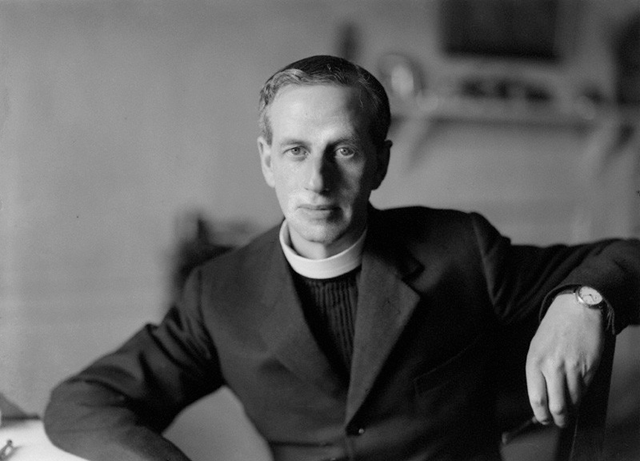
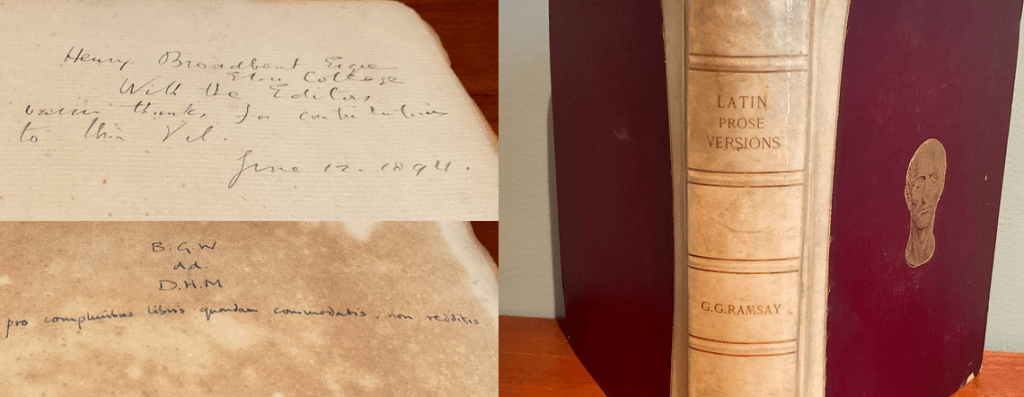
The best of librarians find time amidst the books to make some fun of their own. One such figure was Henry Broadbent (1852–1935), Librarian of Eton, who took delight in his spare moments by translating anything – quite literally anything – into Latin and Greek verse. Here is a small selection of what were gathered into his wonderful little volume, Leviora (Spottiswoode, Ballantyne & co., Eton, 1924):
Newspaper adverts
A young, attractive Lady, extremely well connected, desires to be SECRETARY or COMPANION to a Lady. Accustomed to the highest society; town and countryl has travelled; of cultured tastes, yet light-hearted; fond of all sports and outdoor life. – Write Box H 996, Times, E.C. 4.
Matronae fieri comes aut libraria summae
patricia suavis gente puella cupit.
principibus sociata viris rus novit et urbem,
nec timuit verso discere plura solo:
docta, iocosa tamen, nulli non dedita ludo,
pallida sub tectis delituisse fugit.
littera, si petis, octava et millensima nomen
arca (sed e numero bis duo tolle) dabunt:
quarta ubi pars mediae regionis spectat ad ortus,
temporis et referunt acta diurna vices.
Parrot, handsome Amazon: clever talker, whistler; tame; ideal pet; good companion; guarantee. £8 10s., with cage. – Smart, 23 Dancer-road, Fulham, S.W. 6.
Psittacus en venit pulcher, prope Amazona natus;
sibilat et loquitur belle, feritate remota;
suavior haud comes esse potest; emere at licet octo
cum cavea aureolis; pignus neque deerit ementi.
lautus ego; at domus est vicensima tertia, Pago
qua Saltatorum vicus se tendit in Amplo,
Africus et nomen (sexta haec pars) dat regioni.
Baa, Baa, Black Sheep
“Dic mihi, dum reddo balatus, est tibi lana,
nigra ovis?” “En, saccos tres bona lana replet.”
primus erit domino merces alterque colonae
tertius – ad vicum quaere casam – puero.”
Twinkle, twinkle, little star
Perge age tranquillam sic stella micare per aethram:
qualis sis mecum, parvula, miror ego:
nempe tibi est supra terras altissima sedes,
inque polo luces haud adamante minus.
Limericks and the like
There was a young man who said “Damn!
It appears that I am what I am;
A creature that moves
In predestinate grooves:
I’m not even a ‘bus, I’m a tram.” (Maurice Hare)
“Esse, malum, videor quod sum” (sic, Balbe, gemebas)
“carpere fatali tramite cogor iter:
publica vel nequeo mula ire redire per urbem,
perpetuam versans tristis asella rotam.”
As a rule, a man’s a fool;
When it’s hot, he wants it cool;
When it’s cool, he wants it hot:
Always wanting what is not. (Anon., 1870s)
ὦ τῆς ἀφροσύνης· ψύχους δεῖ θαλπομένοισι,
ψυχομένοις θάλπους· αἰὲν ἀπόντος ἔρως.
Stultus homo est nimium; frigus placet usque calenti,
frigentique calor; quod cupid illud abest.
Swans sing before they die; ‘twere no bad thing
Could certain persons die before they sing. (S.T. Coleridge)
τοὺς κύκνους λόγος τις ᾆσαι πρὶν θανεῖν· ἀνὴρ δ’ ὅδε
εἰ θάνοι πρὶν αὖθις ᾆσαι, μῶν ἀεὶ στένοιμεν ἄν;
Anta canit cygnus, quam fata extrema vocarint:
O si fata Neam, quam canat, ante vocent. (Francis Wrangham)

Notes
| ⇧1 | For more on what this all means, you can try this introductory piece. |
|---|---|
| ⇧2 | An excellent piece on the Latin and Greek poetry of Knox can be found here by the always interesting Tom Keeline on the Classics for All blog. |