J.S. Ubhi
I learnt my Latin to the smell of chicken fat. This is no attempt at a 21st-century urban twist to Proust’s madeleines, no pun on Romeo and Juliet II.2, no odd synaesthetic joke. It is a simple, boring, statement: I learnt my Latin to the smell of chicken fat.

Like the vast majority of the country, I had no recourse to Latin or Greek at school. Oh, there was a modest “gifted and talented” programme, but that saw local university students come and teach basic Japanese, not Latin. Anyway, my friends and I were summarily removed from that programme (and rightly so) for brawling. So, at an age where my middle-class equivalents were readying themselves for university, embarking on trendy gap yahs, or even attending summer schools, I decided to teach myself Latin in between shifts at work. My colleagues found this pretension amusing but nevertheless helped set up some tables in the backrooms usually used for (don’t worry what goes on in restaurant back-rooms!), and in between working as a prep chef or serving front of house I would work through Latin declensions and conjugations.

When I, now a secondary-school Classics teacher, look back at this period I cannot help but be puzzled by the oddness of the auto-pedagogy. True, thriftiness was the governing virtue: my principal tools were handwritten notes of out-of-copyright books online, audio-recordings burned onto CDs, and anything that could be got cheaply. Composition exercises based on the Vulgate mixed with odd spoken Latin drills that were improbably concerned with taenia (“ribbon”) and pileus (“hat”). I must have been the only person to turn up to university throwing around words like devorsorium whilst missing key bits of A-Level (eighteen-year-old examination) vocabulary, anxiously revising rules of scansion just in case I was called upon to declaim some verse. Whatever my tutors made of my hodge-podge self learning, they were for the most part gracious and kind in getting me up to speed.
Already by this point I have broken the principal rule of good teaching: I have blurred the line between the philological and the personal. I have bent your ears with anecdotes, and I have made even myself uncomfortable (the teacher should be neither subject nor object). But I hope that you can see the merit of such an approach. First, though, some context. In 2021 the government made an uncharacteristically far-sighted and generous decision to invest £4m (around 0.00038% of government spending) towards launching Latin in state schools.[1] In time, it was hoped, Latin would cease to be the provender of those with families rich enough to afford private school fees or houses in grammar school catchments.[2]
Yet, despite slow and steady progress – for the first time in more than a century – the new Labour government has elected to murder the programme.
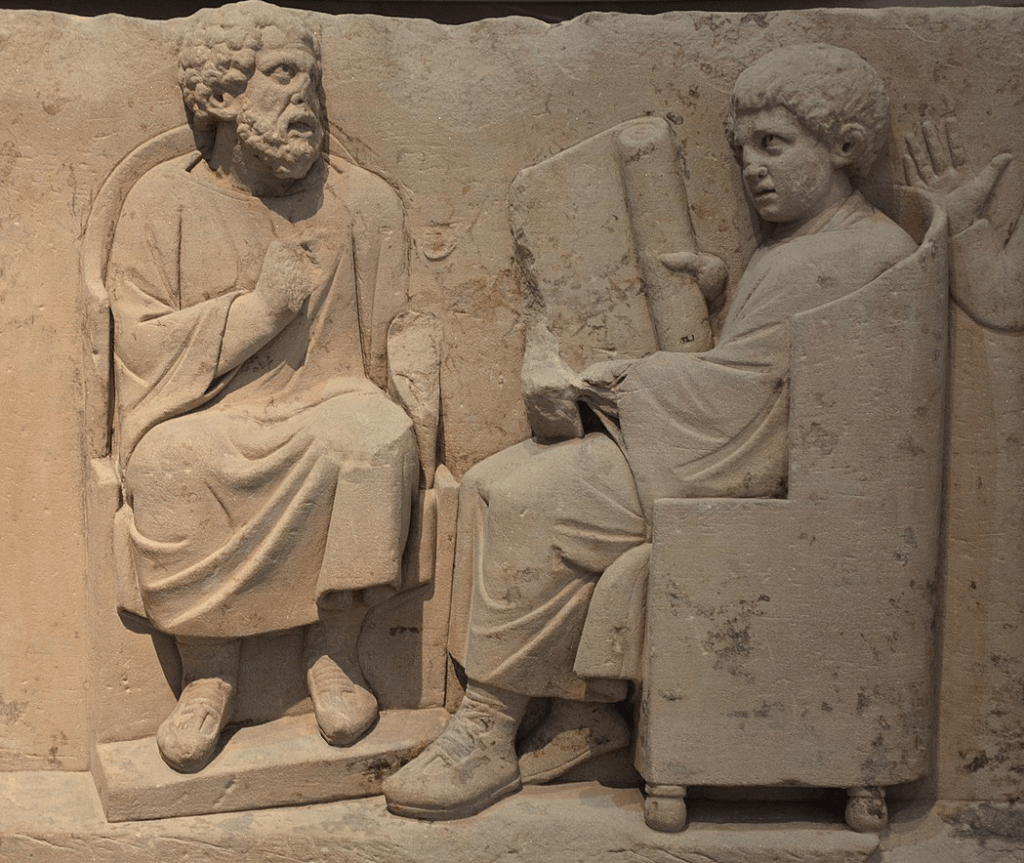
There were 5,000 potential stories just like mine tied to the Latin Excellence Project. I don’t know what it is about the subject of Latin that engenders so many similar stories from those exposed to it, but I do not doubt that many of the pupils would have ended up with stories worthier and more interesting than mine. This essay is not a protest piece (plenty of those have been and are being written – all to similar effect, no doubt). Instead, this is an exploration of the kind of thing that is being taken from thousands of working-class kids.
So rather than repeat the usual talking points here (employability, improvement on psychometrics, facility with the Romance languages, etc., etc.), I think it will be more interesting to give you some indication of what we Latin teachers do, every day, in the classroom.

But what, many people interrupt at this point, is the use of it all? This is a fair question, albeit one that is much better aimed at our universities than our schools.[3] Again, I can only offer the perspective of an individual teacher. Crucially, we must be wary of conflating utility with utilitarianism. The latter – teaching that the legitimacy of actions is dependent on their benefiting ‘the greatest number’ – is in my view a pernicious ideology; the former – seeking what is somehow “useful” or “profitable” – is always hard to predict (just ask any stock-picker). Just think: how rapidly has the world changed since the pandemic? How swiftly have our assumptions shifted?
More to the point, do we really want “usefulness” for us as a state, as a culture, to be defined top-down by politicians or civil service bureaucrats? “Useful”, that is, to whom? How? When? Why do we automatically assume that working-class kids won’t need the linguistic and literary skills that could help parse difficult legal documents, react to equity reports, or walk through consultancy case studies to diverse audiences? “Usefulness” seems to me to be a dangerous, hubristic, and shortsighted game. We cannot teach the world before it unfolds, but we can teach the subject, and the child.

Latin teaches an acuity of language unparalleled anywhere else in the secondary-school curriculum; institutions that offer it do so at a time when the brain’s neuroplasticity is highest. Language is inevitably all around us. We use it, we experience, we suffer it. As time goes on, thanks to LLMs (Large Language Models, an engine of A.I), increasingly less of the language that we encounter will be from humans. Yet language is inescapable: we are verbal creatures. Latin classes are often the place in the curriculum where pupils will encounter a genuinely systemised and scientific approach to language instead of postmodern jargon (a ‘fronted adverbial’, anyone?).
Here we learn the difference between synthetic and auxiliary verbs, why telling someone to shut up is not ending with a preposition, and why an infinitive is less splittable than an atom. Language in this context is liberated from the chains of pseudo-Victorian style guides and class shibboleths and can thus be properly understood – and that’s before we approach the actual benefits of Latin itself. Precise knowledge of this sort can easily bypass the social prestige of class background or cut-glass accent.

Discipline is no longer a popular word. By it I don’t mean the arbitrary and tyrannical imprecations of the old schoolmaster, but the ability to delay gratification, reflect properly on one’s own failings, and make amends. Latin demands this. The word list of vocabulary to be learned is smaller than its MFL (Modern Foreign Language) equivalents, but each word contains a myriad of forms, and these patterns must be mastered back and forth. Each word, too, is polyvalent and its meanings can be mastered only by careful reading and re-reading. Intelligence alone will not avail you; this is as much a personality test as anything. Can you commit? Can you work at something, however difficult and uncompromising it can be at times?
Around Year 10 (ages 14 to 15) we begin to look at real Latin literature. This necessitates a different kind of reading, a different mindset (especially for our current TikTok generation): here we have to hunt out dreaded “style points”, as required by the examination’s board. Pupils are required to master and employ the kinds of rhetorical figures (antimetabole, epanalepsis, synecdoche, zeugma, etc.) that have been beaten into the heads of British school children from Chaucer, Shakespeare, Coleridge, through to Lewis and Orwell.

My favourite preparatory exercise is to give students anonymised political speeches and ask them to parse, analyse, and rate them. Barack Obama, if you’re interested, is frequently considered to be the most overrated rhetorician, with Donald Trump the inverse. Pupils frequently comment that speeches have become less complex over time, around some point after Tony Blair. Churchill, Luther King Jr, and Gladstone are often favourites for analysis. By the time we move onto news stories, the class is already asking questions about the use of the passive voice, substantives, and impersonal constructions. This inevitably leads to interesting and important discussions on the use of language to control, frame, and subvert the credibility of our various cultural/political institutions. All this with no prompt or input from me!
Perhaps this alone is why Latin is such a valuable addition to the state school’s arsenal. Let us take up the tools of our would-be masters. This is critical thinking – a concept so numinous and indefinable as to be practically paranormal – at its best. It is the very thing our education system is meant to promote, as a free side-product to real learning. Of course, this can backfire: “Sir, do you realise you depend on tricola, epanorthosis, and alliteration?”

Then we have the issue of ‘extension’ – another area where the inclusion of Latin in the curriculum pays more than its dues. Mention ‘extension’ and ‘differentiation’ to teachers and watch the creeping dread spread over their faces, for this is where the job becomes a craft. How, in the same class of 20 or 30 pupils, do we teach to the average whilst simultaneously supporting the worst and challenging the best? Sadly, all too often, the best are left behind, or even marshalled as unpaid co-teachers for the worst performing – or worst-behaved. Humanities are often the first casualty here. They lack the prestige of the Sciences, or the immediate relevancy of the Social Sciences. Yet I maintain that Latin is the best way to extend and challenge pupils on this side of the aisle.
Here is another anecdote, this time from the realm of Ancient Greek. I joined a school where a small group of boys had been studying towards GCSE Greek (taken at age 15) through a combination of lunch-time clubs and off-timetable activities. I was asked whether I would mind very much putting it on timetable for Year 11 and getting them through the syllabus? They were good kids, destined not for the Humanities but for STEM and Economics, yet nevertheless they saw the intellectual riches on offer. I spent the entire first lesson trying to put them off the proposal: the language work had not been completed, and half a set text had been shoddily done. There was still to come the prose set text (Herodotus), the cultural background for the unseen/comprehension work, and the broader reading for them to answer the extended essay questions for their set texts. But they were undeterred. Good. For the rest of the year, I pushed them hard, and the work was endless. “You are going up against people with Greek since prep,” I repeatedly reminded them, “if you want an 8 or 9 [the two top grades in the GCSE examination] you are going to have to seize it.” Do not worry: they did.

In the final weeks of the academic year, we sat down over copies of Matthew Arnold’s Mycerinus, a poem on the pharaoh who had been the star of our set text. A group of teenage boys pored over the text, debated the effect of those rhymed couplets, pondered the weight of each iamb. They compared the depiction of Mycerinus here with that of Herodotus and the Menkaure we know from history. It was not long before the inevitable laments started: why can’t English be like this?
And now I am treading on eggshells. A golden rule of teaching is that you are in no way to admit or imply that certain subjects are easier or harder than others (unless, of course, you are in science). I will say that teaching a class of 20 pupils who want to be there is infinitely easier than teaching one of 30 who do not. The job of the English teacher, who must provide both language instruction and literature lessons for the very broadest range of abilities is not an easy one; I am sure many would love to fill their lessons with more Shakespeare, Milton, the Gawain poet and so on. But this is not feasible. Good mathematicians are pushed towards STEP and the TMUA, and scientists towards their respective Olympiads. But what is on offer for children truly gifted at the Humanities? Whether we are prepping for the Linguistics Olympiad, reading the Nativity in Latin, or working out the rules of Roman numismatics, Latin is an effective solution.

I close on an important point. Two words, two seeming contradistinctions, have dominated every policy on humanistic education for as long as anyone can remember: representation and diversity. I recall being a pupil myself and the odd bewilderment of being handed that ‘anthology’, wherein one found poems written in a fake patois or an overly affected Punjabi/Hindi mix. This was, we were told, something to get us out of our narrow overly English boxes and engage with World Englishes. Leave aside the fact the curriculum had left no space for exploring what Englishness was in the first place, nothing in the anthology struck me as being diverse.
For starters, it was inauthentic. If we are dealing with Punjabi-influenced verse, where are the themes and phrases which have echoed down to us since the days of the Sanskrit Rig Veda? Where is the influence of poetic forms both stanzaic (ghazal, sloka) and narrative (varan, qissa)? I now know enough of contact linguistics to understand precisely why I found the selection so inauthentic. This was not poetry, this was not literature. This was the middle-class, Human-Resources-endorsed programme to appeal directly to other middle-class readers. A diversity that is at best skin deep, and at worst more exclusive than what it seeks to replace.
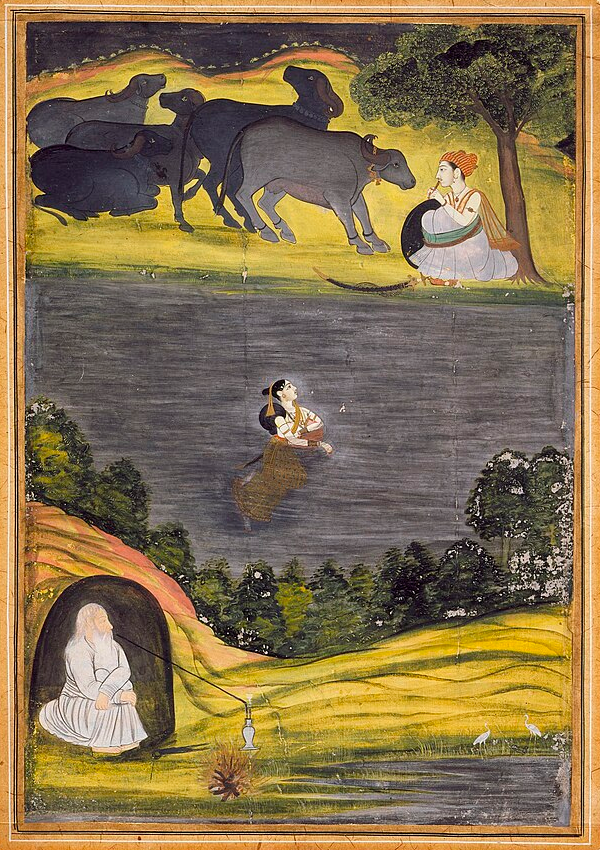
The texts we Classicists read are by their very nature diverse. History – certainly not an editorial board with a D.E.I checklist to honour – has selected them for us, and diverse approaches are needed for their understanding. I am currently teaching the second book of Virgil’s Aeneid, which concerns the sack and fall of Troy. There are other texts from the ancient world that help contextualise this (Euripides’ Trojan Women, Lycophron’s Alexandra), but there are more contemporary accounts, too, recounting the siege and destruction of cities such as Leningrad, Berlin, Mosul, and the ongoing conflict in the Ukraine. Safeguarding, decency, and perhaps my own fragility at times, limit our engagement with some of these texts (some of the material from Berlin and Rwanda really is beyond harrowing), yet this is a perfect example of what you need to do in order to stop looking for yourself in a text and start trying to understand it on its own terms.
That is just one example. Over the past academic year my students have encountered Weber’s tripartite classification of authority, the laments of Balkan women, ritual violence amongst the tribes of Papua New Guinea (and our own football hooligans), reciprocity between Melanesian chiefs, and Chinese Mianzi.
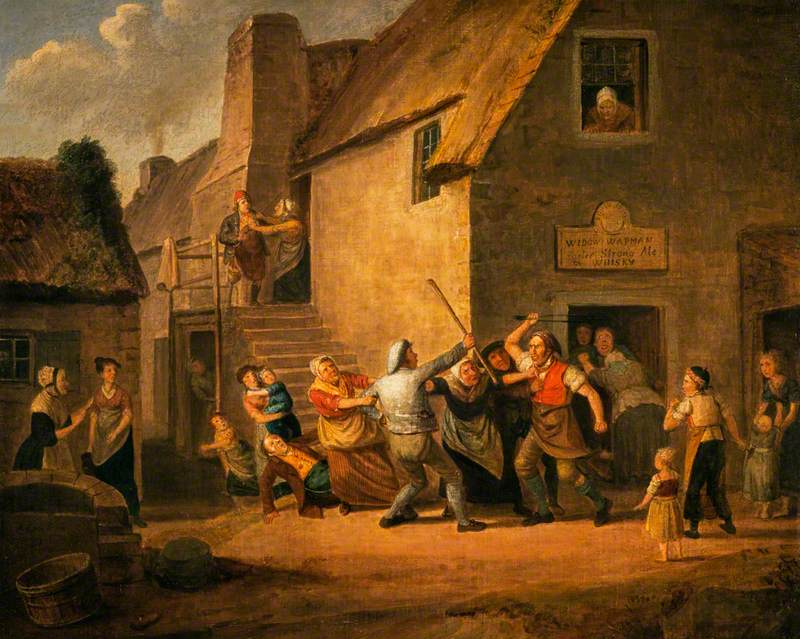
There are, of course, those who can well see the need for a challenging Humanities education, one that combines linguistics with literature and history, but who might well ask “But why Latin? Why not… Classical Mongolian, for example?” Well, quite. I have not even attempted to tackle capital T “Tradition” here and the role of Latin in it, although I think it a very important thing for us to be properly aware of our civilisational roots. I would answer that there is no rule that something good must be unique, and that whilst many other subjects certainly can do all this, it is Latin that so frequently does.
In the grand scheme of things, the £4m ear-marked for the Latin Excellence scheme was both monumental – and minimal (a mere 4% of a bat tunnel). I have eschewed any abject political comments here, but I am sure we can all think of bits of government spending we disagree with (and maybe this is an area where, for the sake of our young, we could have some bipartisan agreement?). We forget too, just what a small thing we are asking for. English, Maths, the Sciences – these are all safe. Latin, one of many elective subjects, takes up an hour or two a week at most. Speaking as a former state schoolboy lucky enough to be now teaching the Classics, it is impossible to calculate what this subject gives to us for the rest of the time we spend in the world.

J.S. Ubhi is a teacher of Classics at a secondary school in the UK. He has previously written for Antigone about the magic of philology, Scythian culture and the last words of Julius Caesar.

Notes
| ⇧1 | On the initial programme launch, see here; on total spending, see here. |
|---|---|
| ⇧2 | Grammar schools were founded around England in the medieval period primarily to teach Latin grammar, usually with provision for local poor children. In the 20th century, the grammar school system rose and fell in favour: after the 1944 Education Act, grammar schools were made free for all, with admission based on performance in a nationwide test (the ‘Eleven-Plus’). From the 1960s, the Labour Government set about dismantling the tripartite education system, advancing ‘comprehensive’ schools which would educate all, regardless of academic ability. Over subsequent decades most ‘grammar schools’ either converted to state comprehensives or became independent, fee-paying institutions retaining their historic name of ‘grammar schools’. At present there are 163 grammar schools that are still state, non-fee-paying, academically selective schools, educating about 5 per cent of the secondary-school populace, but their geographic distribution is very skewed, as can be seen here. Given the popular draw of these schools, the house prices in their catchment areas are often artificially high because of that particular fact. More on the Labour Party’s historic attitude to grammar schools and academically selective education can be read here. |
| ⇧3 | Much of the furore over the Classics these past few years has surrounded what is and is not being taught at universities. I would remind the reader that we are talking about young pupils, and a subject that would amount to about one tenth of their schooling. |