Jaspreet Singh Boparai
Politian’s 1480 inaugural lecture for a university course on Quintilian and Statius is important, not merely as a curiosity in the history of Classical scholarship, or a demonstration of the author’s skill as a Latinist, but as the programmatic statement of one of the finest literary artists of the Renaissance. Classicists should treat these words with at least as much reverence as English literature specialists continue to show towards T.S. Eliot’s 1919 essay “Tradition and the Individual Talent.
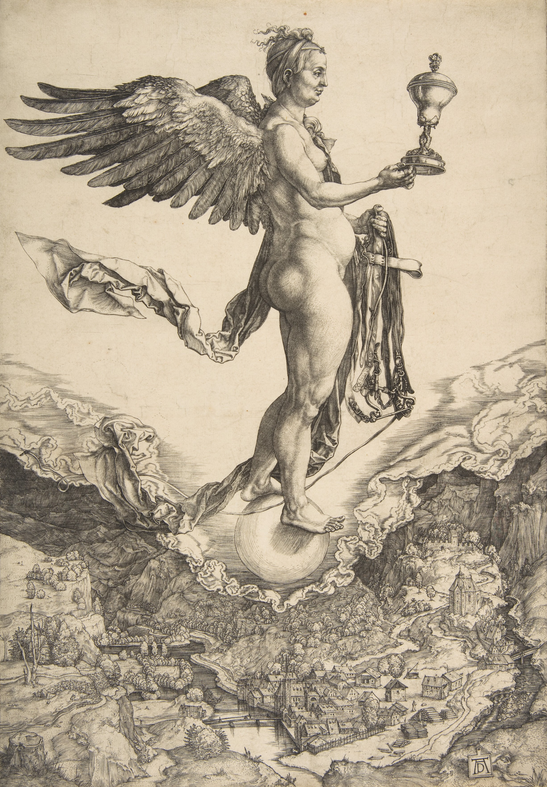
Italians know Politian as a poet whose work inspired artists including Botticelli, Raphael and Michelangelo; among Germans, he is remembered as the man whose verse was illustrated by Albrecht Dürer in one of his most famous prints (Nemesis, 1502); for the French, he set the example for Pierre de Ronsard, Joachim du Bellay and the other lyric poets of the French Renaissance. English speakers think of Politian as the hero of one of our own heroes, Samuel Johnson, the greatest man of letters ever to have lived. John Milton also tried to live up to Politian’s example as a scholar-poet. He deserves to be a model for literary artists of the future.
A substantial portion of this inaugural lecture, amounting to over two thirds of the entire text, was reprinted in an Italian anthology in 1953. This excerpt has become well known among scholars of Renaissance literature, but remains strangely unknown among Classicists, despite the intrinsic interest of Politian’s Latin. Until now the text has never been translated into English, except in occasional fragments.

Politian (1454–94), Poet-Philologist of the Renaissance
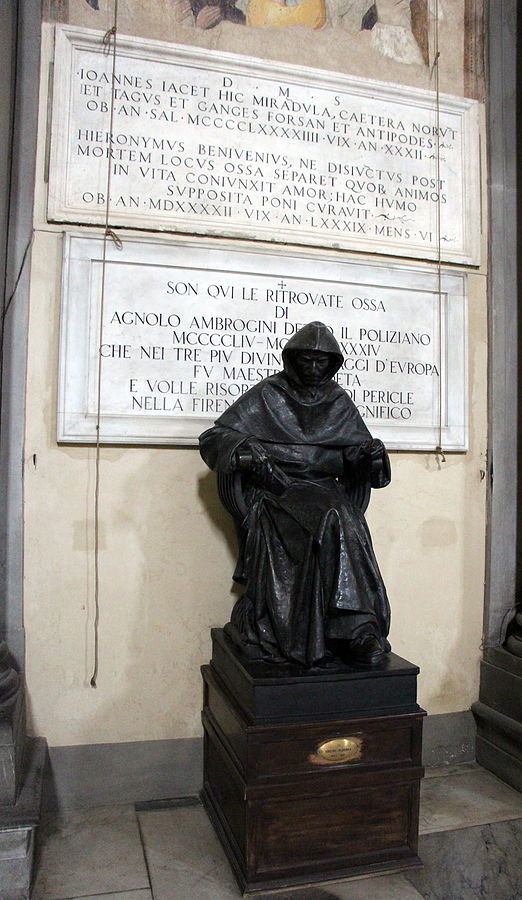
Agnolo Ambrogini was born on 14 July 1454 in the town of Montepulciano, which is known in Latin as Mons Politianus. He adopted the name of his birthplace, and has been known for centuries as ‘Politian’. Modern scholars often erroneously Italianise his name as ‘Poliziano’. It seems important to get this right because few writers have used words with more precision, or accuracy. As a poet in his own vernacular language Politian was immensely gifted, yet his most durable work was composed in Latin. Indeed, he might be one of the only authentic geniuses of Neo-Latin literature, in both poetry and prose. He is also a central figure in the history of Classical scholarship.
Politian’s prowess as a philologist is legendary. Perhaps the most impressive monument to his abilities is his 1489 collection of learned essays The Miscellanea, which has been available since 2020 in the I Tatti Renaissance Library. His range of expertise remains astonishing, as does the Latin in which he shares it with the reader. He could think in the ancient languages, and use them more eloquently than many of the ancients themselves. His achievement seems all the greater when you take into account how hard he had to fight to win his knowledge.
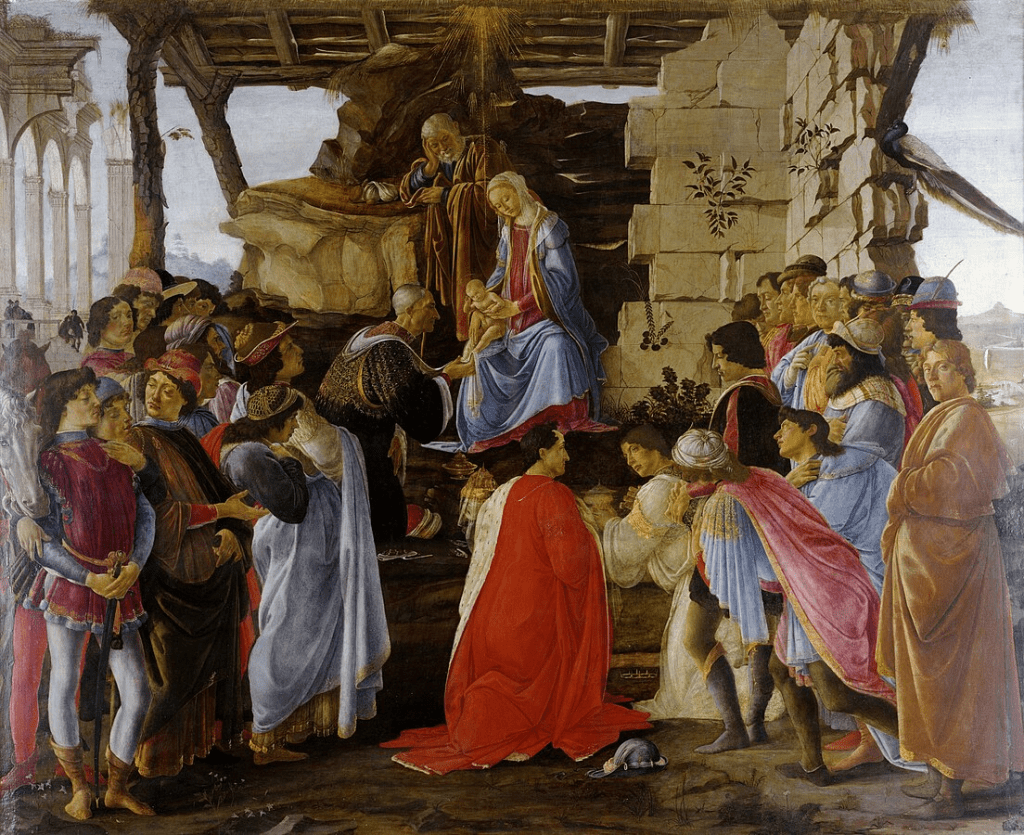
When Politian was nine, his father was murdered. He was sent to live in Florence with quarrelsome relatives. Despite growing up in chaotic circumstances, Politian acquired a mastery, not only of Latin, but also of Classical Greek, at a point in history when there were, at most, a few dozen competent Hellenists in all of Italy. By the time he was fifteen, he had managed to translate the second book of the Iliad into Vergilian hexameters. This feat attracted the attention of Lorenzo the Magnificent (1449–92), then the head of the House of Medici, the most powerful family in Florence. Politian became Lorenzo’s close friend, as well as his admirer.

Lorenzo was a great patron of the arts. He had a high tolerance for Politian’s eccentricities and thin-skinned, truculent personality. It was clear that Politian was not by nature a courtier: for a little while, he acted as tutor to Lorenzo’s son and heir, Piero di Lorenzo de’ Medici (1472–1503), who is sometimes known as Piero the Fatuous. This was not among Politian’s professional successes, although he composed some of his most enduring verses during this period.
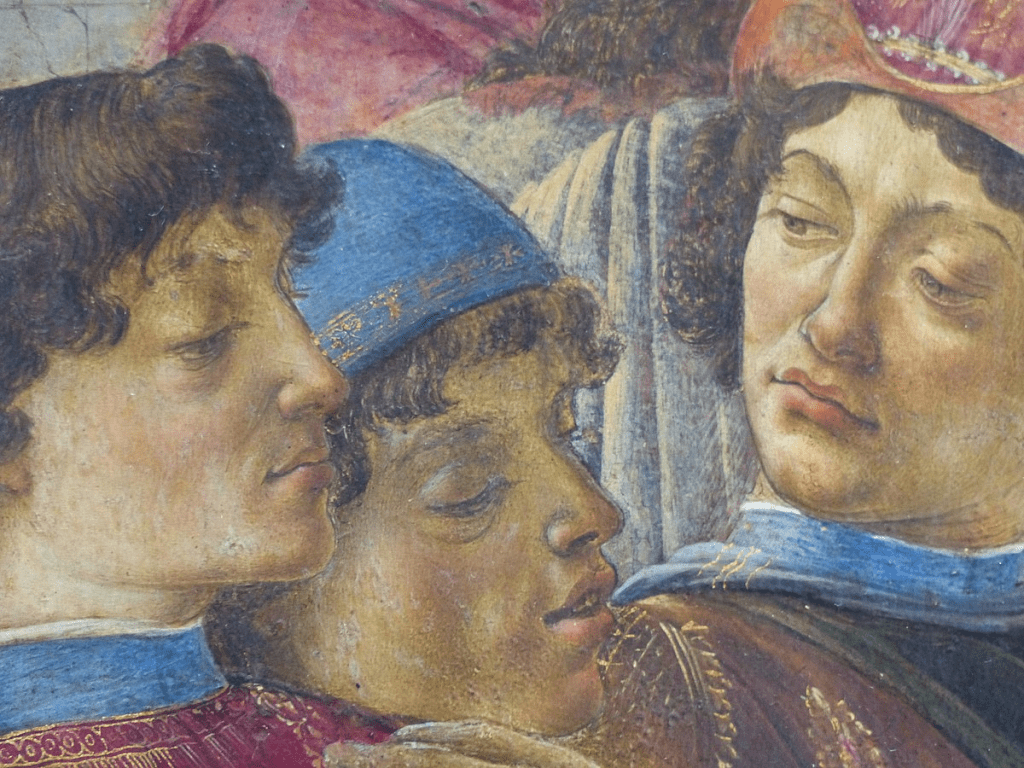
In 1480, Politian was appointed to the Chair in Poetry and Rhetoric at the city university of Florence, which was known as the ‘Studio’. Here he became internationally famous as a professor as well as a poet. Some of his introductory lectures were delivered in Latin verse, rather than prose; the four Neo-Latin poems of the 1480s that were published as the Sylvae are among the major literary masterpieces of the Renaissance in any language.
Politian’s influence waned somewhat after Lorenzo’s death on 8 April 1492. Lorenzo was succeeded in power by Piero the Fatuous, who was no match for his father as a soldier, patron, diplomat, politician or human being. Politian died on 24 September 1494 of arsenic poisoning. He seems to have been assassinated on the orders of his former pupil, who lost control of Florence shortly afterwards, and went into exile, supporting himself by selling off the jewels that his father had collected. Later he drowned in a river in the wake of a humiliating military defeat.
Translating Politian
Politian’s use of Latin scares off even experienced translators. His prose can often seem formal and nuanced in ways that modern English rarely is, now that even well-educated writers have adopted the coarse, sloppy, awkward manner in vogue among American university professors, and those who aspire to similar kinds of authority. Politian, alas, does not talk in a vocal fry.
Then there is the question of vocabulary. Most Neo-Latin writers think in their mother tongues, and translate thoughts in their heads from a vernacular language into an ancient one. Politian did not do this. When rendering his prose into English or any other modern language, scholars tend not to use their lexicons as extensively as they should, because they make the mistake of thinking that his thought processes might have been comparable to their own.
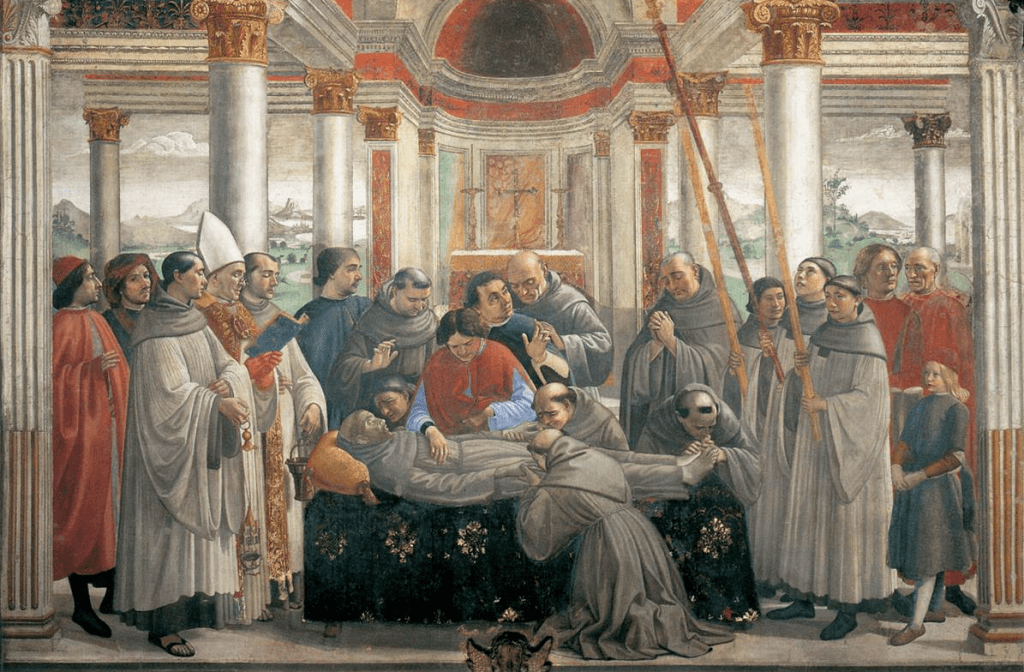
Here is a well-known passage from Politian’s 1480 inaugural lecture, which has been known for centuries as the Oratio super Fabio Quintiliano et Statii Sylvis. Pay special attention to the words in boldface type:
Neque statim deterius dixerimus quod diversum sit. Maior certe cultus in secundis est, crebrior voluptas, multae sententiae, multi flores, nulli sensus tardi, nulla iners structura, omninoque non tantum sani et fortes sunt omnes et laeti et alacres et pleni sanguinis atque coloris. Quapropter ut plurima summis illis sine ulla controversia tribuerimus, ita priora in his aliqua multoque potiora existere iure contenderimus.
Eugenio Garin’s facing-page translation of this passage from his splendid anthology Prosatori latini del quattrocento (Milan, 1953, 879) is perhaps a touch too literal to be accurate:
Né è lecito chiamar senz’ altro peggiore quello che è diverso. Senza dubbio in questi più tardi autori è maggiore la ricercatezza, più frequente il diletto, molte le sentenze, molti i fiori, ma non v’è nessuna lentezza, nessuna struttura inerte, e non sono solamente sani, ma forti, lieti, alacri, piene di sangue e di colore. Perciò, mentre senza discussione riconosciamo meriti grandissimi a quei sommi, così dobbiamo affirmare a buon diritto che in questi altri compaiono taluni pregi nuovi ed altri vi si trovano in forma più egregia.
What exactly does this mean? If you do not read Italian, the question will not perturb you, although you might be alarmed when you realise that literary critics have silently been using Garin’s somewhat thoughtless rendition as an aid to interpreting this dense collection of thoughts. If you read it too quickly, you might think the whole passage is skippable. This erroneous impression is alas confirmed by the best-known English version.

Scholars of English literature know this passage (if they know it at all) thanks to the former Frederick Clifford Ford Professor of English and Comparative Literature at Yale University, the late Thomas McLernon Greene, who translated it in his once-influential study The Light in Troy: Imitation and Discovery in Renaissance Poetry (Yale UP, New Haven, 1982, 148):
We should not automatically call worse what is different. In the later authors there is assuredly more elaboration, more frequent pleasure, many sententiae, many flowers, and there is nothing sluggish; no structure is inert; not only is everything healthy but it is strong, joyous, animated, full of blood and colour. Thus while we recognise without debate the great merit of those [earlier] supreme masters, we must rightly affirm that in these [later authors] certain new qualities appear with more distinction.

We should be grateful to Greene for drawing attention to Politian’s 1480 Oratio, if only glancingly. Yet our gratitude is mixed, because Greene makes Politian sound clumsily inflated – he speaks here in the indistinct language of a failed poet. Politian, of course, was nothing of the sort; his words are more than mere deflated metaphors. We should restore some significance to them.
Here is a fresh attempt at bringing across the meaning of the text, this time with a little more precision:
Moreover, we should not reflexively call something worse because it is different. Indeed, there is a greater refinement in the later writers, and a more abundant pleasure; numerous pithy statements, many rhetorical flourishes; no dull ideas, no artless arrangements; they are everywhere not so much correct in their style as forceful, rich, lively – filled with brilliance and vigour. Therefore, in order to attribute so many qualities to these bodies of work without further quarrel, we must assert that we rightly judge certain elements in them to be superior, and indeed preferable.
Is this clearer, or simply more pedantic? If the latter, it fails in at least one respect: a responsible Latin teacher might say “in order that we may attribute” instead of “in order to attribute” as a rendition of ut… tribuerimus. On the other hand, the same pedant will thrill at the rendition of Politian’s pleni sanguinis atque coloris as “filled with brilliance and vigour”, in accordance with Quintilian’s usage of sanguis and color. But why take all the blood and colour out of the Latin words for ‘blood’ and ‘colour’?
If you are a pedant, you will realise that they do not quite mean ‘blood’ or ‘colour’ here. When translating Neo-Latin of this quality into English, you really do need to look up every single word in the Oxford Latin Dictionary, or Lewis and Short’s Lexicon, and look at how each one was used in a relevant ancient context. Now you begin to see the magnitude of the challenge for anyone who ventures to undertake a rendition of this author into a modern language.
Donkey-work in the Library
The translator’s task here does not stop at the dictionary: you really do need to read all the Latin (or Greek) texts that Politian mentions, if you have not already done so, and take good notes, because this man is never lazy or vague in how he uses words. You must have a clear sense of what he is talking about. The only way to gain this is by reading everything that he expects you to have read – which sometimes feels like every single ancient text ever written.
No wonder translators shy away from this dismal grind. Alas, there is no way of getting around it. You cannot use American-style ‘theoretical’ gobbledygook to cover up your lack of comprehension. You must sacrifice your eyesight, posture and sanity amidst the dim light and strange smells of your local academic library, and move from your uncomfortable seat only to find copy after copy of a great many Greek and Latin books and add them to the pile on your desk. Those worryingly shabby, unhealthy-looking people who seem to have nowhere else to go, and drip from the mouth when they stare at you? Congratulations. You are one of them now.
Some may inexplicably want a glimpse of the sort of utterly miserable donkey-work that is needed to produce an accurate translation of Politian’s Latin. Immediately below is a selection of what seem to be technical terms that are taken mainly from Quintilian’s Institutio Oratoria. You will note that they were given in boldface above, in the Latin, Italian and English texts. Please refrain from using these glosses as a substitute for articles in standard lexica: they are meant only to help illustrate the nature of the translator’s job, where Politian’s Latin is concerned.
CULTUS: polish, refinement: see Quintilian Institutio Oratoria 3.8.58: ‘in verbis effusiorem, ut ipsi vocant, cultum adfectaverunt’. See also Q. 2.5.23; 8 (proem) §20; 10.1.124.
CREBER: Q. Inst. Or. 2.5.8: ‘subtilis et crebra argumentatio’: subtle and frequent proof/argumentation. 11.3.128: ‘pedis supplosio… ita crebra’: stamping the foot… so frequently. 12.10.60: ‘modus… translationibus crebrior’: a style with more frequent recourse to metaphor. On the other hand, see: 9.2.94: ‘crebriores figurae’: abundant figures of speech; 10.1.102: ‘sententiis creber’: full of general reflections.
SENTENTIA: a maxim, an aphorism, an axiom; a γνώμη. There is extensive discussion of this term at Q. 8.5: ‘Sententiam veteres, quod animo sensissent, vocaverunt… [8.5.2] Sed consuetudo iam tenuit, ut mente conceptu sensus vocaremus, lumina autem praecipueque in clausulis posita sententias.’ The use of ‘sententia’ = ‘idea’, ‘meaning’, ‘notion’ is more Ciceronian than Quintilianesque; but of course the rhetoric and vocabulary of this speech do draw heavily on Cicero’s major rhetorical works – Politian’s aim is after all to communicate something about Quintilian’s importance to an audience hitherto only exposed to the (pseudo-Ciceronian) Rhetorica ad Herennium, etc.
FLOS: linguistic ornament: Q. 8.3.87/88: ‘alia copia locuples, alia floribus laeta’: richness may consist in either wealth [of ideas] or luxuriance of language. Cf. also Q. 12.10.13.
TARDUS: Q. 1.3.2: ‘tardi ingenii’ of dull intellect; slow-witted. However: Q. 9.4.137; 10.3.5; 10.7.22 all give ‘tardus’ with the sense of ‘slow’, ‘measured’, ‘stately’ – without pejorative tinge.
STRUCTURA: Quintilian uses this everywhere to mean ‘order’ or ‘arrangement’ in the rhetorical sense: 1.10.23; 8.5.27; 8.6.27; 9.4.45.
INERS: ‘Iners’ = ‘artless’ can be found in Horace, Ars Poetica 445; Cicero Div. in Caecil. 21.67 ‘iners dicendi, arte dicendi carens’.
SANUS: In terms of style: ‘correct’, ‘sober’, ‘sensible’, ‘chaste’; Q. 10.1.44: ‘qui rectum dicendi genus sequi volunt, alii pressa demum et tenuia et quae minimum ab usu cottidiano recedant, sana et vere Attica putant’.
LAETUS: As ‘pleasant’, ‘agreeable’: Q. 9.4.17: ‘dicendi genus tenue laetoribus umeris corrumpere’; OR, in the sense of ‘rich’, 10.1.46: ‘[Homerus] idem laetus et pressus’: Homer is at once rich and concise.
SANGUIS: ‘vigour or force of style’: Q. 8.3.6: ‘sanguine et viribus nitent’; 10.2.12: ‘Quod facit, ut minus sanguinis ac virium declamationes habeant quam orationes…’
COLOR: In the sense of ‘outward appearance’: Q. 10.1.59: ‘multorum lectione formanda mens et ducendus color’; BUT as ‘style’: 6.3.10: ‘color totus orationis’; 8.5.28: ‘color dicendi maculis conspergitur’; 9.4.17: ‘perdidisset enum gratiam, quae in eo maxima est, simplicis atque inadfectati coloris’.
No doubt you have had enough of this already.
The next time you read an accurate-sounding translation of a Neo-Latin text that seems to make coherent sense, and is written in recognisable English rather than objectionable translation-ese, spare a thought for the hapless wretch who has spent hours on every page, checking and double-checking both the original work and his own rendition of it, whilst knowing that perhaps half a dozen people will fully recognise the effort – and those who do will be those other lost souls who stare occasionally at one another from across the reading-room in the same cursed library, as their only relief from the work to which they have condemned themselves, for reasons no sane or normal man can fathom.

Note on the Text
My translation demonstrates a series of compromises, artistic and otherwise. The English does not necessarily follow the Latin word for word; instead the aim has been to bring across the sense of Politian’s thoughts, sometimes at the cost of style. Some readers will have trouble with Politian’s rhetoric, which will appear florid, artificial and inflated in the eyes of those accustomed to plainer speech. It might be impossible at this point in history to render Politian’s words into idiomatic English, because the language as we currently use it is so impoverished and degenerate. His thoughts, however, seem surprisingly congenial to modern sensibilities.
The text is based on the one included in Eugenio Garin’s aforementioned Prosatori latini del quattrocento. Garin reproduces (870–84) the editio princeps of the Oratio, which is in included in the 1498 Aldine edition of Politian’s collected works – although spellings have been modernised here and there (which will disappoint those of us who prefer to spell ‘iam’ as ‘jam’). Most of Garin’s punctuation has been retained, as has Politian’s convention of spelling the Silvae of Statius as the ‘Sylvae’. Paragraphs, on the other hand, have been broken up, because few of us can stand reading more than 150 words or so in a single block without giving our eyes a rest (or what seems like a rest, if we are staring at words on an illuminated screen).
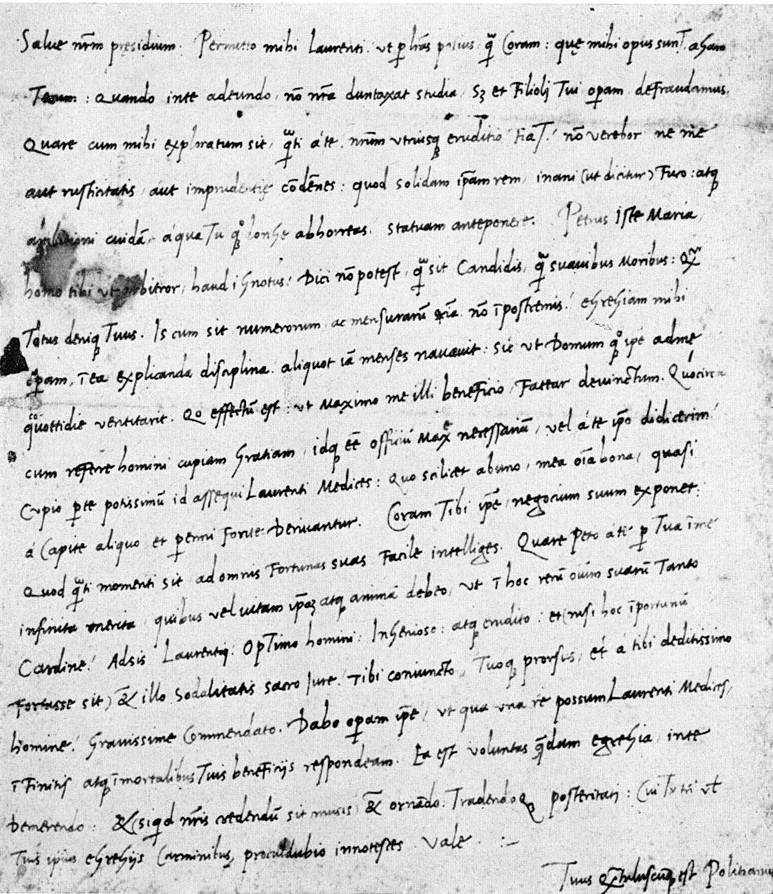
As noted above, this is not quite the full text: the section at the end, consisting of a brief sketch of Quintilian’s life, has been omitted. Although the Latin remains stylish, the content is less engrossing than that of the earlier sections of the lecture, amounting to little more than an orderly collection of biographical facts. Those who are interested to read the entire lecture will want to consult Georgia Zollino’s 2016 edition in Angelo Poliziano: Praelectiones 2 (Olschki, Florence, 2016) 19–31; the biographical sketch is at pages 27 to 31.
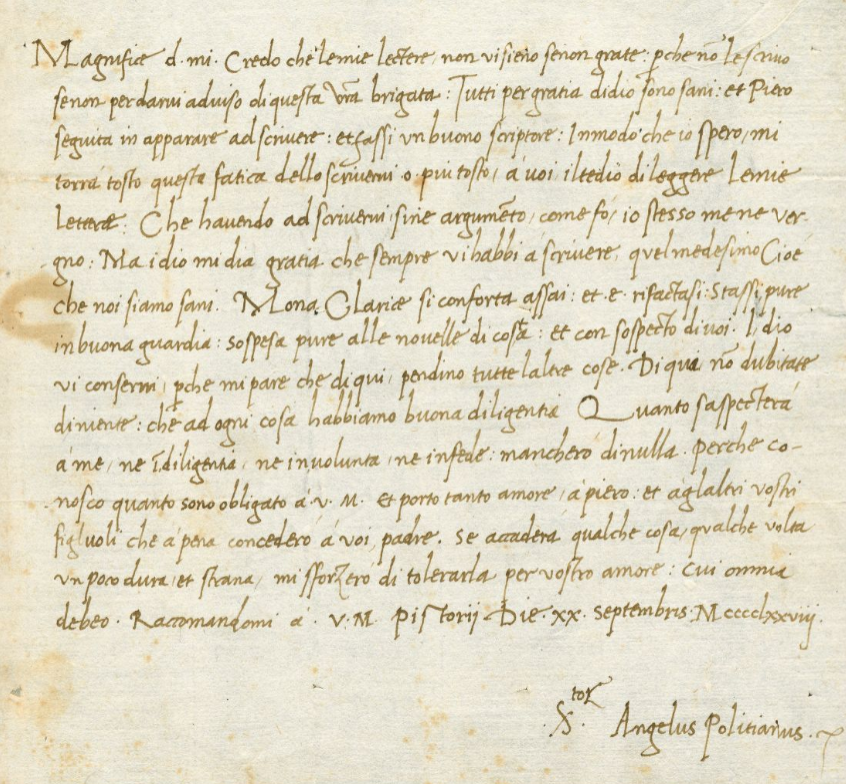
Zollino’s volume also features Politian’s lectures on Persius, Homer and Suetonius. These are of interest insofar as they relate to the Miscellanea, which can now be studied with the aid, not only of two convenient I Tatti Renaissance Library volumes, but also the surviving commentary of Alessandro Perosa (1910–98), one of the titans of Classical and Neo-Latin philology in the twentieth century. Paolo Viti’s edition of Perosa’s invaluable notes was published in two volumes by Olschki in 2022. This legendary Florentine publishing house is slowly but steadily publishing critical editions of Politian’s entire oeuvre. May everyone involved be richly rewarded.
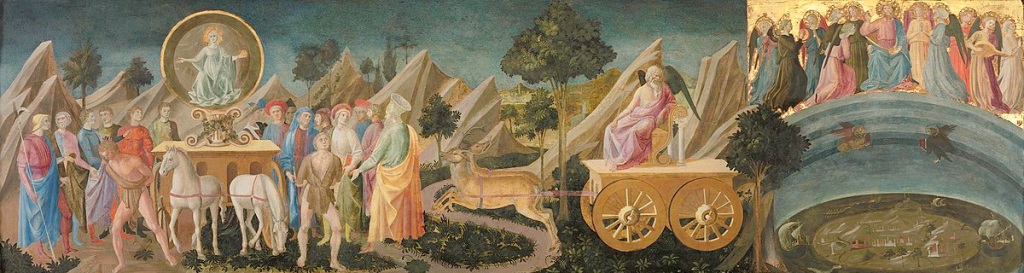
As for the I Tatti Renaissance Library: could we ever repay our debts of gratitude to those responsible for this series? Speaking of libraries: I record my own affectionate thanks to my friends and mentors at the Warburg Institute, not least Anita Pollard, former Secretary and Registrar, for first showing me the Institute’s bookshelves devoted to Politian, and Professor Jill Kraye, the former Librarian, for demonstrating how much fun it is to study Renaissance humanism (and teaching me how to do it). Professors McGrath, Hope and Montagu will, I hope, forgive the absence in the illustrations of Rubens, Titian and Le Brun, among others.
Read Politian’s Oration on Quintilian and Statius’ Silvae, in Latin and English, here.

Jaspreet Singh Boparai cultivates the muses.
