A garland of the best of the rest
Having shared with you our six wonderful winners, we’re keen to gather up and share with you the most impressive entries. So here is a collection of the 30-odd poems we enjoyed most, with thanks both to their authors (young and old) and to all who entered the context. Chapeau to one and all!
RUNNERS-UP
(Those poems in navy blue are for the 18-and-under category.)
Of Ancient Goddesses
Sing to me, Muse, a tale not of the king,
The sky god gazing from Olympus high,
But of the girls who felt his lust’s ill sting,
And of the queen who, sat enthroned, did cry.
Give me no prophecy of golden sun,
The god of silver bow who heals the sick,
But of the maid of silver moon, who won
The wild, and roams with golden sword, feet quick.
Send me not to the Ghost King in his Hell,
The Underworld where pomegranates loom,
But to his sister’s harvest fields, where dwells
The Dread Queen for a time, with spring in bloom.
The vulture flies across the blood-drenched field,
The god with helm and spear within the fray,
But besting him, she who the aegis wields,
Her spear in hand, her flint eyes flashing grey.
The blacksmith now returned to claim his place,
Inventions lauded, with his prize in hand,
And yet his trophy, loveliest of face,
The oldest goddess, Love, a force so grand.
The last to join Olympus, lord of wine
Did overturn the balance, so’s his role,
She, ousted, holds the most important shrine,
And sits, and stokes the homely hearth with coal.
Divine liaisons, ever sun on flowers,
The hyacinth, the laurel, how she fled,
Yet tell me of two girls who sparred for hours,
Of she who took her lover’s name, now dead.
O tell me Muse, why is it always so,
That deeds of gods and men must take the fore,
Yet goddesses and maidens live and sow
Their stories never seen, yet ripe at core.
I thank the countless stars that I see change,
When women take a thread just partly spun,
And tell such tales, so wonderful and strange,
And act as Fates do, weave the story done.
Azriel Farlam, London, UK
Untitled
The words flowed from rivers to streams,
Across villages through minds and into daydreams.
Great answers travelled with dark ink,
Myths and legends respond to the unknown, they think.
Cassandra’s ignored prophecies,
Led to an axe, and a wife watching as she bleeds.
Persephone was imprisoned,
Seasons fluctuated until Hades listened.
The Gods, the Goddesses each stand,
Colossal powers that control mortals and land.
Rome was built using stone, like thread,
Romulus and Remus fought until one was dead.
With my pen in my hand, I write,
Myths and legends form inspirations that are bright.
The great stories that form stories,
Form characters and more myths, art in galleries.
All we have to do is listen.
And write.
Hattie Pigott-Denyer, Bexleyheath, UK
A Mythic Name is Mine
A mythic name is mine, an ancient queen’s.
A fiery, ardent soul, she rose to fame,
In lovely Calydon, by dreadful means.
Her son, heroic and bold, put all to shame,
When, spear in hand, in shaded woodland scenes,
He struck the foaming boar so hard to tame.
Was I — if names are signs — to epic wars
Destined, to fondly read of Trojan shores?
To be a Homeric scholar is a gift —
For what is nobler than a blazing shield?
And yet all day I think of vowel shift.
The Ajaxes advance — alone they yield
To none. But still to me a greater lift
Is learning what linguistic mystery’s sealed
In Homer’s dual. Is it then a sin
If I prefer a noun to fighters’ din?
In Persia’s depths, I join the lines of Greeks,
Whom the ambitious greed of Cyrus led;
But then a quick Boeotian hint soon piques
My interest.[1] More than once, o Muse, I’ve said:
“Clio, forgive me: I’m obsessed. Who speaks
To me is not a god, but by god bred.
Though I am fond of every ancient feat,
Is Lucian’s vowel trial not a treat?
Have I betrayed my ancient regal name?
Do not linguistic reads set you ablaze?
Does not your language too deserve wide fame?
With sounds and change — it’s true — it has her ways,
But without her, you would not be the same.
With stress and roots and stems, she does amaze
Whoever studies her mythology.”
This song’s for her, for Greek philology.
Althea R.L. Sovani, Oxford, UK
Untitled
In venerable tomes where ageless wisdom lies in rest,
One tongue remains eternal, transcending every test;
Latin, with its murmurs both minute and grandiose,
Enshrines the essence of worlds with its linguistic prose.
Amidst these ancient texts, where flawed heroes roam,
Their resonant glories refuse to turn to loam;
They live in Vergil’s lines, in Cicero’s grace,
Where history’s noble visage finds its rightful place.
Ovid’s myths, in verses deftly spun,
Reveal the mysteries of moon and sun;
While Seneca, in his stoic cloak, imparts
Measured beats to calm impassioned hearts.
Through Horace’s odes, I traverse realms of lore,
Where every verse echoes the lyricist’s core;
Metaphors gleam like stars that pierce the night,
Guiding through darkness to wisdom’s radiant light.
The cadence of this ancient tongue profound,
Resonates eternally, unyielding and unbound;
Each line a portal to celestial truth,
Where past and future seamlessly coalesce in sooth.
To master Latin is to possess a key,
Unlocking realms where knowledge flows boundlessly;
A repository where enlightenment’s pure light,
Steers the soul through life with unwavering might.
Thus, let me extol this language, ancient and bold,
Whose words have sculpted eras, their impact untold;
In Latin’s melody, my heart finds its delight,
A beacon aglow with an eternal light.
Aurelia Shaitelman, Houston, TX, USA
Pro Literis Humanioribus
If there’s a ring I’m glad to throw my hat in,
Content to be regarded as a geek,
It’s any ring, or case, concerning Latin:
I hail its benefits, and those of Greek.
Build up your intellectual physique
With grammar! Look beyond our narrow doorways
To visions from the radical antique:
Please welcome Literae Humaniores!
It’s not that these are tongues to hold a chat in;
You should be circumspective if you seek
Good spots to spout Amo, amas, amat in,
But read, and let the ancient authors speak:
You’ll find you’re in an enviable clique,
And soon you may embark on private forays
Into a world forever newly chic:
Protean Literae Humaniores.
It’s only fair to throw a caveat in:
Classical teachers now must fear they’ll pique
Some cultural assassin (or attattin);
But whatsoever harm the Vandals wreak,
This legacy, both patent and oblique,
Continues. My raise may not equal your raise,
Non-Classicist, but though you’re looking sleek,
I’m rich in Literae Humaniores.
ENVOI
Prince, would you learn some Realpolitik?
Pick up Annales. Courtship? Try Amores.
Would you impress your princely peers? Look hic:
Come foster Literae Humaniores!
Julia Griffin, Statesboro, GA, USA
In Memoriam Hank Gathers
There lies Memnon on the plain
Brave youth slain by tempting Fate.
Greatness shattered, Death’s pall come,
Though friends nearby, so far from home
Eos mourns her son and wails
Strangers bear him fast away.
Memnons’s eyes will not see day-
Bright sun, blue skies or e’er again
Give comfort to his shaken mates.
Eos mourns her son and wails
Friends and strangers quiet now.
Quiet now the cheers and shouts,
Quiet now the banners’ wave.
Memnon here awaits the grave.
Eos mourns her son and wails
Hard his heart beat in the fray,
Slow our hearts toll here today,
His bright mirth stilled now, gone away.
Thoughts of him uproot our hearts
His smiling gazes, joyous leaps
In air now gone. But in our minds
We see him clear: our bounding elk,
Our comrade dear.
Come, the time for mourning’s here.
Memnon here awaits his grave.
Friends now bear him close and near.
Deadened voices flat proclaim
The glories of our Memnon’s fame …
Inner voices shed his name
Eos lifts her head, and wails.
Tony Amodeo, Los Angeles, CA, USA
The Child’s Plea
Save, save my weary soul –
I know not beauty, nor of form;
My views of life are right deformed
By this my world to thole.
I’ve never once seen art –
My Vergil’s strippers, sordid fare;
My Ovid’s classless odious swears;
The poets have no part
In these our dark, dark days.
For no child born, to still be young
Today, has seen a world not flung
Away in torrid raze
Of superficial cares,
Of crass and folly, screen and vice
Of perverts whom around one tries
In vain to gasp at air.
Thus blind from birth till now –
But if there be a realm of gold,
The pure of which I may breathe bold,
If I may dare to think it so –
Couldst not thou grace my weary soul
And, if I may have only one wish granted, raise me to the clouds?
Max Liu, Palo Alto, CA, USA
The Isles of Books
The isles of books, the isles of books
I sail betwixt and come to rest,
In some I leave, some trapped by hooks
As Dido held me to her breast.
That same she slashed herself in rage
For I did search another page.
I was with him, Hector of Troy.
Andromache she brought his son.
And we all wept, he kissed that boy,
He faced his fate, he did not run.
But away I sailed in Eon’s light,
In rosy tints I saw that fight.
Telemachus he ventured out
To find his strength in search of kings,
As I from book to book do scout
From salty seas to giving springs
To feed my soul, sustain desire.
Prometheus, I beg for fire.
Across the strait a blind man wails.
Rage Oedipus, rage for your sins.
Beyond your land, through darkened trails
I left your shame for sirens’ hymns,
Though you like us have torn the twine
That binds us all through age and time.
Antigone, Antigone
You held my hand when I was stray.
Antigone, Antigone
You set my boat upon its way.
Alas, I hear that creaking rope,
But what’s divine always brings hope.
Through twists and turns I travel by
An island where there plays this scene-
Aeneas holds Anchises high,
Upon his back, his face serene,
His shoulders bear his culture’s flame
And by these books we do the same.
The isles of books, the isles of books,
Come take the winds of history gone,
Explore their lands, the hills and brooks;
Erebus rules where once they shone,
But we who dare and we who strive
Shall keep these books, these isles alive.
Rory Barclay, Allendale, UK
A Warrior’s Urn
Forgotten now by man—not long upon
This earth, ephemeral—you have long lain
Interred, exquisite details gold and bronze
Preserved beneath this dusty Grecian plain.
Whose ashes are within your walls enclosed?
Which warrior, so long ago, did fall
Here slain by some unknown triumphant foe?
His name, perhaps once great, since lost to all.
Perhaps his comrades did build pyre immense
And mourned his death upon this sun-baked shore;
Else distant land his body bore they thence
To home, to rest amongst his ancestors.
Whom e’er he may have been before you held
His undisturbed remains: despite the fact
That time has seen his memory long quelled,
Within your shell his glory dwells intact.
T.D.J. Snelling, Oxford, UK
Medea
Colchis is a barbarous place.
Hecate, Hecate, whisk me away.
Midst so vulgar a crowd, shines only your Three-Faced grace;
Yea—Colchis is a barbarous place.
My father, my brother: a fat pair of grapes:
Plopped into my mouth, betwixt tooth and tongue—they shall know my pain.
Colchis is a barbarous, barbarous place—
Hecate, Hecate, whisk me away.
Diego Calle, Toronto, Canada
The Woman who Waited
Muse, sing about the woman who waited,
Wove until her fingers bled, scarlet-red,
Onto the pained shroud she had created.
Her face was stained by scars of tears she shed.
She kept awake during the waning night.
Muse, sing to me of the woman who ruled,
Over the land from valleys to the heights,
Watched like a hawk but she was never cruel.
Muse, sing to me of the woman who slid,
Out from the grasp of the selfish suitors,
While Night protected her from the looters.
Muse, sing to me about Penelope,
For I carry her story within me.
Jasmin Lay, Bristol, UK
Is Tennyson’s Ulysses a Man to be Admired or Pitied?
If you don’t know the poem, here’s the gist:
Agèd Odysseus, white-whiskered and
warming his frailness beside a hearth
contemplates what it might’ve all been for.
The best years of his life spent wandering,
first in search of, then away from, war.
He is one who has never rested, never
had need of it, who bears out his name
to this day because we repeat it.
He has drunk from life, tasted honor and fame.
Nor is he attached to any of these things
but is prepared to pass through the arches
of ultimate experience, and leave all behind,
treasures and body, perhaps even the mind.
He will bear that, too, when it’s time.
Until then, he says, let every space
be filled with purpose. Yes Death closes all,
but something ere the end may yet be done.
Tiresias foretells of one final sea voyage.
We the reader are left to wonder whether
the king of Ithaca will ever undertake it.
Dante says that he does, that he reached
the other side of the stars and wrecked
in view of the highest mountain the king
had ever seen, which was purgatory.
Knowingly he abandons an ailing father,
and perhaps a good son, and the love
he still owes his wife for ten long years
of weaving, for the promise of one more
adventure. Is he irresponsible? Reckless?
Does knowing Tennyson wrote this after
Hallam’s death offer any clarification?
When I was younger I thought, Here’s one
embittered, who doesn’t know his time’s come,
willing to lash himself to the mast again
and sweep others along to suffer his burden.
Now I think I would like to go with him.
To strive, to seek, to find, and not to yield.
Grown older, I know what the young do not.
How the fire grows less and less hot.
How our time on this stage does not last
and desire and passion can slip into the past.
It’s the flame burning in the rain that must be
tended to continually, must be uttered to
strange vows or it may go out inexplicably,
and who knows after that if it can be lit again?
It may be we are dead a long time before we die.
It may be knowing when the time has come
has less to do with chance than we thought.
Though much is taken, much abides.
There lies the port. The vessel puffs her sails.
Embark on winds undying, on hopeful tides.
Robert Charboneau, Reno, NV, USA
A True Story of Julius Cesare
Julius Cesare, yes he of old,
Came walking down the street so bold,
Whistling a song a seer had told,
In robes of silk and purse with gold.
Now down the same street a pirate came,
Seeking a hostage, either man or dame.
So when he saw Julius near the plain,
Off went Julius, a captive in chain.
A week later a ransom is made,
For Julius Cesare the gold is paid.
When Julius heard the amount to be laid,
He exclaimed, “What? So little? By Jupiter’s maid!”
Audrey Dolezal (aged 13), Springfield, NE, USA
Poem
Puncture with a hat the air above a perispomenon
What’s that? A quote, a pithy note, some clever chippy chappie wrote?
But ply your pens my gents, gird on, our loggorhoea can’t go on,
We’ve much to plow in ancient seas, and I don’t know what’s going on,
I would, mind you, but in my boat,
All seafaring’s learnt by rote.
Hey you! Is that a new idea?
Haunch your briefs right over here.
I think you’ll find you are quite wrong,
It’s contradicted in Aristotle 1.
Gil Fyodor Oldham, Oxford, UK
Ornithiaka
By Ps.-Ps.-Oppian[2]
A Didactic Epyllion in Four Books[3]
Proem
Lady of wild things, Great Mother Cybele,
Guide us to river and meadow and grass;
There let us study the range of our bird life,
As in their daily quest round us they pass.
Queen of the avians in their variety!
Each forming part of an orderly whole:
Cycles of nesting and hatching and dying,
Provident pulse of the immanent soul.
As your beloved, the young woodsman Attis,
Rose to new life amid mountain and pine,
Each generation meets death and revival,
Playing its role in the drama divine.
I: Grassland
See how the Wren in his plumage caerulean
Courts his drab females in bush and in hedge;
Nearby the Red-Browed Finch gather in squadrons,
Moving as one onto branch or to ledge.
Untaught, their captains like scouts reconnoitre,
Venturing first in advance of the group,
Weighing the balance of gain and of danger,
Ever alert for a threat to the troop.
Hark, now they scatter – a Kite on the thermals,
Drifting with barely a twitch of the wing,
Scanning the scene for the faintest of movements,
Now there is silence – none daring to sing!
Just as a fighter will crouch down in cover,
Hoping no sound will expose him to fire,
So all the feathered ones cease from their bustle,
Patiently willing the hawk to retire.
II: Freshwater
Perched on a limb overlooking the water,
See the Black Cormorant spreading his wing:
Drying his feathers soaked after diving,
Chasing the fish and the frogs through the spring.
Meanwhile, two Wood Ducks glide onto the surface,
Plaintively calling each other to rest:
Tagging along with them, seeking a shelter,
A lone Little Grebe takes a share of their nest:
Just as the Phrygian couple once welcomed
Travellers, truly the gods in disguise:
Teaching us humans to sense the divinity
Present in all, though opaque to our eyes.[4]
III: Coastal
Now let us stroll through the dunes to the shoreline,
Shifting our gaze to the wondrous Sea!
White-winged Black Terns plunging down to the surface,
‘Non-breeding migrants,’ each autumn they flee.
Likewise, the Redshank’s a seasonal visitor,
Patient explorer of crevice and crack,
Hued in reverse is the Pied Oystercatcher:
Orange beak, crimson legs, chest and wings white and black!
Patrolling above is a raptor majestic:
White-Bellied Sea-Eagle, lord of the wave,
Transformed from Periphas, famed King of Attica,
Whom, for his piety, Zeus chose to save.
IV: Land of Parrots[5]
First comes one ‘cocky,’ a-perch on a high point,
Making a survey of all that’s below,
Summoning comrades with raucous directive,
‘Birdseed to north! Come on, fellas, let’s GO!’
Instantly, sulphur-topped birds in their dozens,
Gleaming in white and all screeching as one,
Sacred to Hermes, the god of the tricksters,
Land with a thud, and proceed to have fun!
Crunched up and shredded, the seeds are demolished,
So too are items left lying around;
Cockatoo Bacchanal! Primed for destruction:
Prepare for the worst upon hearing their…
(MS Vatican A abruptly breaks off: the page has been torn, possibly by a sizeable beak.)
Judith Stove, Sydney, Australia
Untitled
Among the sad Aegean’s craggy isles,
Across the wine-faced deep of Homer’s lay,
Between old Hadrian’s castles, mile-on-mile,
With Aeschylus, in Marathon’s gore-stained spray,
My mind does travel, and forgets a-while
The traffic and the troubles of my day.
When in the office I can steal a glance
Of Perseus during my boss’s meetings,
And watch Pope’s Cretan youths about their dance,
Or pass Agesilaus a cheery greeting,
Then am I no more in that screen-soaked room,
With men just marking time before the sod–
No, I am hearing Sappho at her loom,
And battling with men, who fought with gods!
Don Fox, Cambridge, UK
Arsinoë
I see you sometimes in dim galleries,
With your sister half in shadow, it seems
Her famous face becomes your own to me,
But her brow darkens and you hide again,
Trapped once more by the strokes of Caesar’s pen,
Your epitaphs scoured away by men,
Through Capitoline streets that Caesar led,
One queen for triumph, another to bed,
Your crown rests on Cleopatra instead,
Even in chains did you challenge her throne,
And she feared you more in display at Rome,
Than the Nile-fed plains of your lost home,
Tears unshed, her father’s other daughter,
A victim to make savage mobs falter,
When they raised you to Diana’s altar,
In death you’re eclipsed, but somehow more free,
Just a name remains in captivity,
It rolls from my tongue like Pontic honey.
Arienne K, Bethel, ME, USA
Hecuba
I would believe Cassandra now.
Today I tore my sparse grey hair.
Bent to a master. That bodily sway
feels like a scab over a woman’s sorrow.
But it does not unwomb the tender lives I wore
or stillbirth Hector, and his warm, sweet boy.
And Priam, what is left of of all my grey
is hardly anything Odysseus can borrow.
I held them all, our dead, within my swell.
And I am still that citadel.
Isabel Chenot, Ulster Park, NY, USA
The Voice of Achilles
Are you forged like iron, or do you harbor a soul?
Does your heart echo bronze or beat with the blood of kings?
In the storm of spears, where do you claim your role—
A name on the lips of many, or a shadow time still sings?
How deep does your fury carve beneath that bronze-bound shield?
Does it smolder like coals or swell like a rising tide?
When Patroclus fell, and the gods’ favor reeled,
Did you falter in grief, or seize fate at your side?
What ancient song stirs within that speaks of ceaseless strife?
Can you bear the weight etched in stones that never tire?
When the gods gaze down from their realms of endless life,
Do they see merely a warrior or a soul caught in fire?
Recall the hour when Hector fell at the Scaean Gate,
The earth drank deep of his blood as Troy’s towers quaked.
In destiny’s shadow, where glory and grief debate,
Did you swing your sword for honor, or for the loss you faced?
Who am I, Achilles ponders in the dead of night?
Not merely a hero but a man by fate undone.
For the victory, the wrath, the endless, bitter fight
Have left on his soul a scar that weighs a ton.
Yet more than a tale, more than a blade, I rise.
I am the echo of fate, both captive and free,
I hold fast to the vows that bind and that ties,
Yet long for the man the gods would have me be.
In the hush of the camp, when shields lie still in sleep,
And stars murmur softly of gods long gone,
I stand by the dying flames with a heart worn deep,
Not merely Achilles, but flesh, spirit, and bone.
William Alston, Washington, DC, USA
Alcestis to Admetus
As a star-decked sky born to winged night,
your scheme-shaded eyes watch me, fever-lit.
Your warm hand reaches to touch, briefly, mine,
as we stand apart before this moon-struck crypt.
Here, sky’s dark is cut by your whispered prayer.
Cold zephyrs sigh ceaseless over worn stones.
You ask I measure the length of my love;
I return not pleas that you assess your own.
Stark truth – our days of trust have run their course;
we play at peace to make memories sweet.
For this meeting – parting – you judge our last,
henceforth, you pay my bride price to Death’s seat.
Thus I leave you, knowing I felt love most,
While you stay with those who adore as ghosts.
Almila Dükel, Coventry, UK
The Younger Cato
Recall, I ask, Cato th’ younger,
the man who tore his guts asunder.
To preserve his integrity,
he lived not t’ ask for lenity.
All Rome mourned to hear of you dead
even the mighty Ceasar said,
“O Cato, I envy your death”
Though ‘twas more easily said with breath.
As your dagger let loose the flood
the Tiber flowed red with your blood.
That day your sons lost a father
but Rome lost more than a swather.
As your dusty feet t’ dust returned
and your corpse upon the pyre burned,
the death knell rang not just for you
but sounded for your country too.
Today we shudder at your final act.
None of us strive to face the grave intact.
Surrender is a choice we hold most dear,
What was it that drove your hand:
Valor or fear?
Cody Wilson, South Bend, IN, USA
Betwixt them the cure of all is found
Viridescent cliff shrouds divine,
abound with downy, wooly leaves,
idyllic, alpine Crete most crowned
boasts her fruit of violet weaves
“A lover’s calling, most sublime!”
nameless Orpheus’ lungs aglow;
Virgil will dance about his heart,
but fatal Aegean stirs below.
You glorious, mythic paean!
Retold from thund’rous days of yore
Minoan isle of mixed tongues,
when Aeolus drove ships from shore
entrenched forever in your breasts
the legend binding hallowed land:
budding erondades’ testing ground
where Eros meets the will of Man.
Cooper Hochstetler, St Paul, MN, USA
Fave cani!
He lies forgot upon the filthy pile
And spreads his limbs to meet the noontide sun.
His mangy legs had once the marches run
And chased the hare o’er many a wooded mile;
In hunter’s wits he’d matched his master’s guile.
Now he, his eyes with darkness near o’errun,
Lifts not his head, but through the dusky dun
Of dust-cloud, once more sees Ulysses smile.
O Argos, blest of all the canine race,
Trusty and true, to see thy master home!
But will thy mistress be found faithful yet,
And know her lord, now coming on apace,
And scry his features through Minerva’s gloam
As clear as thou didst, good and faithful pet?
Kieran Wilson, Gabriola Island, BC, Canada
Athena’s Owl
Oh little owl, you are so wise,
absorbing through your all-seeing eyes,
those huge, limpid pools of light,
all knowledge, flight or fight.
Battle-armed Athena, goddess
of war, had strategy for prowess,
to contrast Ares’ impulsive rage,
furor to destroy rather than assuage.
Athena, admiring Odysseus’ wit,
brought her serpents to great Troy’s
shore, to ease that wooden beast
into the heart of Priam’s ancient unlit
citadel, hideous punishment for boys
of an outspoken and brave priest.
Hers the victory, Priam’s the loss,
Odysseus’ the wide sea to cross.
Athena Polias oversaw great Athens’
move to democracy, her moral justice
and intellect bringing civilised passions
to a world on the brink – oh worthy mistress!
The owl’s wisdom was your guide then,
bright-eyed and lovely-haired Pallas,
as you fought off covetous Poseiden
to claim your city without malice.
A new power outshone before long,
Rome, figurehead of a great empire.
Minerva was the godly transformation,
with temples where the people throng.
Crafts and medicine, arts and the fire
of poetry are her sphere; as the nation
spread its wings to all corners, a little fowl
came too, to Aquae Sulis – ’twas the owl.
Lucy Bird, London, UK
The Homeward Strait
The wrath of Antiphates’ monstrous horde –
Compelling many a ship to burst apart
And many a shipmate, perishing on board,
To curse his duke, Ulysses, in his heart –
Did decimate the hapless Grecian fleet.
’Twould seem, to men, a dreadful loss undue;
But Jove, he thinks – his sifting incomplete –
The Ithacans too many, not too few.
The captain cannot save his greedy crew
When, swine-like though the magic’s been undone,
They do things their bellies bid them do
And gleefully slay the oxen of the sun.
Jove’s will is clear, his reasoning unknown;
The homeward strait admits one man, alone.
Anand Mangal, Irving, TX, USA
The Great Bequest
I am not steeped in Classics, Latin, Greek;
I do not know my Doric from Ionic,
Or facets of rhetorical technique,
Comedic forms, the intervals harmonic.
A few names inescapable persist:
Horace, Virgil, Sophocles and Cato;
Unopened books on aspiration’s list;
A notion to immerse myself in Plato.
The minds of babes, the moment they are minted,
At once with old ideas become imprinted.
But what remains of Ottomans, Phoenicians?
What tracts and songs did Aztecs leave behind?
By hook or crook the Roman-Greek accretions
Survived their fall, passed down the works of mind,
A legacy we can’t, nor should, surrender
That shapes our world from governance to thought:
Aesthetics, intellect, ambition, splendour;
By ancient forebears modern arts are taught.
Euclid, Catullus, Diogenes:
Triumphs of the West their progenies.
Gladiators, Spartans, city-states,
Galley slaves, an Emperor’s hot rage,
Barbarians assailing at the gates:
It were enough to live in such an age.
In sandals, facing Vandals, hold your nerve;
Beneath a hail of arrows lift your shield;
For what they somehow left we must preserve,
To softer entertainments must not yield.
From out that gilded time, so much of merit:
Our duty and our honour’s to inherit.
Jason Mills, Accrington, UK
Out of Athens: A Philosophical Poem
Preamble
Noble Athens—our western heritage. Are you fated to fade in the autumnal phase, of Western Culture? Or, is there yet no way to vanquish your sterling aristocracy?
Poem
By the hand of Athena, the grey-eyed Goddess,
Emerged the Athenaeum, the mighty Acropolis;
At the Agora, where Philosophia was captured,
By the hand of Socrates, came the bacchanalian rapture!
You guided the hand of Phidias, left Pericles to plague;
Shaped the Tragedian, unleashed the Orestean Rage!
You Birthed noble Plato, sentenced Socrates to suicide;
Erected by the efforts of Theseus,
Destroyed by Alcibiades’ pride.
Still, Plato’s Dialogue, lasts the passing of time;
Aristotle, a monolith, walks within the Scholarly mind.
Sophocles, still reveals Antigone at play;
Irrespective of the elements, the Parthenon remains.
We lament the past, for a nobility no
Longer attained.
Heroic virtues beyond the horizon, and
Far behind our age.
It is not having been worthy of the name:
Athens! Noble, Athens, whence we came!
Dawson Williams, Couer D’Alene, ID, USA
Caryatid
A woman of marble, a
thousand-yard stare,
such beauty, such grace,
such a dignified air;
You stand with your
sisters; you aren’t alone,
performing your duties with
siblings of stone;
Supporting the cornice,
tympanum and frieze,
the triglyph, metope and
such, if you please;
Been doing your job, and
doing it well
over two thousand years
(or so I’ve heard tell);
You’re the picture of style;
your look is iconic,
You vastly improve ev’ry
feature Ionic;
The Parthenon stands in
sun and in storm
thanks to your classical
function and form;
For if any looter had taken
the trouble
to move you, then we would
have nothing but rubble.
David Pevney, Charlotte, NC, USA
Untitled
Meltemi herded white flocks over the sea.
Stirring the olive orchards, shaked the limbs.
Revocations of the past, wine on my lips,
Taste of nectar.
I swam over lavender seas, winged with bliss.
Oenophoria took me up to heaven.
Savoring the time, watching the earth beneath.
Both were mine to hold.
Evren Bülay, Istanbul, Turkey
Come and Go
Many women come and go,
Some jolly, some plagued with woe,
Hecuba throwing herself from the mast,
Arguably suggests she was not having a blast,
But Clytemnestra ridding her husband of life,
Did alleviate a lot of pain and strife.
Many men die in battle,
Shipped off to be butchered, much like cattle,
Patroclus praised, brave of heart,
The end of the Trojan War he chose to start,
Hector however was left in the mud,
Literally and metaphorically, as the ground was stained with his blood.
Many heroes, many zeros,
Distinguishing them can be a task.
Who is right? Who is wrong?
What façade lies behind the mask?
Agamemnon slaughtering his own child,
By modern standards is seemingly wild,
But he had to appease the Gods to set sail,
Which had reduced a lot of Greeks to a violent shade of pale.
Men and women come and go,
Some butchered, and others plagued with woe,
And although it is hard to simplify,
Good and evil? One can try.
These myths lack in moral bounds,
The speed at which they come and go however would only astound.
Poppy White, London, UK
The Romans in Scotland
O mighty Rome, with legions led,
You crossed the seas, your banners red
To Caledonia’s rugged land,
With iron grip and stern command.
The houses burned, the flames did rise,
A crimson glow beneath the skies,
The cries of those in chains, a mournful song,
Yet in the mountains, spirits strong.
The battles fierce, the Romans’ might,
Their victories gleamed in the night,
Yet in the crags, the Highland brave,
Found shelter in each hidden cave.
The Caledonians, wild and free,
Their hearts aflame with liberty,
From heights they struck, with silent tread,
Their foes in fear and darkness fled.
Again and yet again they came,
The Romans’ power, their endless claim,
But in the end, the mountains’ shield,
A haven where the free did yield.
For in the mists, the clans did thrive,
Their spirits wild, their hopes alive,
And though the Romans’ reign was long,
At last, they left, by freedom’s song.
O Caledonia, land of pride,
Where freedom’s flame shall e’er abide,
The Romans came with might and steel,
But could not break your steadfast zeal
Andy Wallace, Edinburgh, UK
The Spark
The spark that launched a thousand ships
Just to steal a kiss from Helen’s lips
Apollo’s passage through the sky,
Flaming wings of Icarus who soared too high
Fair Artemis with a glint in her eye
As she sets her target in her sights:
Bathed in moonbeams, she owns the night.
The forge of Hephaestus, where cinders fly,
Bolts hurled by Zeus in a thunder strike:
By the fire of Prometheus, let there be light!
The brilliance of legends made to last
Shines a beacon from ages past.
When storytellers ignite a spark,
It guides our passage through the dark.
Angela Lord, Warlingham, UK
Dead Hopes; Living Dreams
Dead line the shelves
Tomes like tombstones
Green grass out the window
Streams stumble past stones.
Oh woe to the self so conceived!
Low race of bronze be believed?
Bastard children of the race of gold,
Bronze broods rust earth like mold…
What good man could believe,
Worthy loins of giants begot me?
Who would trade glory for a little brains?
The poet’s pen for Peleus and son?
Scholar’s path for all the hero’s gain?
Pope’s sharp wit for health undone?
Why then, when sweet Diana’s rays –
Flanked with clouds like sentinels
Bring me weeping to my knees
Such pains of loss take processional?
For was it not thou yonder dead who showed
Glory never to be matched?
For still with grip of death ye hold,
Some bright gold ovum yet unhatched…
Formless, flung from sleep of morgue,
Sightless seer Tierasius awaits – for
Fresh libations newly poured,
Living wit, audacious gait!
So, with rasping breath
I whisper hope that there may yet be
Yonder, still, greater glories for to see…
Like noble fruit off some old tree.
Dr Patchouli, Mumbai, India
And finally we share in full the wonderfully immersive, and characteristically sui generis, offering from Peter Hulse:
The Collected Classical Imitations
of the Very Reverend Algernon Jeremiah Hulse
I ‘m very proud to say that I come from Stoke-on-Trent (Ο fortunate senex! as Vergil might have remarked) and there’s always been a rumour in our family tradition that somewhere or other in our history there lurked another Classical scholar apart from yours truly.
The other day I was delving into the ancestral archives when I came across an antique volume with roughly the same title as this piece.
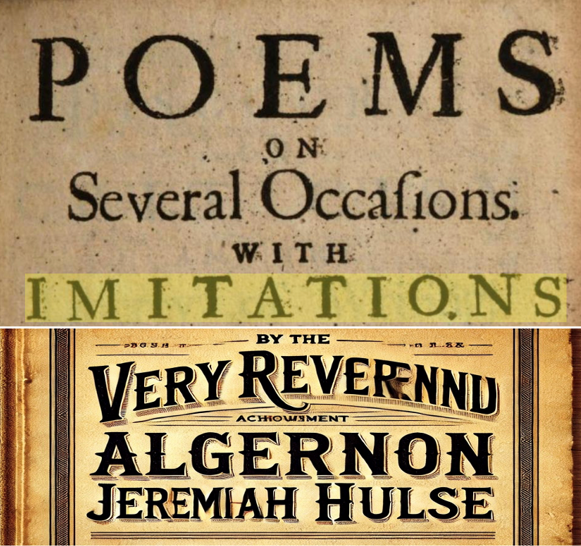
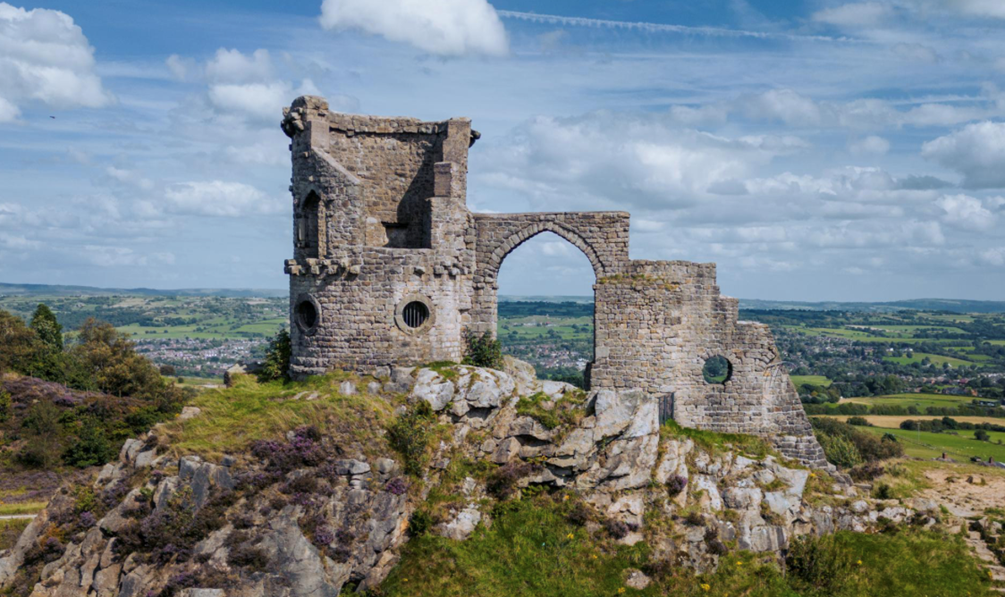
It had apparently been published in about 1809 and was the work of my great-great-grandfather Algernon Jeremiah Hulse. In a very (it must be said) long-winded introduction, not to be quoted in detail, he tells the story of how for the latter part of his life he held a parish out in the wilds of Staffordshire, and that, when he wasn’t preaching lengthy sermons to a congregation that noticeably diminished over the years – his church was very difficult to get to, as can be seen from this illustration…
He spent his time in Classical scholarship, his only companions, an ancient housekeeper named Mrs. Eurycleia Smith, his cat Cicero, his parrot Cassandra and his faithful hound Argos.
He corresponded with contemporary scholars. There are a number of largely illegible letters preserved in our archive, one of which seemed to be signed Richard P. (could it possibly be the great Richard Porson? – probably not). Apart from his letter-writing, he spent his time reading the Greek and Latin cCassics, commenting on them and imitating them in English verse, of variable quality, typical of the time.
The rest of my ancestor’s volume is given up to these imitations, two of which are appended here. The first seemed to be an attempt to imitate Horace’s Alcaic or Sapphic poems – it’s not clear which Algernon has in mind – in the second, he seems to have Mr. Alexander Pope in his sights. It’s followed by a Latin version that perhaps shows that his verses required further attention.
I leave his efforts to the critical judgement of the reader, only remarking that it’s good to know that Classics is a long family tradition.
1.
Studious ones, who seek the past’s grand wisdom,
Ancient tongues unfold the storied ages,
Latin, Greek, the key to mighty knowledge,
Timeless and golden.
Homer’s verse, resounds with heroes’ glory,
Vergil’s lines, with fields of war and duty,
Plato’s thoughts, in dialogues immortal,
Truth everlasting.
Graced with words of power, noble, vivid,
Texts of yore reveal the world in splendour,
Guiding minds to heights of keen perception,
Language of sages.
Seek, with fervent heart, the lore of ancients,
Wisdom carved in stone and papyrus sheets,
Latin, Greek, the bridge to heights of learning,
Echoes eternal.
2.
Awake, my soul! to realms of ancient lore,
Where wisdom dwells, and muses gently soar.
In Greek’s sweet cadence, heroes rise anew,
While Latin’s grace in measured verse breaks through.
How oft I gaze upon those hallowed texts,
Where reason shines and artful thought connects!
A tapestry of knowledge, rich and vast,
Where every line’s, a bridge to ages past.
From Homer’s quill that paints the brave and true,
To Vergil’s verse, where fate and honour stew.
What hidden treasures in each noun entwined,
In verbs, the pulses of a culture bind!
Thus do I revel in this learned quest,
In every lesson, find my spirit blessed.
For language wields the power to inspire,
Igniting passion like a soul’s desire.
In echoes of the ancients, wisdom’s spark,
Illuminates the shadows cold and dark.
So let me toil, with fervour and delight,
For in these tongues, the mind takes wondrous flight.
3.
Excita, mens mea! Nunc veteres tendamus ad artes,
Quo sapientia stat, Musaque celsa volat.
Versibus in Graecis, redeunt heroës in auras,
Gratia dum resonans verba Latina movet.
O quotiens sacris contemplor carmina libris,
In quo fulget mens, et ratio iuncta docet!
Algernon Jeremiah Hulse

Notes
| ⇧1 | Xenophon, Anabasis 3.1.26. |
|---|---|
| ⇧2 | The only information available about ‘Pseudo-Pseudo-Oppian’ is that s/he is neither the Cilician writer of Halieutica, nor his Syrian imitator, author of Cynegetica. |
| ⇧3 | Our author has stretched the epyllion, traditionally composed only in hexameters, to embrace (largely dactylic) tetrameter. |
| ⇧4 | Philemon and Baucis, who welcomed Zeus and Hermes disguised as travellers (Ovid, Met. 8.611-724). |
| ⇧5 | Petrus Bertius’s map of the southern regions (Descriptio Terrae Subaustralis, c. 1600) shows a large unknown continent, labelled PSITTACORUM REGIO. Stanford University, purl.stanford.edu/sk925cp8974. |