Angie Hobbs
οὐδ᾽ ἐάσομεν πείθεσθαι τοὺς ἡμετέρους ὡς Ἀχιλλεύς, θεᾶς ὢν παῖς καὶ Πηλέως, σωφρονεστάτου τε καὶ τρίτου ἀπὸ Διός, καὶ ὑπὸ τῷ σοφωτάτῳ Χείρωνι τεθραμμένος, τοσαύτης ἦν ταραχῆς πλέως, ὥστ᾽ ἔχειν ἐν αὑτῷ νοσήματε δύο ἐναντίω ἀλλήλοιν, ἀνελευθερίαν μετὰ φιλοχρηματίας καὶ αὖ ὑπερηφανίαν θεῶν τε καὶ ἀνθρώπων.
ὀρθῶς, ἔφη, λέγεις.
μὴ τοίνυν, ἦν δ᾽ ἐγώ, μηδὲ τάδε πειθώμεθα μηδ᾽ ἐῶμεν λέγειν, ὡς Θησεὺς Ποσειδῶνος ὑὸς Πειρίθους τε Διὸς ὥρμησαν οὕτως ἐπὶ δεινὰς ἁρπαγάς, μηδέ τιν᾽ ἄλλον θεοῦ παῖδά τε καὶ ἥρω τολμῆσαι ἂν δεινὰ καὶ ἀσεβῆ ἐργάσασθαι, οἷα νῦν καταψεύδονται αὐτῶν· ἀλλὰ προσαναγκάζωμεν τοὺς ποιητὰς ἢ μὴ τούτων αὐτὰ ἔργα φάναι ἢ τούτους μὴ εἶναι θεῶν παῖδας, ἀμφότερα δὲ μὴ λέγειν…
καὶ μὴν τοῖς γε ἀκούουσιν βλαβερά· πᾶς γὰρ ἑαυτῷ συγγνώμην ἕξει κακῷ ὄντι, πεισθεὶς ὡς ἄρα τοιαῦτα πράττουσίν τε καὶ ἔπραττον καὶ “οἱ θεῶν ἀγχίσποροι…” … ὧν ἕνεκα παυστέον τοὺς τοιούτους μύθους, μὴ ἡμῖν πολλὴν εὐχέρειαν ἐντίκτωσι τοῖς νέοις πονηρίας.
‘We cannot allow our citizens to believe that Achilles – the son of a goddess and a father, Peleus, who was a man of the utmost self-control and a grandson of Zeus, and who furthermore was guided by Chiron the wisest of schoolmasters – was in such a state of inner disorder that he combined in himself the two contrary diseases of illiberal love of money and overweening arrogance to gods and men.’
‘You are right,’ he said.
‘We must therefore neither believe nor allow the tales of the terrible rapes committed by Theseus, son of Poseidon, and Peirithous, son of Zeus, or any of the other lies now told about the terrible and ungodly things which other sons of gods and heroes are said to have dared to do. We must compel our poets to say either that they never did these things or that they are not the sons of gods; we cannot allow them to assert both…
‘… Moreover such lies are positively harmful. For those who hear them will be lenient towards their own wrongdoing if they believe that this sort of thing is and was always done by “the close relatives of gods…”…
‘We must therefore put a stop to tales of this kind before they breed in our young men indulgent tolerance of wickedness.’
(Plato, Republic 391c–e)
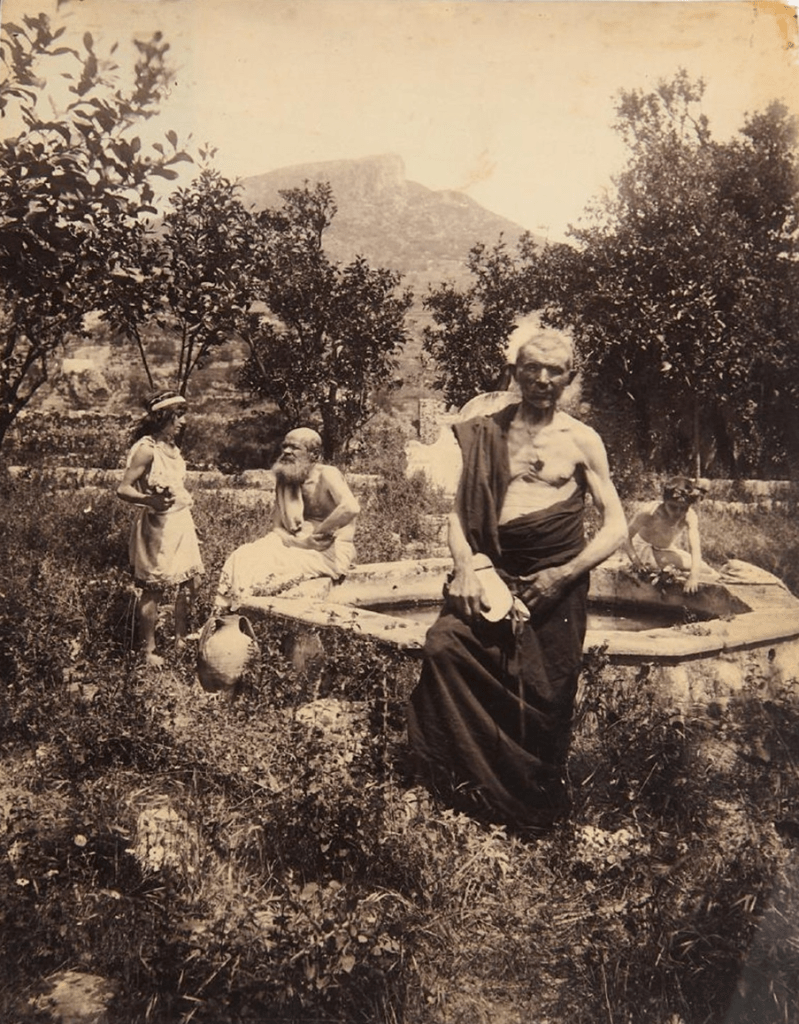
In this passage of Republic Book 3 (391c–e) the character of Socrates is explaining to Glaucon and Adeimantus why the depictions of Achilles and the other heroes in Homer need to be heavily censored. He is outlining the primary education in the arts and physical training that the future Guardians of the ideally just city are to receive. Most of these young men (and, we learn later, young women too) will go on to form the Auxiliary class, a combined military, police and executive force. A few (again, both men and women) will later be selected for further training in mathematics and dialectic and eventually become Philosopher-Rulers, but their long years of higher education will still be interspersed with periods of active military service. In Plato’s eyes, the Homeric heroes are wildly unsuitable role models for his Guardians: the city needs obedient soldiers and steadfast, not unruly warriors.
Plato’s stance towards the Homeric heroes had not always been so critical. In the Apology, almost certainly an early work, the character of Socrates is happy to compare Achilles’ behaviour to his own: his willingness to die rather than compromise his dedication to philosophy is comparable to Achilles’ willingness to sacrifice his life to avenge the slain warrior Patroclus. It is a comparison that may strike us as odd, as both the historic Socrates and the character that Plato creates notably reject the Homeric code of revenge, a code which emphasizes harming your enemies while helping your friends. Yet even in the Apology Socrates concludes by declaring that if Hades exists then he is looking forward to cross-examining the heroes of old (!). And Plato leaves us in no doubt that the real hero of the Apology is Socrates himself.
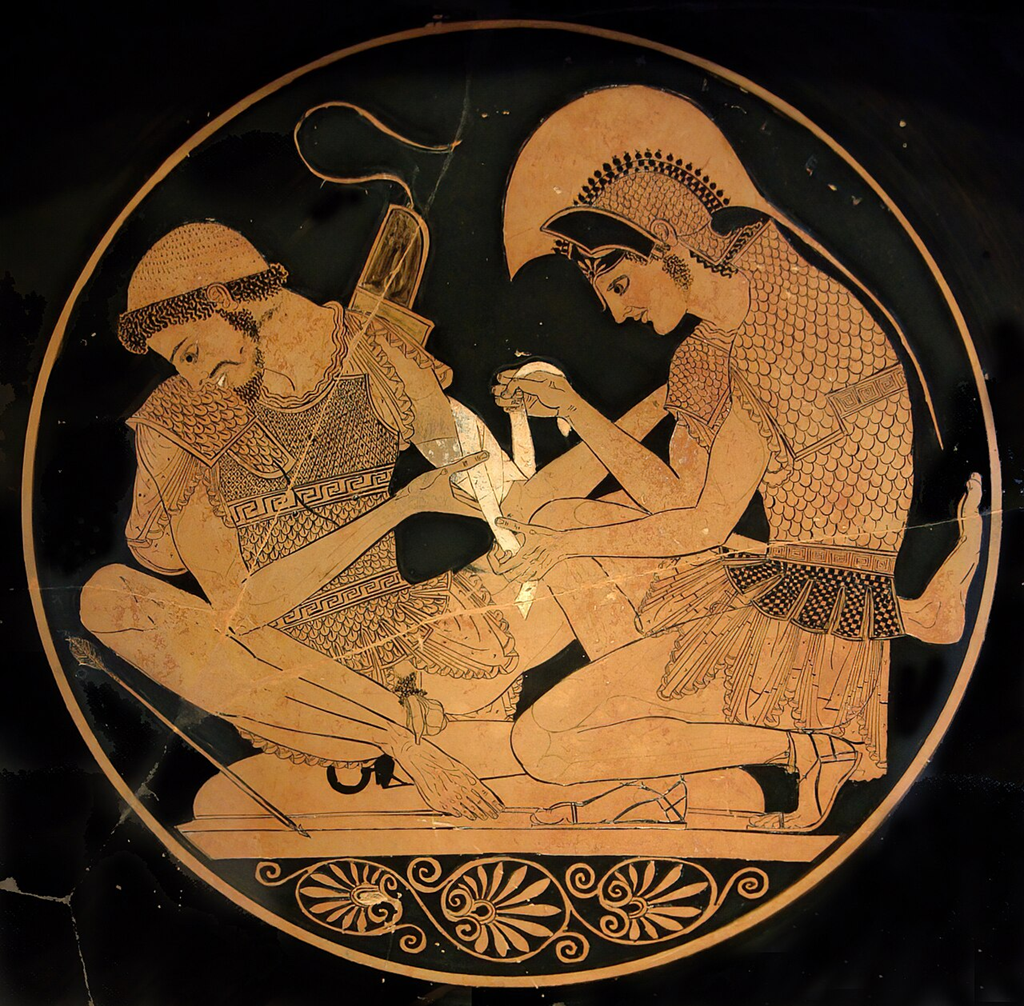
Plato’s profound interrogation of heroes and heroism (and honour and honouring more generally), particularly in the Apology, Hippias Minor and Republic, is an aspect of his thought that is often overlooked, and one which deserves our serious attention. He scrutinizes in detail the heroes of his culture, particularly Achilles and Odysseus in the Iliad and the Odyssey, poems in which the young men he is trying to educate are steeped.
What is a hero and do they do more harm than good? Utilizing his analysis of the human psychē, Plato explores why some of us long to be heroes, and why more of us long to look up to a hero; he was acutely aware of how much a person’s or community’s heroes tells you about them, and he was not afraid to call for radical change in our heroic models – changes which he realized would require profound social and educational transformation.
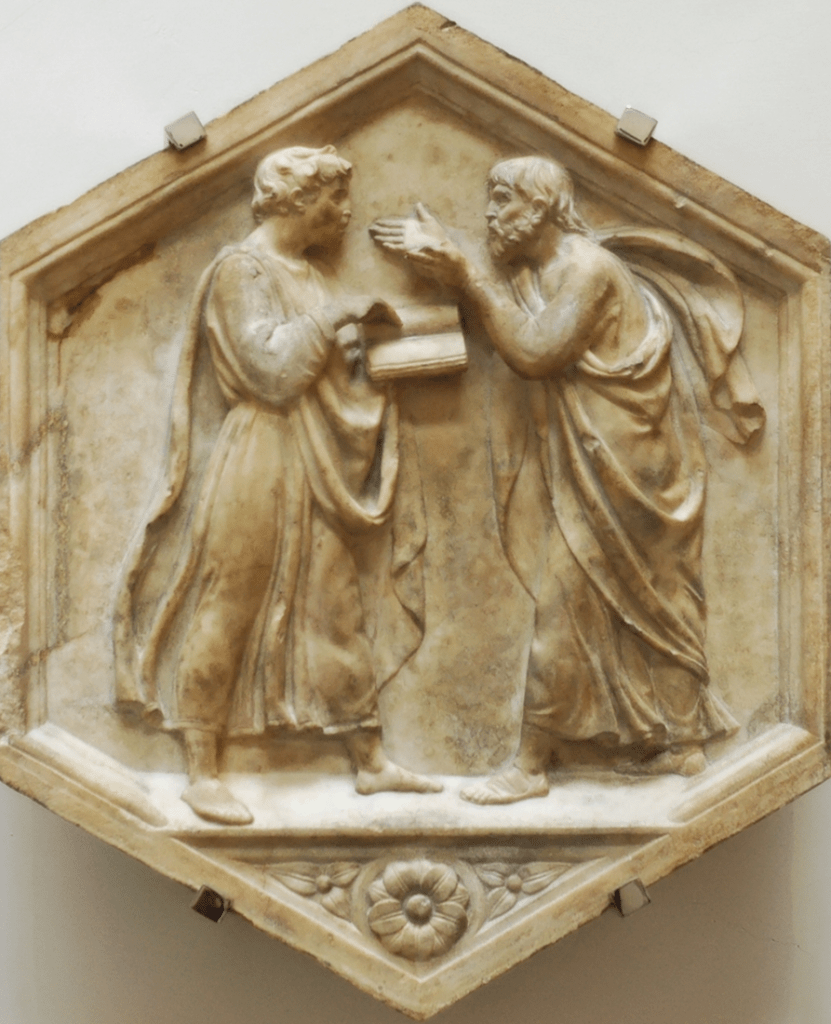
His lucid interrogation of heroism matters because our own attitudes to the notion of a hero are often conflicted and confused. On the one hand, we are aware that heroic courage can tip over into foolhardy recklessness or pointless brutality. We can see that changing circumstances and technologies may mean that a traditional brand of heroism becomes outmoded, as Wilfred Owen and others discovered when they entered the industrialized, anonymized wastelands of WWI with only Homer and Horace as guides. Or the keenly anticipated hero may never show up – they may be as elusive as Godot. Better, surely (we may think) to tackle the problem ourselves – or work towards a more equitable and peaceful world in which the hero is redundant.
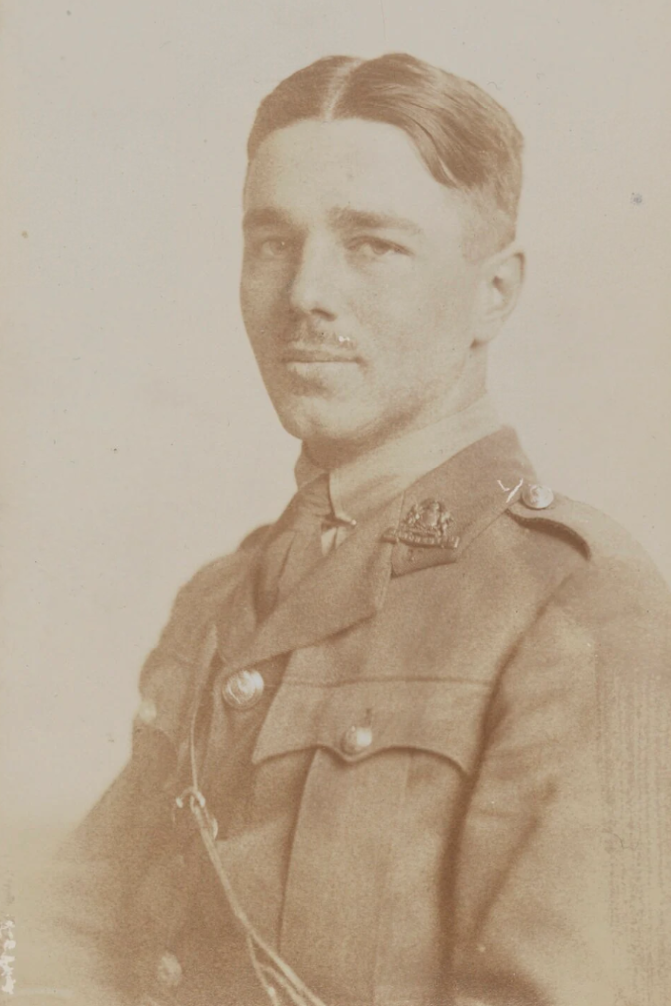
We are also aware that excessive hero-worship can destroy lives and make the worshipper vulnerable to exploitation, particularly if the wrong person is selected (current debates around unsavoury male role models and ‘toxic masculinity’ are a case in point). The same goes for an excessive desire to be a hero. The opportunity may never arise and, even if it does, the hero can cut an isolated figure, the “lonely dragon” that is Shakespeare’s Coriolanus.
We note that the term ‘hero’ is frequently exploited for political or financial gain, or to divert attention from catastrophic mistakes: it does not take long for a political or military leader to praise as ‘heroes’ those they have accidentally killed through their own ineptitude, whether or not the combatants have in fact done anything heroic.

Yet the very fact that the term is so often misapplied shows that it still has allure. Our investment in the idea of heroism, and in honour and honouring more broadly, is attested by our often heated debates about who deserves a statue or memorial, and the names of cultural venues: witness the current controversy over the renaming of the former John F. Kennedy Memorial Center for the Performing Arts in Washington DC. We really care about who deserves our veneration.
Plato asks many of the same questions and raises many of the same concerns. Like us, he also wants to retain the concept of the hero ande is prepared to undertake the detailed work needed to refine it. His thinking on the issues evolves throughout his life, and is often explored through his depiction of the character of Socrates – both through what he says and how he is portrayed. (Plato never speaks in his own voice; his dialogues are populated by a rich and varied cast of characters, and Socrates is usually the main interlocutor; however, although based on Plato’s mentor and beloved friend, the historic Socrates, Plato’s Socrates and the historic Socrates are not identical).
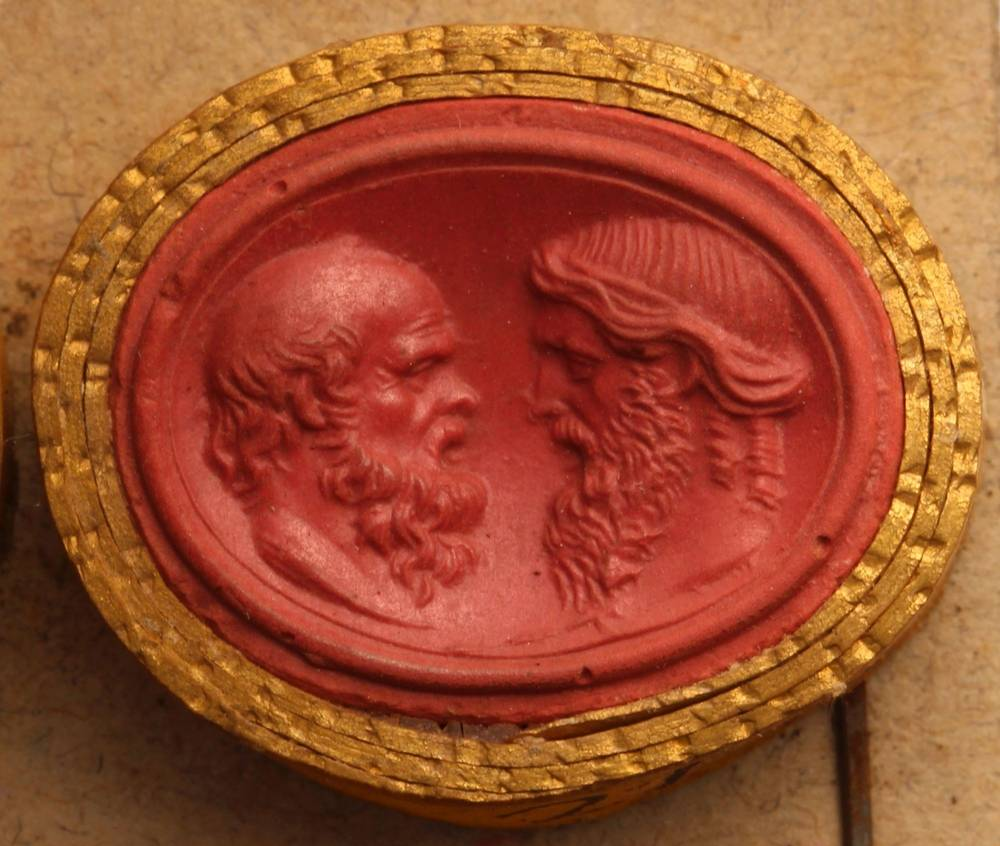
Another probably early work, the Hippias Minor, is forensic in its treatment of the Homeric heroes: Socrates explicitly debates whether Achilles or Odysseus is the finer. Although the ending of the dialogue is formally inconclusive, it appears that Plato wants us to consider the possibility that there may be more than one kind of heroism, and heroic ideal, and that both Achilles and Odysseus have their different virtues – and also that both have their specific flaws. However, by the time we reach the Republic, Plato has the character of Socrates engage in much fiercer criticism of both heroes: Achilles may be courageous, but he is also disobedient, excessively emotional and at times really savage in his bloodlust; Odysseus is preferable because he is usually more disciplined and self-controlled, but he too can at times be prone to physical indulgence.
Secondly, at the time of writing the Republic Plato has developed a sophisticated tripartite psychology. There is a reasoning faculty, which desires truth and reality; an appetitive faculty which desires physical pleasures, material goods and money; and, crucially, there is the thūmoeides, a spirited faculty which desires honour and respect and success. What better way to acquire honour than by emulating those whom your society already honours – in some cases, esteems as heroes? Plato recognizes that the profound importance of the human desire to be respected and honoured will require a thorough overhaul of your society’s heroes and role models.
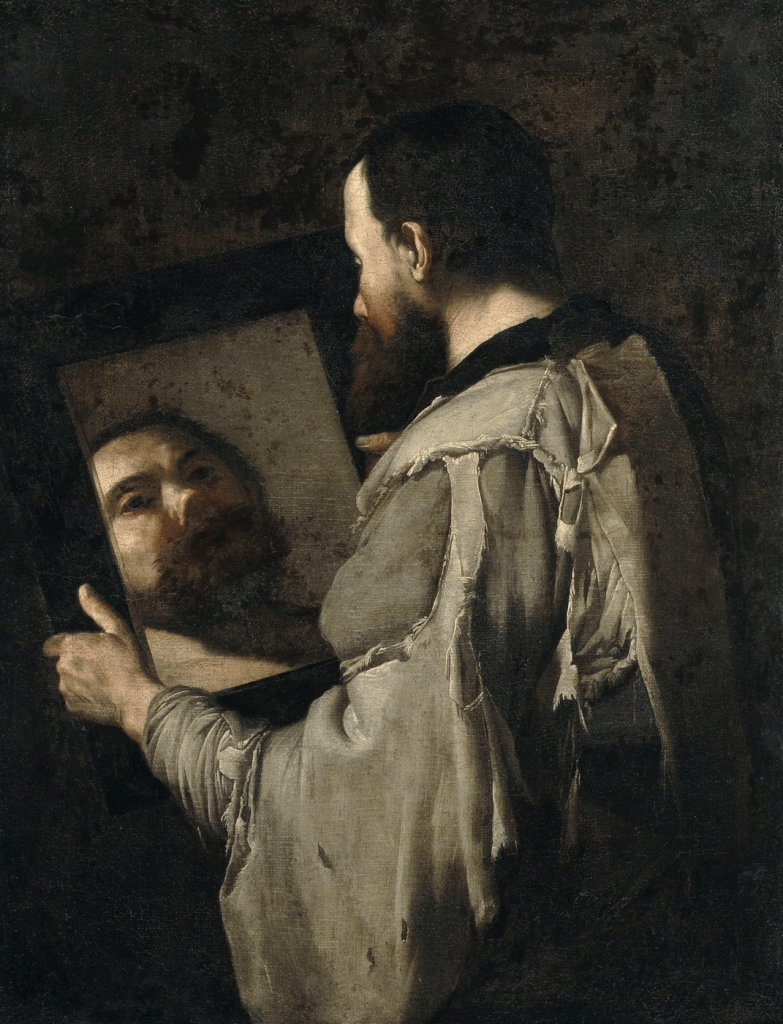
This overhaul does not simply involve critiquing the old Homeric heroes; it also involves setting up new ideals. The real hero of the Republic, as Plato portrays him, is again the character of Socrates himself and indeed the character of the philosopher more generally: it is significant that the Philosopher-Rulers of the ideally just state that Socrates describes are to be treated as objects of a hero-cult after death (540b–c).
The young Guardians will still need military models and leaders to look up to and emulate – although Achilles is excised from the Myth of Er in the final book of the Republic, a suitably purified Odysseus is allowed to remain – but Plato is now explicitly extending the field of heroism beyond the battlefield: Socrates and all those who risk or give their lives for truth and justice are even greater models. Although he wants to interrogate the notion of the hero, he certainly does not want to get rid of it: he recognizes that the term speaks deeply to a fundamental part of our psychē and has real potency and value. His aim is to prevent the currency from being debased.
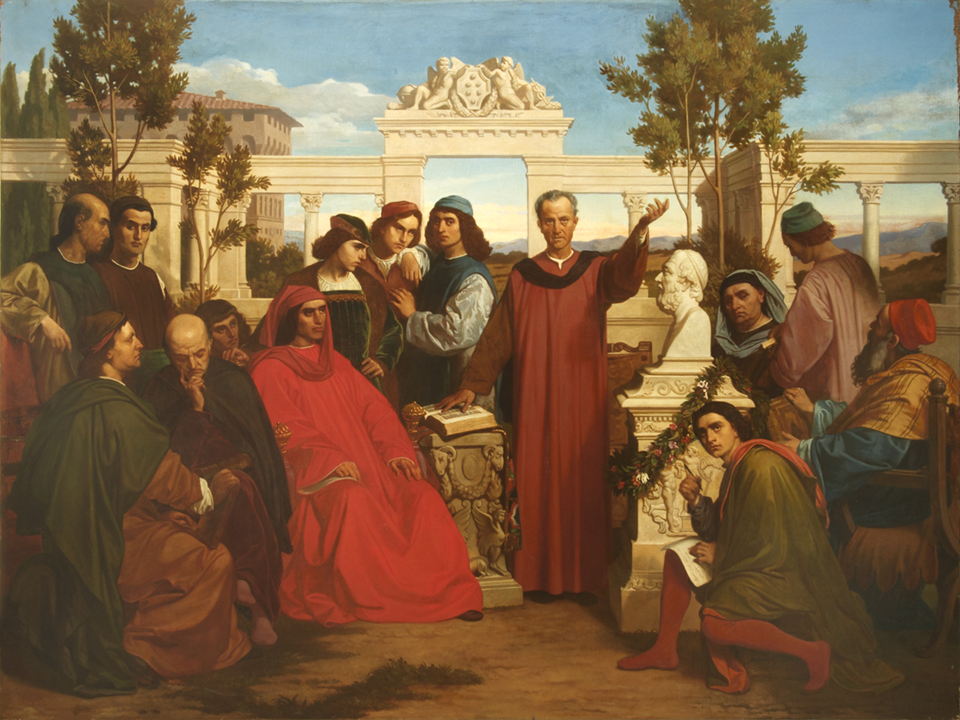
What might Plato say to us now? He would say that the notion of the hero is too important to be cheapened to the point where it loses all meaning (I have recently, and depressingly, seen the terms “chip shop hero” and “face cream hero”). And he would strongly urge us not to confuse ‘hero’ with ‘celebrity’. He would ask: has the so-called ‘celebrity’ actually done or created anything worth celebrating? He would always remind us that, understood properly and applied with care, the term ‘hero’ can stimulate our moral and intellectual ambition and help us be our best self. But, for precisely the same reasons, he would warn us that admiring or emulating the wrong kind of hero gives licence to our worst.
Plato has so much to teach us now – about the need for dialogue, and good and bad ways of conducting it; about what constitutes individual and communal flourishing and how flourishing is not the same as happiness or pleasure (though will usually involve them). His incisive account in Republic 562a–576c of how democracy can be subverted to tyranny by a cynical and opportunistic demagogue is only too clearly relevant. His profound analysis of heroes and heroism is also a vital part of his legacy and one from which we can learn much.

Angie Hobbs is Professor of the Public Understanding of Philosophy Emerita at the University of Sheffield. Her chief interests are in ancient philosophy, and ethics and political theory from classical thought to the present, and she has published widely in these areas, including Plato and the Hero: Courage, Manliness, and the Impersonal Good (Cambridge UP, 2000). Her most recent publication for the general public is Why Plato Matters Now (Bloomsbury, London, 2025), which contains a chapter on “Heroism, Celebrity and Money.” She works with a number of policy sectors, and contributes to radio and TV programmes and other media around the world. Her website can be found here.