Mateusz Stróżyński
In three recent pieces, I examined Tolkien’s allusions to the ancient epic tradition, showing that the Classical tradition formed a significant (although possibly subconscious) background to Tolkien’s literary creativity. This year is the 25th anniversary of the first instalment of Peter Jackson’s cinematic trilogy The Lord of the Rings, which was released in 2001. This first film, The Fellowship of the Ring, won four Oscars, while the third part (The Return of the King, 2003), won the record tally of eleven, giving the entire trilogy seventeen Oscars in total.
The later Hobbit trilogy by Jackson (2012–14) was much less successful, but the first series of Tolkien movies earned praise from film critics, and was generally accepted by Tolkien fans. Even so, it highlighted the uneasy relationship between the visual arts and literature, since Jackson’s movies, whatever their value in their own terms, failed to bring across the sheer richness of Tolkien’s prose.
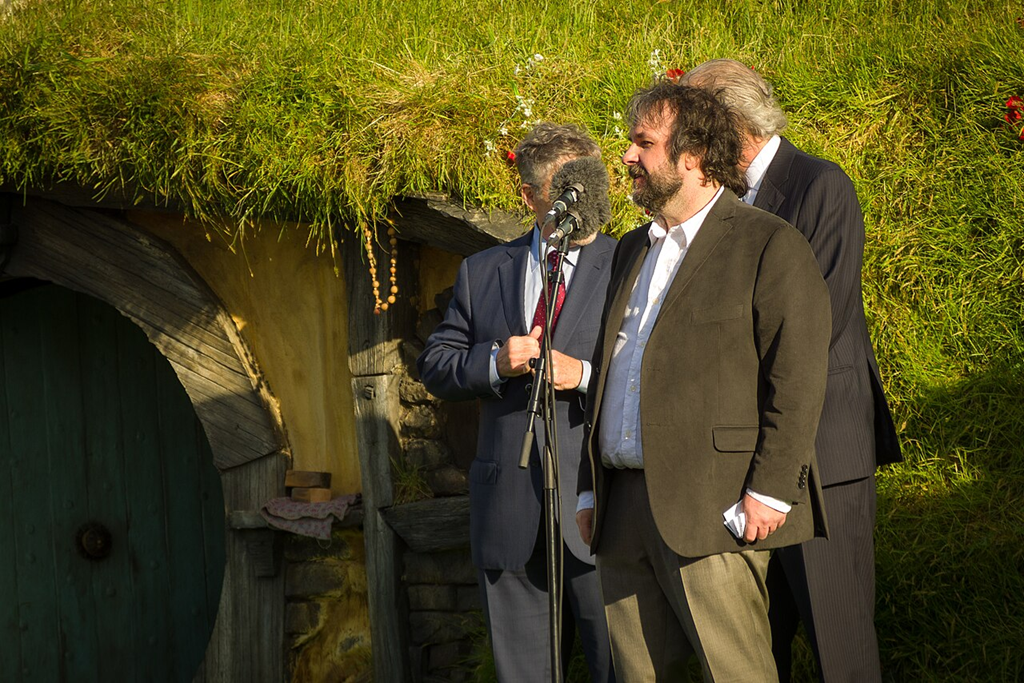
Tolkien himself was not particularly keen on turning his most successful novel into a film. In 1957 or 1958, an American screenwriter named Morton Grady Zimmermann approached Tolkien with a proposal to create an animated adaptation of his Lord of the Rings. Tolkien saw the script and hated it. He shared his thoughts in a letter to Forest J. Ackerman: “The canons of narrative art in any medium cannot be wholly different; and the failure of poor films is often precisely in exaggeration, and in the intrusion of unwarranted matter owing to not perceiving where the core of the original lies.”[1] Tolkien’s son, Christopher, a professor of English literature like his father, was strongly against Jackson’s project, but since the copyright to the movies had been sold in the 1960s, he couldn’t prevent the film adaptation from happening.
J.R.R. Tolkien’s point that the failure of a cinematic adaptation lies in “not perceiving where the core of the original lies” extends to any kind of interpretation or adaptation. His more precise points about “exaggeration” or “unwarranted matter” remain equally universal, when we apply them to the relationship between novels and movies. In this piece I want to take a brief look at the Classical epic echoes in Tolkien’s novels, which I have discussed in my previous pieces, to comment on the way they were rendered by Peter Jackson in his two cinematic trilogies.
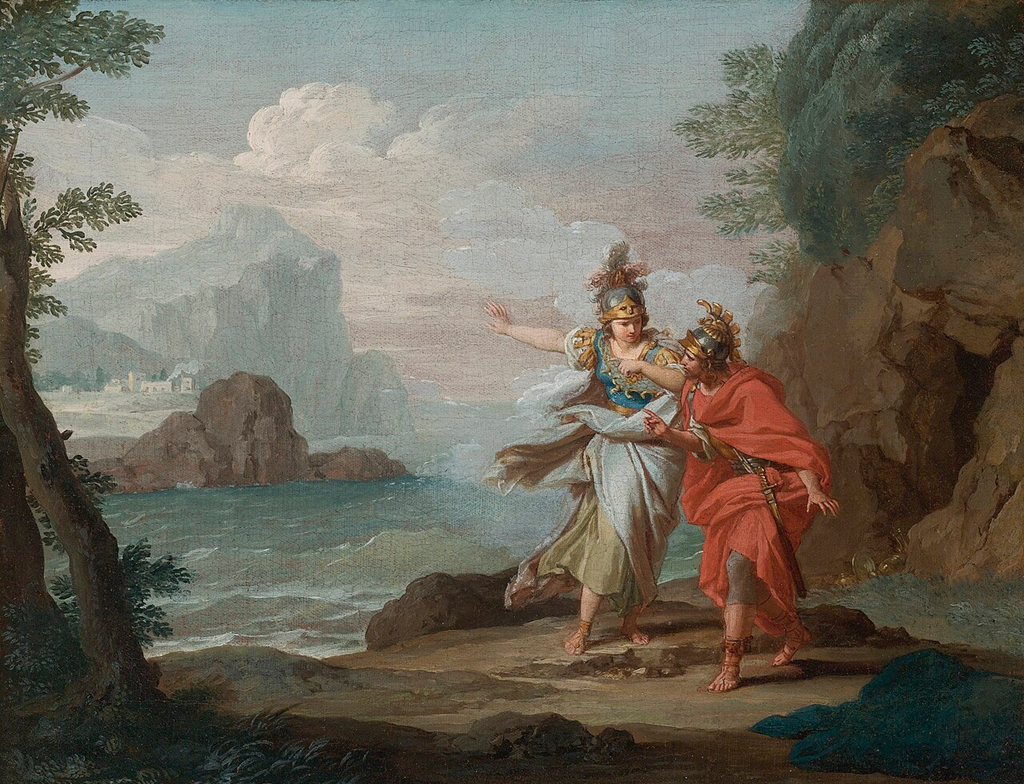
The barrel-ride scene from The Hobbit, which is an allusion to the escape from Polyphemus’ cave in the Odyssey, appears in the second Hobbit movie (The Desolation of Smaug, 2013). Unfortunately, the filmed scene is deprived of almost all the features that make it seem Homeric. What remains is the use of the routine by Bilbo: the barrels are regularly floated from Thranduil’s halls into Esgaroth, and this is how the dwarves escape their imprisonment. However, the method of escape is not allowed adequate emphasis in the film, since the dwarves are not locked inside the barrels, as in the novel. Instead, they float in open barrels, which removes the element of concealment.
The humor of the situation is also lost. In the novel, Bilbo, the author of the ingenious trick, suddenly forgets that he will not be able to close himself in a barrel, so he has to ride it, just as Odysseus rides a ram in an unorthodox manner in the Homeric poem. The very idea of riding a barrel as though it were a fat pony is thus detached from its classical context; the filmmakers seem to be at loss with respect to what the whole scene is supposed to be about. So, having decided that it is not particularly successful, they add “unwarranted matter”, as Tolkien put it: a fight with orcs, which becomes the dominant motif of the scene, and obviously has no counterpart in the original.
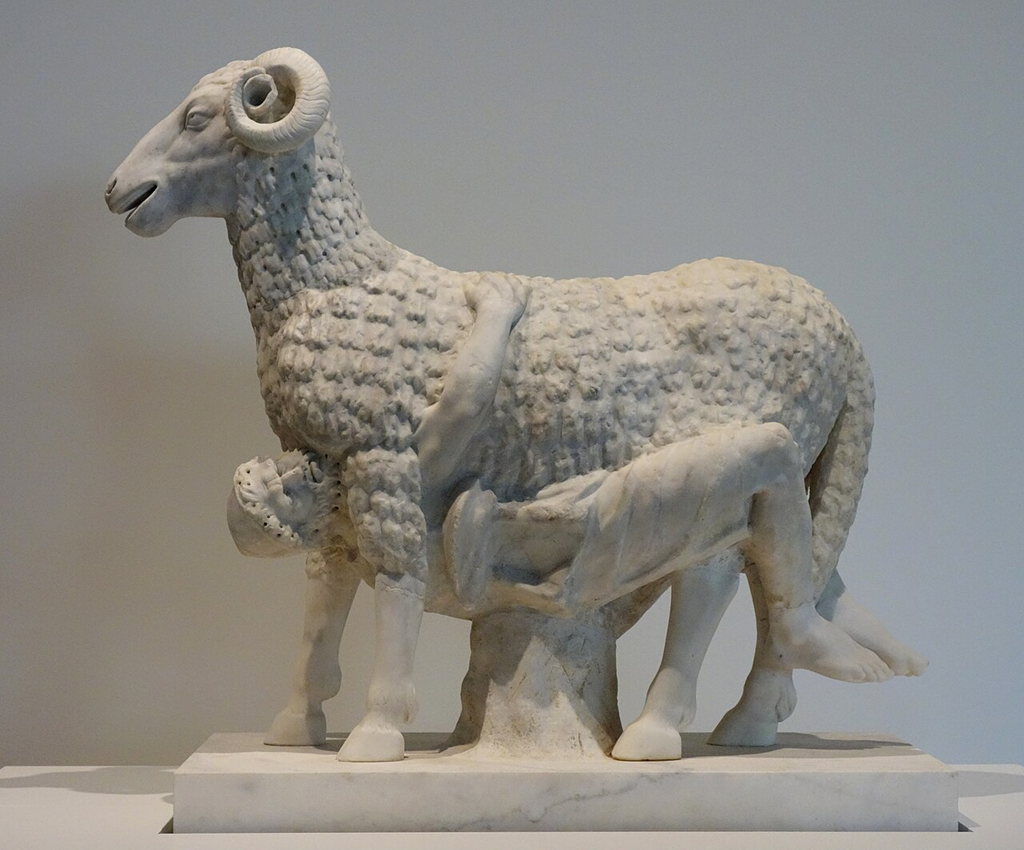
Here the adaptation deprives the scene of its essential character, which is an escape from danger by cunning rather than force, pointing to the trickster figure of πολύτροπος Οδύσσευς (polytropos Odysseus). The scene becomes a spectacular play of images, almost like a music video, in which the viewer’s attention is held by a rapid series of shots: the rushing current of the river, spilling water, and the fight with the orcs. One of the dwarves in the movie, Bombur, vividly resembles the character Obelix, played by Gérard Depardieu in the 1999 film Astérix & Obélix contre César (Asterix and Obelix vs Caesar), an unintended reference to antiquity that does not enhance the scene. Bombur-Obelix fights several orcs simultaneously while still sitting inside the barrel, spinning around his own axis and killing successive opponents in a way which is hardly congruent with Tolkien’s manner of handling combat scenes in his novels.
When it comes to the scene of killing Smaug, which echoes the death of Achilles amid the burning of Troy, the destruction of the city in flames is presented suggestively rather than explicitly. The filmmakers retain the motif of the ‘Achilles’ heel’ intact, since Smaug possesses a weak point on his chest where he is shot by the Bard of Esgaroth. All the other aspects of the motif, however, vanish without a trace. There is no trick by Bilbo, nor any accidental spotting of the soft spot on the dragon’s belly. The discovery of Smaug’s weak point, his ‘Achilles heel’, becomes what Tolkien called an “exaggeration”: a rather elaborate, invented legend about a black arrow that is the only weapon capable of defeating the dragon. Balin tells it, and Bard knows of it because it is part of the shared history of dwarves and the people of Esgaroth.
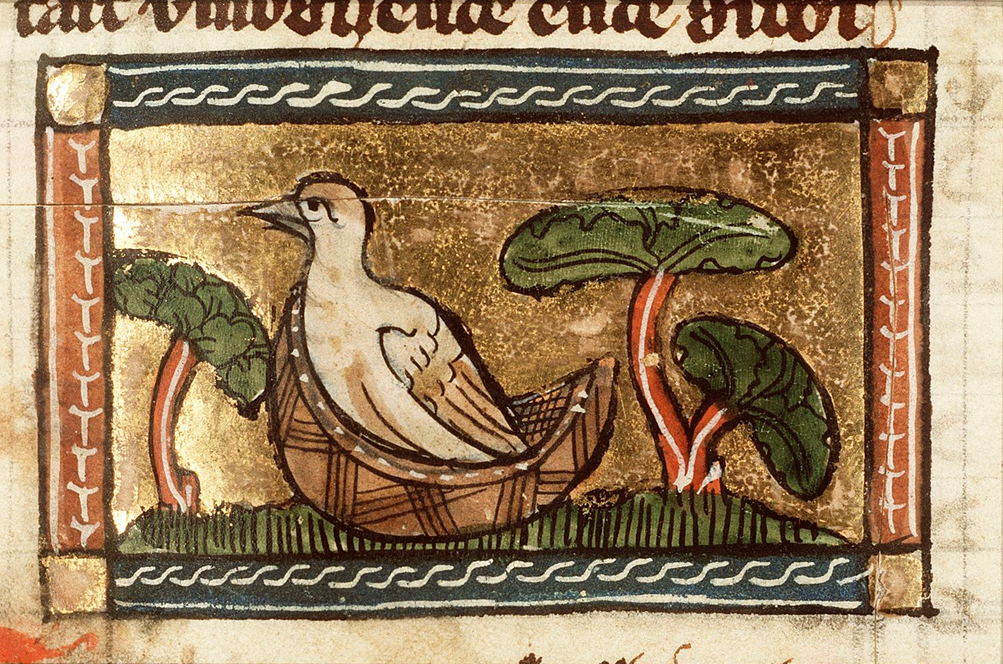
There is also no role for the “divine” thrush who cooperates with the human warrior in killing the attacker (which is reminiscent of Apollo’s assistance in killing Achilles). Also, instead of a bow and arrow, the filmmakers introduce a gigantic, complicated mechanical crossbow; the reason for this exaggeration remains entirely opaque. Perhaps, it was intended to show that it is not so easy to kill a dragon, but the result is clearly a failure. In the book, Smaug is killed by a simple bow-shot, like Achilles.
The failure results in, as Tolkien put it, “not perceiving where the core of the original lies.” One of the fundamental recurring motifs in Tolkien’s work is the biblical motif of David and Goliath: great deeds are accomplished by someone who seems too weak for them. Smaug’s death in the novel also follows that pattern of a confrontation between human weakness and some monstrous power of evil. It is already present in the prototype of this scene in Tolkien’s legendarium, that is, the killing of the dragon Glaurung by Túrin. Similarly, Bard as a mere mortal seems to have no chance against Smaug, but he is aided by the unexpected help of the thrush, and by Bilbo’s earlier perceptiveness and cunning, which together expose the dragon’s weakness. As I have shown in the previous piece, this convergence of several factors shows the hidden divine ‘grace’ acting beneath in addition to the ancient epic echo present in this scene.

As I argued in my last piece, the ancient motif of νόστος (nostos) is based on the idealization of home and homeland as places of safety and peace, places longed for when one is far away at war or on a journey, and to which one wishes to return in order to find peace once more. In the film adaptation of The Lord of the Rings (and of The Hobbit as well), the creators have accurately grasped the significance of this idealization. This is evident above all in the extended opening of The Fellowship of the Ring, where the Shire is shown, successfully, as a wonderful, idyllic land bathed in sunlight and greenery, inhabited by joyful and kind (although not particularly serious) creatures. It creates a striking contrast with the later scenes in the film and its two sequels, where darkness, greyness, barrenness, and the terror of the Enemy dominate. The early images of The Fellowship remain in the viewer’s mind as a point of reference — something that has been lost or left behind, but to which one wishes to return together with the protagonists.
The Return of the King, however, departs from the novel in one fundamental respect: it entirely omits the destruction of the Shire by Saruman and his lackeys. The hobbits simply return to a homeland that is unscathed and whose ideal character has not been questioned at all. I leave aside here the practical reasons why the filmmakers made this decision. They may be obvious, since the film extended version runs nearly four hours! However, the result is that the filmmakers replace Oliver Taplin’s first variant of νόστος by the second one, because instead of returning from a dangerous world to a home that has lost its safety, they depict a return from a dangerous world to an entirely safe homeland. This resembles more the return of Menelaus to Argos than that of Agamemnon to Mycenae or Odysseus to Ithaca. It is, however, at the same time, a departure from Tolkien’s original design.
The filmmakers attempt to preserve something of the νόστος motif in a brief scene in which the four hobbits, upon their return, sit in the pub and drink beer, watching their laughing, cheerful fellow hobbits. In this scene one can see the sadness on the protagonists’ faces, contrasting with the noisy joy of the others, unaware of the great dangers undergone and the heroic deeds accomplished by Frodo, Sam, Merry and Pippin. The motif of loss is thus shifted by the filmmakers to a purely internal plane, and such internalization is fully in keeping with the spirit of Tolkien’s novel. In a short image, it is shown to us that something has indeed been destroyed and wounds have been inflicted, although only the attentive viewer will perceive the deeper meaning of it.
It also gives a somewhat different significance to Frodo’s subsequent journey to the Immortal Lands, which concludes both the book and the film. In the film Frodo is portrayed as wounded, suffering, and alienated from the world, but since there is no depiction of his struggles after returning, of the painful “civil war” and betrayal in the Shire, of its tainting and healing, the meaning of his journey to the West remains less clear. In Tolkien, it is a powerful symbol of the human condition: nothing can be perfect in this life, and we have to give up on our idealizations, because true reality is not in the temporal domain. In the film, the journey to the Immortal Lands is reduced to an individual healing of Frodo, who can no longer find joy in his home and homeland, which appear almost as beautiful as they were when shown to us at the beginning of the first movie. Thus the filmmakers fail to show how Tolkien interprets the epic motif of νόστος: each time we return home after a long wandering, we realize with increasing clarity that our Home is not to be found on this earth.

Mateusz Stróżyński is a Classicist, philosopher, psychologist, and psychotherapist, working as an Associate Professor in the Institute of Classical Philology at Adam Mickiewicz University in Poznań, Poland. He is interested in ancient philosophy, especially the Platonic tradition. His most recent books are Plotinus on the Contemplation of the Intelligible World: Faces of Being and Mirrors of Intellect (Cambridge UP, 2024) and Plato and Jesus, not Caesar: Metaphysics of Freedom and Tyranny in Younger Europe (Brill, Leiden, 2026).
Further Reading:
J.M. Bogstad & P.E. Kaveny (edd.), Picturing Tolkien: Essays on Peter Jackson’s The Lord of the Rings Film Trilogy, (McFarland & Co., Jefferson, NC, 2011).
Raphaëlle Rérolle, “Tolkien, l’anneau de la discorde,” Le Monde, 5 July 2012, available here.
Notes
| ⇧1 | Undated letter of June 1958: see J.R.R. Tolkien, The Letters of J.R.R. Tolkien (ed. H. Carpenter, Houghton Mifflin, Boston, MA/Allen Unwin, London, 1981). |
|---|