Geoffrey Greatrex
Introduction
Classicists around the world were, in general, pleased and impressed that the new Canadian Prime Minister, Mark Carney, in his already famous Davos speech of January 2026, invoked Thucydides’ Melian dialogue. One might have hoped that the allusion would provide a welcome boost to the profile of Classics in his country, encouraging university administrations to take the field seriously and even promote it. In fact, however, the situation is quite the reverse.
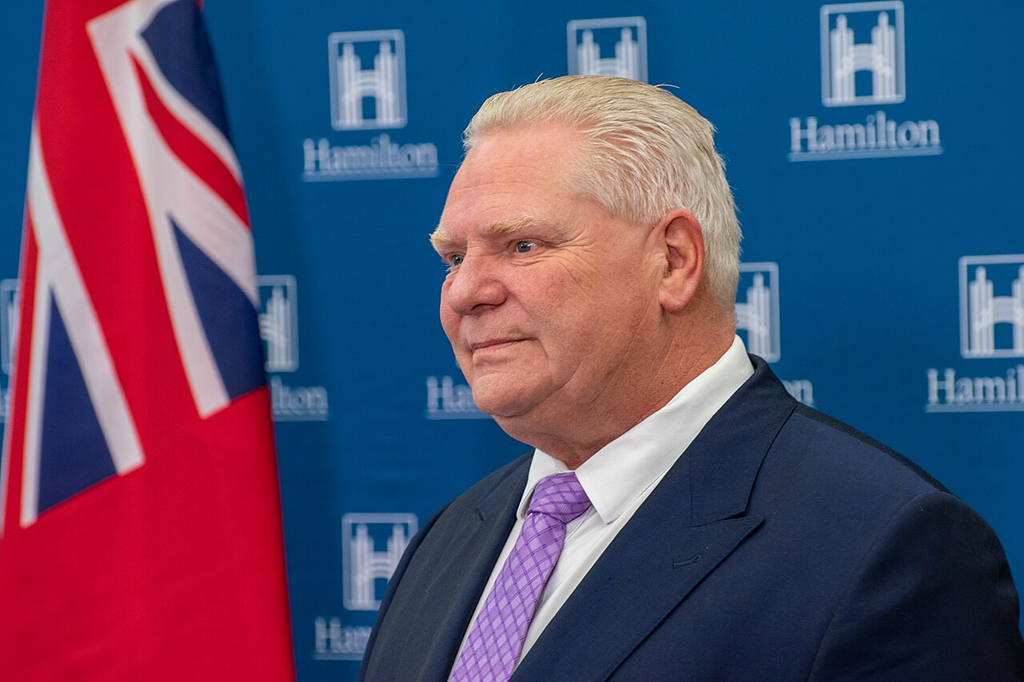
Education in Canada, unlike (say) in Australia, is not a federal but a provincial responsibility. This does at least have the advantage of sparing academics the cumbersome and ineffectual Research Assessment Exercises or the like that have plagued colleagues in the UK and Australia. But while Canada’s PM may be a Liberal, elsewhere in the country the picture is more varied, and in many provinces governments are more right-wing and populist, from Alberta to the central provinces of Ontario and Quebec, right the way to Nova Scotia and Newfoundland on the Atlantic coast. To give one example, the Premier of Ontario, Doug Ford, called on students in February 2026 not to pick “basket-weaving courses” at university, but rather to choose programmes linked to the job market. Such a narrow view of the role of universities – to produce workers, not citizens – is all too common in Canada and well beyond.
The Situation at the University of Ottawa
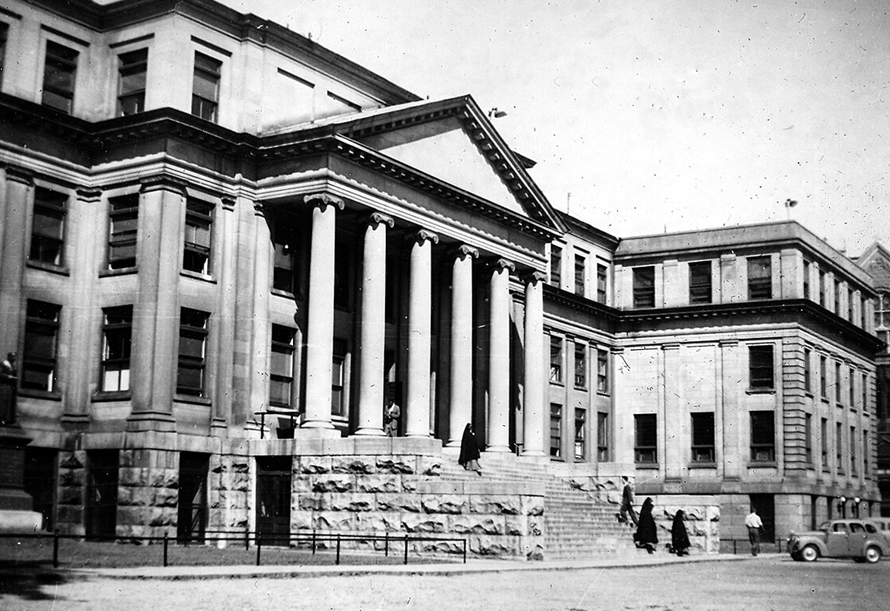
Admissions to the Honours programme in Greek and Roman Studies at the University of Ottawa were suspended, for the second time this academic year, on 6 February 2026. The administration claimed that enrolments since the lifting of the initial suspension in autumn 2025 were insufficient: in fact, about six new students were expected to arrive. Now there will be none. Given the earlier suspension, for one and a half months in the period when applications are most numerous, and in particular the fact that the administration failed to contact those who had been turned away then (despite assurances that it would do so), the total of half a dozen was respectable and not far off that of previous years. For some time, our programmes in Classics (known as Greek & Roman studies/Antiquité grecque et romaine) have been stable in numbers (albeit at around 40 to 50, all told), while our classes are often oversubscribed, attracting students from throughout the campus; the university itself has some 50,000 students altogether, while Faculty of Arts has over 4,000.
Classics has been taught, in both English and French, right from the foundation of the university by Catholic oblates in 1848. In the 1970s and 1980s, once the university became a secular institution, the Department of Classics (as it was then) counted among its number such scholars as Colin Wells, who led Canadian excavations at Carthage, Susan Treggiari, who subsequently went on to posts at Stanford and Oxford, the French archaeologist Michel Janon, and the specialist of the Hellenistic period Michel Roussel. In the year preceding its merging with the Department of Religious Studies in 1996, it still boasted some twelve professors; now the programme, within the merged department, has five full-time professors and an array of faithful part-time staff without whom operations would quickly grind to a halt.
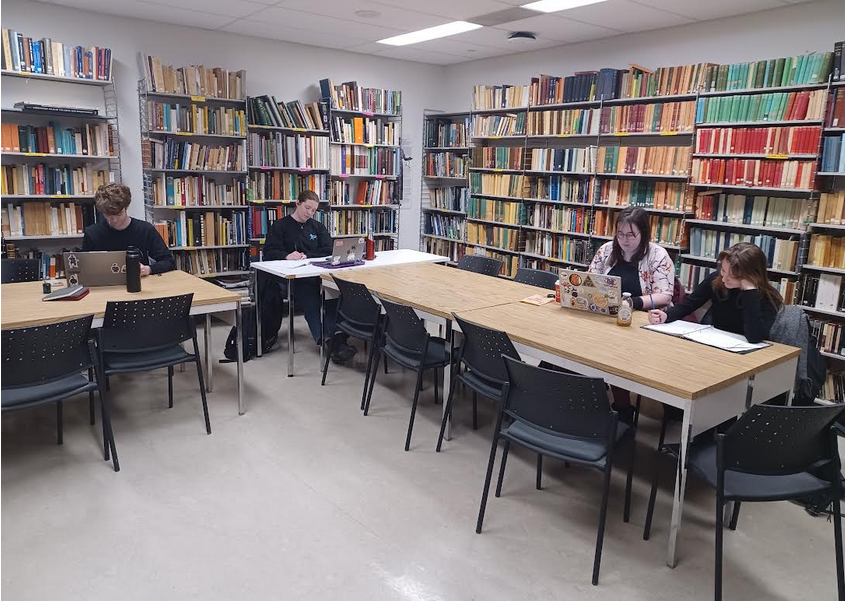
The combined department counts only eleven professors, while no new appointment has been made for over twenty years. Yet among its ranks are four members of the Royal Society of Canada, two of them – Richard Burgess and Jitse Dijkstra – in the Classics sector. It further boasts a museum of Greco-Roman antiquities, founded in 1975, regular study trips to the Mediterranean, and well-attended public events. For twenty years, until its abrupt suspension in 2024, there was also an MA programme in Late Antiquity, from which students went on to study at universities such as Oxford, Princeton and St Andrews.
Naturally none of this has cut any ice with administrators. But there is an unusual circumstance that seemed as though it might hold off the axe. For the situation at the university is unique, in that the institution has a bilingual designation from the Province of Ontario, which imposes certain rules. Among these is one that bars the university from suspending programmes in French that have five or more students enrolled in any of the last three years; in our case, seven were admitted in autumn 2024, which should give grounds for contesting the decision.

There is a further clause, however, which appears to allow the institution to suspend programmes even above this threshold, provided that both English and French versions are affected; the administration claims furthermore to have a judicial ruling from a lawyer that vindicates their approach, although they refuse to divulge it on the grounds of confidentiality. Whether or not the suspension is permitted, the media have taken an interest in the case, since the situation for Franco-Ontarians, who are numerous in the region and whose community the university claims to serve, is particularly difficult now: if any should want to pursue the study of Latin and Greek, they will be obliged to go to Quebec, where fees for students from outside the province have just been increased substantially.
As things stand, the Dean of the Faculty of Arts has promised to reopen the programme – following a “restructuring” – in autumn 2027. A restructuring, of course, involves the slimming down of course offerings, particularly in the languages. Small-scale courses, which are the pride of certain universities, are regarded as unacceptable, not just on economic grounds, but also, it seems, because of their inefficiency; administrators even have the temerity to claim that it is demoralising for students to have few peers with which to interact, as if the courses (as opposed to the programmes) lacked students – and as if small classes were depressing occasions!
Moreover, not only small-enrolment courses are under fire, but also those which reach across the campus, e.g. on the Greek and Latin origins of medical terminology, which have proved both popular and successful. Unsurprisingly, many are sceptical as to whether this promised reopening will ever take place – and no doubt potential students will also hesitate to apply to a programme that seems highly vulnerable. This scepticism is due not just to a (justified) distrust of the university’s administration, but also to an awareness of how at other institutions such tactics have been used to overcome resistance until it is too late to save a programme – as indeed has occurred elsewhere, which leads us into a brief survey of the state of Classics programmes in Canada.
The Situation in Canada
As already mentioned, the context in many provinces is not propitious. Just in the last few months, at the University of Calgary, the Classics programme decided to move from Religious Studies to History while at the same time redesigning its offerings to fit its new context. It had been understood that a new programme in ‘Ancient and Medieval Studies’ would be set up and everything was ready. Then the whole programme was cancelled, ostensibly for budgetary reasons. Now the dean has resigned; negotiations continue; there remains the hope that something may be salvaged.
At the University of Waterloo, Classics is swept up in a cull of faculty through early retirements, leading to department amalgamations and the loss of at least three faculty members (with no new hires) – and this despite the department generating profits for the Faculty of Arts. The Classics department at Queen’s University, Kingston, Ontario, was hit hard by substantial cuts a few years ago, but a broad coalition of colleagues was able to muster considerable support and to mitigate at least some of the changes being proposed.

At Dalhousie University, in Halifax, Nova Scotia, the provincial government has recently passed a law tightening its grip on universities, allowing it even to intervene in matters of programming; it appears likely that, as a result of funding difficulties, minimum enrolments in courses may lead to the cancellation of upper-level Greek and Latin courses (unless they are given as unpaid overload by colleagues). Saint Mary’s University, Halifax, no longer teaches ancient languages, while at the University of New Brunswick offerings are now very limited. Cuts have also been announced at Memorial University, Newfoundland, though their impact on the Classics department is not certain.
At York University, in Toronto, on the other hand, there are more encouraging signs: an ‘Ancient World Studies’ stream has been created within the History department, and with its support; it should be approved imminently by the university’s administration. Within this stream Classics courses will continue to be offered, including the ancient languages. The situation remains stable at the University of Winnipeg, as also, for instance at the University of Victoria and McMaster University (in Hamilton, Ontario), where courses on medical terminology are particularly successful.
Conclusion
There can be no doubt that Classics, just like many Humanities subjects, is in serious peril in Canada, as it is everywhere else. Governments in general want universities to tailor their offerings to the immediate needs of the labour market, as can be seen most obviously in the declarations of Doug Ford mentioned above. Bulk offerings are preferred, hundreds of students being taught in courses that rely heavily on learning platforms and automated marking (especially via multiple choice tests); there is talk even of ‘self-directed’ courses (also known as SLICCs – ‘Student-led individually created courses’), while ‘experiential learning’, privileging links with employers again, is likewise a buzzword.
Such a utilitarian vision of university education is bad enough in itself, but it is all the more pernicious when allied with a general prejudice against the Humanities. It is depressing already that universities should be making decisions about the programmes they offer purely on the basis of economic factors, as is now taking place. But it is yet worse when, as seems to occur remarkably often, they impose cuts on programmes that are actually popular and profitable, or when, for instance, they remove without consultation or argument special week-long programmes for high school students in ancient or medieval history that had consistently attracted a good following.
Yet, despite everything, there are signs of hope in the current crisis. When there is support at the level of the dean or the upper administration, Classics (and other disciplines) can survive and even flourish. The turn-around in Classics at Carleton University, Ottawa, in the recent past can be ascribed in large part to the energy and competence of the Dean of Arts, John Osborne. It is no coincidence that he is an internationally acclaimed scholar, unlike so many of his counterparts at numerous institutions, who swiftly forsake all research, perhaps with a sigh of relief, upon embarking on their administrative career. External backing from donors, e.g. at Simon Fraser University at Burnaby, British Columbia, which receives funding from the Niarchos Foundation for their Hellenic Studies programme, naturally can also help in weathering the present storms.
At Ottawa we have local support and generous donors, although by no means on a scale to ensure the survival of the programme. Many of our former students live and work nearby while maintaining contact with the department; each year some of them come to explain to our current students how their studies have helped them on their career path. It is our allies who, we hope, will help to exert pressure on the administration to reverse course (again) – an uphill struggle, to be sure, though we hope to capitalise on the adverse impact that the decision to suspend the programme has on the Franco-Ontarian community. Of course, we welcome support from all quarters, and hope that we may yet build a strong programme in Classics with a particular focus on Late Antiquity.

Geoffrey Greatrex is Professor in the Department of Classics and Religious Studies at the University of Ottawa, Canada. His research focuses on the period of Late Antiquity, in particular Procopius of Caesarea and the reign of Justinian: his monograph, Rome and Persia at War, 502–532, was published in 1998, while a source book, The Roman Eastern Frontiers and the Persian Wars, A.D. 363–630, co-authored with Sam Lieu, appeared in 2002. He has also edited a translation and commentary of The Chronicle of Pseudo-Zachariah Rhetor (Liverpool UP, 2011) with two collaborators, and brought out several volumes of conference proceedings. In 2022 his commentary on Procopius’ Persian Wars was published by Cambridge University Press along with a new translation, while in 2023 he collaborated with Stephen Mitchell on the third edition of his History of the Later Roman Empire (Wiley-Blackwell, Hoboken, NJ, 2023).
Further information on the campaign for keeping the Classics alive at Ottawa can be found here and via our Bluesky account.