Jaspreet Singh Boparai
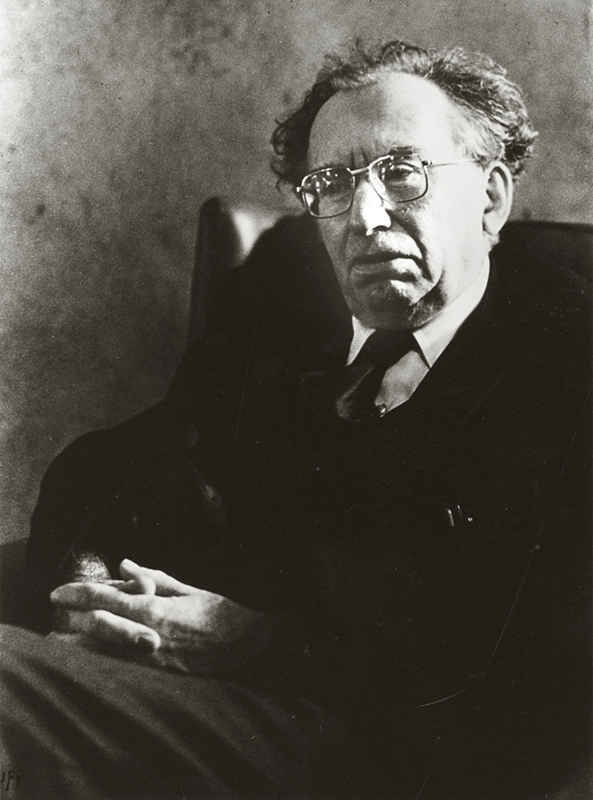
The great historian Arnaldo Dante Momigliano left Italy in 1939, at the age of 31. Despite living in England for almost half a century, and developing an enviable command of the written language, he never quite lost his thick Torinese accent. When he spoke English, he sounded like he was playing the vampire in an amateur dramatic society’s production of Dracula. The late Sir Fergus Millar, former Camden Professor of Ancient History at Oxford, was fond of recounting his experience of a lecture during which he (and no doubt other members of the audience) were puzzled by Momigliano’s incessant references to someone named ‘Aldo Ligar’. After some time, it dawned on Sir Fergus that ‘Aldo Ligar’ was ‘The Old Oligarch’ – a writer from Classical Athens who was responsible for a study on the constitution of Athens that has been included in the corpus of Xenophon’s works.
We have no idea who the Old Oligarch was, when he lived, or why he wrote his treatise on the Athenian Constitution. This work rivals even the Ion, Hecuba and Heraclidae of Euripides as one of the worst literary texts to survive from Classical Athens. Some commentators regard it as perhaps the earliest surviving example of Attic prose – one hesitates to call it ‘literary’ prose, but this is the description in use among less discerning scholars.
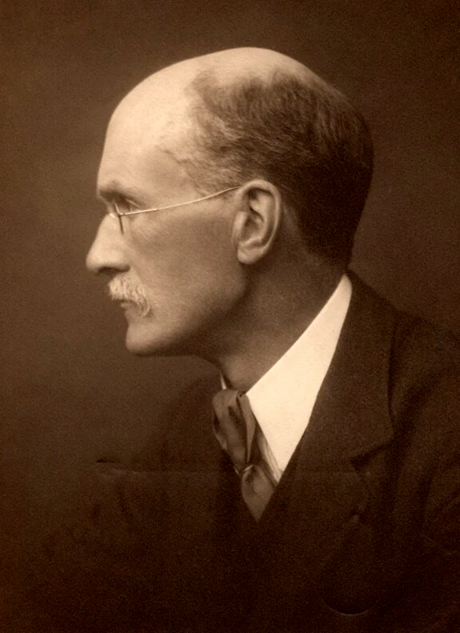
Outside the English-speaking world, this author of this treatise remains known as pseudo-Xenophon. We owe his current sobriquet to the eminent Hellenist Gilbert Murray (1866-1957), whose 1897 History of Ancient Greek Literature describes him thus:
Similar to Stesimbrotus in general political views, vastly removed from him in spirit, is the ‘OLD OLIGARCH’, whose priceless study of the Athenian constitution is preserved for us by the happy accident of the publisher taking it for Xenophon’s. It is not only unlike Xenophon’s style and way of thinking, but it demonstrably belongs to the first Athenian Empire, before the Sicilian catastrophe. It is, in fact, the earliest piece of Attic prose preserved to us, and represents almost alone the practical Athenian style of writing, before literature was affected by Gorgias or the orators. It is familiar, terse, vivid; it follows the free grammar of conversation, with disconnected sentences and frequent changes of number and person. It leaves, like some parts of Aristotle, a certain impression of naked, unphrased thought. The Old Oligarch has a clear conception of the meaning of Athenian democracy, and admitting for the moment that he and his friends are the ‘Noble and Good’, while the masses are the ‘Base and Vile’, he sees straight and clear, and speaks without unfairness.
One man’s priceless is another man’s worthless, of course. We might also question the relative confidence with which Professor Murray has dated this treatise, whilst disagreeing further with his assessments of its style and quality of thought, to say nothing of its historical value. Even so, he claims: “If only we had a hundred pages of such material as this instead of thirteen, our understanding of Athenian history would be a more concrete thing than it is.”
For all Professor Murray’s generosity towards the man he calls the Old Oligarch, he remains mystified as to the point of this treatise, finally concluding:
The work reads like the address of an Athenian aristocrat to the aristocrats of the Empire, defending Athens at the expense of the Demos. ‘We aristocrats sympathise with you; your grievances are not the results of deliberate oppression or of the inherent perversity of the Athenians, they are the natural outcome of the democratic system. If a chance comes for a revolution, we shall take it; at present it would be madness.’
Murray’s account is so elegantly phrased that its incoherence is not instantly obvious. But the Old Oligarch’s text resists not just interpretation but our basic comprehension of its purpose, and point, even though the language itself is so simple – not to say clumsy. The text itself is only eight and a half pages long in the late Vivienne Gray’s Cambridge University Press commentary from 2007. Yet not all Classicists will have read it, and those with fastidious tastes in prose may be forgiven for having deliberately avoided it, so a summary will be helpful before we attempt to discuss this work further.
Since the 17th century, editors have divided this treatise into three chapters of twenty, twenty and thirteen sections. It organising principles are difficult to discern, and what we have may well be fragmentary. In the first sentence, the Old Oligarch spells out his disapproval of the politeia, or ‘constitution’, that the Athenians have chosen, on the grounds that because of this choice, worthless men, or ponēroi, do better, or ameinon prattein, than the chrēstoi, or valuable citizens. Yet the constitution is stable, and efficiently performs its main function, which is to maintain the interests of the dēmos – the people. The Old Oligarch’s definition of dēmos is vague and somewhat unstable, except insofar as he uses it to contrast the masses against the small number of useful, well-born, wealthy citizens. His analysis is unsubtle, to say the least.
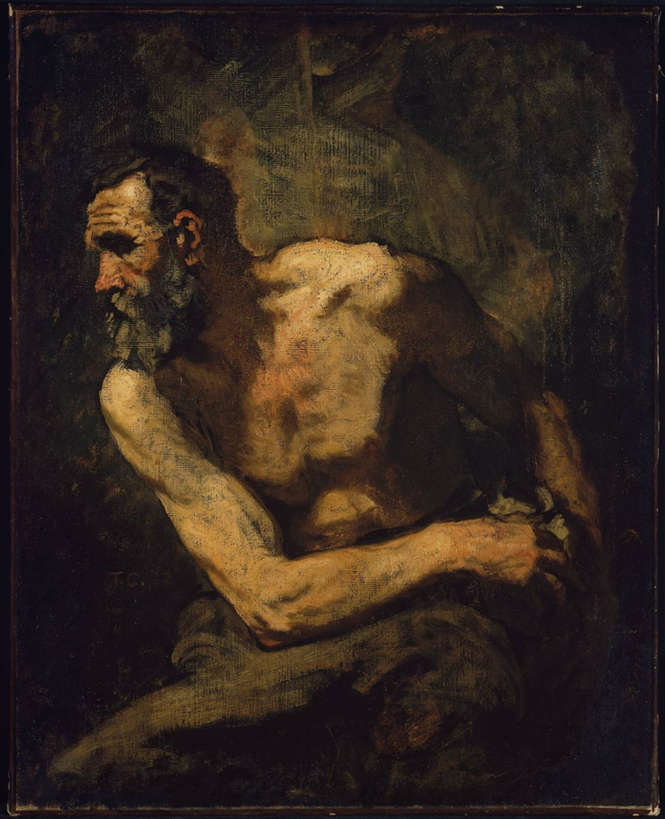
In the Old Oligarch’s eyes, the so-called best element in society, the beltiston – or, describing men, the beltistoi – is always opposed to democracy, because within the classes he prefers, the amount of vice and injustice is minimal, whereas within the dēmos, ignorance, indiscipline and general worthlessness prevail. According to the Old Oligarch, the dēmos positively shrinks from eunomiā, “good government”. They derive their strength from its opposite.
The Old Oligarch’s attitude towards slavery is novel, to say the least. He either observes or complains that slaves and metics enjoy extreme akolasiā, or lack of moral restraint, and it is impossible in Athens to strike them, on the grounds that members of the dēmos are indistinguishable from slaves and metics in dress and physical appearance. The reasoning seems to be that the Athenian dēmos is so ugly and badly dressed that legal norms have evolved to prevent people from beating slaves in public, just in case they accidentally hit a citizen instead.

The Old Oligarch’s precise lines of thought are even harder to make out with respect to the apparent wealth and luxury enjoyed by some slaves. His conclusions about isēgoriā, “equality of free speech”, are similarly unrestrained by conventional notions of logic. At least he is clear on the consequences of Athens’ naval power: the city needs resident aliens, or ‘metics’, because of the fleet’s complicated range of requirements, which cannot be satisfied by citizens alone. The result of this is isēgoriā for metics as well as citizens.
The Old Oligarch’s vision of society seems proto-Nietzschean in its insistence on the oppression of a strong, virtuous minority by a weak, resentful, cowardly majority. In some ways this colours his vision, not only of relations between the chrēstoi and the ponēroi, but also between Athens and her tribute-paying empire, whose members at least cannot oppress the Athenians in the way that the dēmos oppresses its social superiors.

The Old Oligarch defends the need for allies to sail to Athens for court cases on the grounds that there are economic benefits for the Athenian dēmos. Gilbert Murray seems to have missed the line in this section of the treatise, in which the allies are described as effectively the slaves of the dēmos.
This treatise is structured, if that is the word, as a series of answers to criticisms by some imagined interlocutor, who would appear to be a reactionary critic of democracy. The Old Oligarch then proceeds to answer each unvoiced objection, not by denying its truth, but by explaining how it fits into a seamless constitutional whole that serves to maintain, not just the interests of the dēmos, but the integrity of the constitution itself.
He notes that Athens’ dominance of the sea provides military as well as economic advantages, not to mention the importation of exotic luxuries, enabling a certain cosmopolitanism in speech, diet and dress due to foreign influence. Tribute payments from the empire enable not only beautiful sanctuaries but also frequent sacrifices, which the Old Oligarch seems to conceive of less as religious ceremonies than as barbecues. In this way, the Athenian state seems to have developed a role as a provider of comforts and luxuries to the dēmos.
Readers might almost suspect the Old Oligarch to be a secret democrat offering a highly unorthodox and ironic paean to his preferred form of government. He alleges that oligarchies are obliged to stand by alliances and oaths, since someone can always be held responsible, whereas the dēmos always finds means to identify and blame scapegoats, or else take credit for good results for which they are not responsible.
On the other hand, the Old Oligarch repeats the commonplace that Athenian comic playwrights are allowed to mock prominent or meddlesome individuals, not members of the urban mob, or the dēmos itself. His sense of crowd psychology seems either far ahead of its time, or else so primitive as to be pre-civilised. Yet his cynicism is his outstanding feature: he claims to forgive the dēmos for their democracy, on the grounds that one ought to forgive anyone who is merely looking out for himself and his own interests.
The Old Oligarch is critical of chrēstoi like himself (or so it seems) who choose to live in democratic rather than oligarchic states. It is easier, he says, for a man who is kakos, wicked, by nature, to escape notice in a democratically governed city than an oligarchy. In the final section of the text, the Old Oligarch defends the Athenians against the charge of sluggish administration, and unjust disenfranchisement of citizens, and applauds them for consistently taking the side of the cheirones, the inferior classes, in foreign civil wars: after all, like is well-disposed to like.
Even in a short account, there is a great deal to skip. The treatise is neither rich nor informative. In terms of the material, and its organisation, there is much to be desired; nor is the Old Oligarch an effective rhetorician, by Athenian standards anyway. He seems to hold an aristocratic education in high regard, whilst demonstrating conspicuously few of its virtues. It might be charitable to conclude that the text in its current form is neither complete nor meant for public consumption.
We cannot reasonably speculate on how pseudo-Xenophon’s text entered the Xenophontic corpus. In November 2018, a colloquium at the University of Strasbourg examined the circulation, influence and reception of the Old Oligarch; the proceedings were published in 2020 as Les aventures d’un pamphlet antidémocratique: transmission et reception de la Constitution des Athéniens du Pseudo-Xenophon, edited by Dominique Lenfant. The entire collection rewards close study: paper after paper demonstrates, beyond all reasonable doubt, that the Old Oligarch’s Constitution of the Athenians is a work of no significance whatsoever.
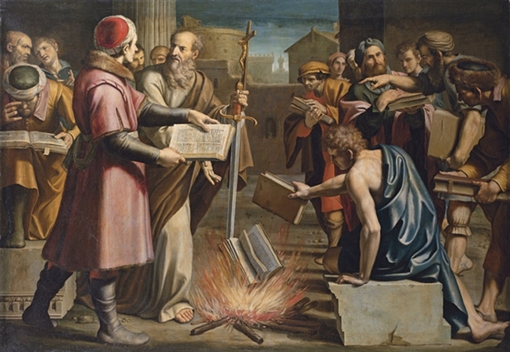
The first explicit mention of this text in antiquity will be found in the second book of Diogenes Laertius’ Lives and Opinions of Eminent Philosophers, towards the end of the section on Xenophon in the second book. Diogenes Laertius lists this among the works of Xenophon, but admits that this attribution was questioned by the 1st-century BC commentator Demetrius of Magnesia, about whom next to nothing is known. Yet Stobaeus quotes this text as though it were by Xenophon.
Perhaps more doubt would have been cast on the authorship of this text had someone bothered to read it. Thanks to the Xenophontic association it at least has a well-attested manuscript tradition and printing history; but nobody in modern times began trying to figure out its real author until the early 19th century, when it was noticed that the Old Oligarch’s style is nothing like Xenophon’s; nor are his criticisms of democracy coming from the same direction. At least one famous German philologist, August Böckh, thought this text was by none other than Critias himself; but it seems unlikely that it would be the work of any well-known figure, given its general qualities, and lack of quality.
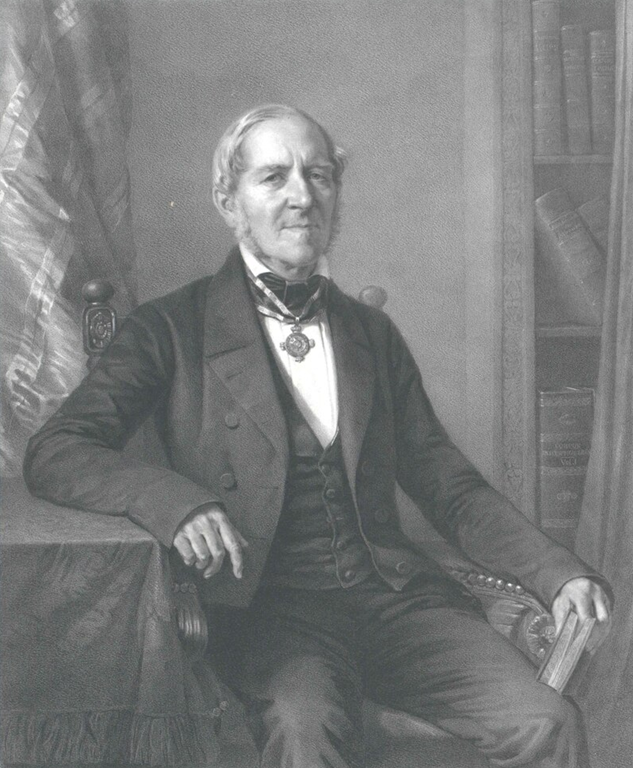
In a 2008 commentary, the lamented Peter Rhodes listed a range of possible dates for this text: Glen Bowersock thinks it might have been produced as early as the 440s; Jacqueline de Romilly thought it came before the Peloponnesian War; Geoffrey de Ste Croix was certain it was a product of the period between 431 and 424, whilst Robin Osborne puts it before the Oligarchy of the 400 but after the Sicilian Expedition and subsequent disaster (415–413 BC). Arnaldo Momigliano, in a 1960 article, declared that none other than Thucydides himself responded to this otherwise obscure screed.
There is no time to go through all these ingenious demonstrations of learning, except to point out that it seems fatuous to determine the date of something before its overall purpose has been worked out. Perhaps the most convincing explanation comes from Ernst Kalinka, whose commentary on the Old Oligarch was published in 1913. According to Hartvig Frisch, in his own 1942 commentary:
With intricate reasoning, Kalinka attains to his most peculiar theory according to which the pamphlet is an improvised speech at a symposium, a speech addressed to a definite person, and in which the author while speaking gives way, adapting himself to the disapproval of his audience and other manifestations… This perverted theory of Kalinka’s, which unfortunately disfigures his excellent large commentary, found no followers.
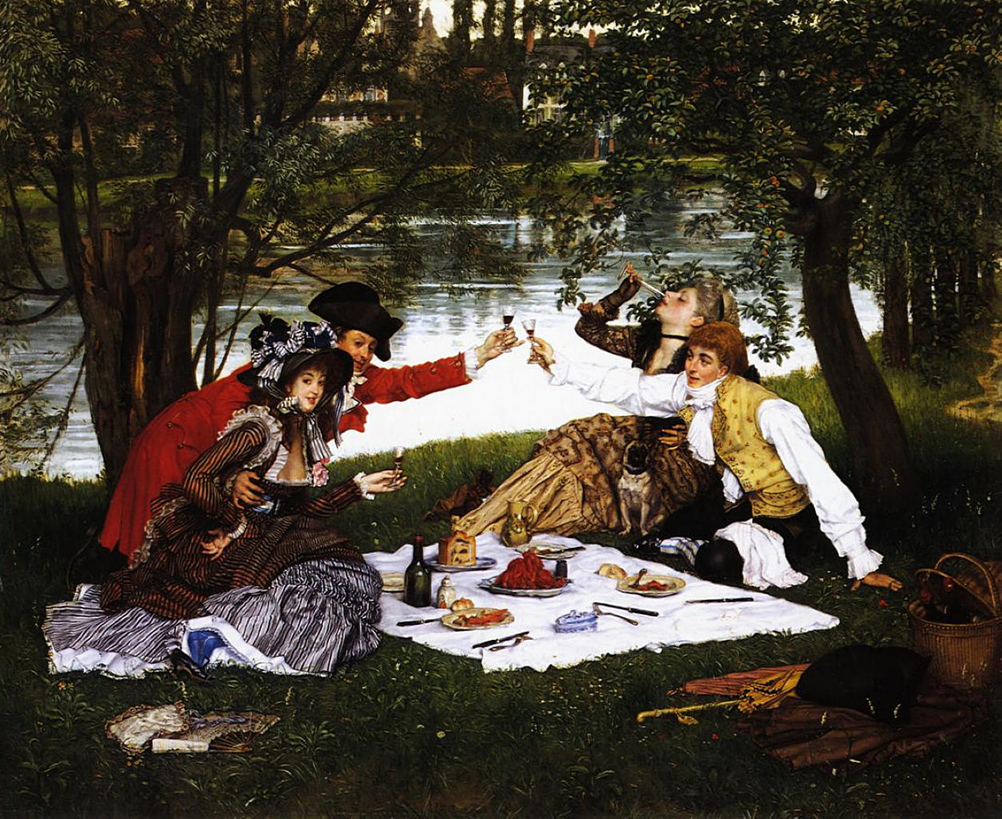
It did find a follower, belatedly, in the year 2000 when, in a festschrift for Mogens Herman Hansen, the All Souls Fellow Simon Hornblower decided that the Old Oligarch’s treatise is in fact a work of imaginative fiction, possibly belonging to genre of literature associated with ritualised drinking-parties, or symposia. He dates it to the 370s BC. According to this theory, this is by no means the work of a stupid, ignorant or poorly-educated oligarch; rather, it is the product of a drunk. This accounts for its repetitiveness, disconnected thought and literary incompetence. What looks to us to be the work of a clumsy, cynical dolt is in fact clever and playful. On the whole this is far more flattering than the interpretation of William G. Forrest, who dated it to 424 BC, and concluded, in a 1970 article in the journal Klio:
It is not, of course, a document of the practical political world, an attempt to persuade anyone to do anything. It is a piece of detached political analysis in which the author explains the strengths of Athenian democracy to some, he believes, less percipient critics… But in a sense it is not even a serious piece of political analysis. Rather it is a sophistic exercise, an artificial performance for the classroom, in which a light-weight young pupil serves up a garbled version of his professor’s far from light-weight thoughts, illustrated in part by the professor’s own examples, but far more often from the writer’s own limited range of political experience – the years 428–424… An undergraduate essay then.

Hornblower’s theory has the great advantage of enabling literary scholars to analyse this text further in terms of asyndeton, anaphora, ring composition, and all those other technical terms that are used to fill up space when Classicists are struggling to meet deadlines. No doubt further research into the Old Oligarch along these lines will reveal him to be the first real political scientist of antiquity, in the modern academic sense of the term rather than the vague one sometimes applied to Herodotus and Thucydides.
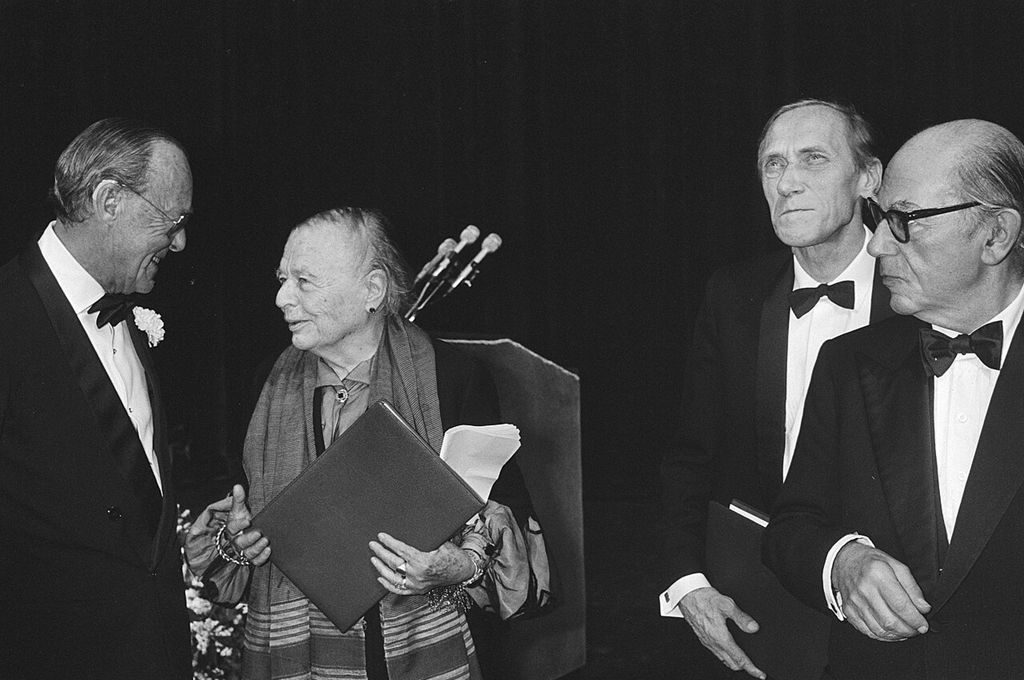
The Athenian Constitution text combines overt intellectualism with a lack of obvious intelligence. The author is a pedant despite his modest command of visible facts, and he insists on the values of an educated élite despite demonstrating few such obvious virtues himself, other than a kind of pathetic nihilistic impotence. He is neither talented nor cultured. In that sense, he is our first PPE-ist, and he deserves to be studied further in order to ensure that people like this never happen again.

Jaspreet Singh Boparai cultivates the muses.
Further Reading
Peter Rhodes and John L. Marr produced a thorough commentary on the Old Oligarch’s Constitution of the Athenians, along with an intelligent translation. This was first published in the Aris and Phillips series in 2008, and is useful even for those of us who have no real need for an English version of the text.
The commentary and text by Vivienne Gray in the Cambridge University Press ‘Green and Yellow’ series (Xenophon: On Government, 2007) isn’t spectacular, but the volume includes two other texts by the real Xenophon that are not only fascinating in their own right, but also make you wonder why anybody could have ever thought that ‘the Old Oligarch’ had anything to do with Xenophon, or could hold a candle to him, intellectually, stylistically or otherwise.
Simon Hornblower’s festschrift essay from 2000 is usefully reprinted as Chapter 16 of Thucydidean Themes (Oxford University Press 2011).
As for William G. Forrest’s essays on ‘Pseudo-Xenophon’: Forrest was Socratic not only in his manner of teaching, but his refusal to write down or publish anything himself. His articles “The Dates of the Pseudo-Xenophontic Athenaion Politeia” (Klio 52, 1970, 107–66) and “An Athenian Generation Gap” (Yale Classical Studies 24, 1975, 37–52) are thus rare, precious and worth tracking down.