Christopher Tanfield
Mind versus Psȳchē
When we think about the mind today, we talk about consciousness, neurons, and brain chemistry. But for Ancient Greeks and Romans, the concept was broader and stranger. They spoke of psȳchē often translated as “soul” – a word that bridged poetry and philosophy without any religious overtones. Unlike our modern “mind”, psȳchē encompassed life itself, the spirit that survives death, and the seat of thought and emotion all at once.
The journey of this idea, from Homer to the late ancient philosopher Plotinus, reveals how deeply the Greeks grappled with questions that still puzzle us: What makes something alive? Can consciousness exist without a body? How do we reconcile physical processes with subjective experience?
Three Meanings, One Word
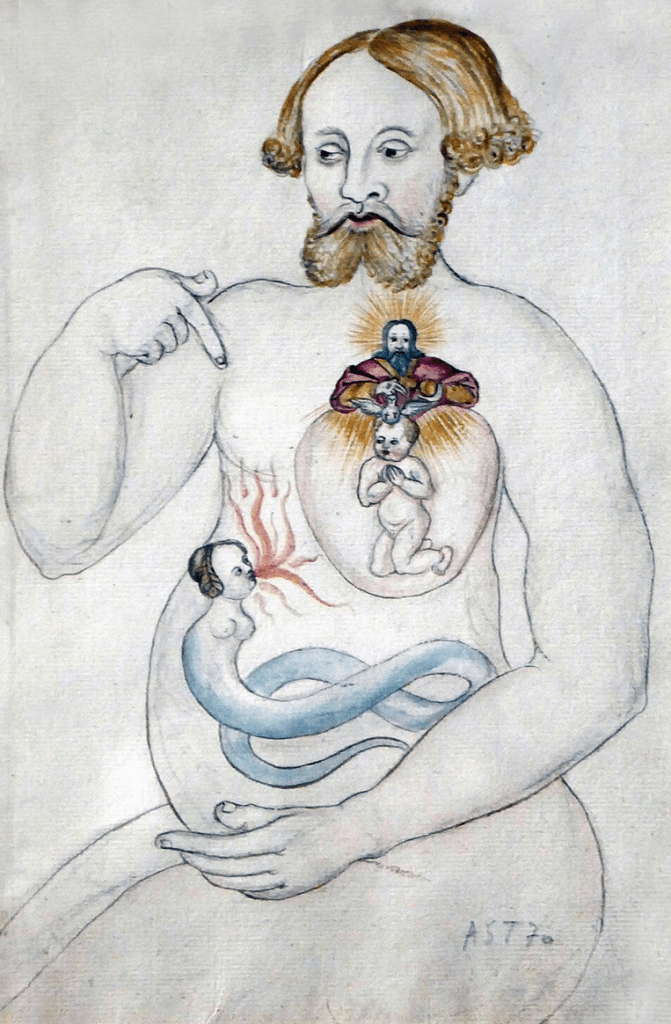
Ancient Greek writers used psȳchē in three overlapping ways. First, it meant the life force – whatever distinguishes a living body from a corpse. In Homer’s Iliad, warriors fight for Hector’s psȳchē, meaning his life itself. Second, it referred to a spirit that could separate from the body, possibly surviving death. When Hector dies, his psȳchē flies from his limbs down to Hades. Third, and emerging in later lyric poetry and tragedy, psȳchē became the seat of reason, emotion, and character – closest to our modern “self”.
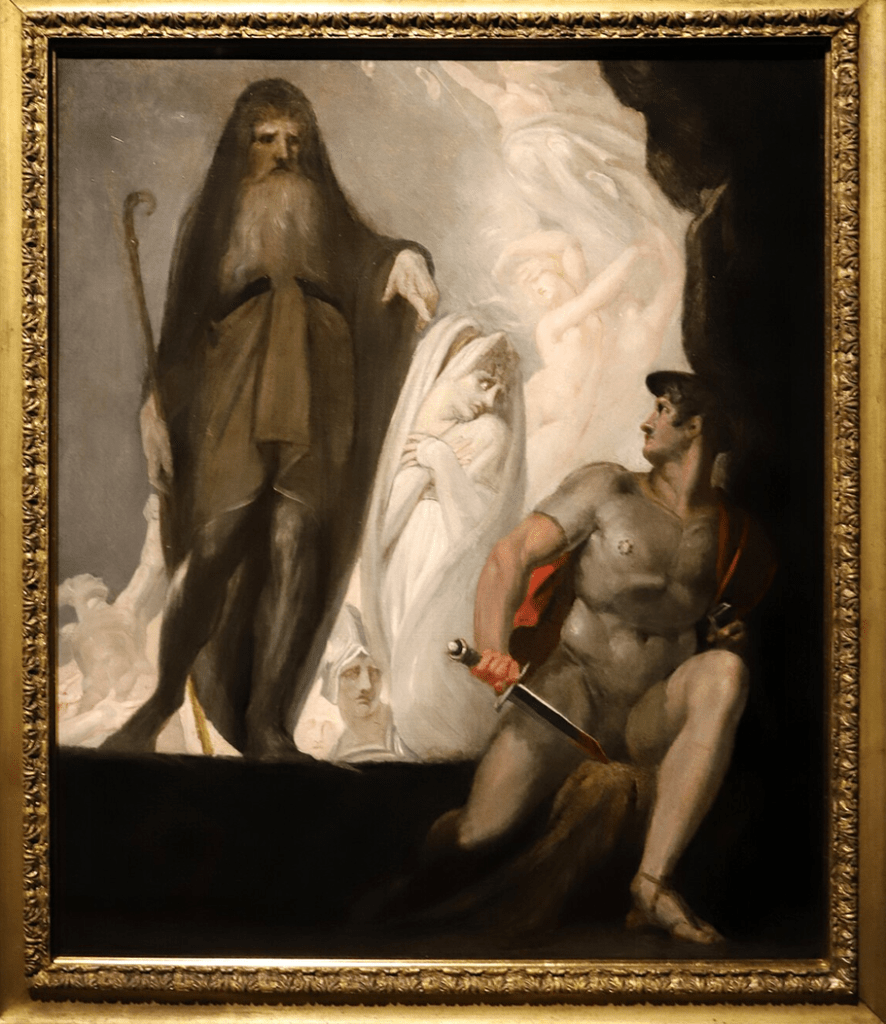
In Homer’s epics, the psȳchē leads a shadowy existence. The living rarely mention it except when death looms. Once separated from the body, it becomes a pitiful thing. When Odysseus visits the underworld, he finds the souls of the dead flitting about like bats, craving blood briefly to regain their faculties. Achilles, ruling over them, declares he would rather be a living slave than king of the dead. Why? Because for Homer, genuine thought and feeling required the body. Fear lived in the heart, reflection in the midriff. The psȳchē on its own was incomplete.
Philosophers Enter the Picture
By the 6th century BC, early Greek philosopher-scientists were trying to explain not just the heavens but also the fundamental nature of reality. Thales thought everything came from water and attributed psȳchē to magnets because they could move iron. Was the soul made of matter, or did it somehow transcend it? Different thinkers championed different elements: Anaximenes chose air (noting how breath sustains life), Heraclitus fire, and Empedocles a combination of all four elements.
Democritus, the atomist, considered psȳchē to be made of especially fine, spherical atoms – spherical because that shape allowed maximum mobility. Meanwhile, Anaxagoras proposed something more abstract: nous, or mind, which was “mixed with nothing” and somehow set everything in motion while knowing all things. This inaugurated a long debate between materialists who saw the soul as physical and dualists who believed it was fundamentally separate from matter.
An unusual idea also appeared during this period: reincarnation. Influenced by mystical Orphic cults and the teachings of Pythagoras, some Greeks began to believe the psȳchē retained its identity across multiple lives. Pythagoras supposedly recognized a friend’s soul in a beaten puppy. Yet most Greeks remained skeptical of such claims, viewing death as final.
Plato’s Revolutionary Vision
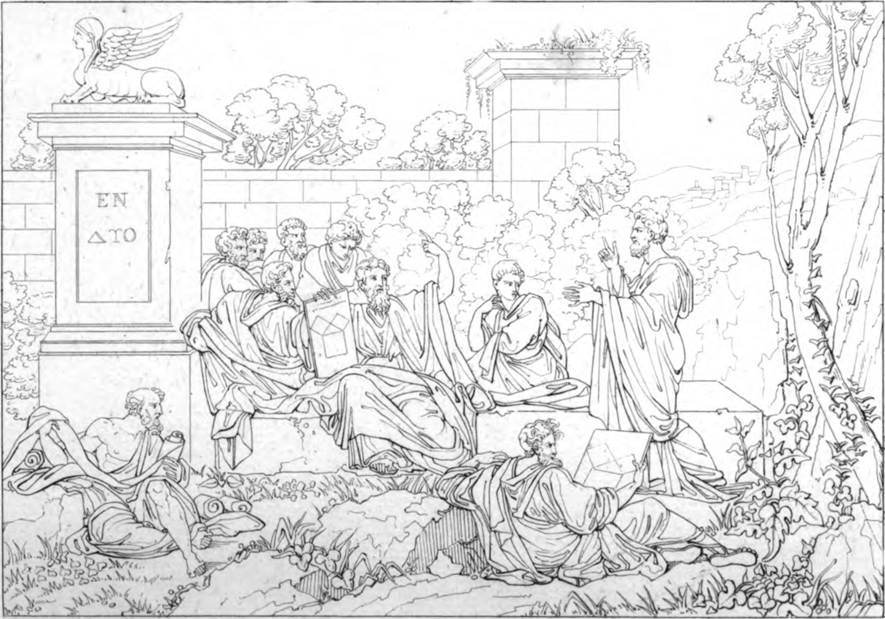
Plato transformed the discussion by integrating earlier ideas into a comprehensive philosophy. In his dialogue Phaedo, Socrates argues that the psȳchē is not just life but immortal intelligence. It can grasp universal truths – the essence of “redness” or “justice” – that exist beyond the physical world. This psȳchē is “divine, immortal, intelligible, uniform, indissoluble.” But this creates a problem: such a purely rational soul, freed from bodily sensations, seems oddly inhuman.
In The Republic, Plato offers a richer account. The psȳchē has three parts: the rational (which reasons and plans), the spirited (which feels pride and anger), and the appetitive (which craves food, drink, and sex). A person is “just” when these parts work in harmony, with reason governing the others. This tripartite soul, unlike the cerebral version in Phaedo, captures more of what we recognize as human experience. Plato’s dialogue Phaedrus introduces a variation on it: the famous metaphor of the psȳchē as a charioteer driving two horses – one noble, the other unruly, representing our conflicting desires. And in the dialogue Timaeus he adds a cosmic dimension: the world is alive with soul and intellect, and from its material individual souls are created – in animals, which originate through reincarnation, and plants, which have only the appetitive part of psȳche, as well as in men.
Do we have here one theory or several? Plato’s student Aristotle set out to create a more coherent account.

Aristotle’s Functional Approach
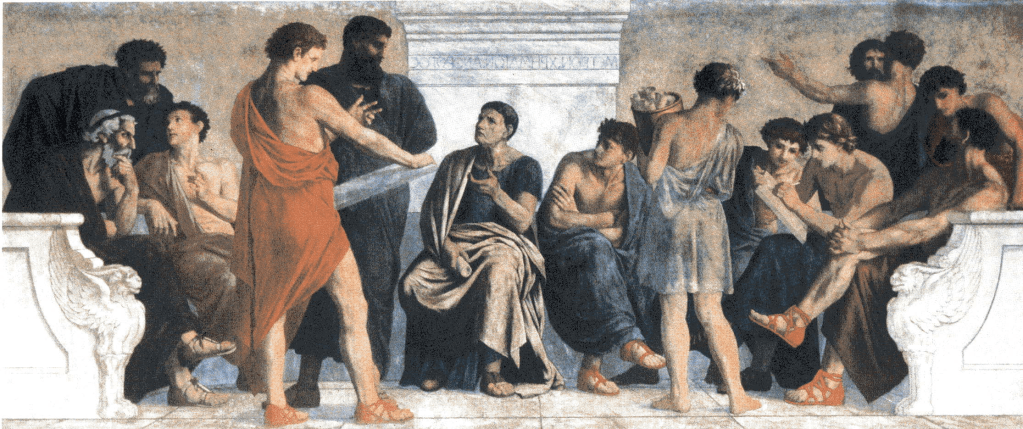
Aristotle rejected previous theories wholesale. The psȳchē doesn’t move through space, isn’t a harmony, can’t migrate between bodies, and isn’t divisible into separate parts. Instead, he proposed something revolutionary: psȳchē is the “form” of a living body – not its physical matter but what gives it its defining properties.
Consider an axe. Its matter is wood and steel, but its form – its essence – is its capacity to chop. An eye’s matter is the pupil and surrounding tissue; its form is the capacity to see. Similarly, an organism’s psȳchē is what actualizes its potential to live as a particular being. It’s not a ghost in the machine but the organization and capacities that make the machine work as a living thing.
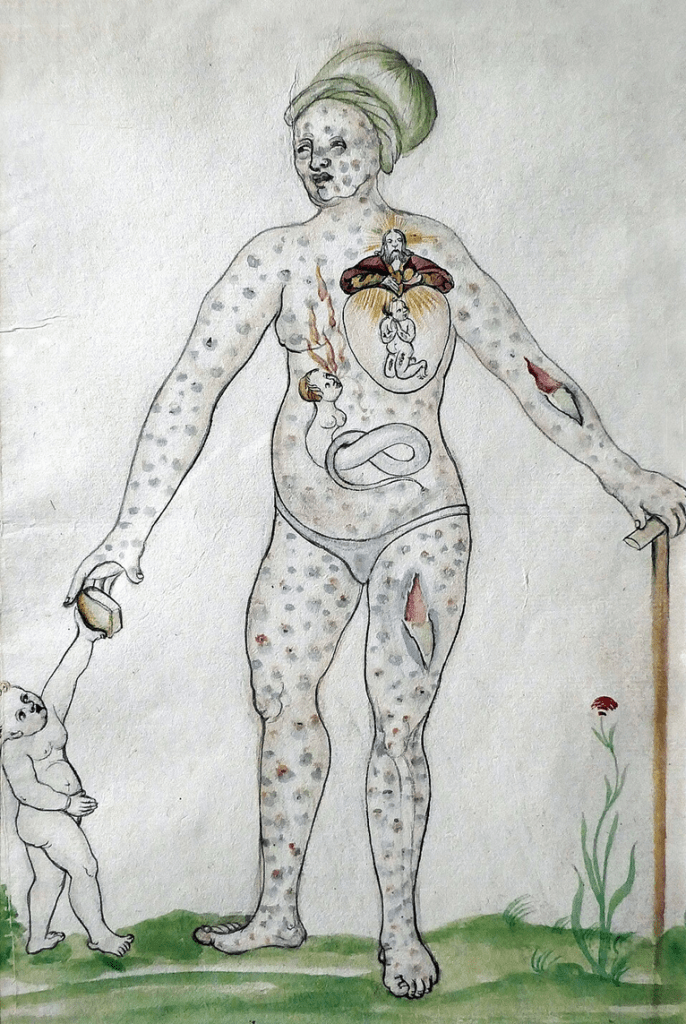
Aristotle envisioned a hierarchy of capacities. All living things (from plants upwards) can reproduce and grow. Animals add sensation and movement. Humans add rational thought. The psȳchē is this nested set of abilities, with nous (intellect) at the pinnacle. Importantly, for Aristotle, you can’t separate most of the psȳchē from the body any more than you can separate sight from the eye. However, he suggested that nous might be different – perhaps imperishable; and what exactly he meant has sparked centuries of debate.
This functional view had profound implications. Aristotle didn’t ask “What is it like to be conscious?” but rather “What is happening when we see or think?”, with consciousness inherent in the seeing or thinking. He focused on how psȳchē enables behavior and cognition, providing multiple kinds of explanation: the formal (what the organism essentially does), the efficient (what makes it develop as it does), and the final (its purpose in nature).
The Materialist Turn
After Aristotle, Hellenistic philosophers returned to materialist principles. Epicurus, following Democritus, insisted everything consisted of atoms and void. The psȳchē was a special aggregate of fine particles spread throughout the body, capable of thought and emotion. When the body dissolves, so does the psȳchē – no afterlife, no reincarnation.
But this raised a troubling question: if atoms move according to fixed laws, where is human freedom? Epicurus insisted we do make genuine choices, proposing his notorious “atomic swerve” – random deviations in atomic motion that allow for voluntary action. Whether this actually solves the free will problem remains debated (albeit in the terminology of quantum indeterminism).
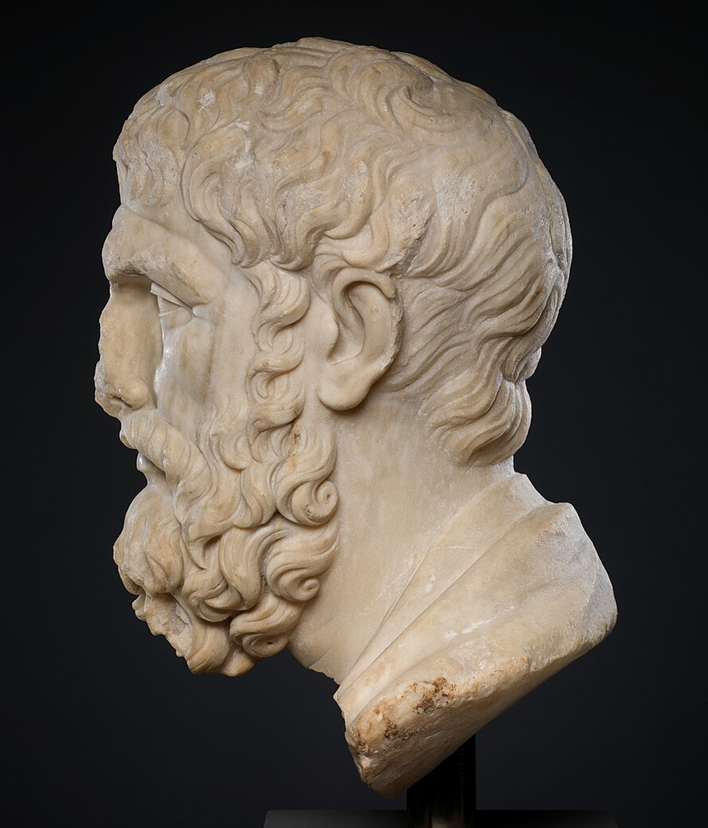
The Stoics offered a different materialism. They believed a divine intelligence, made of fire and breath, pervaded all creation. This pneuma (breath or energy) animated plants and animals. The human psȳchē was a special form of it, located in the heart. The psȳchē had seven subsections: the five senses, reproduction, and speech; all governed by the “commanding faculty” that assessed sensory impressions and decided how to act.
For Stoics, everything happens according to divine fate, yet humans are morally responsible because reasoning itself is fated. They compared it to a dog tied to a cart: if the dog runs willingly, it coincides with necessity; if it resists, it’s dragged anyway. Virtue lies in the wisdom with which fate is accepted.

Plotinus: Return to Transcendence
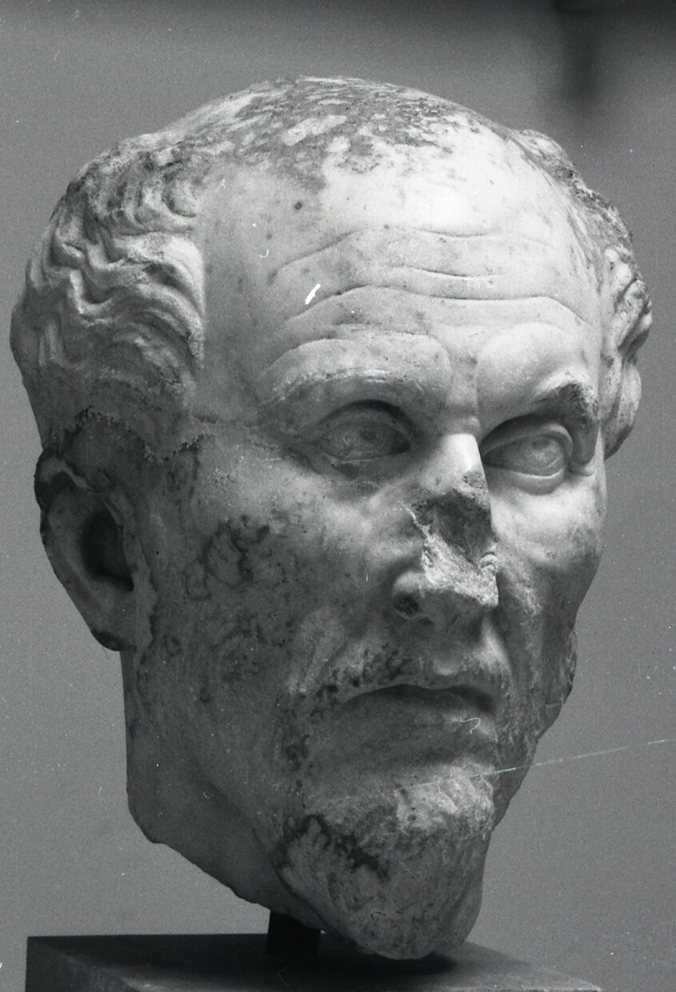
In the third century CE, making a volte face from Stoicism, Plotinus (without any apparent influence from Christianity) revived and radicalized Platonic idealism. He proposed a cosmic hierarchy descending from the One (absolute perfection beyond being itself) through Intellect (containing all eternal ideas) to World-Soul, which projects life onto matter. The individual souls of all life forms are reflections of this World-Soul, temporarily embodied but never fully separated from their divine source.
Matter, for Plotinus, isn’t evil but represents the furthest distance from the One – the dimmest reflection of divine light. The psȳchē “illuminates” matter while being “darkened” by it. Through contemplation and purification, the psȳchē can ascend back toward union with the divine. Plotinus reported ecstatic experiences of such transcendence, anticipating later mystical traditions.
Why This Still Matters
Modern philosophy focuses on “mind” rather than “soul”, largely because Descartes separated consciousness from biological life. But the ancient Greek concept of psȳchē offers something contemporary thought sometimes lacks: a unified vision connecting biological life, subjective experience, and rational thought within a cosmic system.
The Greeks didn’t treat consciousness as an isolated phenomenon but asked how mental life emerges from and remains connected to physical processes. They recognized that nous operates differently from basic perception yet, unlike Descartes, refused to divorce it more or less entirely from bodily existence. Thus though they struggled with what distinguishes living from non-living matter, with the relationship between brain and mind, and with free will – still much vexed questions, as noted at the outset – they found in the psȳchē a unifying framework for their analysis.
Perhaps most importantly, the twists and turns that psȳchē has taken remind us that understanding human nature demands more than either neuron mapping or introspection of consciousness, is in fact more than both. Psȳchē acknowledges that matter matters; most ancient Greek schools of thought would probably deny that silicon-based computers can ‘think’ or ‘know’ in the same sense that a flesh-and-blood human ‘thinks’ or ‘knows’; for even the most reductive among them also emphasized how capacities develop and interrelate, such as reason to perception or emotion. The Ancient Greeks may not have had our scientific knowledge, but their insistence on comprehensive explanation offers a model for thinking about minds, or souls, that we might do well to reclaim.

Christopher Tanfield taught Latin and Greek for twenty years at secondary schools in London before leaving the city to concentrate on writing. His most recent book is A Companion to the Aeneid in Translation.
Further Reading:
J. Cottingham, In Search of the Soul (Princeton UP, NJ, 2020).
H. Lorenz, “Ancient theories of Soul,” The Stanford Encyclopedia of Philosophy (Summer 2024), Edward N. Zalta & Uri Nodelman (edd.), available here.
S. Everson (ed.), Companions to Ancient Thought 2: Psychology (Cambridge UP, 1991).
More particular topics are covered by:
A. Code, “Soul as efficient cause in Aristotle’s embryology,” Philosophical Topics 15.2, Ancient Greek Philosophy (1987) 51–9.
M. Nussbaum & A. Rorty (edd.), Essays on Aristotle’s De Anima (Oxford UP, 1995): many articles of interest, especially K. Wilkes’s “Psuchē versus the mind”.
D.J. Furley, “The early history of the concept of soul,” Bulletin of the Institute of Classical Studies 3 (1956) 1-18.
W. Jaworski, Structure and the Metaphysics of the Mind: How Hylomorphism Solves the Mind-Body Problem (Oxford UP, 2016).
A.A. Long & D.N. Sedley, The Hellenistic Philosophers (Cambridge UP, 1987).
H. Lorenz, “Plato on the soul,” in G. Fine (ed.), The Oxford Companion to Plato (Oxford UP, 2009) 243–66.
C. Shields, “Soul and body in Aristotle,” Oxford Studies in Ancient Philosophy 6 (1988) 103–37.
L. Gerson, “Plotinus and the Platonic response to Stoicism,” in J. Sellars (ed.), The Routledge Handbook of the Stoic Tradition (Routledge, London, 2016) 44–55, available here.
J. Rist, “Plotinus on matter and evil,” Phronesis 6 (1961) 154–66.
R. Descartes, Reply to the Fifth Set of Objections (4), Objections to the Meditations and Descartes’ Replies (1637–41), trans. J. Bennett (2007), available here.