Michael Firth
Located in the southernmost part of Asia Minor, just north of the Turkish border with modern Syria, Antioch was the jewel of the Late Roman Empire’s Eastern Frontier.[1] The teacher and orator Libanius (AD c.314–93) was one notably proud citizen. His Oration in Praise of Antioch paints a vivid picture of a wonderfully cosmopolitan city in which cultures from all over the globe mixed, where one could bathe in luxury or obtain the finest Greek education.[2]
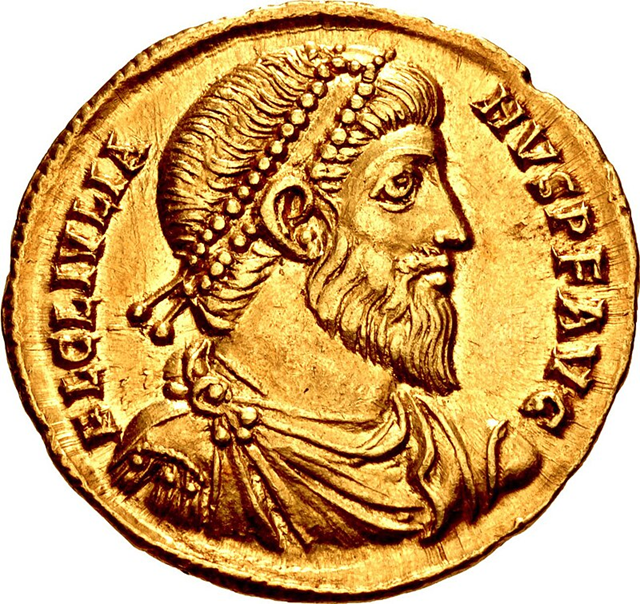
From its foundation around 300 BC by one of Alexander the Great’s generals, Seleucus I Nicator, Antioch established itself as “the fair crown of the Orient”[3] and continued flourishing under Roman rule. However, the city found itself at odds with several emperors of the 4th century AD. One case in point was Julian ‘the Apostate’ (r. 361–3), the last of Rome’s pagan emperors.

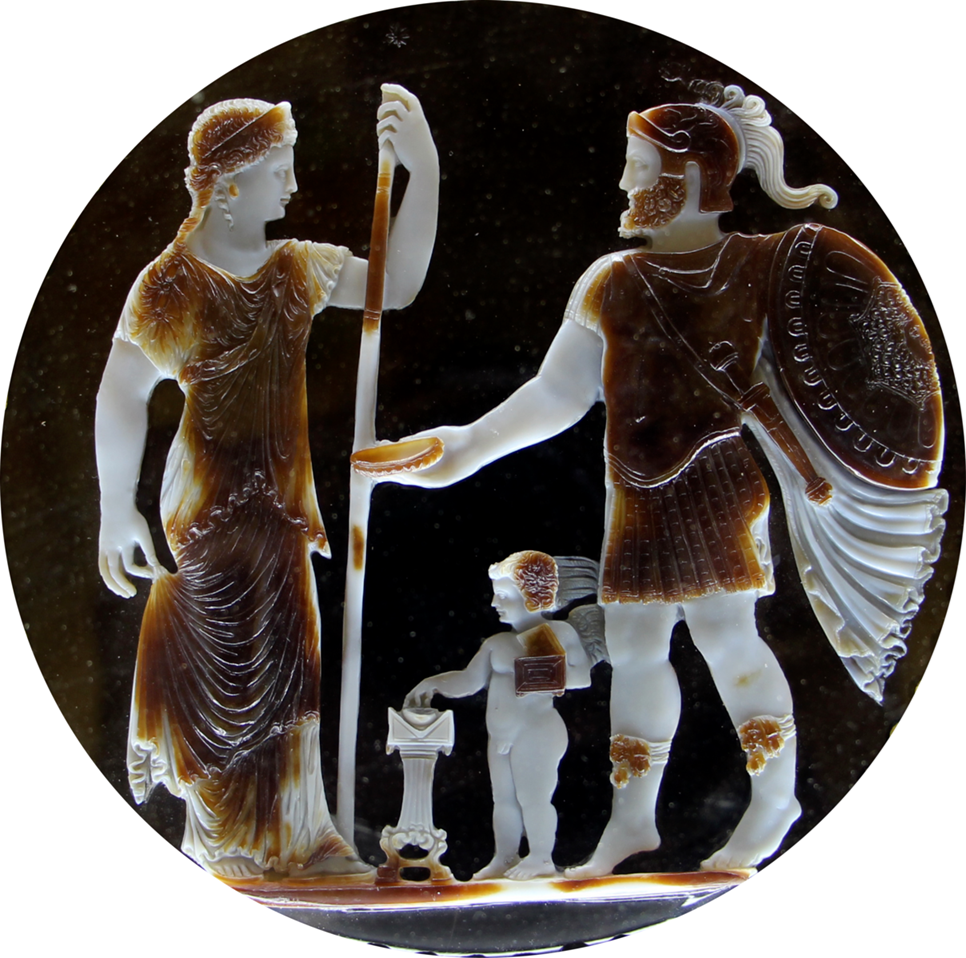
Julian travelled to Antioch in July of 362 to prepare for a significant campaign against the Persians. These preparations took approximately nine months (until March 363). According to the historian Ammianus Marcellinus (c.330–91), the emperor approached to the sounds of wailing and crying, since he had arrived by chance during a festival in honour of Adonis. These rites were in honour of the tragic lover of Aphrodite, who was murdered by the jealous Ares. This was received as a bad omen for Julian’s arrival.[4]
Ammianus is our primary source for this period of history, a soldier-scholar who wrote the Res Gestae (“things done”, i.e. “history”). His surviving work richly covers the 4th century, particularly the wars and reigns of emperors. In Julian’s case, he was an eyewitness: it is understood that he was in the emperor’s army and joined him at Antioch.[5] One of Ammianus’ key figures ahead of his accounts of Julian was Julian’s brother, Gallus (326–54).
Before Julian’s Arrival
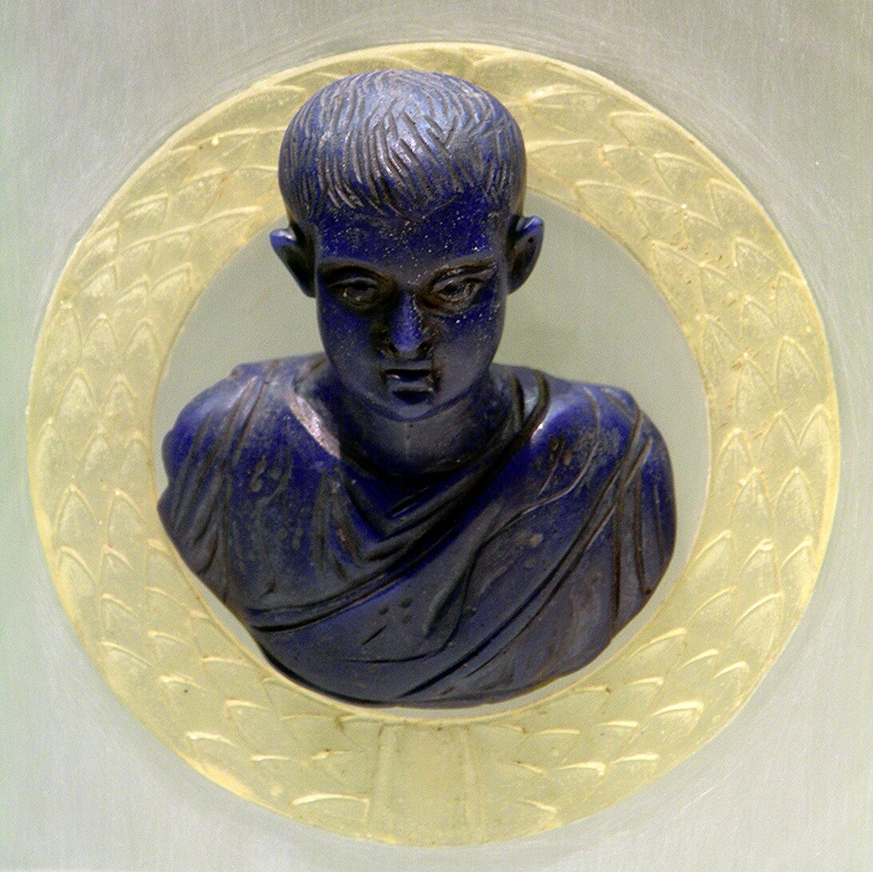
Gallus was Caesar to Julian’s predecessor, and their cousin, Constantius II (r. 337–61). ‘Caesar’ meant that he was the ‘junior-emperor’ to Constantius, following the imperial structure of having up to four emperors at a time since Diocletian’s reform in 293.[6] Constantius spent most of his early reign in the East, yet was forced to head into the Western half of the empire when his brother and co-ruler Constans was murdered in 350. Constantius made Gallus a Caesar to handle matters in the East while he fought a usurper, Magnentius, in Pannonia (a province comprising parts of modern Austria, Hungary, Slovenia and Croatia).
Gallus and his wife Constantina (Constantius’ sister) stationed themselves at Antioch in 351.[7] Here began an especially violent episode in the city’s history. Ammianus describes Gallus as bloodthirsty and claims that Constantina was just as bad, if not worse. He describes her as a Fury fuelling his bloodshed: together, he writes, they falsely accused many of treason or practising magic.[8] The accused were executed or impoverished and exiled. We are even told that Gallus would roam the streets and inns with a gang of armed attendants and interrogate people about what they thought of him.[9] Gallus’ wrath was not aimed only at citizens; he even ordered for the entire senate at Antioch to be killed but was foiled in this by a governor. This, amongst his other crimes, was enough for Constantius to order Gallus back to Italy, where he was put to death.[10]
When discussing Julian’s arrival, Ammianus is quick to mention one Thalassius, a former assistant master of petitions who held office through and after the reign of Gallus. He tells us that Julian hated Thalassius for his political movements against Gallus, to the point that he had not been allowed to greet the emperor or attend court while Julian was at Antioch. Julian was presented with an opportunity to have the man arrested and stripped of office when opponents of his accused him of robbing them, yet we are told that Julian reconciled with Thalassius.[11] Regardless of Julian’s relationship with Thalassius, it is clear that Gallus’ former presence in Antioch had not been forgotten.
This summary demonstrates that Gallus had left a traumatic legacy in Antioch during his time; his actions were so vile that they forced Constantius to plan his execution. The arrival of Gallus’ younger brother may well have caused anxiety in Antioch. It would, at the very least, have hastened the inhabitants’ worsening opinions of Julian once the disputes began. Ammianus, a staunch and devoted supporter of Julian, even compared his time in Antioch to that of Gallus’ during an interaction with the senate there: “He resembled his brother Gallus, though without his cruelty.”[12] It is also important to note that Julian, while identifying his brother’s shortcomings in office, defended Gallus to some extent, claiming in his Letter to the Senate and People of Athens that Gallus “deserved to live, even if he seemed unfit to govern.”[13] Julian also alleged that there may have been others “responsible for his [Gallus’] errors”,[14] which was probably not well received by the very city that was victim to them.
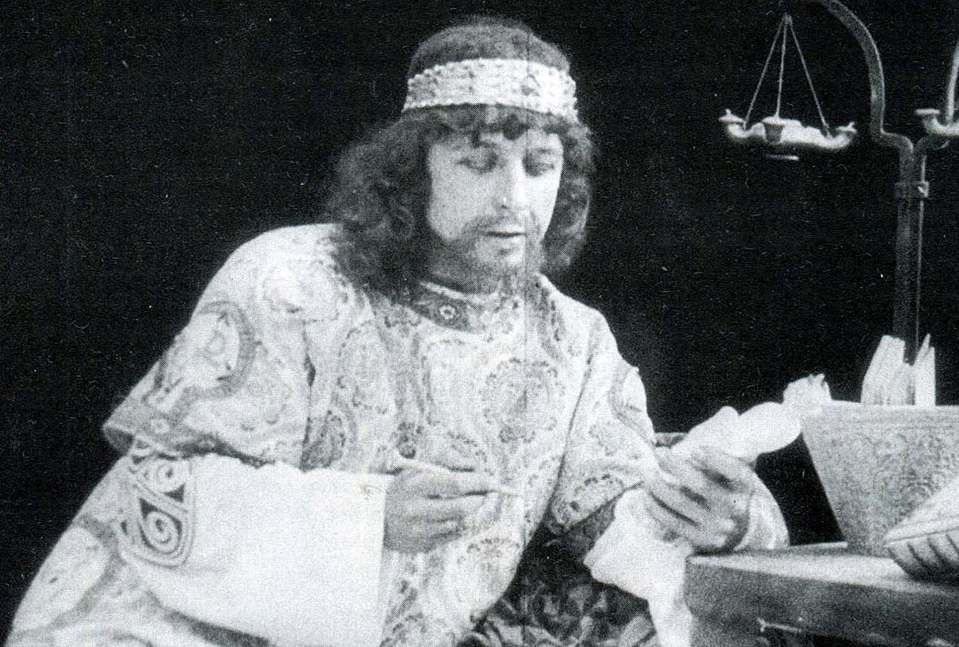
Gallus was not the only factor that influenced Julian’s arrival. In November 361, the Bishop of Alexandria was violently killed by a mob of pagans due to his hostility to paganism – manifested in banning sacrifices and shutting down temples – alongside two officers.[15] While Julian was a pagan, Christian Alexandrines and others in the wider Empire expected a form of punishment to be enacted. The bishop and his officers were Roman citizens, who had been unlawfully and violently murdered and their remains defiled, as the mob supposedly dragged them through the streets and burnt their corpses. Ammianus himself, though a pagan, labels the mob “inhuman”.[16] He tells us that Julian “was bent upon taking vengeance”, yet was “pacified by his intimates”. Julian issued an edict to condemn the mob and promised future punishment if such an act was repeated. [17] Yet this is clearly an oversimplification, a skirting analysis by Ammianus, who probably wished to move on quickly from this controversial topic.
Julian’s response to these murders survives. His “horror at the outrage”[18] is not as distinct as Ammianus claimed: his language suggests that he instead approved of the act but was obliged to criticise: “though I wish to praise you, I cannot, because you have broken the law.”[19] Julian even came to the defence of the murderous mob, stating on the bishop’s demise: “I might even admit that he deserved even worse.”[20] Thus Julian inadvertently sent a message: his inaction against the mob demonstrated a lack of care towards his Christian subjects. The death of the bishop is likely to have resonated throughout Christian communities across the empire – and now Julian was soon to enter Antioch, a city whose population was substantially Christian.[21]
Pagan vs Christian
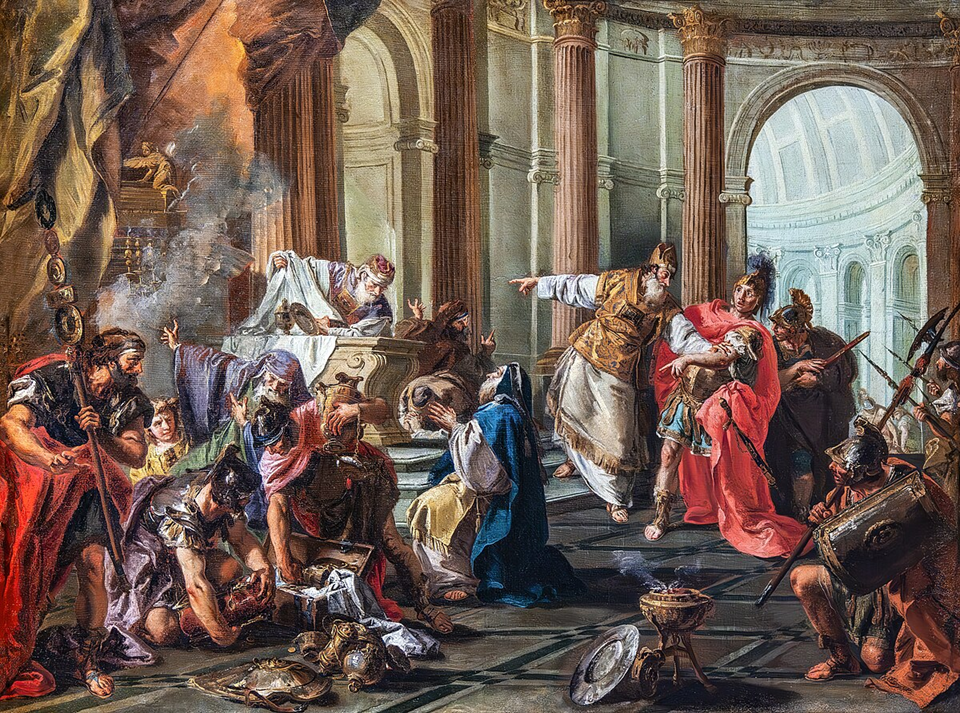
We come, then, to another major factor that divided Julian and the Antiochenes: religion. Ammianus tells us about an episode in Antioch which caused an uproar with the Christian inhabitants. Located outside but near the city, Daphne was home to a grand temple of Apollo. Similar to the site at Delphi, it was located by an oracular spring; Julian wished to revive this spring that had been blocked up by Hadrian during his reign.[22] Alongside this revival, he ordered the removal of several remains that had been buried nearby by Christians, including the Christian martyr and Antiochene bishop St Babylas, whose coffin was located in the nearby church.[23]
Julian’s pagan revival may have been in the spirit of re-elevating his faith back to its former glory in the Roman world, but it is clear that he was not afraid to belittle or demean the beliefs and sanctities of Christianity to bring this about. Matters only worsened when the same temple of Apollo burned down not long after, on 22 October 362.[24] A Christian retaliation was not a farcical idea, but Ammianus claimed that Julian accused the Christians outright, and condemned them by ordering the greater church at Antioch to be closed. He expresses surprise that the emperor did not conduct a proper investigation before making his accusations. Ammianus also adds some evidence suggesting that the temple fire was an accident caused by a visiting philosopher who left wax tapers burning, which might have ignited the old woodwork.[25]

Julian, while usually appearing impartial on religious matters, clearly had no love lost for Christianity. His lack of care about the Bishop of Alexandria’s demise, yet swift and premature punishment of the Christians in Antioch after the suspected destruction of the temple, demonstrates such favouritism. The Christian population doubtless felt alienated by Julian’s rule, to say nothing of his threatening presence in the city. For over half a century, the Empire had been predominantly ruled by Christian emperors, so the sudden attempted revival of paganism, pushed more hastily by Julian who was now in their midst, combined with the closure of churches and relocation of the long-buried dead, must have sent a palpable wave of anxiety throughout Antioch.
Julian’s promotion of paganism was also demonstrated by his extravant sacrifices while in the city.[26] Ammianus tells us that “he drenched the altars with the blood of an excessive number of victims, sometimes offering up a hundred oxen at once, with countless flocks of various other animals.”[27] Even Ammianus, a pagan, believed that Julian’s sacrifices were immoderate. The emperor claimed that they were made in preparation for his large campaign into Persian territor: he sought good omens and fortune for this upcoming war.[28]
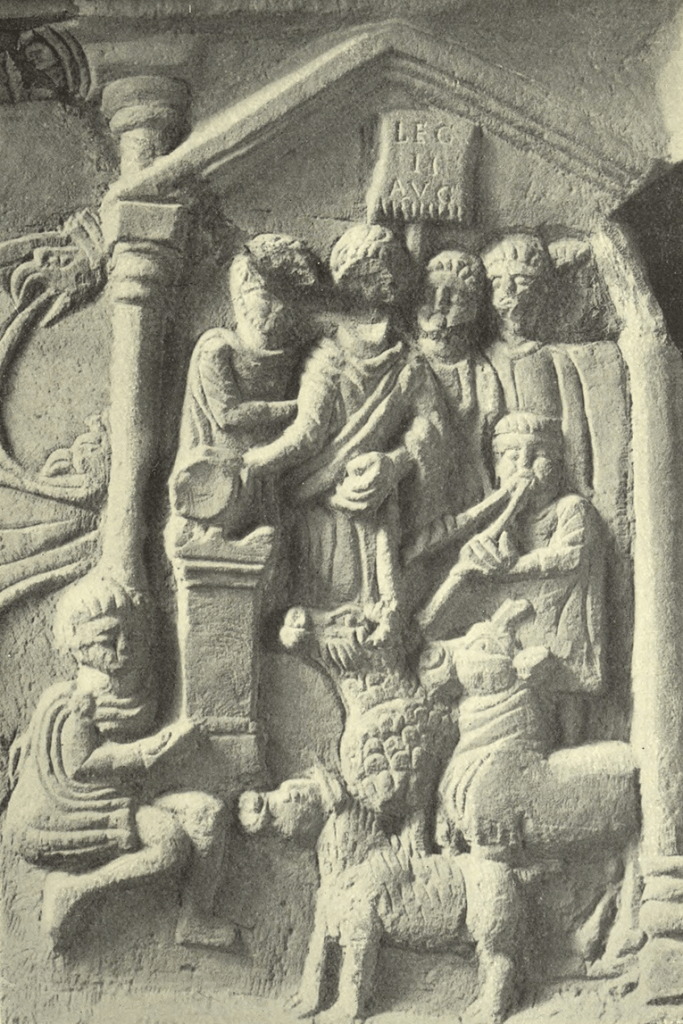
However, did Julian really need to perform sacrifices on such a scale? An argument could be made that he wished to promote paganism amongst the population, especially the soldiers who Ammianus claimed “gorged themselves on the abundance of meat, living boorishly.”[29] Perhaps the emperor simply wished not only to honour his faith but also to encourage it by spoiling his men with meat from his sacrifices. It may also have been an attempt to lift their spirits and boost morale ahead of the difficult war that was looming. That being said, Julian had already demonstrated that he was not above pettiness when it came to the Antiochenes; a counterargument could be made that he did this intentionally to offend and displease the Christians. In fact, this lavishing of meat over his men likely did not sit well with any of the Antiochenes, particularly amidst an acute food crisis.

Famine
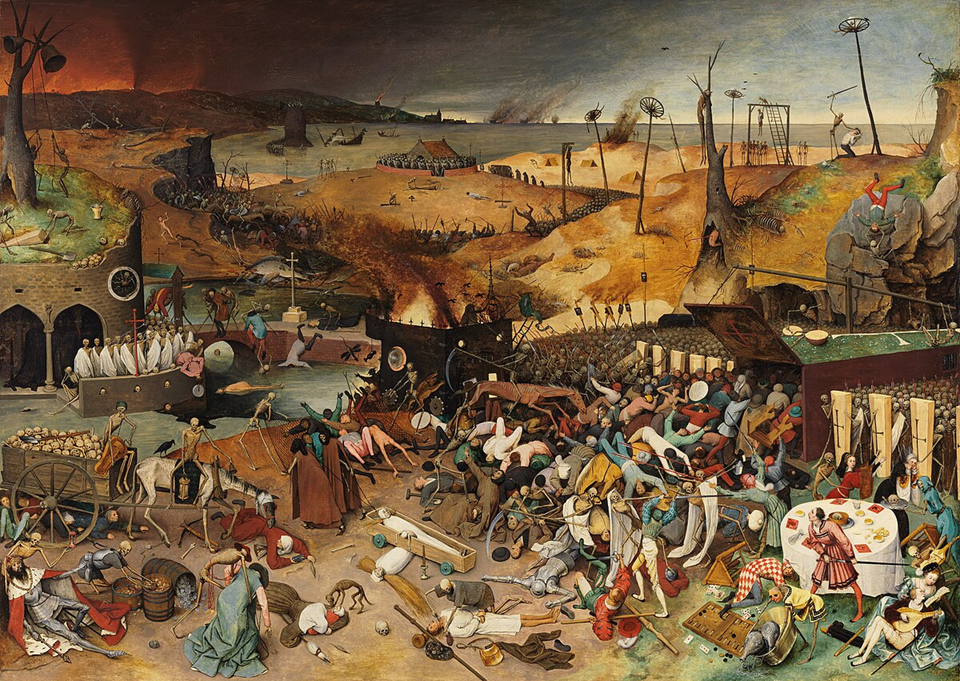
The third major contributor to the friction between Julian and Antioch was the famine crisis that the city faced. Though wealthy and powerful, Antioch began to suffer from food shortages in the second half of the 4th century, arguably due to the influx of people, whose additional demands exceeded the available food supply.[30] Though Libanius affirmed that Antioch was on fertile land and its placement next to the Orontes River allowed for inexpensive transport, we know that Julian faced issues with having to fix prices and contest with the local senate. This may have been due to a widespread drought that blighted the land in 362.[31] How, then, did this blameless disaster cause a clash between Julian and the city?
First, the aforementioned horde of soldiers that Julian had brought in preparation for war almost certainly contributed to this crisis: more military men meant less food for the average population. Secondly, when those men were witnessed dining lavishly on sacrificial meat, the sight would have been enough to infuriate any starving Antiochene.
That such sacrifices did not just offend the Christian population is confirmed by Ammianus’ report that the population began calling Julian the “slaughterer”, bold mockery and effrontery of the emperor.[32] However, it was Julian’s involvement in the attempt to resolve the issue that truly drew the last straw with the citizens. Ammianus claimed that to gain popularity amongst the inhabitants, Julian lowered and fixed the prices of commodities, yet even Ammianus admits that his favoured emperor did not properly regulate this process, leading to “scarcity and famine”.[33] Originally, Julian had encouraged the local senate to resolve this issue when he first arrived, but by October they had failed in this task, so Julian stepped in.[34] His desire to lower the prices, however, was challenged by the senate; meanwhile, the citizens took to ridiculing the emperor, thus leading to his most famous surviving work.
The Misopogon
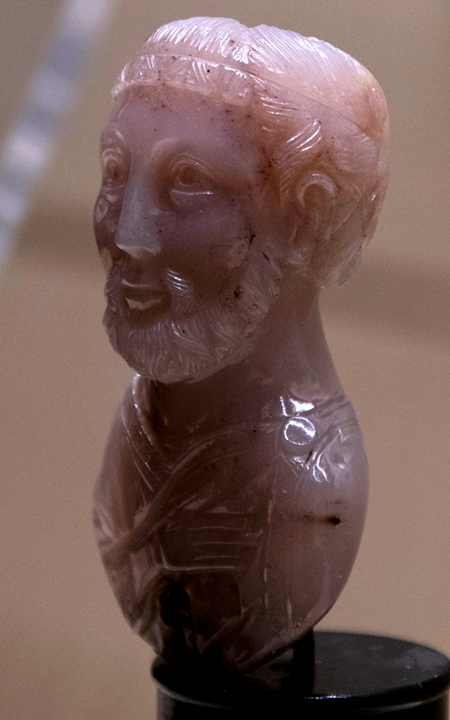
The Misopogon, or “Beard-Hater”, was Julian’s response to the mockery and criticism he received from the Antiochenes, as well as a direct attack on the senate and the people for the city’s continued faults despite his attempts to resolve them. In this work, Julian tried to justify his attempts to resolve the famine. After the price fixing failed owing to commodities being removed from the market, he had food such as corn brought in from nearby cities, and even Egypt, to be sold at his fixed price. This led to yet another crisis, as those who had wealth took advantage by buying up this corn and then attempting to resell it at their own prices.
The Misopogon was written shortly after this, ready for the New Year celebrations of 363. Julian wrote it in Greek and had it displayed on notice boards in the city. Readers would soon begin to realise that it was a sort of satire, written first about the emperor himself before quickly turning onto the Antiochenes.[35] Julian claimed that the city is at fault for electing poor senators – peasants who were not worthy of the station nor capable of the office, whereas he personally paid for all the crops he had imported.[36] He then argued that he did precisely the job he was supposed to as emperor – to support the masses no matter whom it displeased – and he called the Antiochenes “ungrateful”.[37] He ended the Misopogon with a dramatic and emotive promise that he would act properly towards Antioch in the future, adding the prayer that “the gods duly pay the recompense” in return for “your good will towards me”.[38]

The Misopogon is not just Julian’s response to the food crisis criticisms. He also discusses the dissatisfaction the Antiochenes feel towards him in general, based on his manner and appearance as emperor. It appears that the Antiochenes did not take kindly to Julian’s demeanour; Ammianus claimed that he was “ridiculed”. The Antiochenes mocked his beard (hence the title of his writing) and narrow shoulders, and they were displeased that he kept a company of women. Furthermore, they mocked his incompetence at carrying out sacred duties, which he carried out only for display.[39] Julian reciprocated by describing what is wrong with the city – their “soft and delicate way of living”[40] – much to the dissatisfaction even of Ammianus, who declares that Julian’s attack on the city included “several things beyond the truth”.[41]
Julian also described how the Antiochenes were displeased that he did not attend the theatre or stay at the horse races very long, as was expected of his civic duties.[42] Libanius offers us an insight to support this view when he encouraged his fellow Antiochenes to close the theatres and reduce the number of races so as to please the emperor; he wished for the Antiochenes to “punish” themselves before Julian does, whether out of love for his emperor or fear for his city’s safety.[43]

It is clear that Julian’s relationship with the Antiochenes was irreparable; the citizenry despised the emperor and he had reduced himself to writing satirical announcements to defend himself. Julian showed acute incompetence in trying to resolve the food crisis and then turned to insulting the citizens: there is no route back from that.
By the time Julian departed from Antioch in 363, he had left an indelible impression on the city. The emperor had put himself at odds with every type of citizen, regardless of faith or status. There may have already been low expectations from the citizens, given Julian’s association with his brother, who had previously terrorised them; this situation was worsened when Julian defended his late brother in official letters. He alienated the Christian populace by illustrating his negligence towards them through his lack of action against the Bishop of Alexandria’s murderers as well as his premature punishment of the falsely accused Antiochene Christians for the burning of the temple of Apollo.
Julian also failed to aid (and arguably intensified) the food crisis the city faced through his several unregulated and inept resolutions; all the while, he found the resources to sacrifice hundreds of animals and then allowed his men greedily to hoard the meat. Furthermore, the citizens were offended by Julian’s unkept manner and his unwillingness to perform his public duties of attending events such as the theatre and the races. Faced with such a range of criticisms, the emperor reduced himself to attacking the citizens in The Misopogon. Sometimes true events surpass even satire itself.

Michael Firth is a postgraduate student at the University of Nottingham. His interests lie primarily in Classical Greek and Persian religion, mystery cults, mythology and statecraft, which he plans to pursue at a PhD level. However, he is also more than happy exploring Ancient Religion as a whole and is fascinated by the rise and spread of Christianity.
Further Reading
The Res Gestae of Ammianus Marcellinus, the Letters and Misopogon of Julian, and the Orations of Libanius can conveniently be read in the Loeb Classical Library. John Chrysostom’s Discourse on Blessed Babylas and Against the Greeks was translated by M.A. Schatkin in The Fathers of the Church: Saint Chyrsostom: Apologist (Catholic University of America Press, Washington, DC, 1985).
N. Baker-Brian & S. Tougher, Emperor and Author: The Writings of Julian the Apostate. (University Press of Wales, Cardiff, 2012), see esp. Ch. 17.
T.D.Barnes, Ammianus Marcellinus and the Representation of Historical Reality (Cornell UP, Ithaca, NY, 1998)
J. Casana, “The archaeological landscape of Late Roman Antioch,” in J. Huskinson & I. Sandwell (edd.), Culture and Society in Later Roman Antioch (Oxbow Books, Oxford, 2003) 102–25.
S. Elm, Sons of Hellenism, Fathers of the Church: Emperor Julian, Gregory of Nazianzus, and the Vision of Rome (Univ. of California Press, Berkeley, CA, 2012).
M.W. Gleason, “Festive satire: Julian’s Misopogon and the new year at Antioch,” Journal of Roman Studies 76 (1986) 106–19.
C.P. Jones, Between Pagan and Christian (Harvard UP, Cambridge, MA, 2014), see esp. Ch. 3.
S. Kosaka, “The murder of George of Cappadocia and the violent pagan image in Ammianus Marcellinus,” Scrinium 11 (2015) 64–77.
J.H.W.G. Liebeschuetz, Antioch: City and Imperial Administration in the Later Roman Empire (Oxford UP, 1972).
M.R. Salzman et al.,Pagans and Christians in Late Antique Rome: Conflict, Competition, and Coexistence in the Fourth Century (Cambridge UP, 2016)
S. Tougher, Julian the Apostate (Edinburgh UP, 2007).
Notes
| ⇧1 | This essay was inspired by Dr George Woudhuysen’s teaching on the Christian Empire; I would like to thank him and Dr Edmund Stewart for their guidance. |
|---|---|
| ⇧2 | Lib. Or. 11.270. |
| ⇧3 | Amm. 22.9.14. |
| ⇧4 | Amm. 22.9. |
| ⇧5 | T.D.Barnes, Ammianus Marcellinus and the Representation of Historical Reality (Cornell UP, Ithaca, NY, 1998) 1–3. |
| ⇧6 | See J. Harries, Imperial Rome AD 284 to 363: The New Empire (Edinburgh UP, 2012) 25–33. |
| ⇧7 | S. Elm, Sons of Hellenism, Fathers of the Church: Emperor Julian, Gregory of Nazianzus, and the Vision of Rome (Univ. of California Press, Berkeley, CA, 2012) 29. |
| ⇧8 | Amm. 14.1.1–2. |
| ⇧9 | Amm. 14.1.4, 9. |
| ⇧10 | Amm. 14.7.2, 9; 14.14. |
| ⇧11 | Amm. 22.9.16–17. |
| ⇧12, ⇧41 | Amm. 22.14.2. |
| ⇧13 | Julian. Ep. ad Ath 271D–272D. |
| ⇧14 | Julian, Ep. ad Ath. 272C. |
| ⇧15 | S. Kosaka, “The murder of George of Cappadocia and the violent pagan image in Ammianus Marcellinus,” Scrinium 11 (2015) 64. |
| ⇧16 | Amm. 22.11.10. |
| ⇧17 | Amm. 22.11.11. |
| ⇧18, ⇧20 | Ibid. |
| ⇧19 | Julian, Ep. 380. |
| ⇧21 | J.H.W.G. Liebeschuetz, Antioch: City and Imperial Administration in the Later Roman Empire (Oxford UP, 1972) 224–5. |
| ⇧22 | Amm. 22.12.8. |
| ⇧23 | Chrys. Bab. 82–90. |
| ⇧24 | Amm. 22.13.1. |
| ⇧25 | Amm. 22.13.2–3. |
| ⇧26 | Chrys. Bab. 80, 103. |
| ⇧27, ⇧29 | Amm. 22.12.6. |
| ⇧28 | Amm. 22.12.5. |
| ⇧30 | Lib. Or. 11.164-167; J.H.W.G. Liebeschuetz, Antioch: City and Imperial Administration in the Later Roman Empire (Oxford UP, 1972) 129. |
| ⇧31 | Lib. Or. 11.19-25, 260-262; J. Casana, “The archaeological landscape of Late Roman Antioch,” in J. Huskinson & I. Sandwell (edd.), Culture and Society in Later Roman Antioch (Oxbow Books, Oxford, 2003) 110. |
| ⇧32, ⇧39 | Amm. 22.14.3. |
| ⇧33 | Amm. 22.14.1. |
| ⇧34 | Julian, Misop. 368–9. |
| ⇧35 | M.W. Gleason, “Festive satire: Julian’s Misopogon and the new year at Antioch,” Journal of Roman Studies 76 (1986) 106. |
| ⇧36 | Julian, Misop. 368–9. |
| ⇧37 | Ibid. 370B. |
| ⇧38 | Ibid. 371C. |
| ⇧40 | Julian, Misop. 339a. |
| ⇧42 | Julian, Misop. 339–40. |
| ⇧43 | Lib. Or. 16.41. |