Josh Allan
Socrates: What aspect of life is the rhetorical use of the spoken word concerned with?
Gorgias: The most important and valuable aspect of human life, Socrates… (Plato, Gorgias, 451d)
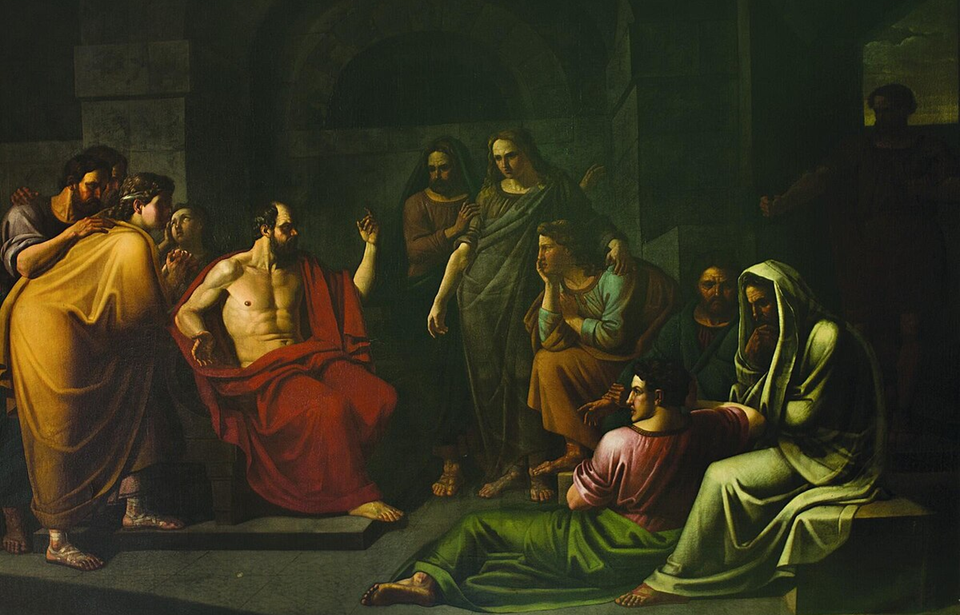
Such a response seems as though it could only have come from the mouth of a rhetorician. But the belief that “almost every accomplishment falls within the scope of rhetoric” was hardly uncommon in ancient Athenian society. Indeed, Gorgias’ speaking skills inspired the creation of a movement that would elevate rhetoric to the status of a high art. The sophists – as they came to be known – placed rhetoric at the core of their educational curriculum. By instructing the Athenian elite in the virtues of good speech, this loose collective of itinerant teachers succeeded in weaving rhetoric into the very fabric of Athenian statecraft.

The Greeks’ veneration of rhetoric is nearly as alien to 21st-century sensibilities as their acceptance of pederasty or their penchant for sacrificing animals at the altars of capricious gods. As Thomas DeGirolami has pointed out in these pages, “rhetoric is a dirty word today. Media outlets, pundits, and even scholars often use it to describe meaningless bluster.” Yet, as Robin Waterfield has observed, “even if the importance of rhetoric for political purposes has receded these days, rhetoric remains a strong presence in our lives in other guises,” whether it’s in the form of advertising, journalism or casual arguments among friends.
Waterfield’s remark comes from his introduction to Gorgias, Plato’s most comprehensive work on the subject of rhetoric. The protagonist of the dialogue is not the eponymous Gorgias, however, but rather the philosopher Socrates. Gorgias is merely one of Socrates’ interlocutors, led down a series of dialectical alleyways into conceding that rhetoric and virtue are unrelated, and that language can do little more than imitate reality. While Plato would soften his condemnation of rhetoric in the Phaedrus, composed roughly a decade later, Gorgias foreshadows sentiments laid out in Republic, in which he argued that a perfect society would banish poets for being able to speak so convincingly.

To be persuasive is to be deceitful, since language can only imitate reality (and reality itself, in Plato’s understanding, is only an imitation of truth). In Gorgias, he goes further by describing rhetoric as a τριβή (tribē), or “knack”, a kind of superficial flattery which gratifies the mind rather than edifying the spirit. Gorgias may know how to adulate his listeners, says Socrates. But he cannot show them the truth.
In Socrates’ view, then – and therefore Plato’s[1] – what is good about rhetoric is also that which makes it wicked. Nowadays, however, critics of rhetoric are reluctant to concede that this particular sword might be double-edged – all while decrying its lethalness. Journalists and activists routinely frame inflammatory rhetoric as the spark that lights very real fires and provokes acts of violence, while academics such as Michel Foucault and Jacques Derrida have long believed in “the violence of the letter”.
But if the notion that words can cause physical harm seems peculiarly postmodern, it can be traced at least as far back as the bloody afterbirth of European fascism. The pogroms and persecutions that characterised life for the average Jew during the Third Reich were a direct consequence of political leaders’ efforts to dehumanise Jews and condone antisemitic violence during rallies and public addresses. If, in modern-day Germany, charisma is considered synonymous with evil in the political imagination, then the leaden bloviations of Helmut Kohl and Angela Merkel signalled something else entirely: the banality of good.
A perverse and widespread scepticism towards persuasive speech per se is not uniquely Teutonic, and seems to have infected the West more generally. In Britain, Enoch Powell’s infamous ‘Rivers of Blood’ speech haunts political discourse perhaps less for the contents of Powell’s remarks than for the stark and messianic tone with which they were delivered. Powell had previously been a professional Classicist. The vivid title by which the speech came to be known was not a literal premonition but a reference to Book 6 of Virgil’s Aeneid: “As I look ahead, I am filled with foreboding; like the Roman, I seem to see ‘the River Tiber foaming with much blood’.”
To invoke such imagery nowadays is to open oneself to the least charitable interpretation of an essential ambiguity. More often it can lead to public ridicule, as when former prime ministers Boris Johnson and Liz Truss attempted to bejewel their valedictory speeches with references to Ancient Rome. When Johnson compared himself to Cincinnatus, Mary Beard was quick to point out that the Roman statesman was “an enemy of the people”, while others laughed as Truss stumbled over her pronunciation of Seneca (although not as much, it must be said, as at Johnson’s pronunciation of the opening lines of the Iliad).

The result of all this is a denuded political language. Rhetoric these days is ‘snappy’, ‘ugly’ or, worse yet, ‘spreadsheet’; rarely ‘grand’, ‘lucid’ or ‘eloquent’ – to translate just a few of the adjectives that typically attended rhetoric in the age of Virgil. Even Socrates – at least as Plato depicted him – conceded that the mellifluous nature of rhetoric made it useful for “the admirable procedure of trying to perfect the minds of one’s fellow citizens”. Behind these words lurks an awareness that beautiful language can just as often be the midwife for philosophy, critical thinking and sound mental health – as much as it might be for lies, deceit and slander. The fact that the very notion of perfecting one’s mind seems almost laughable nowadays, and that philosophy itself has fallen out of fashion, is indicative of the narrow straits into which rhetoric has drifted.
It is not surprising, then, that when the word ‘rhetoric’ referred to something rich and complex, it boasted legions of defenders as well as detractors. For Plato’s student Aristotle – to take just one example – rhetoric constituted a useful tool, provided it was wielded by the right people. While Aristotle dismissed the sophists’ lack of philosophical grounding, he treated rhetoric itself as a discipline worthy of examination. In his Rhetorica, Aristotle divided rhetoric into three categories: forensic, deliberative and epideictic. These categories corresponded to the three arenas in which rhetoric was typically practised: respectively, the law courts, political assemblies and ceremonial events.
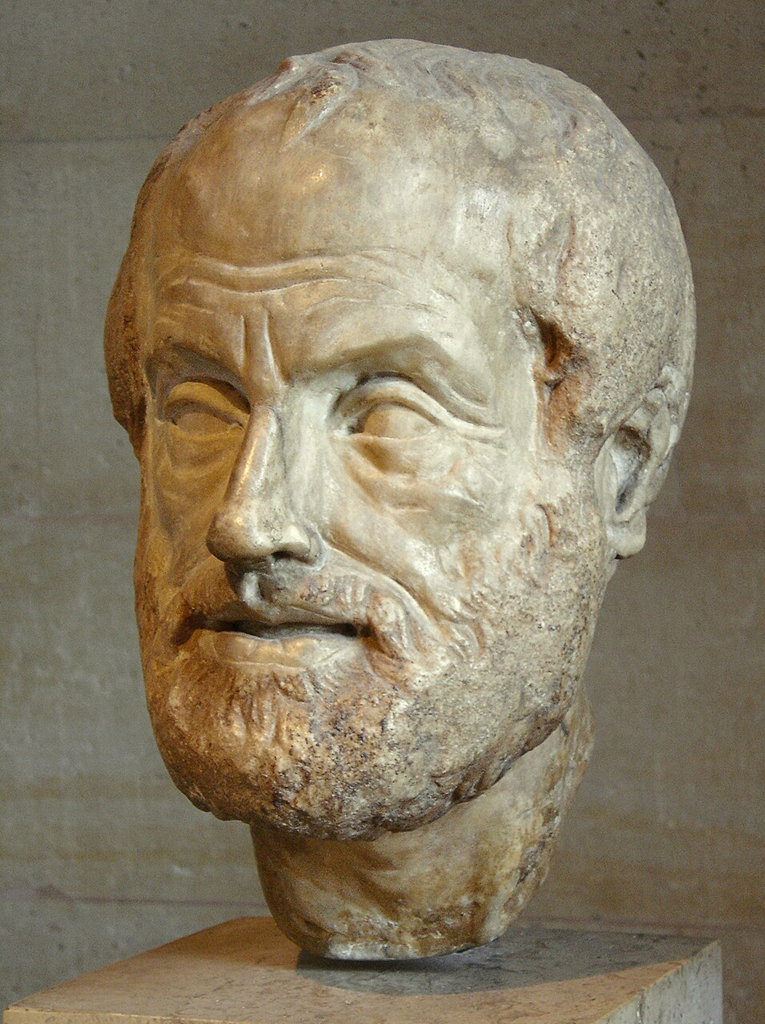
Plato’s Academy was not the only institution of its kind in Athens. In 392 BC, five years after the Academy opened, Isocrates opened his own school dedicated to teaching rhetoric. Aristotle would in turn go on to found his own Lyceum, where rhetoric was considered an essential subject. As liberal education became more and more institutionalised throughout the 4th century BC, rhetoric and philosophy became respectable subjects for formal study.
After the battle of Chaeronea in 338 BC, the Greek city-states were subordinated to the control of Philip II of Macedon. As the populace was shorn of its political independence, and by extension an effective popular democracy, the utility of rhetoric as an instrument for securing votes diminished. To the west, however, the orators of the Roman Republic were learning from their Greek forebears, and beginning to employ the techniques of Demosthenes and (later) Dionysius of Halicarnassus in their court cases and political debates. Prominent Roman orators did for Latin what the post-sophists had done for Greek, taming an unruly language into a set of devices that could be marshalled in the name of argumentation.

Just as Aristotle subdivided rhetoric into its forensic, deliberative and epideictic spheres, so Cicero, the last and greatest of Republican orators, and the imperial-era rhetorician Quintilian (late 1st cent. AD) defined five canons: Invention, Arrangement, Style, Memory and Delivery. Other rhetoricians, including the unknown author of the Rhetorica ad Herennium, plumped up the rhetorical nomenclature further still, adding terms such as peroratio, commoratio and amplificatio, or otherwise calquing Greek innovations. Thus προοίμιον (prooimion) became exordium; ὑπόκρισις (hupokrisis) became pronuntiatio; and so on.
Rome, like Greece, would eventually succumb to an authoritarian system of government. With the accession of Octavian in 31 BC – restyled Augustus four years later – the Roman Republic became the Roman Empire. As in Ancient Greece, the ability to speak persuasively became less expedient, as political positions within the senate relied less and less on democratic consensus. Military coups became a decisive factor in the push and pull of imperial power. State-level popular elections became increasingly ceremonial procedures, before finally ending altogether after the reign of Tiberius, Augustus’ stepson.

Still, what followed was far from a dark age. It is true that the two centuries of civil stability known as the ‘Pax Romana’ (‘Roman Peace’, c.27 BC–AD 200) were not quite as bloodless as the name implies. From rebellion in Judea to the assassinations and civil wars that characterised the Year of the Five Emperors (AD 193), there were more than a few casualties. But rhetoric was not one of them, having already been enshrined in the apparatus of Roman political culture and the education system.
The Second Sophistic, as the flourishing of Greek literature in the period AD 50–230 later came to be known, further increased public interest in the art of rhetoric. But it had a decidedly nostalgic flavour. Already there was a growing sense that the apogee of rhetoric lay, like Hesiod’s Golden Age, in the distant past. This regressive attitude intensified as the Roman Empire began to crumble. Just as temples, tombs, roads and aqueducts served as visible reminders of past greatness, so the panegyrics of Greek and Roman orators served as past examples of literary excellence.

After the fall of the Roman Empire, even as over the centuries the kingdoms of France and Spain and England grew in power, eclipsing the technical and military might of their common ancestor, still it was Cicero, Demosthenes and Epidius who remained the role models for anyone interested in the art of public speaking. Latin survived as the language of high culture, but as a native language it was gradually displaced. Consequently the potential for rhetorical innovation weakened, as familiarity with the language waned without disappearing completely – an irony which allowed the Greek and Roman canon to maintain its prestige.
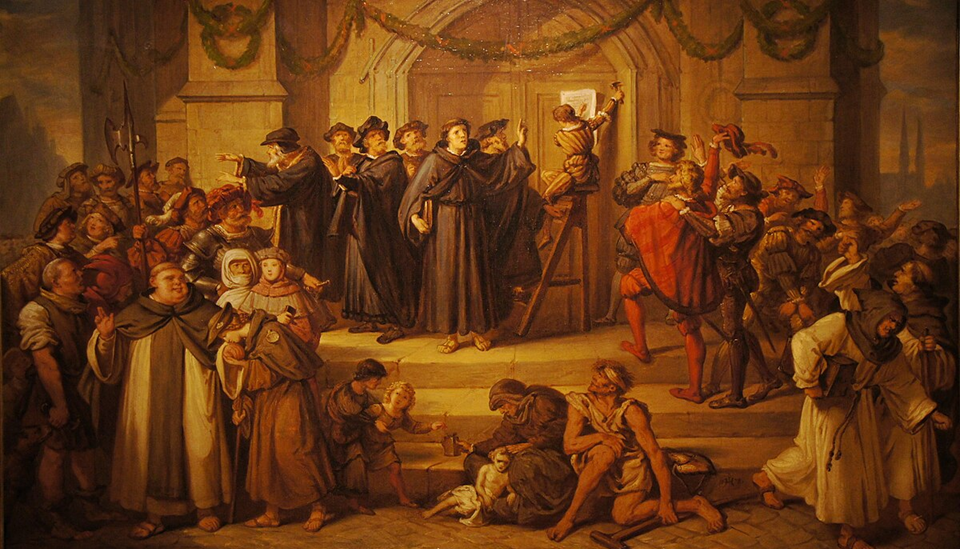
One need only read Martin Luther or Michel de Montaigne to see how the ancients’ stylistic proclivities snaked their way into the vernacular languages. The ability to construct a tripartite crescendo, or to amuse audiences by dryly deploying zeugma or apophasis, was not lost when Latin and Greek ceased to be spoken on the streets of Rome and Athens. What was lost, however, was the spareness, inflectional diversity and syntactical plasticity inherent in the morphological make-up of these languages, qualities that even the most garlanded poets in Tuscan Italian or High German could never quite recapture.
Even Shakespeare’s Julius Caesar was unable to achieve in English a single line with the economy and alliterative resonance of the words the real Caesar delivered to the Roman senate following his victory at the Battle of Zela: veni, vidi, vici. The quotation attributed to Caesar before he crossed the Rubicon to declare war on Pompey – “let the die be cast”, or “the die is cast” – is famously striking. But it is more impactful and more concise in Latin: alea iacta est – as Suetonius remembered it, and conciser still in Greek – ἀνερρίφθω κύβος (anerrhiphthō kubos) – as recorded by Plutarch.[2] Unfettered by the somewhat stifling rules which regulate sentence structure in most modern European languages, longer utterances in Latin and Greek tend to exhibit more liberty and creativity, juggling nouns, verbs, adverbs, adjectives and every other part of speech in a dizzying whirligig where words shrink, swell and circle back in grammatical agreement with one another.

That is not to say that English is totally inflexible. Shakespeare’s Brutus is more eloquent than the Caesar he describes when he tells himself, for instance, to “think him as a serpent’s egg / which, hatched, would as his kind grow mischievous.” As E.A. Abbott noted in his Shakespearean Grammar, “for freedom, for brevity and for vigour, Elizabethan is superior to modern English.” But even Elizabethan English struggled to accommodate the complexity of Classical languages. Abbott observes how “the long and rounded periods of the ancients commended themselves to the ear of the Elizabethan authors. In the attempt to conform English to the Latin frame, the constructive power of the former language was severely restrained.”
If “as far as English inflections are concerned the Elizabethan period was destruction rather than constructive”, the period following was more destructive still. By the time Milton was writing Paradise Lost in the 1660s, spelling and sentence structure had become much more standardised. The same process was mirrored on the continent, particularly when the emergence of the modern nation state brought about a need for centralised educational curricula.
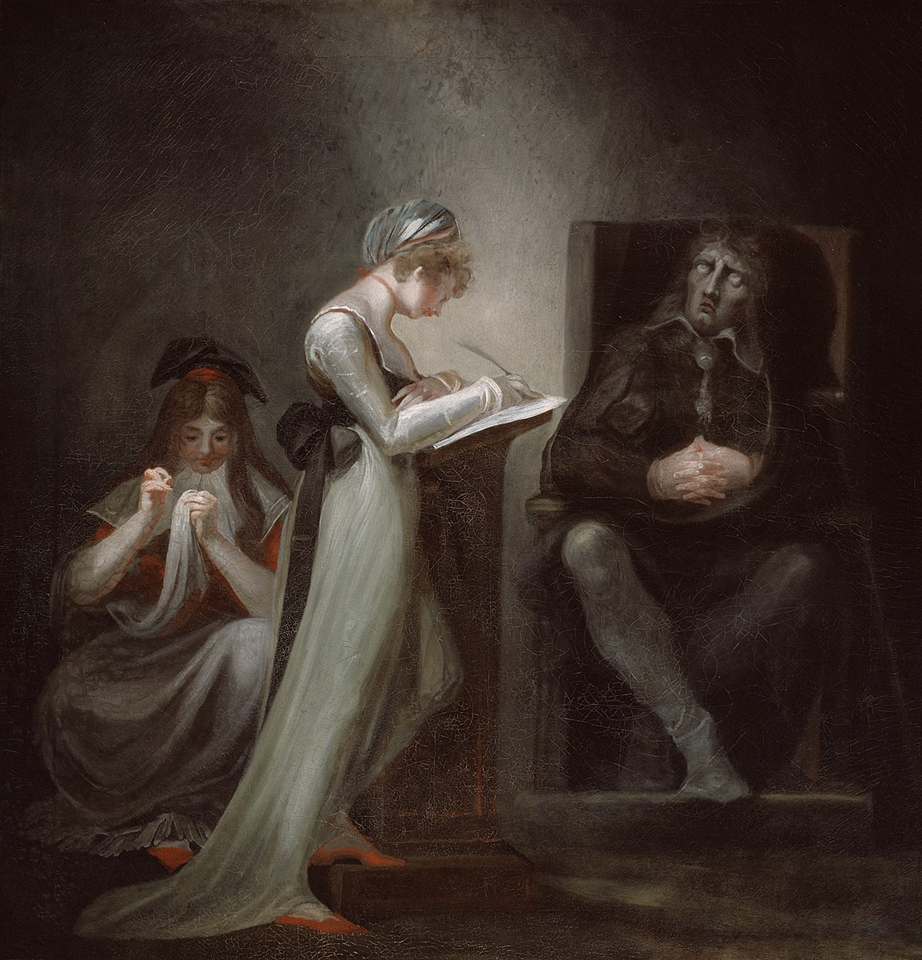
Modern readers unversed in Latin and Greek, or even in the older variations of English and other European languages, remain generally unaware of their sophistication. A language can give a window into different worlds and ways of thinking; but what it cannot do is show us how another language works. One writer who has drawn attention to this shortcoming is the American author Donna Tartt, who studied Classics and Philosophy at university, and whose best-selling novel The Secret History narrates the tumultuous lives of a group of students at the fictional Hampden College. The story is told from the point of view of Richard, a neophyte Classicist who is inducted into a selective, and secretive, Ancient Greek class. Early on in the novel Richard chances upon his classmate, Henry, translating Paradise Lost into Latin. When asked why, Henry replies that
Milton to my way of thinking is our greatest English poet, greater than Shakespeare, but I think in some ways it was unfortunate that he chose to write in English… In Paradise Lost he pushes English to its very limits but I think no language without noun cases could possibly support the structural order he attempts to impose.

Henry isn’t wrong to lament the strictures of English and the decline of inflected languages with multiple cases. Whether through top-down efforts to standardise grammar, spelling and vocabulary, or the erosion of superfluities that naturally occurs when a language is spoken over a long period of time by a large number of people, the evolution of languages is mainly a process of simplification. Communication becomes easier, more intuitive; but the potential to deliver rhetorical sleights of hand, to build towering edifices of clauses and sub-clauses with which to dazzle and disarm listeners, diminishes. The syntactical gymnastics that can make the poems of Ovid or the Annals or Tacitus so intimidating to school students furnished Latin literature with some of its most remarkable passages, and are in no small part what makes them worth studying in the first place.
For Richard and his classmates, studying the past is a bittersweet experience. “They too,” narrates Richard, reflecting on his peers, “knew this beautiful and harrowing landscape, centuries dead; they’d had the same experience of looking up from their books with 5th‑century eyes and finding the world disconcertingly sluggish and alien, as if it were not their home.” Richard, Henry and their peers may be pariahs in an academic environment where study of the Classics has been sidelined; but this rose-tinted reverence for the past was a far commoner sentiment in the epoch between the Ancient world and the American century.

While familiarity with Latin and Greek literature has historically been a province of the elite, it has vanished almost entirely among today’s elite. Where priests, professors and ministers alike were once conversational in the language of Cicero, mastery of Latin is now confined to the corridors of the Vatican. Besides anachronisms like Henry, few can appreciate, at an instinctive level, exactly why or how the poetry of Horace or the speeches of Cicero so dazzled the people of Ancient Rome.
Is there reason to be hopeful for the reemergence of Classical rhetoric? Of Aristotle’s three spheres, the forensic and epideictic are more or less irrelevant to modern day life. We are still entertained by legal dramas, but a courtroom trial is a far more private affair than it once was. Nor do ceremonial procedures feature in our lives with anywhere near the same scale or significance as public religious rites did to the Ancient Greeks.

The deliberative – that is, political – sphere, however, remains alive and well. As we have seen, Classical rhetoric advanced in lockstep with the evolution of popular democracy. It therefore may have been reasonable to expect similar results from the widening of the franchise in mature Western democracies over the past hundred years. But even as literacy rates have sky-rocketed, and as information has become increasingly accessible, the quality of political rhetoric has declined. The era of mass communication, powered by radio, television and the smartphone, has ushered in a world where statesmen must make themselves fully comprehensible to the lowest common denominator across tens of millions of listeners, a trend set to accelerate as governments continue to lower the voting age, and as British parliamentarians let ChatGPT do the thinking for them. What follows is a type of rhetoric that Socrates would never have recognised, let alone condemned: dull, unadorned and, ultimately, uninspiring.

Josh Allan is a writer based in London. He received an MSt in World Literature from Mansfield College, Oxford, and his work has appeared in The Oxford Review of Books, Quillette, The Mallard and other publications. He has previously written for Antigone about the practical benefits of learning Latin.
Notes
| ⇧1 | “What might a Platonic Socrates be,” as Nietzsche mused, “if not Πρόσθε Πλάτων, ὄπιθεν τε Πλάτων, μέσση τε χίμαιρα” (a hexameter verse meaning “Plato in front, Plato behind, and a Chimaera in the middle”). |
|---|---|
| ⇧2 | It is possible that Suetonius (or his scribes) omitted the final o from Caesar’s words, as alia iacta esto would match the Greek more closely with the meaning “let the die be cast”. |