David Money
Near the start of 2025, I thought it was time to stop dithering. Not in every aspect of life – heaven forbid – but in the matter of reviving Vates, The Journal of New Latin Poetry. The Latin word vates means “poet”, or occasionally “prophet”, singular or plural, masculine or feminine. A viable journal needs poets, plural – and readers, plural. Editor, singular, and poet, singular, I could supply myself: finding the others and getting them on board was the challenge for the coming months.

Where did all this begin? Back in 2010, with the establishment of Vates as an open-minded and accessible place for the enjoyment of newly-written Latin verse. It appeared online more than once a year (on average) until 2018, a total of fourteen issues under the founding editor (and Antigone contributor) Mark Walker. Then Mark, a busy school-teacher, decided to call it a day. As a regular contributor, I was sorry about that, as were many others. Time passed, not without dithering. But I did at least establish that Mark would be pleased for Vates to continue under new editorship.
What is the right recipe? Mark’s Vates had a mixture of poetry and articles about poetry – less formal than a more serious academic journal, but often lively and informative. I wanted to keep the mixture, while beefing up the poetic content, and spicing up the prose with one or two new ideas. I also wanted, after a gap of seven years, to be sure that we were re-establishing something with a good prospect of permanence, and likely to be taken seriously. Part of the seriousness was obtaining an official number (ISSN) and ensuring we would be archived by the British Library. That’s no guarantee that the new regime will last, but it is at least a statement of intent.
It’s quite a lot of work, to contact hundreds of people and tell them about a journal proposal, inviting contributions or help of other kinds, such as spreading the word; mostly enjoyable, occasionally not so much. The fruits of it arrived over the spring of 2025. Some parts were easier to edit, some harder; relatively trivial, but I thought important to get right, were the brief biographical notes for the list of contributors, aiming to steer a middle course between over-sharing and taciturn modesty. Accessible English translations for everything were vital. Persuading non-English-speakers of that, and helping them achieve it, was a major goal.
I wanted issue 15, the first new issue, published on 1 August 2025, to be fairly substantial. One might not be able to achieve all that is desirable straight away – establishing a new readership, and finding those willing to write longer prose pieces, can take a while – but I did not wish to look feeble. I think feebleness has been successfully avoided. We have nearly 150 pages: some devoted to introductory material, short prose articles, notes on contributors and so on, but more than a hundred pages containing new Latin verse, with translations, which is the essential function of Vates.
Who is eccentric enough to compose Latin poetry today? You may be unsurprised to learn that professional Classicists, some of them retired, feature heavily. Other careers are represented too, including the business world (both business and politics, in one case). For some writers this is a minor, marginal activity, an amusing diversion. For others it is a significant part of their lives and creative achievement: those more serious about it can produce large quantities (and, I hope readers may judge, some works of considerable quality). We have several contributors with varied poetic offerings that add up to more than a hundred lines. In all, 29 people have poems in issue 15.
How to arrange all those poems, long and short, serious and frivolous, into a coherent and harmonious whole? I did not want to divide the verse into thematic sections, but there is a loose connection between various neighbouring items that may help: we start with some fables; then love poems; war and politics; translations (mostly from English, also Persian and German); then satires and epigrams. Individual readers may not like everything; something should appeal to the tastes of anyone who likes Latin.
Our poets come from many different places: wide international representation was something I was aiming for, and have partially achieved, though there is room for further progress. We have several from Britain (though could do better: more on that below); some parts of Europe are represented well – Austria, Germany, Italy, Hungary; more from the low countries (home to much excellent Neo-Latin scholarship) would be welcome. We are yet to penetrate France and Spain. In the Americas, Canada is prominent, the United States present, alongside Mexico and Argentina. There are two poets from Kyoto in Japan, one old, one young.
Diversity of location, and diversity of styles have been achieved; diversity of gender, up to a point. Historically, verse-writing has been more of a male activity. It would be good to see a higher proportion of women involved in future. Still, some of the strongest voices in Vates issue 15 are female. To pick out just one whose vigour I admire, Karin Zeleny of Vienna writes powerfully about her passion for paintings, for wine, or for people, as in her Sapphic ode ‘Ad Amantem’ (‘To my Lover’, p.34): aureo autumno tibi venit aestas / tantus est cordis calor… (“In golden autumn there came summer for you: so hot is the heat of your heart”).
Readers of Karin’s verse may notice an aversion to punctuation and capital letters, that some may find off-putting initially. Once one gets used to her preferences, or those of other authors, it should not be a really troublesome barrier to clear understanding. I decided not to impose uniformity on the presentation of Latin (as Mark had done in issues 1–14), but to let authors have their own way. Some people care a lot about this – Karin is one of them – and I would prefer to accept this diversity of opinion, at the cost of a small loss of consistency. Much of editing is a trade-off between giving freedom to authors, and keeping things consistent enough to avoid irritating readers.

To succeed at all, an editor needs lots of help. “How can I help?,” you are surely asking. Do any unhelpful and miserable people read Antigone? It is hard to imagine. In the first place, just having a glance at the new Vates issue would be helpful.
There is quite a lot of it: some parts may appeal more than others. Perhaps try the editor’s introduction, and just a few poems in a style that seems readable. From the prose section, please have a look at “What excites me”, a set of very short pieces that attempt to answer the question of why we are bothering to read this stuff – not just new Latin, but older poetry too.

Part of the point of “What excites me” is to encourage a wider range of contributors, of all ages. All that is needed is the willingness to think about it (no need to agonise for too long: just pick one example) and write something very short and fast: the work of half an hour, or even less. No need to write poems: just to read them. How hard is that? Yet the results, collectively, can be worthwhile, offering an insight into the personal enthusiasms of the contemporary Latin-reading public. We have nine kind pioneers in issue 15. I’d like to find more, to keep the momentum going in issue 16 and thereafter, including some current students at schools and universities. Former students in careers outside Classics are also very welcome. Please consider giving it a try.
What else can you do to help, if you don’t write verse yourself? Tell other people, naturally, and encourage them to read it. Those engaged in teaching, at any level in schools or universities, could do something else that is almost unheard of, but exceedingly easy to do, and potentially transformative: mention a living Latin poet to your students. Dead language or not, living people are writing it, right now, and (I think) quite well too – adding in valuable ways to the store of literature that has built up over more than two thousand years. How many students, and how many professors, know that?

I am not suggesting that teachers take too much time away from essential parts of the syllabus. Gaul obviously needs to be invaded, or Rome founded. My suggestion, in the editor’s introduction, is that, once a year, part of a class might be spared for a living poet: maybe making a comparison or contrast with a Classical work that is being studied. It could make all the difference, for awareness of contemporary Latin verse. It could also be rather fun. To help out, I suggest that Vates should gradually create a teaching anthology of short, easily accessible works by living authors that might work well in class.
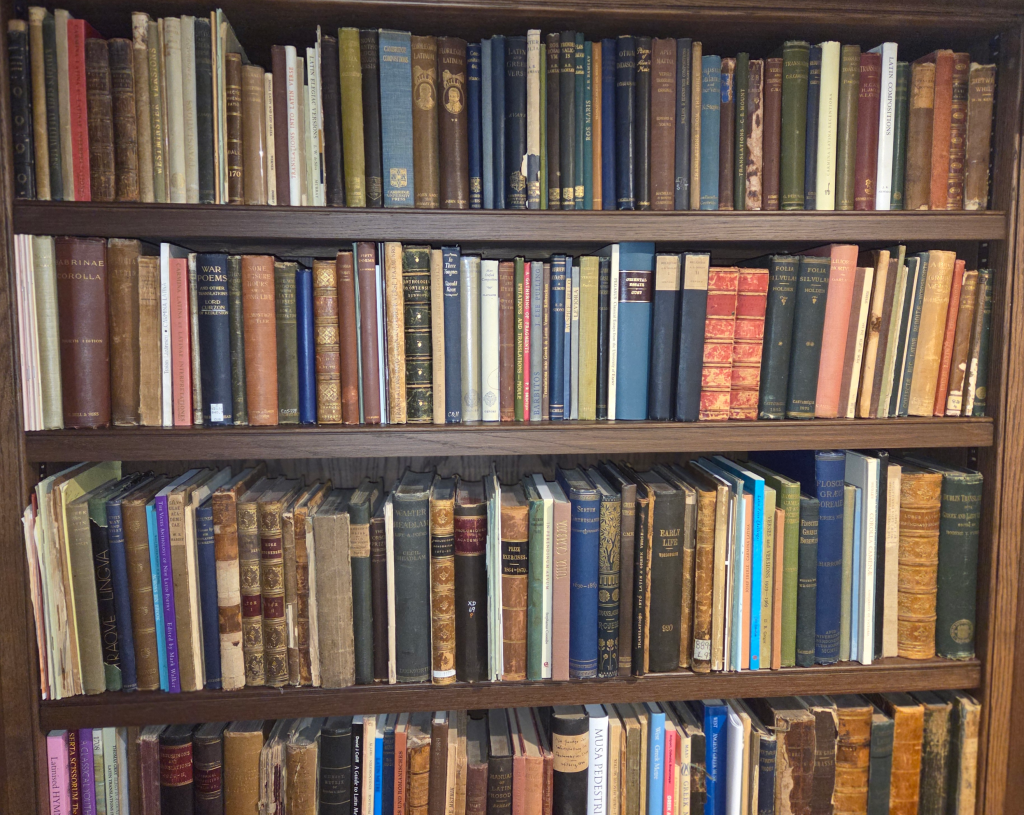
Finally, for those who do write poems: please contribute to Vates. I say that to anyone, anywhere: but most particularly to all those who have already sent in verses to the various small collections organised by Antigone. Don’t just confine your Muse to this forum. Though both may be online, there a big differences between the journals: one high-tech (even with pictures!), and devoted to all of Classics – the other more focused on the encouragement of verse. We would appreciate your participation very much. Incidentally, publicising your work elsewhere online (such as Facebook, X, or personal websites) is not a barrier to inclusion in Vates, which offers a more permanent kind of publication.

There’s no need to be parochial, of course, and I am delighted that Vates is so international. Still, for the honour of British Latin composition, it would be nice to see some more of the Britons, whom we know to be capable of it, lifting a finger to their keyboards. That applies especially to younger versifiers. When I was an undergraduate, or a graduate student, or a junior fellow in a college, I would have leapt at such an opportunity to publish verse, had it been offered (which it wasn’t, as far as I noticed). I haven’t seen much leaping yet – but let’s hope the message can reach some relevant people. For female poets, by the way, the score so far is: Foreign women, 4: British women, nil. Does anyone care to remedy that?

Thank you for giving some of your time to this brief introduction to what the revived Vates is trying to do. I hope it may have piqued your interest enough for you to look at it further, and remember that Latin poetry is not as dead as some may have assumed.
The first fourteen issues of Vates are also available here, and the editor can be contacted here. We hope to publish Vates issue 16 about eight months after its predecessor, i.e. in the spring of 2026; it would be helpful if material for consideration could be sent by the end of March 2026. Floreant poetae!
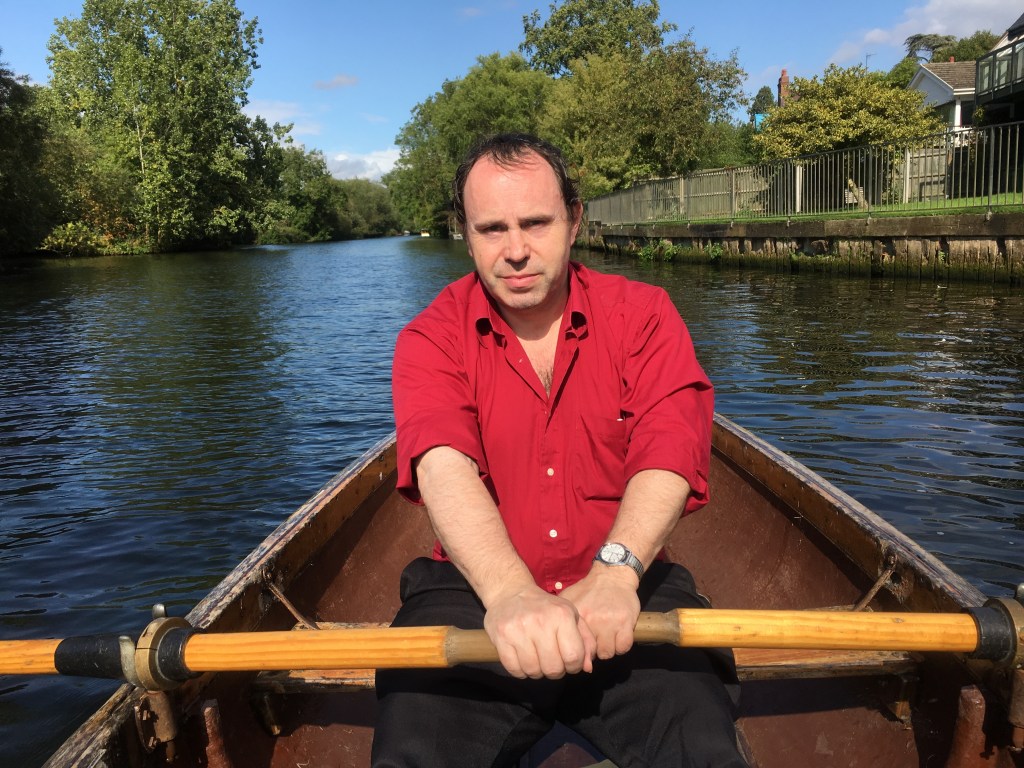
David Money is a writer of Latin poetry, and (from 2025) editor of Vates. He has previously taught Classics and Neo-Latin Literature at the University of Cambridge, and has published extensively on British Neo-Latin.
