Jaspreet Singh Boparai
Are the Satirists Exaggerating?
One of Martial’s epigrams (2.66) describes why a lady beat her hairdresser with a mirror:
Unus de toto peccaverat orbe comarum
anulus, incerta non bene fixus acu:
hoc facinus Lalage speculo, quo viderat, ulta est,
et cecidit saevis icta Plecusa comis.
desine iam, Lalage, tristes ornare capillos,
tangat et insanum nulla puella caput.
hoc salamandra notet vel saeva novacula nudet,
ut digna speculo fiat imago tua.
In Walter Ker’s 1919 translation for the Loeb Classical Library, the poem runs:
One curl of the whole round of hair had gone astray, badly fixed by an insecure pin. This crime Lalage avenged with the mirror in which she had observed it, and Plecusa, smitten, fell because of those cruel locks. Cease anymore, Lalage, to trick out your ill-omened tresses; and let no maid touch your distempered head. May salamander mark it or ruthless razor rasp it bare, that your features may befit your mirror.
The casual cruelty shocks modern readers, particularly when they have never seen anything like this in real life. Elaborate hairstyles are out of fashion today even among those who can afford personal hairdressers. When such ladies punish mistakes, they tend to do so by of leaving an ungenerous tip, or writing a passive-aggressive review on Yelp. But also the very idea of going out in public with hair that might take hours to arrange seems preposterous to most of us, at least at this point in history, where “athleisure wear” has become the ubiquitous status symbol among the vulgarians who make up our ‘élite’.
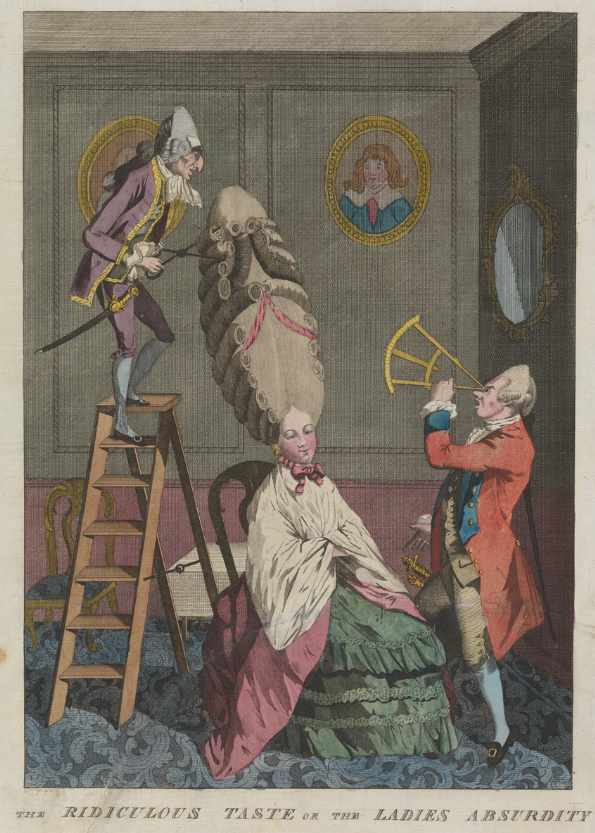
Juvenal is even more scathing about the way in which elegant Roman ladies treated their ‘beauty teams’. An entire section of his notorious Sixth Satire (vv.474–511) describes the tyrannical régime of the bored, rich and fashionable in some detail.
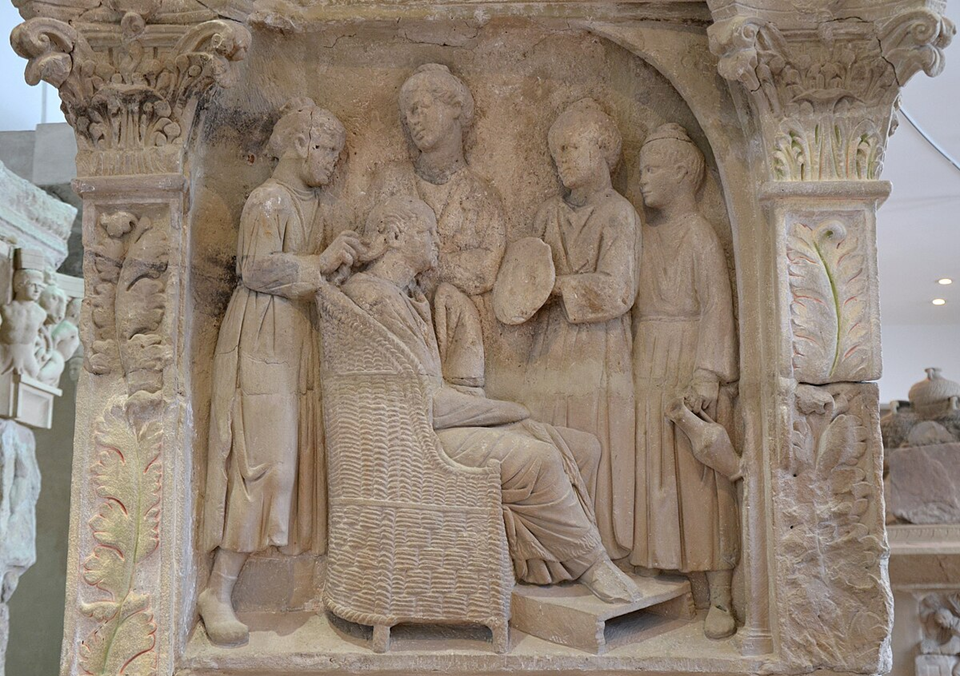
We need not examine the entire passage closely except to point out one curiosity (502–4):
tot premit ordinibus, tot adhuc compagibus altum
aedificat caput: Andromachen a fronte videbis,
post minor est, credas aliam.
And in Susanna Morton Braund’s 2004 translation (again for the Loeb Classical Library):
She weighs down her head with tiers upon tiers, piles her head high with storeys upon storeys. From the front you’ll see an Andromache but from behind you’ll see someone smaller. You’d think it was someone else.
Juvenal has a habit of exaggerating, and we might take this with a pinch of salt. Surely Roman women of the 2nd century AD didn’t have big hair of the sort that potentially increased their height by a foot or more, and potentially ruined their posture. Yet it turns out that some of them really did, if surviving portrait busts from the period are to be believed.
The most famous example of such a hairstyle may be seen on the Fonseca Bust, which is now in the Capitoline Museums in Rome.
The Fonseca Bust
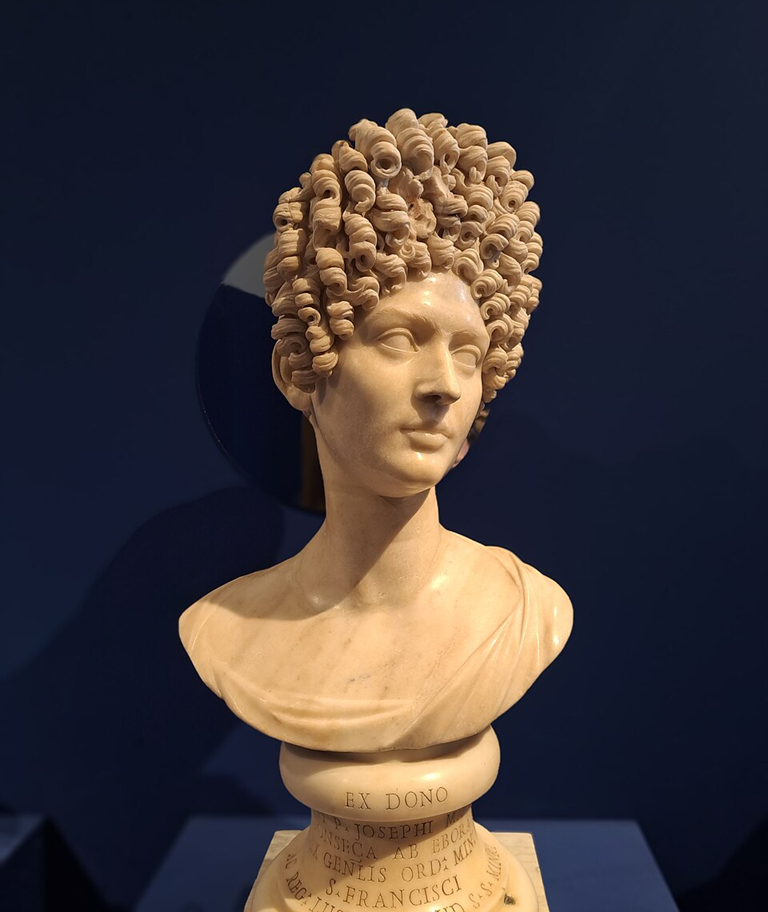
This extraordinary portrait was found in the 18th century near the church of Santo Stefano Rotondo in Rome. Originally it was in the possession of Mgr José Maria da Fonseca de Évora OFM Obs., Bishop of Porto (1690–1752).
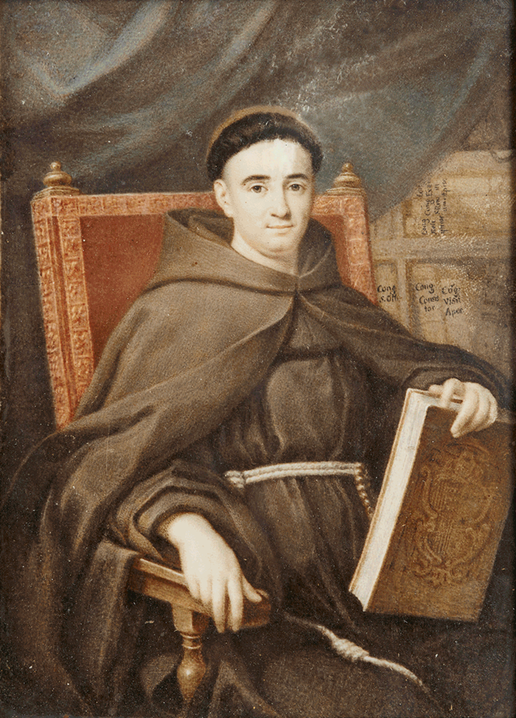
Bishop Fonseca does not seem to have been related to Gabriel da Fonseca (1586–1668), personal physician to Pope Innocent X from 1644 to 1655. Connoisseurs of art know Gabriel da Fonseca because he commissioned the great sculptor Gianlorenzo Bernini (1598–1680) to immortalise him in a bust that can still be seen in Rome in the Church of San Lorenzo in Lucina.
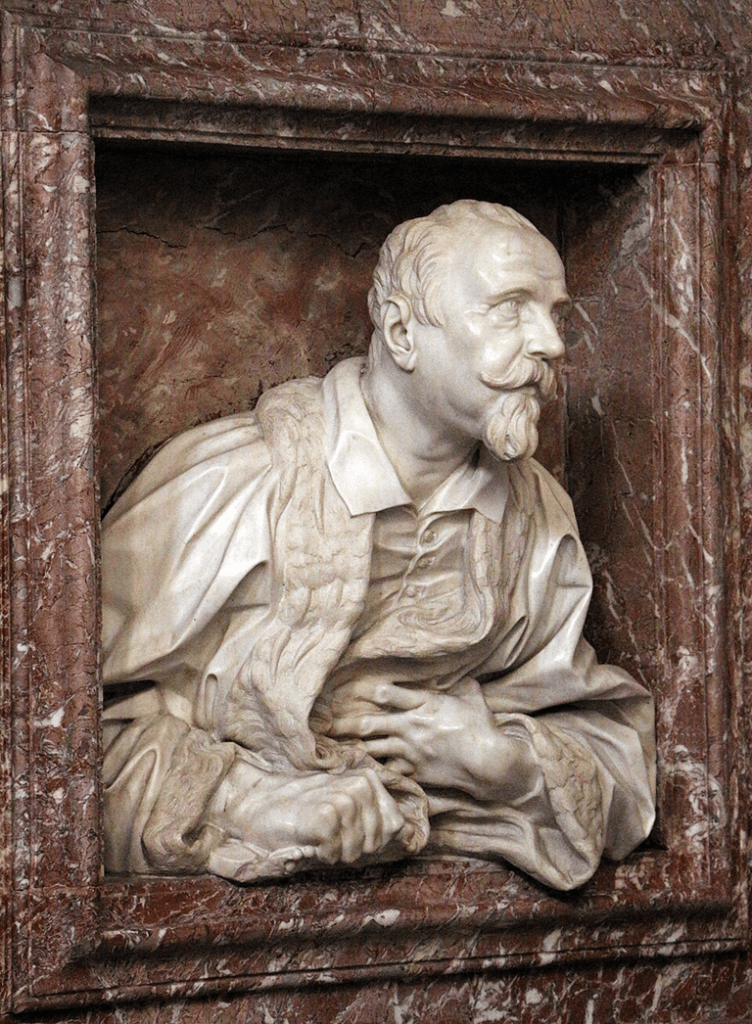
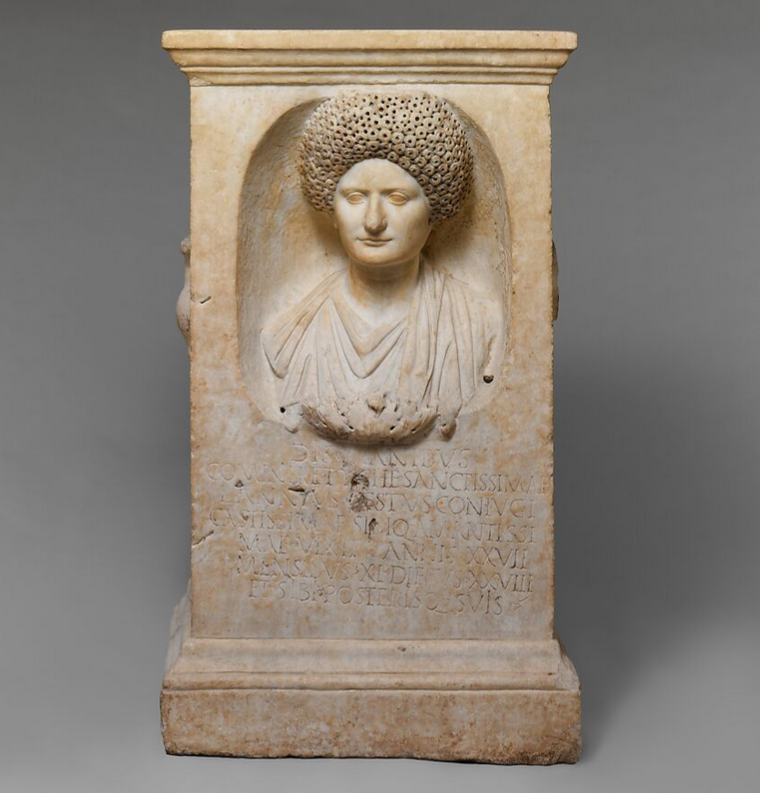
The Fonseca bust was discovered long after Bernini died, which is a shame, because he would have been particularly interested in certain of its details, not least the care with which the sculptor tried to depict the subject’s curly hair.
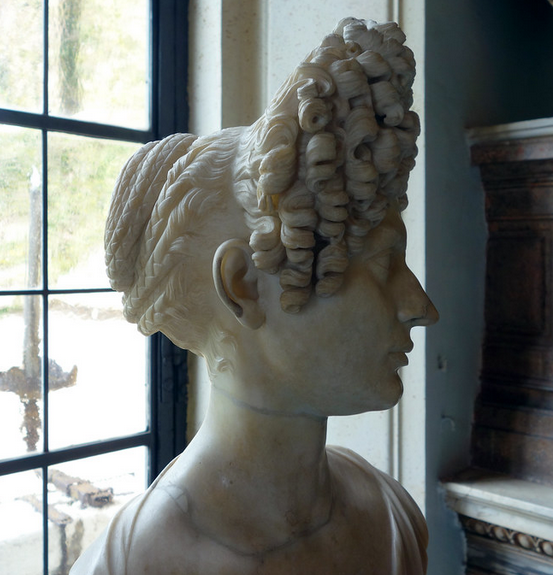
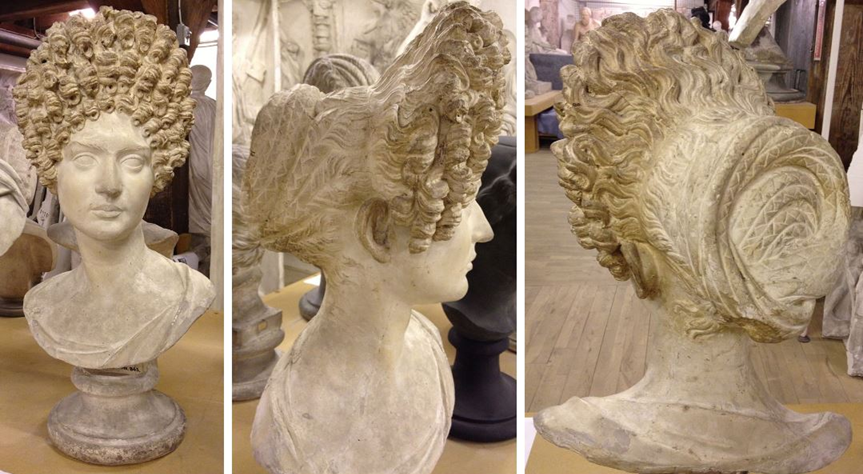
The Fonseca bust is one of the finest sculptures of its type, although it is far from unique in terms of its coiffure. Countless portrait busts from the late 1st and early 2nd centuries AD feature a ‘toupet’ or high brim of curls across the head. This seems to have been a dominant style among women of fashion during the Flavian dynasty (AD 69–96).
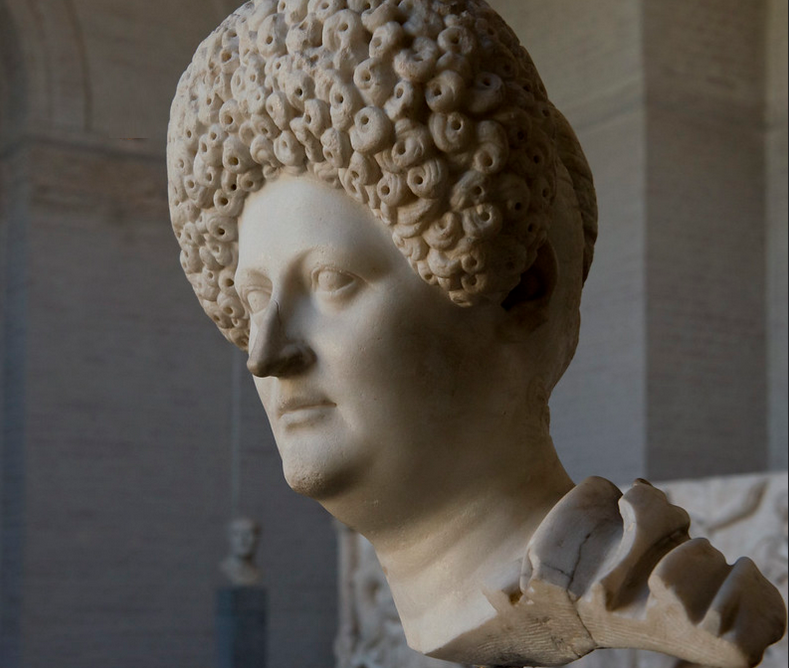
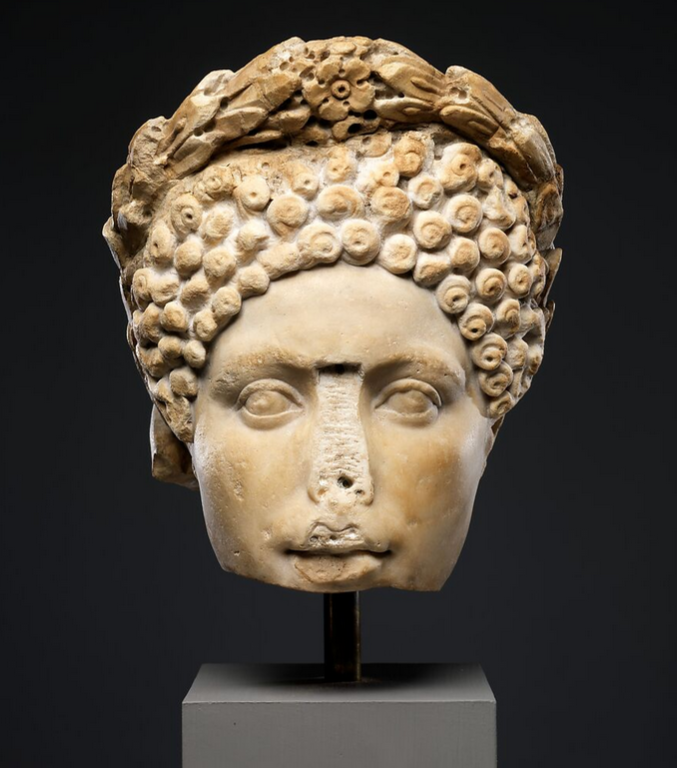
To get some idea of how unusual this sort of hairstyle was even among women of the imperial family, it might be worthwhile to look at the relative plainness of earlier portrait busts, where hairdressing was concerned.
Roman Women before the Flavian Era
Surviving classical and Hellenistic-era sculptures of women tend not to feature elaborate hairstyles. Perhaps this is because most surviving examples are either memorials to virtuous Athenian wives and daughters on grave stelae, or else depictions of goddesses, whose immortal beauty requires no adornment. A select few depict eastern queens, who have little need of status symbols to remind people of who they are.
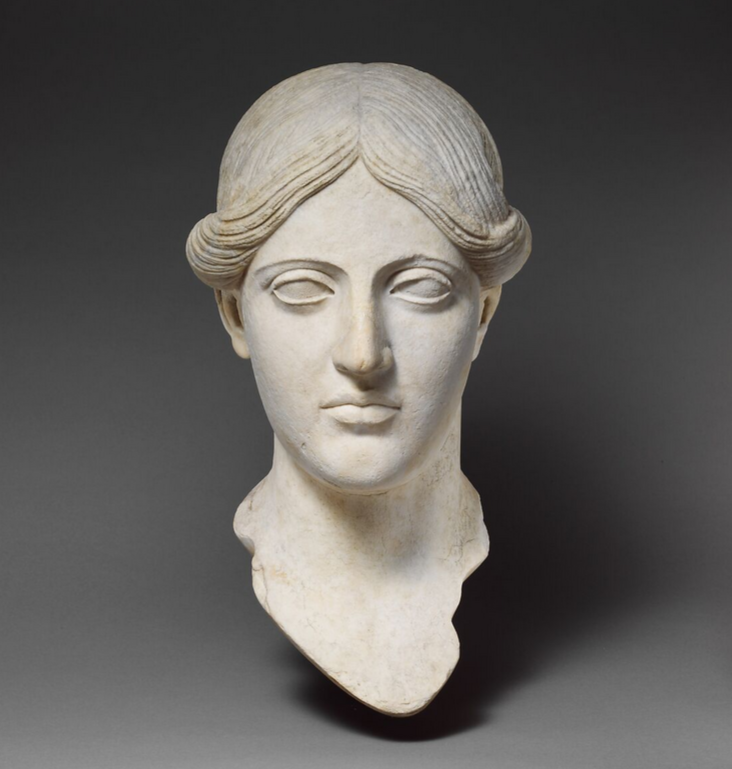

Roman women of the Republican and early Imperial eras lived according to a rather different set of standards from those of Greek goddesses and Hellenistic monarchs, yet they too are usually depicted with simple, even severe, hair.
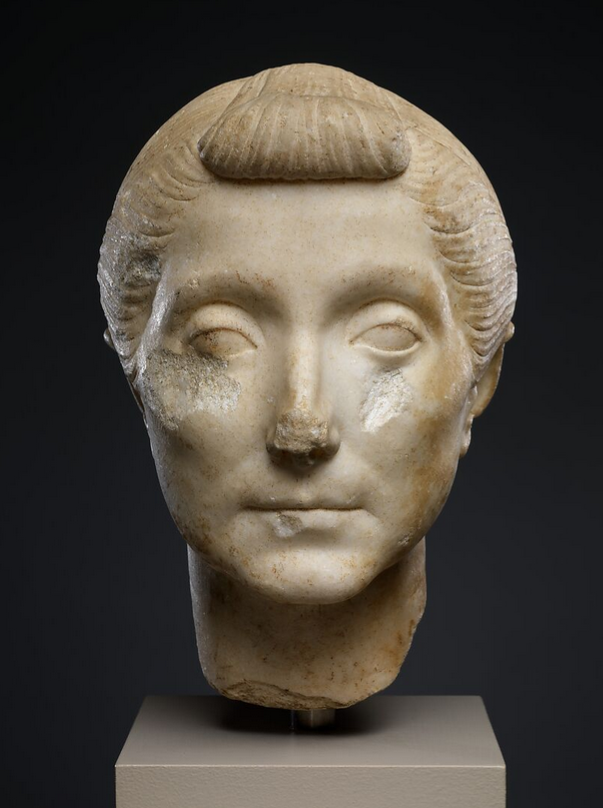
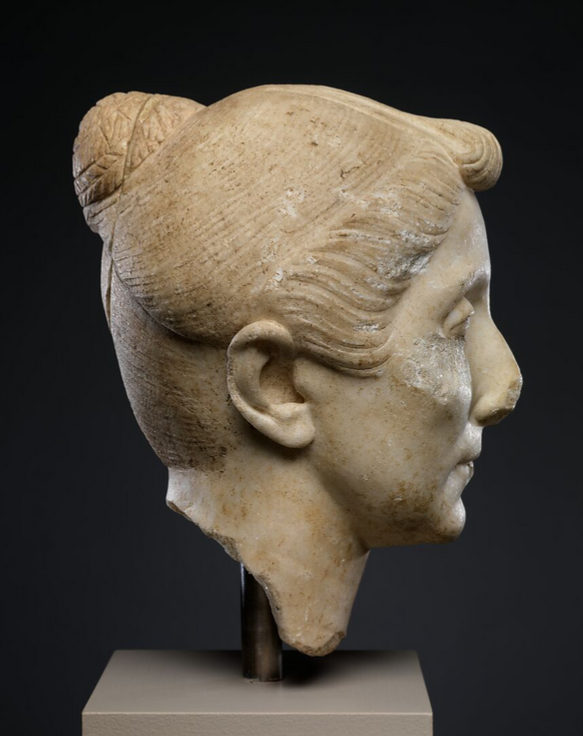
Livia Drusilla (59 BC–AD 29), wife of the Emperor Augustus, is always represented with a simple, austere coiffure. This is partly because the imperial family tried to maintain a studied ‘Republican’ unpretentiousness, partly because the restrained ‘classical’ style of official art was so ill-suited to peacockery, except perhaps where it illustrated a cautionary tale. After all, the Augustan notion of glamour surely began from the premise that the truly powerful did not need to show off, or explicitly assert who or what they were.
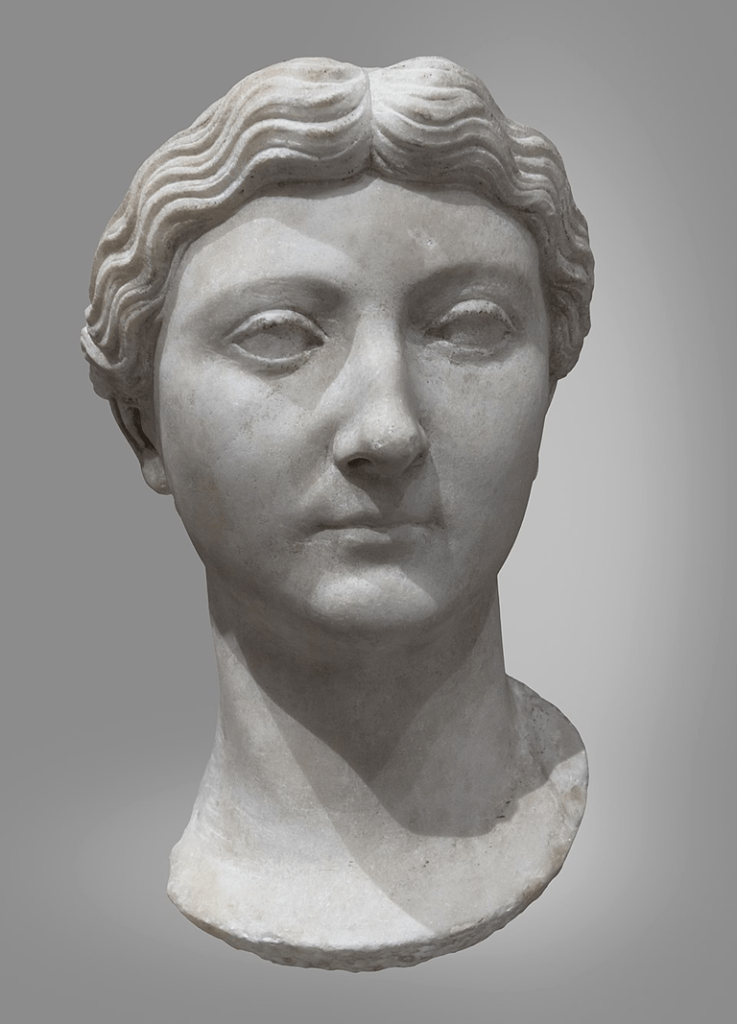
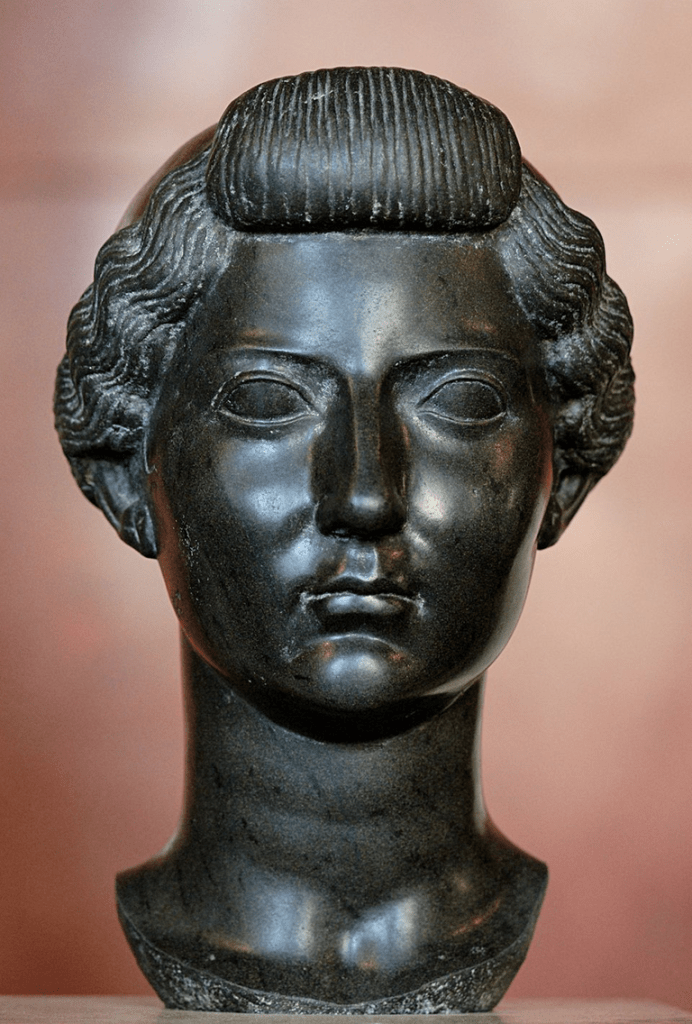
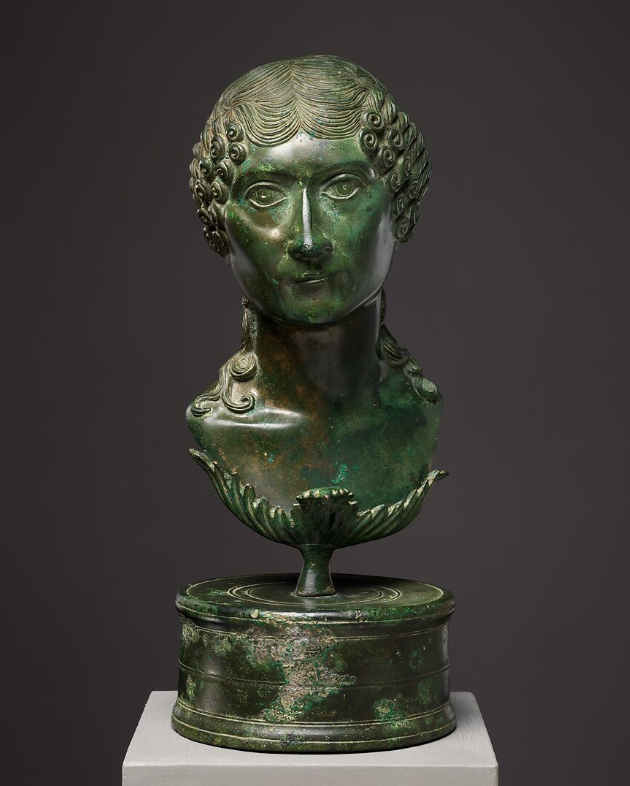
But fashions change, and Livia’s gently, neatly wavy coiffure could not last forever. Not when women of the imperial family became less self-consciously exemplary in their morals than Livia had tended to be (at least when she was in public). Also, artistic trends will generally develop, evolve and/or degenerate over time, except in the most stable, rigidly conservative cultures. Artistic and moral developments alike in the post-Augustan era may both be seen in portrait busts of Agrippina the Younger (AD 15–59), the niece and fourth wife of the Emperor Claudius, and the mother of the Emperor Nero, who appears to have had her murdered.
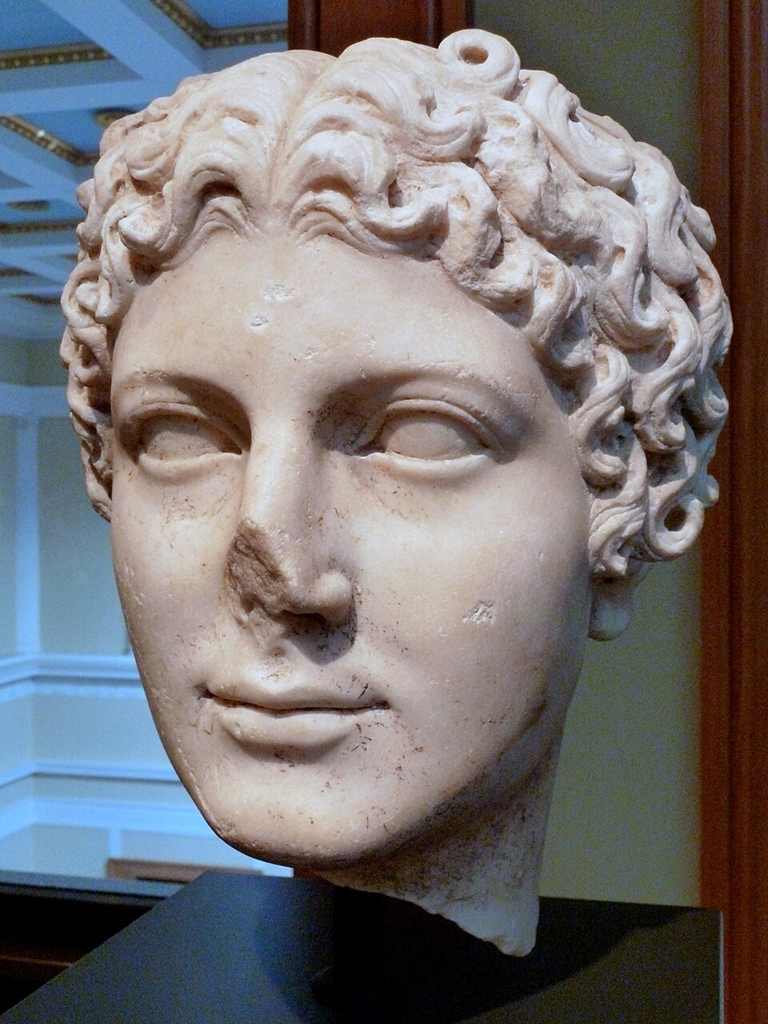
The head of Agrippina on display at the Getty Roman Villa in Los Angeles perhaps demonstrates how artists were growing tired of decorum, restraint and Augustan convention. The sculptor seems more interested in Agrippina’s hair than her face, for whatever reason. He has also tried to find a middle way between idealism and naturalism, and although the final compromise is not necessarily a happy one, the result is interesting – exciting, even (if only to historians of art).
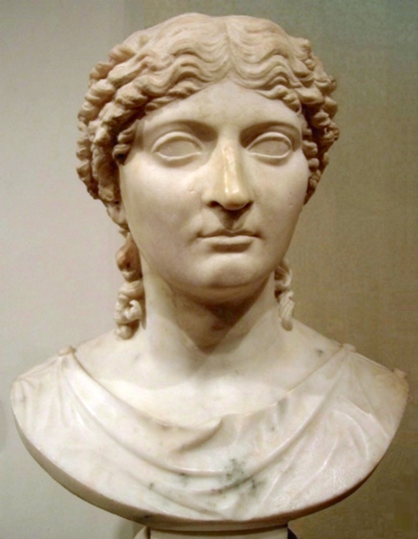
Rather like the Silver Latin poets of the period, the sculptors of the waning Julio-Claudian era seem to have grown impatient with making art that felt somehow outdated. What they were creating seemed neither to reflect not illuminate reality as they were living it in the Rome of Claudius and Nero. But they had no real forum or outlet as yet for expressing or exploring their perceptions.
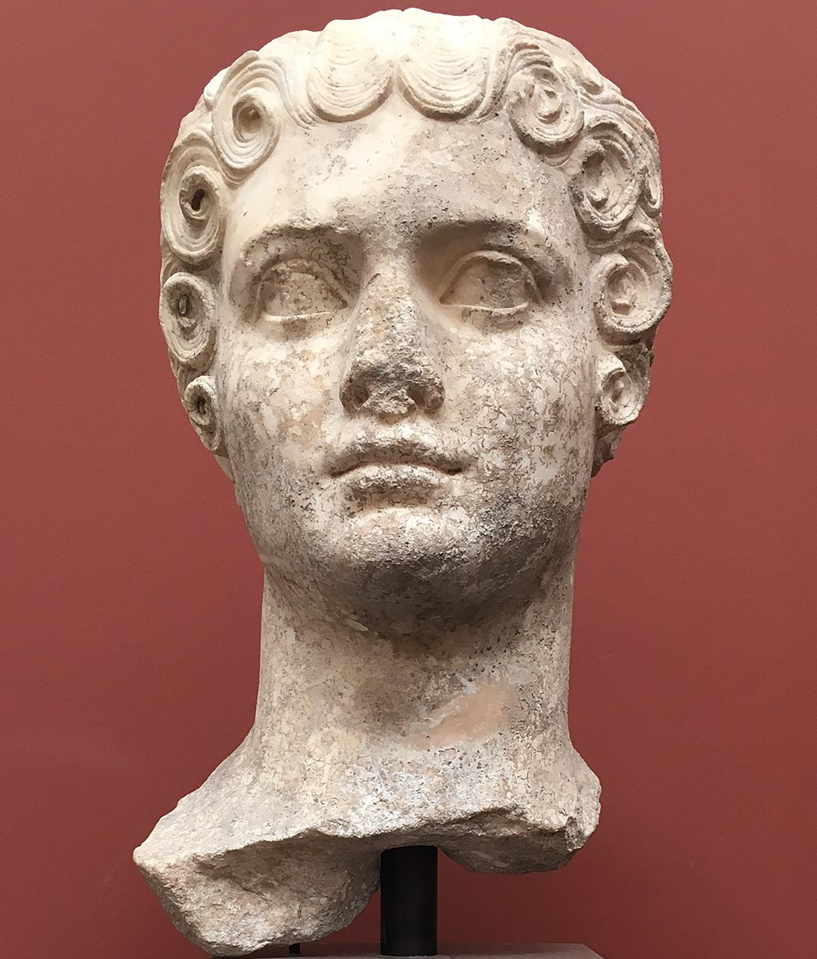
Domitian and the ‘Toupet’
The Emperor Domitian reigned from AD 81 to 96. He seems to have been the first Roman emperor to write a treatise on hair care, and was fond of wearing wigs, because he was afflicted in middle age by baldness. It is difficult to say whether there is a direct connection between his sensitivity about his own catastrophic hair loss and the tendency throughout his reign for high-society women to be depicted with ‘toupets’, and other seemingly artificial extensions.
Only two female subjects of Flavian-era portrait busts have been positively identified: Julia Flavia (AD 63–91), known as Julia Titi, and Domitia Longina (AD c.50/5–126/30). Julia Flavia was Domitian’s niece, and perhaps also his mistress; Domitia was his wife, and seems to have been implicated in his assassination. Both women feature on imperial coins; this has enabled their likenesses to be confirmed with a reasonable degree of certainty (although some art historians seem over-confident in identifying certain busts as portraits of these women).
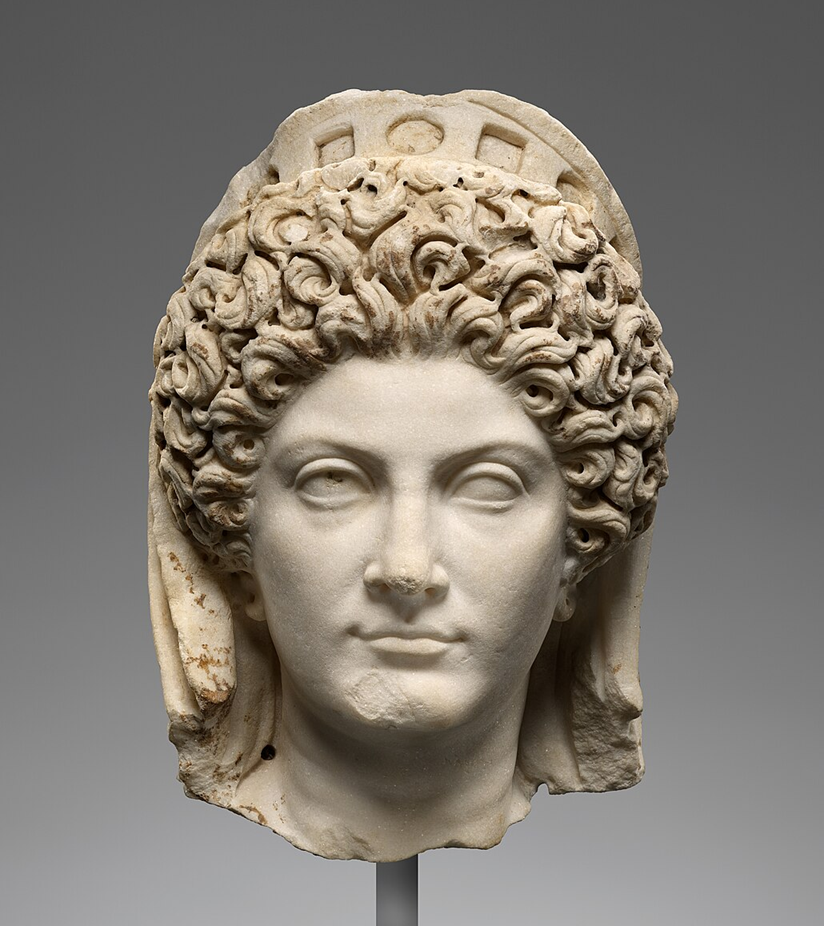
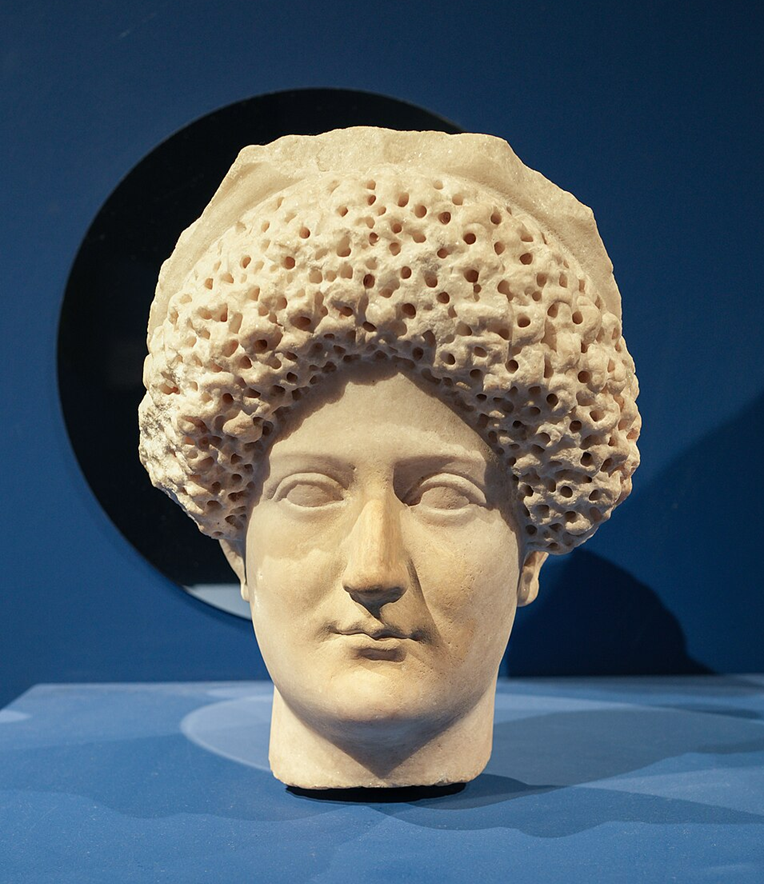
A rare gilded bronze head that was unearthed in 1826 and is now in display at the Santa Giulia Museum in Brescia appears to depict Domitia with one of her familiar hairstyles. This coiffure is daringly extravagant by Augustan standards, although some women in the Trajanic and Hadrianic eras would have elaborately braided hairdos and sponge-like crests and arrangements of ringlets in so many layers that they almost appear to have wedding cakes on their heads. Around three dozen female portrait busts survive from the 2nd century AD in which the hair was sculpted separately to be fitted atop the subject’s head like a wig.
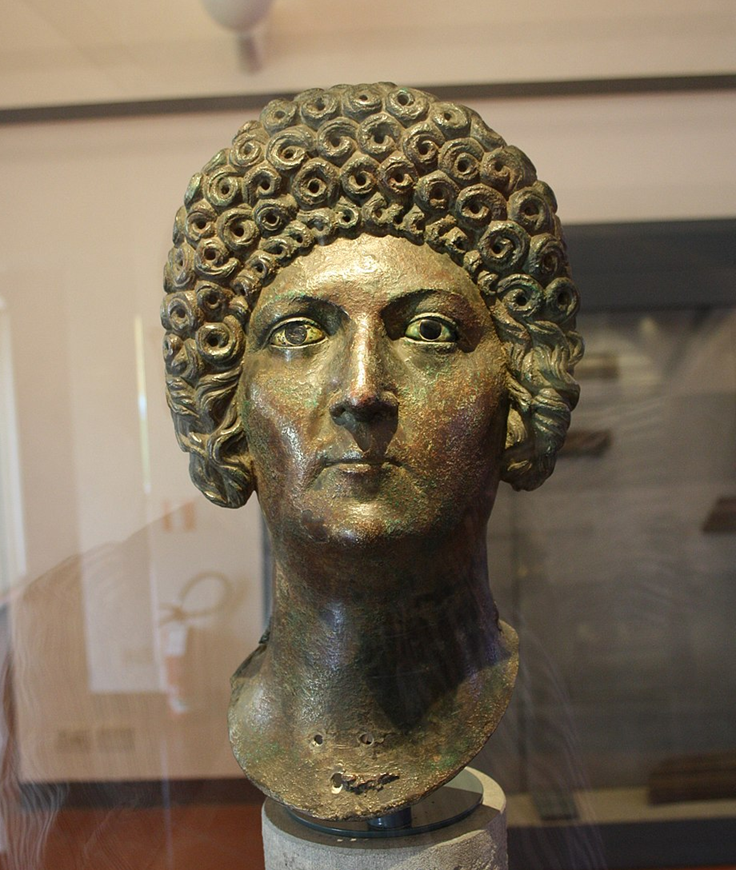
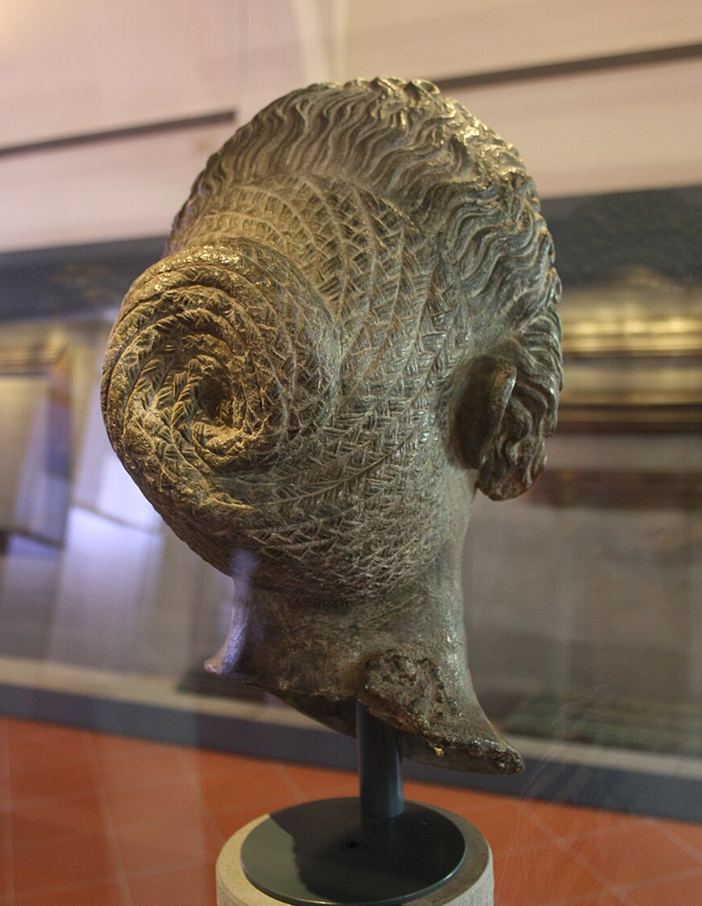
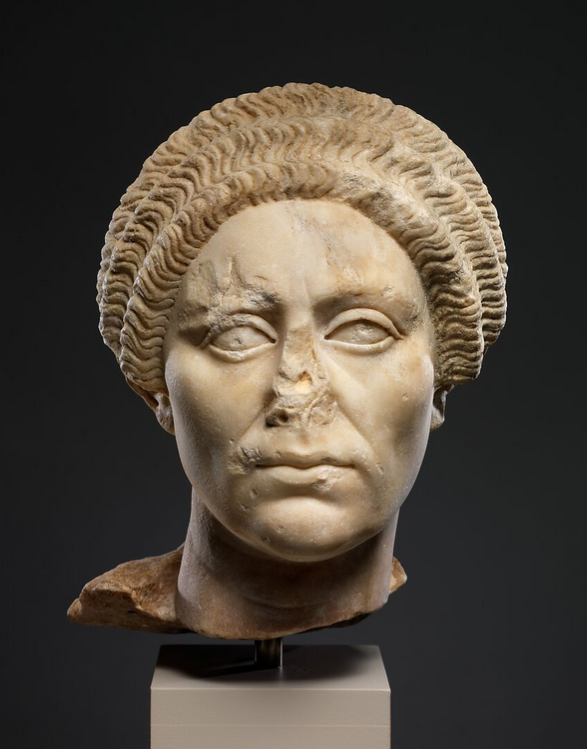
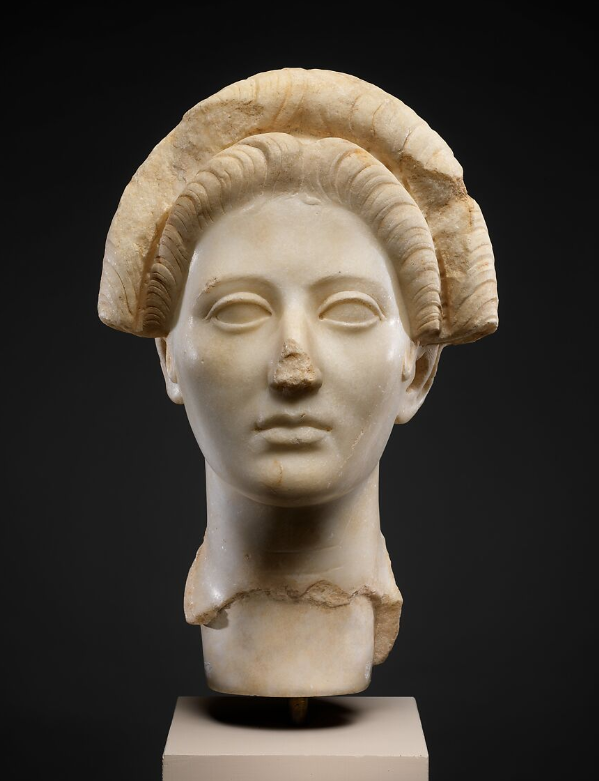
The great museums of the world are filled with relatively modest domestic and provincial sculptures of women that demonstrate just how far the ‘toupet’ spread beyond the imperial family. It took time, effort, leisure and at least one reasonably competent hairdresser to enable women to look this silly in public, and so it inevitably became a sign of power and high social standing.

Decline and Fall of the Marble Wig
The Emperor Trajan’s sister Ulpia Marciana (AD 48–112/14) had perhaps the most eccentric hairstyle of any Roman matron: she looks vaguely like an Australian frilled lizard trying to ward off predators.
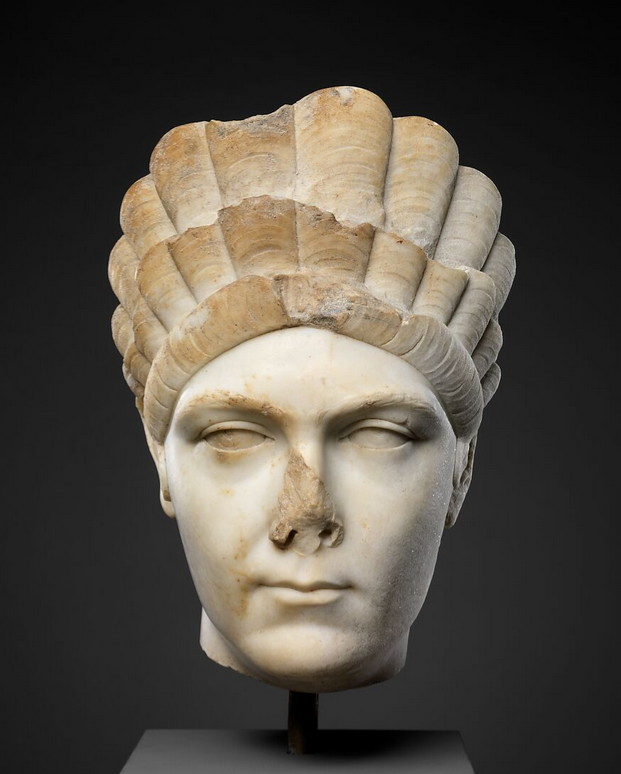
One of her few competitors is her daughter, Trajan’s niece Salonia Matidia (AD 68–119), whose hair was almost as strange.
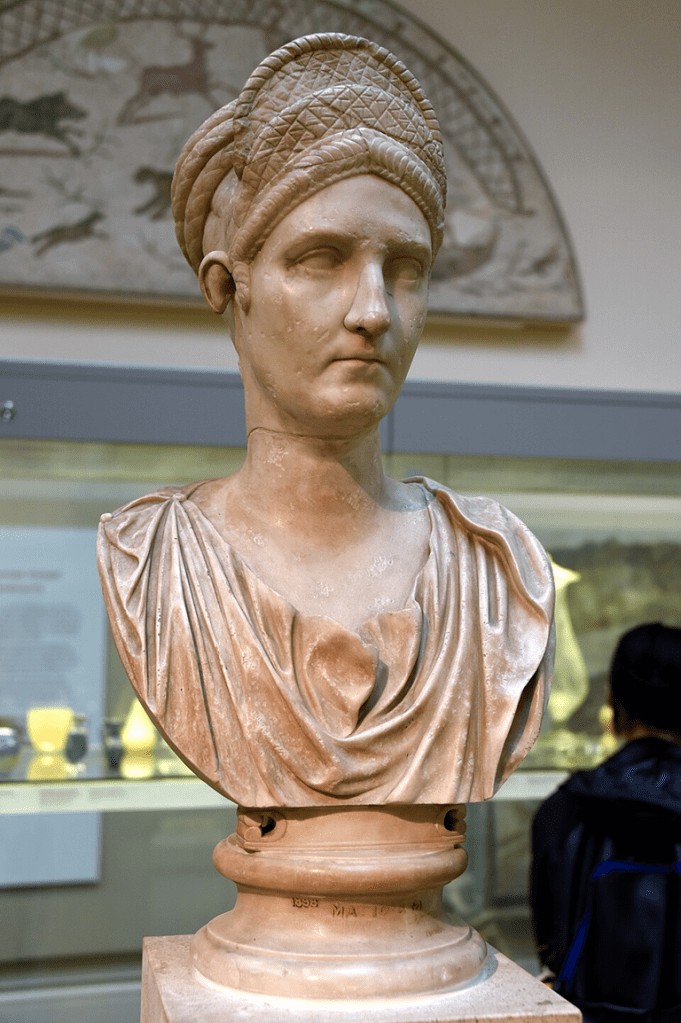
But after the era of Trajan and Hadrian, the fashion for elaborate coiffures appears to have faded. Severity perhaps began to reassert itself in Roman high society under the influence of Trajan’s wife Plotina, who died in 122. By the standards of Ulpia Marciana and Salonia Matidia her hairstyle was almost a return to the grandmotherly simplicity of the Empress Livia’s wavy coiffure.
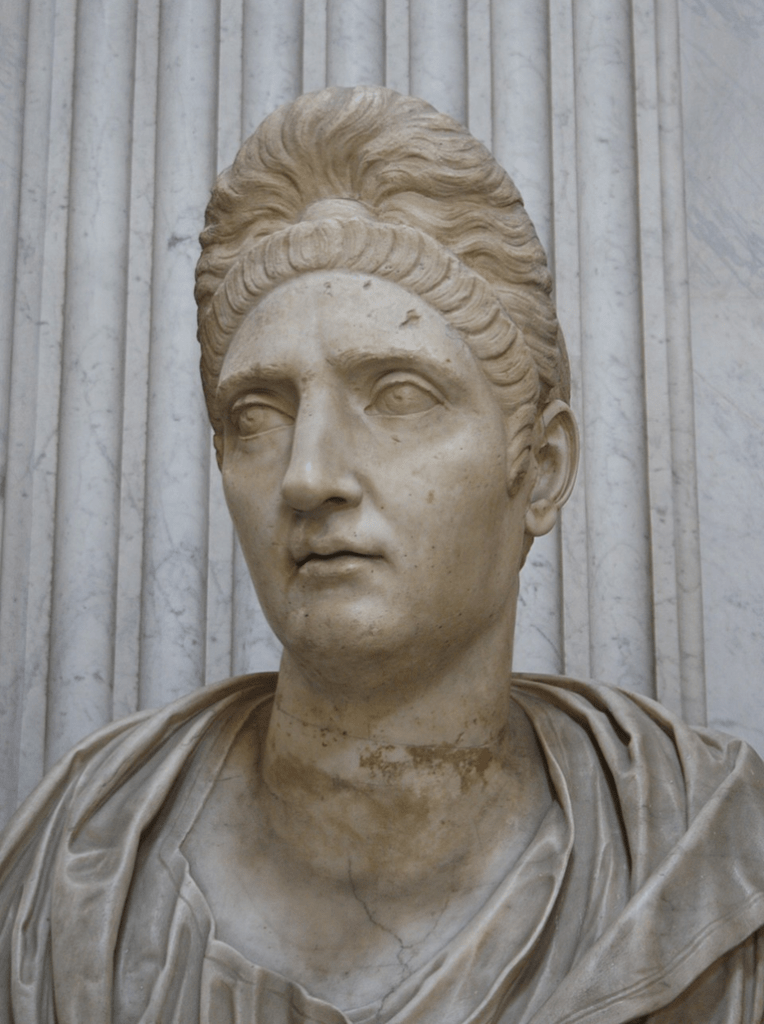
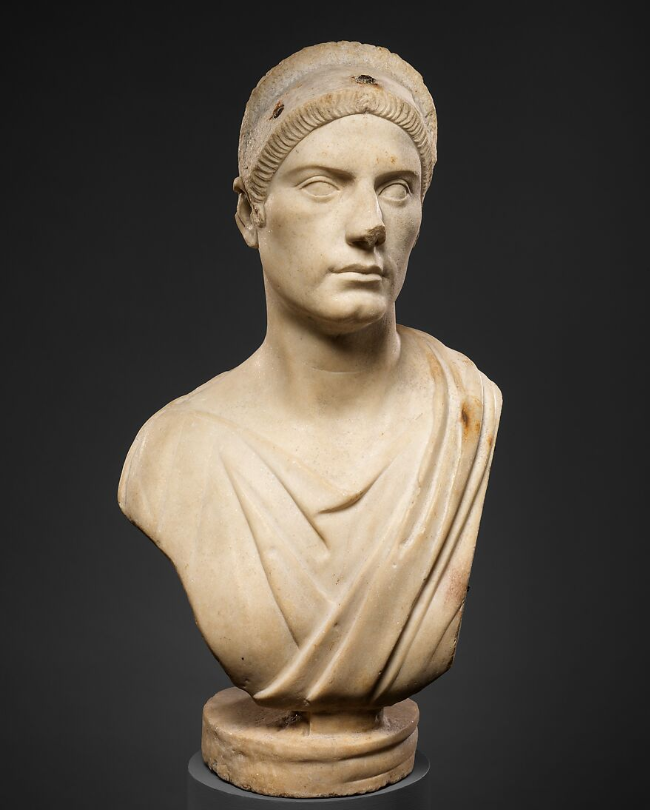
The real return to Augustan standards perhaps began with Vibia Sabina (AD 83–136/7), wife (and second cousin once removed) of the Emperor Hadrian. There is no hint in her portraits of the sort of hair that would require hours to style and put in place.
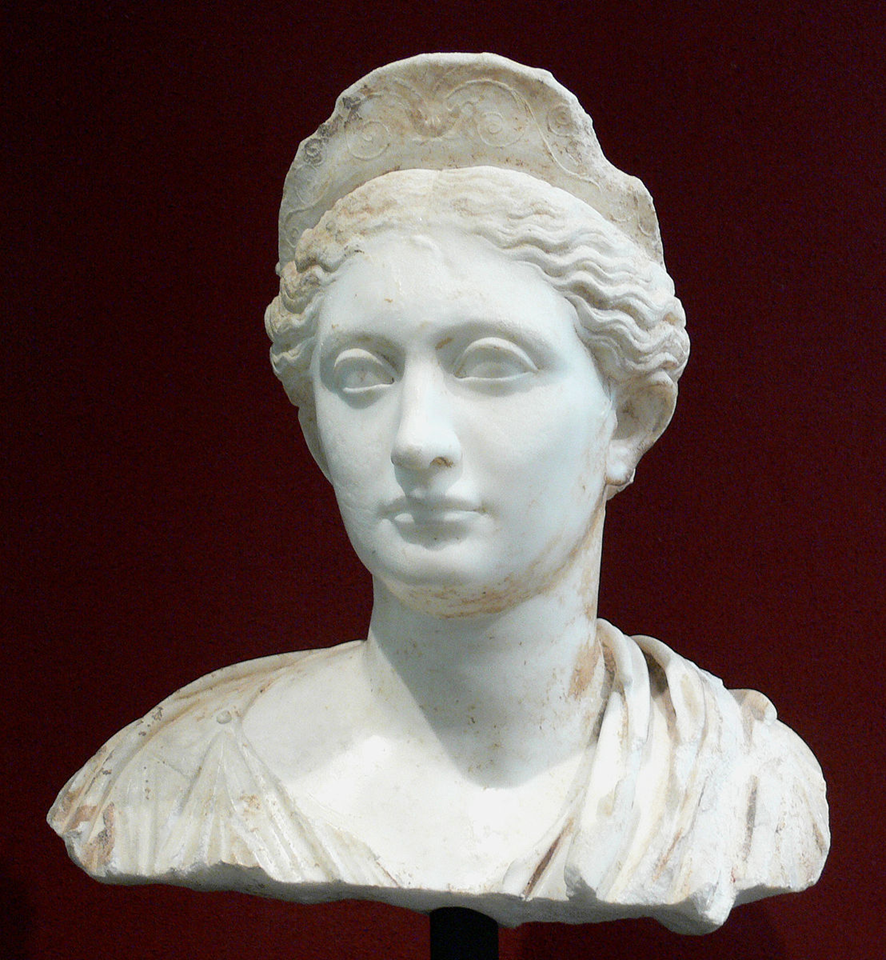
Also, Roman art was already beginning to stagnate during this period, and would begin its decline into “late-antique” art as early as the latter half of the 2nd century. Great work could still be produced, not least by the manufacturers of carved marble sarcophagi, but the general standards of sculpture were already deteriorating visibly during the reign of Marcus Aurelius (AD 161–80 ). Within a century of his death, many technical skills that could be taken for granted among Roman sculptors of the second century were already lost. The decay is saddest in imperial sculpture, of course, because there the decline cannot be denied.
Julia Domna (AD 160–217) was Empress of Rome from 193 to 211, whilst her husband Septimius Severus (145–211) reigned as Emperor. In many busts it seems impossible to tell whether she is wearing a wig or simply has been depicted by inept artists.
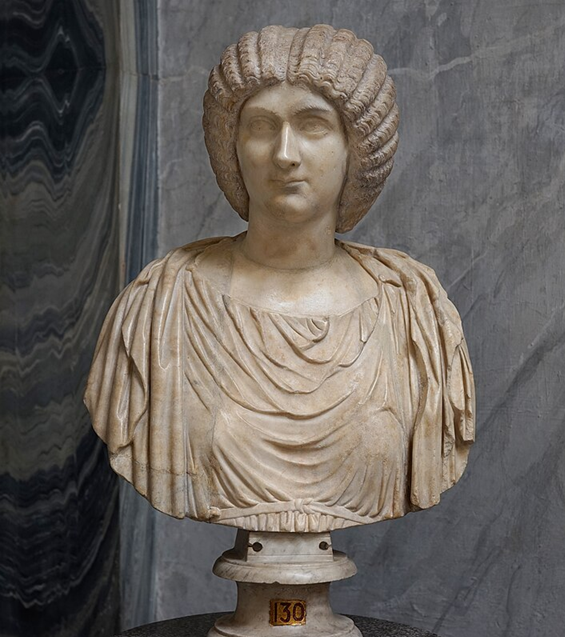
By the mid-3rd century, even the very finest sculptors seem unable to depict the difference between natural and artificial hair.
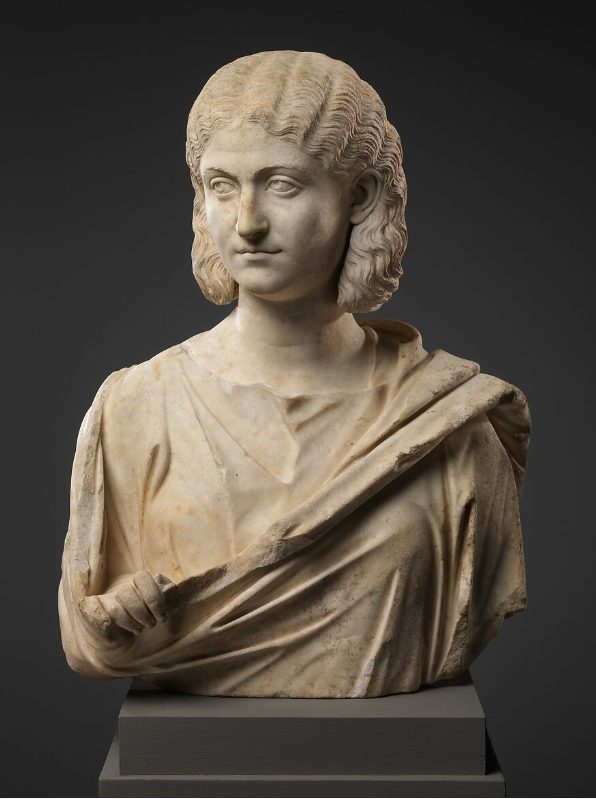
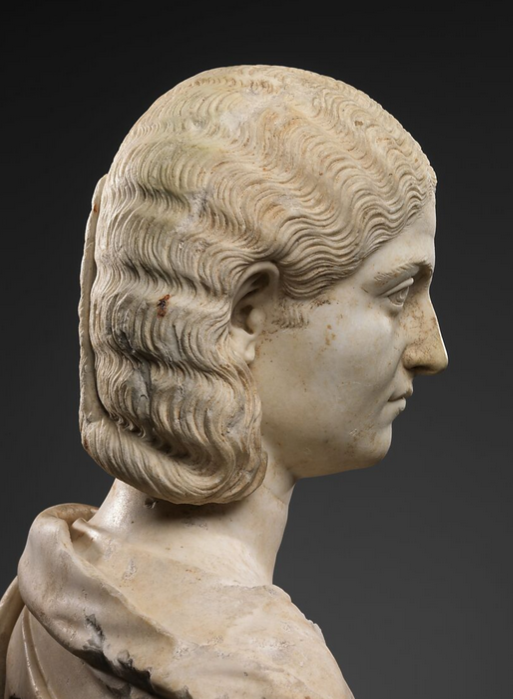
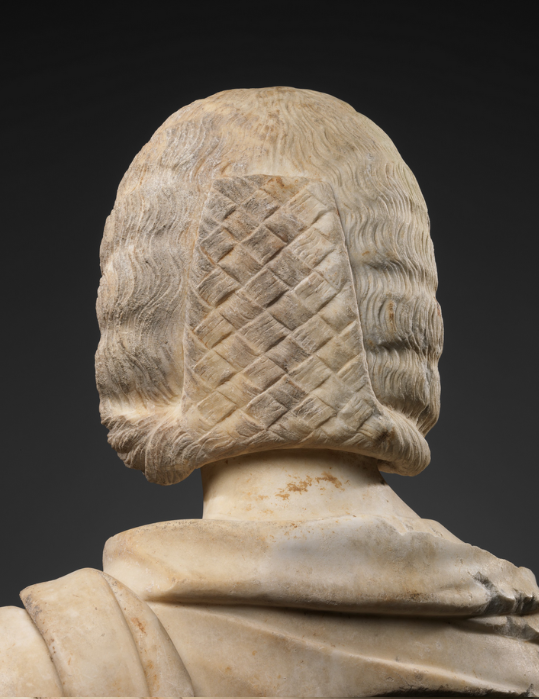
The depiction of hair in ancient portrait sculpture provides a reliable index of a given artist’s skill and artistic competence. You can trust that the subject of the Fonseca Bust really looked like that, and had a personality that the sculptor successfully captured in a way that would have been recognisable to her friends. But we live in an age where art historians and other scholars are terrified of being seen to make explicit ‘value judgments’, even about something as insignificant as a work of art – or the depiction of hair in a work of art – for reasons that cannot justly be described as ‘reasons’ since they really amount to little more than verbal manifestations of cowardice.
Why should we trust the judgment of anyone who is too chicken to assert a judgment? Why trust anyone who cannot admit that visible decay, decline and deterioration are indeed an indication of decay, decline and deterioration? Where is the evil or cruelty in recognising standards, or maintaining them?
Such general questions have a life-and-death importance, yet we should narrow our discussion here to something simpler, and ask ourselves whether we are impressed by all these Flavian, Trajan and Hadrian-era portrait busts with marble wigs. If we are, then it seems fair to ask whether the sculptors were doing the right thing in memorialising a fashion that was so coarse, crass, vulgar, and fundamentally pointless. Should we be grateful that these portrait busts help us to understand passages in Juvenal and Martial – or do they have a higher intrinsic value than that? Our age has fallen so far that we need explicit, defensible answers to such questions.

Jaspreet Singh Boparai cultivates the muses.