Nick Thomas
From 25 to 28 June this year, at the Old Fire Station theatre in Oxford, a few hundred lucky punters will be able to see the world premiere production of a double-bill show, The Myth of Medea. This consists of my own reworking of Euripides’ Medea (first staged in 431 BC), and my sequel, Medos, which follows our infanticidal sorceress into her Athenian exile, and involves her in the homecoming of Theseus and the death of Aegeus.
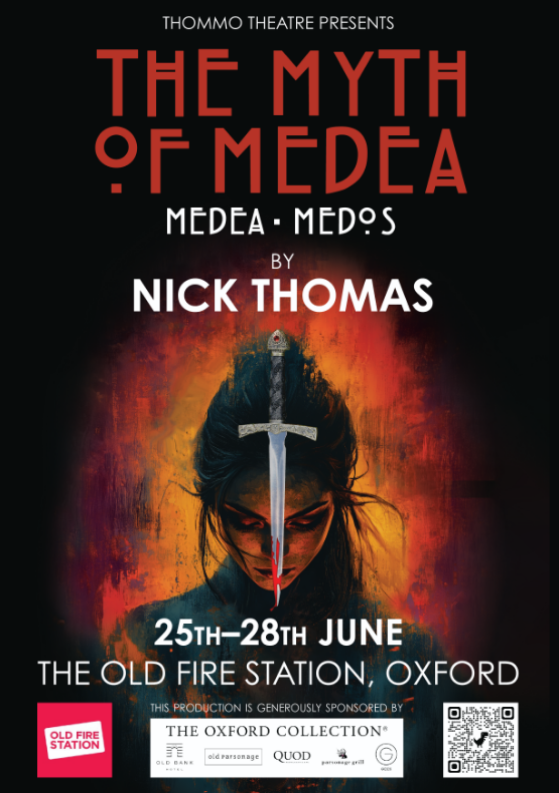
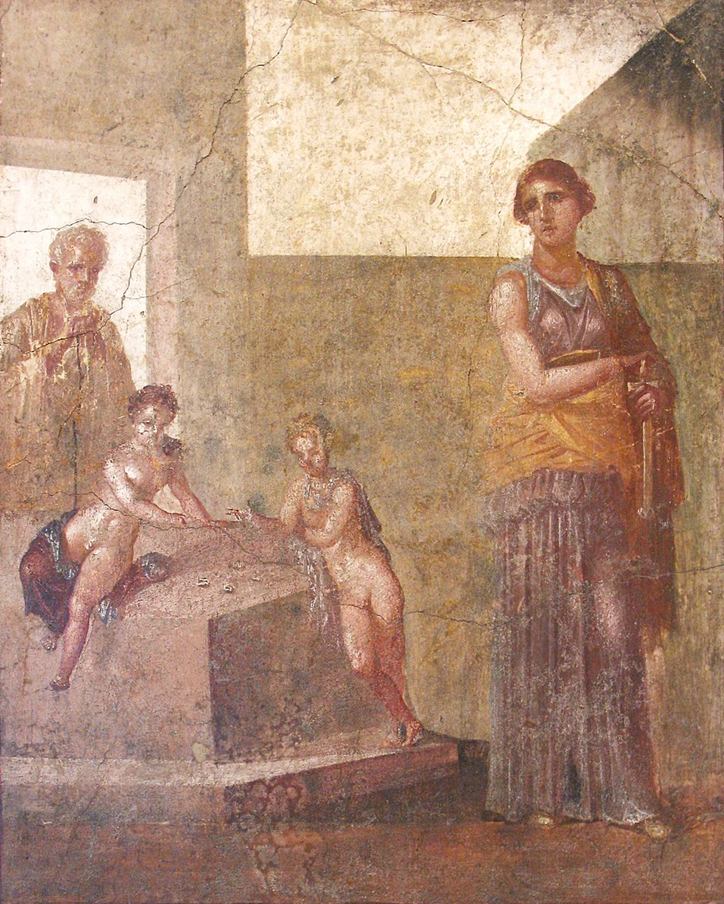
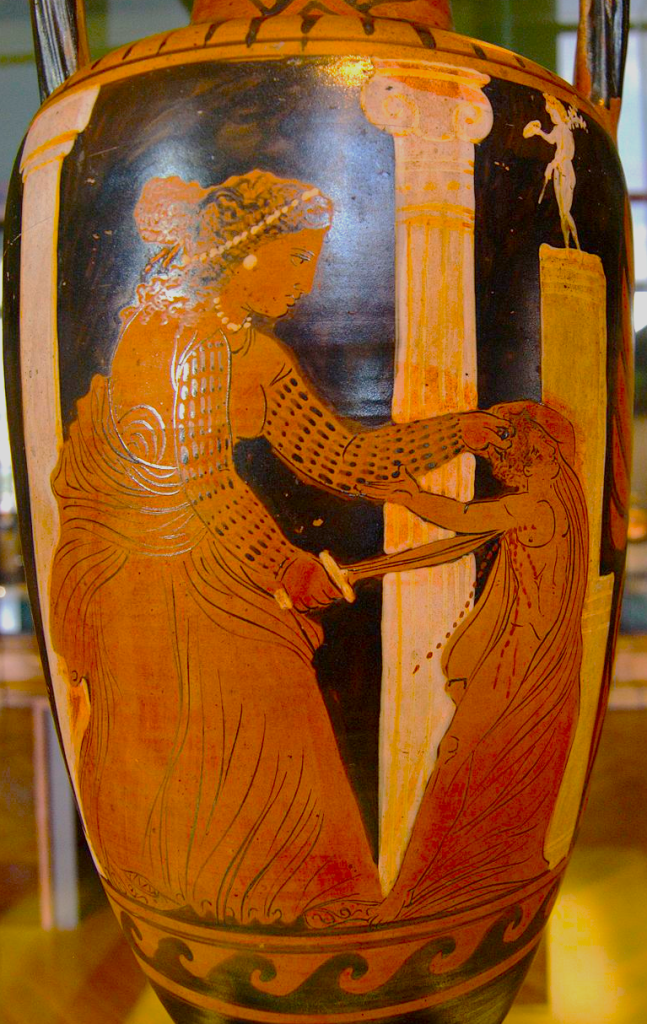
The first story will be familiar to many, even most members of the audience: ten years after his theft of the Golden Fleece with Medea, Jason betrays her by marrying the princess of Corinth. Medea effects the death of the princess and the king, then murders her own children by Jason – and gets away with it. The second story is consistent with the canon of Greek myth, but has never been dramatised before. The plays last just under an hour each, and both are written in English pentameter.
Why Pentameter?
I’m very glad you want to ask me that… iambic pentameter trips out so naturally in English that we use it by accident all the time (well, I do!). “I’d better go and make a pot of tea”; “Repatriate your manufacturing”; “I never stood a chance with Florence Pugh.” When the historian Niall Ferguson speaks about his battles in ‘woke academia’ he likes to say “They tried to cancel me, but I’m from Glasgow,” which is a line of pentameter, albeit with an unstressed final syllable, or feminine ending, as I still insist on calling it.
The formal structure of the verse is essential to the dramatic power of Attic tragedy, and it seems an appropriate genuflection to the writers who invented modern western drama, two and a half thousand years ago, to use dramatic verse when adapting their work for the present day. Besides, the discipline of writing in metre can actually generate poetic imagery. It can also tempt a writer to fill a line with needless words (Samuel Johnson came up with some shockers that way). But consider this, from Richard II:
Not all the water in the rough rude sea
Can wash the balm from an anointed king.
“Rough” and “rude” are redundant to the sense of the couplet, but Shakespeare needed that extra foot in the line, and so stumbled on a striking image with some rich alliteration to boot. A missing beat is an opportunity to dazzle, not just a hole to be filled.

Pentameter isn’t a problem for my actors, all of whom have done their share of Shakespeare, and know how to bury the metre in the sense to stop it coming out rumty-tumty. The only difficulty arises when they’re still in the process of learning their lines, and the director – especially when he’s also the writer – feels like a precious ass for pointing out that it’s “on” not “upon”, or “into” not “to”. In a prose work these inaccuracies would be negligible, but when the metre informs the rhythm of the lines, and the rhythm informs their sense, getting it word perfect really matters. The best way around this is to get the actors to practise their lines with someone who will pick them up on every tiny mistake – preferably someone they won’t want to hit for doing it.
An unexpected problem arose from the fact that my actors were all educated in different places at different times – we have an age range spanning 60 years – and so learnt different conventions governing the pronunciation of Ancient Greek names. But we have to standardise, so we use the following warm-up exercise before rehearsal:
MEH – DAY – A!
EEG – USE!
THEESS – USE!
CALC – EYE – OH – PAY!
CRAY – OWN!
Reassuringly for me, our youngest actor, playing Medos, goes to my old school, where classical RP seems not to have changed in 50 years.

Why Rewrite Medea?
This project began 25 years ago, when I’d written the book and lyrics for a musical, and then had to watch an actress with startling looks and stage presence being scandalously underused in a bit of rom-com froth. Any playwright worth his salt loves writing strong female characters, so I wondered what I could come up with that would do her talents justice. I settled on Medea, which I’d had to translate for Greek ‘O’ Level many years earlier. An hour in the library established that my schoolboy Greek was still good enough to make sense of the differences between translations, so that I would be able to produce my own poetic ‘rendering’ on the back of other people’s scholarship; but it wasn’t long before I got interested in psychological possibilities that Euripides had not explored, and started writing my own play.
This was hardly audacious. Seneca the Younger produced his own version in the 1st century AD, and the last 400 years have seen at least another eight, as well as ten operas. My effort aims to be one of the more respectful, in that I’ve stuck pretty closely to Euripides’ sequence of scenes, and retained much of his proto-feminist subtext. But there are structural and dramatic differences.
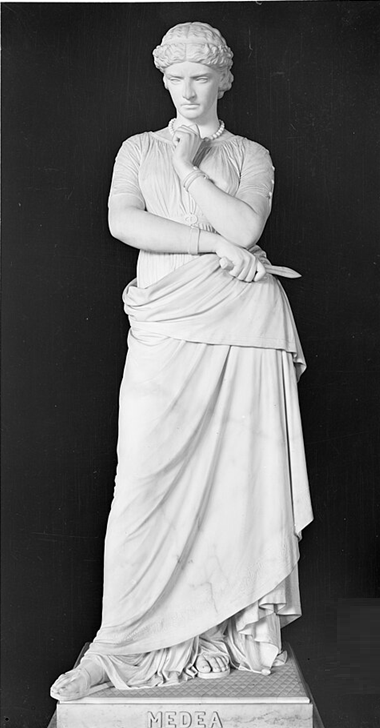
Early on I decided to conflate the Nurse, the Tutor, and the Messenger into a beefed-up Nurse with more depth to her character and a bigger share of the lines. More importantly, my Medea is helped on her way to insanity by getting it into her head that the children are not really hers, having been conceived in lust for the young princess, not for her:
Not mine, those pale invaders borne by me,
Stained with my blood, but bearing in their veins
The powdered rock of monuments. So white
There’s hardly any life to kill. That’s why
The Greeks bury their dead – statues don’t burn!
And whereas, in Euripides, Medea wavers back and forth in her resolve, sometimes almost persuaded by the Chorus of women, my Medea steadily paints herself into a logical corner, twisting every appeal to sense and piety from Chorus into another reason to go through with her plan.

But she still gets away with it, so what then? Many years after the first play had been warmly received in Oxford, I dusted off my Lemprière (The Classical Dictionary) and my Apollodorus (The Library of Greek Myth), and found there was plenty of material there for a sequel. So here we are.
As it happens, Medea is back on the GCSE syllabus for next year, and after our matinée performance on Saturday 28 June we’ll be doing a Q&A for school parties, with free snacks. It could be the first full matinée any of us has ever seen.

Who is Chorus?
It’s not unusual in these adaptations to use a single voice as Chorus, especially on a small stage where fifteen would be a tight fit, and mine is a single male citizen rather than a mob of Corinthian women. But this is not just to save space and money; it also pits the self-conscious rationalism of the Hellenic man against the wild passion of the ‘barbarian’ woman, and sets up a pattern of dialogue in which the woman is always one step ahead.
Attic tragedy began with the Chorus, to whom the semi-legendary figure of Thespis added one actor, and Aeschylus another. By the end of the 5th century BC the cast had topped out at three, and the dramatic function of Chorus had become a versatile tool in the playwright’s box. The Chorus of Aeschylus’ Suppliants are embedded in the plot and drive the action; the Corinthian women of Euripides’ Medea observe in horror, try in vain to influence the plot, and voice the audience’s reaction.
In my Medea it is Chorus, at first an innocent passer-by, who is on the receiving end of the Nurse’s lamentation when the play opens. It is also his first disturbing encounter with a Colchian woman. But she’s just the warm-up act, and soon he’s arguing with a famous magician who’s wild with fury, and witnessing her encounters with the errant husband, then with Creon, the doomed king of Corinth, and then with King Aegeus of Athens. Anyone with any sense, of course, would make an excuse and bolt for cover at the first sign of a domestic row conducted in public, but Chorus stays, representing the thoughts and the voyeuristic fascination of the audience. He stays to watch because we do – or is it the other way round?
In the second play I decided to push this ambiguity further. Medea and Medos, her son by Aegeus, have been thrown out of Athens by Theseus, the crown prince. But Aegeus knows he has broken an oath by allowing this, and fears the gods will punish him by killing his son while he’s off slaying the Minotaur etc., and wants her back. Chorus is his agent, and the action opens when he finds her. She senses his presence behind her, but looks out at the audience to say: “What are you doing here?”

So the dialogue between Medea and Chorus resumes, with him still simultaneously the voice of our thoughts and her conscience, and an observer who can’t intervene, still struggling to understand her nature. But as the link between us and a story that only picks up again because we’re watching it, he raises questions about time and providence that inform the story itself.
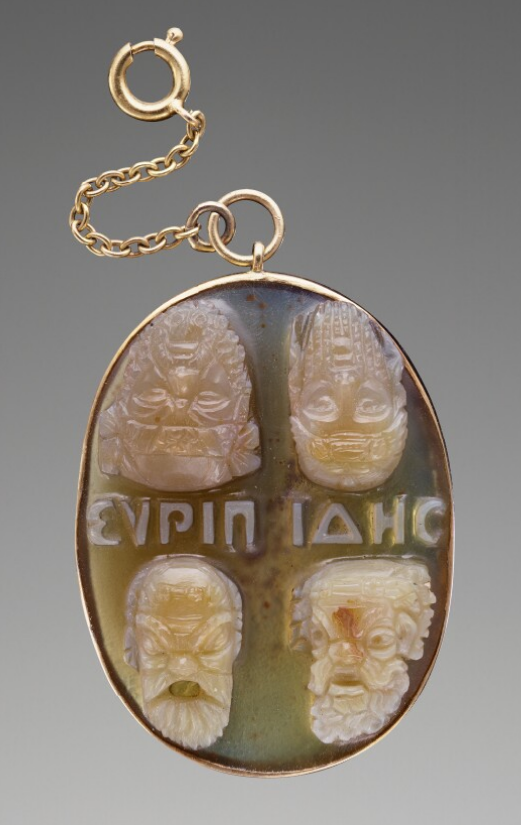
What is Prophecy?
Medea is not, strictly speaking, a prophetess. At her most innocent she is a helper, often depicted as a high priestess of Hecate. Even ‘sorceress’ is a rather overblown, superstitious term for someone who is actually a pharmakeia, a practitioner of medicinal magic. But then, if you can predict the effect your medicine will have, are you not seeing into the future? And have you not, then, altered the future with your medicine?
Mythology is full of strong, heroic men brought low by scheming women with second sight, from Agamemnon to Macbeth, and the line between seeing the future and influencing it is fine indeed. To this day people will pay clairvoyantes, hoping that generosity will result in a favourable reading, almost as though the crystal ball reveals a multiplicity of futures, like the spinning chambers of a fruit machine.
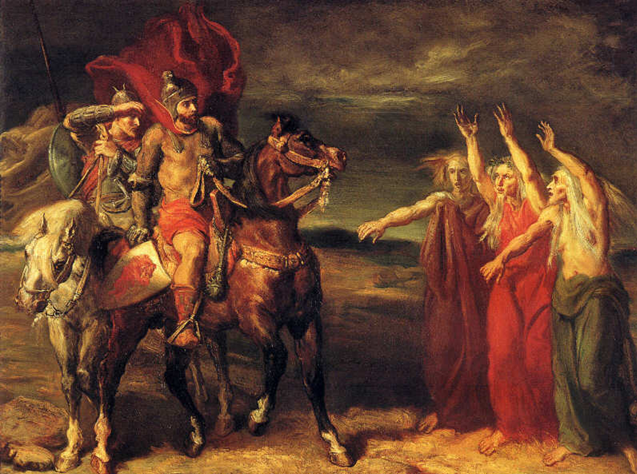
Euripides has Medea screaming curses, as a wronged woman well might, and of course his audience knew they would be fulfilled, so they are. My Chorus pursues this superstition about the power of female passion:
The future you see is the one you want,
Your vision is what makes it all come true.

But prophecy is not just the ability to see into the future, even to shape it. It is a sensitivity to a different plane of reality. In Medos, an ageing Medea is beset by characters who think she can shape a future just by imagining it, which she knows is not true. It takes blood and passion to turn a curse, and the object (or the audience) has to believe in it for it to work. But as she starts to sense the truth about Theseus’ paternity (disputed in classical sources), she remarks:
But prophecy can trace a past in stone,
As well as damn a future up for grabs.
I expect most of my audience will know what happens to Theseus after the play ends (there’s a programme note, just in case), so when Medea predicts his fate she’ll get it right, thereby turning prophecy into curse. Because they’ll know that she has, themselves having looked into a mythical future that’s about 3,200 years in the past.
Would Euripides Approve?
Our production will bear little physical resemblance to that witnessed by the Athenian audience of 431 BC. The costumes have been designed to suggest, rather than replicate antiquity; there are eight actors, and they will not be wearing masks. And although we enjoy very generous sponsorship from The Oxford Collection of hotels and restaurants, it doesn’t run to rebuilding the theatre in order to accommodate a crane supporting a chariot drawn by dragons. In my treatment these are imagined by Medea at the peak of the madness to which she has driven herself.
But Euripides himself was not shy of depicting insanity (Heracles murdering his family), or a terrifying irrational frenzy (The Bacchae), and he certainly understood practical necessity in staging. He was also adept at blurring the temporal and the timeless, at building the dramatic crescendo in the depiction of a folk tale that had already been flat on the page for centuries, and at taking liberties with his material in pursuit of the coup de théâtre. He was a restless innovator who played with and ripped up the conventions of his day, constantly nagging at quotidian security with flashes of dark transcendance. In Peter Levi’s rendering from forty years ago:
There is a vengeance touches underground,
And touches all living mankind.
The mind of the dead does not live,
Yet it has an immortal moral part
That blows into this world’s immortal air.

Nick Thomas was a freelance journalist for 35 years, mostly for The Daily Telegraph, The Catholic Herald, and The Times. His plays include Dancing Bears, Sweet Ladies, and The Queen of King’s Cross. His novel Vienna (Resource Publications, 2020) is available on Amazon. He lives in Oxford with his wife and two children.
Other Antigone articles on Medea have explored the concept of revenge and Seneca’s Stoic retelling of the myth.