Henryk Elzenberg
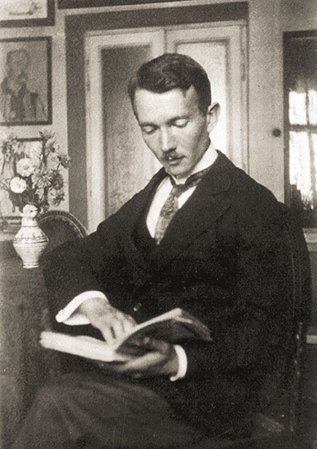
NOTE ON THE AUTHOR: Henryk Elzenberg (1887–1967) was a Polish philosopher and aphorist. He completed his schooling in Switzerland, then earned his first degree in Classical Languages and Literatures in Paris. Not only was he exceptionally proficient in Latin and Greek, he also had an excellent command of French and German, and knew English and Italian very well – not to mention Sanskrit. His range of intellectual and literary interests was vast: his doctoral dissertation examined religious sentiment in the work of the 19th-century French poet Charles Leconte de Lisle; among his major academic publications is a study of the ethics of Marcus Aurelius. Outside Poland he is best known for having taught the poet Zbigniew Herbert; at home he is celebrated as one of the most important writers of the 20thcentury. The following is the first translation into any language of one of his major essays.
Lucretius and the Religion of Materialism
Henryk Elzenberg
An essay first published in 1927, in the journal Przegląd współczesny (6, 20).
Translated and edited by Mateusz Stróżyński.
This essay was originally conceived as part of a series. I wanted to discuss some general human issues that interested me in connection with the masters in whom these issues found typical solutions. The masters were from a wide range of historical periods, from pre-Classical Greece to our own. Instead of the now-preferred formula of the so-called “progress” of mankind, I was guided by a notion of demonstrating to both myself and the reader that there exists a certain civitas aeterna [eternal city] of human thought, in which centuries are nothing. Also, that our relationship with the past is something more than inheritance; it is a kind of equal community – a certain, as it were, timeless brotherhood.
Over the course of my work, I realised my mistake: I became aware that for contemporary readers my authors are strangers, and that, by tying my cause to them, I would be defending a lost cause. I therefore abandoned my plan. But the essay about Lucretius was already very far advanced, and it would have been difficult for me to retreat. So I publish it, albeit with the sad feeling that my awareness of this strangeness [of the Classical author for the modern reader] had an impact on my work as well, and not in the best way.
I
Among the calamities that can overcome a person, and take away the meaning and moral basis of life, there is perhaps none greater than materialism. What does man want from existence? He wants moral order in the universe, the observance of a certain hierarchy of values by reality, and the existence in it of something that, in his uncertain and flawed language, he calls the spiritual element, which is to exist within himself as an independent substance. He wants eternal things, and finally – he wants God, who will materialise in himself and vouch for eternity, and spirit, and the moral order. That all these are delusions, that God is a vague symbol, that the soul is an error of empirical observation, that evil and good are conventions of man – these are not taught solely by the philosophy of materialism. However, among the doctrines of unbelief, it is the one which is most easily formulated, and sinks most deeply into souls. No wonder, then, that for many it is an archetype and a synonym of unbelief, and thus a source of severe torment.
For everyone? No, undoubtedly not; there are materialists who are satisfied. These include – apart from divine sages, who are capable of desiring everything and doing without everything – both men of impulse and the present moment, who do not look beyond the given sensation, and know nothing of such wholes as life, the world, infinite time; and those whose spiritual life has withered and become a naked instinct to know, and to whom God (if He exist), and the Good itself (if it appear incarnate), could not provide more joy or satisfaction than the empty knowledge of their non-existence would. Both of these kinds of people are, to the bottom of their souls, irreligious; I will not deal with them here.

But there are also those for whom impulse and the present moment are not everything, for whom a thing called life emerges from the dust of sensations, and for whom, out of that dust of sensations, a thing called the world is formed. Such people, embracing these things with their feelings, and not only with their cognition, make of them the objects of their concern, and make demands on them. The doctrine of materialism can only plunge such spirits into despair.
How will they try to defend themselves? Some preserve their peace of mind at the expense of their nobler nature; they deny any ideals that are too painful to cherish. Such, for example, is the attitude, which is, in a certain popular sense, called “Epicurean”. It is a means of slipping out of torment and gaining peace of mind by consciously turning one’s gaze away from the hopeless whole and focussing on the present moment and whatever is at hand to squeeze out of the moment what it can temporarily provide. It is a defeat which may even be graceful; nevertheless, it is a defeat. It is better not to look for any kind of rescue, and endure agony and torment rather than search for such a rescue.

However, is there not an attitude that would protect from both agony and defeat – that is, that would salvage peace, at least in part, and – first and foremost – salvage the ideal, in spite of unbelief? Religious need, unfortunately, also involves certain selfish strivings, such as the immortality of the individual and the awareness of divine protection, and nothing can restore these things to the materialist. But it is also about something else: the possibility of worship, and of the objects of such worship. Worship is necessary for life, and in the absence of everything else it can perhaps suffice for life; we worship God and the moral order, the spirit and the hierarchy of values, and that is enough for us to be grateful to these things for saving our lives.
So is it possible to save at least one object for worship? Then our existence will become possible. Then it will be possible not to believe in the objectivity of the spirit in the world, and to live as if we were spirits ourselves. It will be possible not to believe in the moral order, and to have our own laws and norms, and to act according to them. It will be possible to feel the hostility of the universe towards us, and in a sense even to despair, and yet recognise that for the religious man life is not just a curse, that it is worthwhile to be born and to pass through the horror of the gates of death. Wouldn’t that be one of the most beautiful triumphs available to man?

It isn’t difficult to be winged when one has Plato’s faith; but to see the world as a lump of matter, to dwell in it as if one dwelt in a graveyard, and still, even here, not to allow our wings to wither away – this is the true art. And yet there are people who have accomplished it. There are materialists who are far from satisfaction as well as from this withered existence, and who have been able to bring out of this worst of abysses a dark but inextinguishable flame, an ideal that is somber but alive. It is worth looking into such a race of men; it is worth learning how it is done, how we can “abandon all hope”,[1] but still preserve something greater than all hope – and to live on with that one thing.
II
One of the heroes of this race is the ancient poet Lucretius [c.94–55 BC]. He has everything of it; he is a typical representative of that race. As a strict follower of Democritus, he is a preacher of the purest materialism; as a great religious spirit, he is unhappy with his own philosophy. As an indefatigable and audacious soul, he does not allow himself to be knocked down by misfortune: he endures its assaults to the very end. To become acquainted with Lucretius is to become acquainted with the great drama of unbelief in its perpetual struggle for its right to have an ideal.
Lucretius’ materialism is well-known. Apart from bodies and void, there is nothing else in the world; the soul, too, is material, composed of finer particles. There are no forces, no action at a distance, no causes other than collisions of atoms and combinations of them. Even light, even magnetism, even sense-perception and, consequently, thought, are caused solely by the fact that bodies move, pushed one by the other. All purposefulness is a delusion; no gods influence the course of affairs in the universe. As in the universe, so in living organisms: mechanism prevails. The mortality of individual souls, the mortality of cosmic arrangements, successively or simultaneously arising from the dust of atoms, close down this system of clear and unambiguous concepts, in which there is neither doubt nor flaw. Materialism is obvious, crushing, relentless.

That Lucretius is not a happy materialist, however, requires some evidence, because a few features in him seem to indicate the opposite. The author of De rerum natura is, after all, an Epicurean, bound, in a manner of speaking, by his religious affiliation and thus by a cardinal imperative to be content with the world. For him, as for Epicurus, the “guide of life” is pleasure, “divine pleasure”, which never deceives.[2] On the contrary, however, it is religion, it is the belief in the rule of the gods over the world and the delusion of immortality, that gives birth to all that is worst in life. And Lucretius wrote his poem and presented in it his materialistic system precisely in order to bring salvation to humanity tormented by this madness. The world of matter gives us everything we really need; a bit of soft grass, fruit, a stream, the sky overhead: isn’t this enough for happiness? It is not fair for us to be ungrateful and – instead of using these gifts – to sulk that there are not more. But if you look closely, the poet himself does not follow his own advice or commandments.
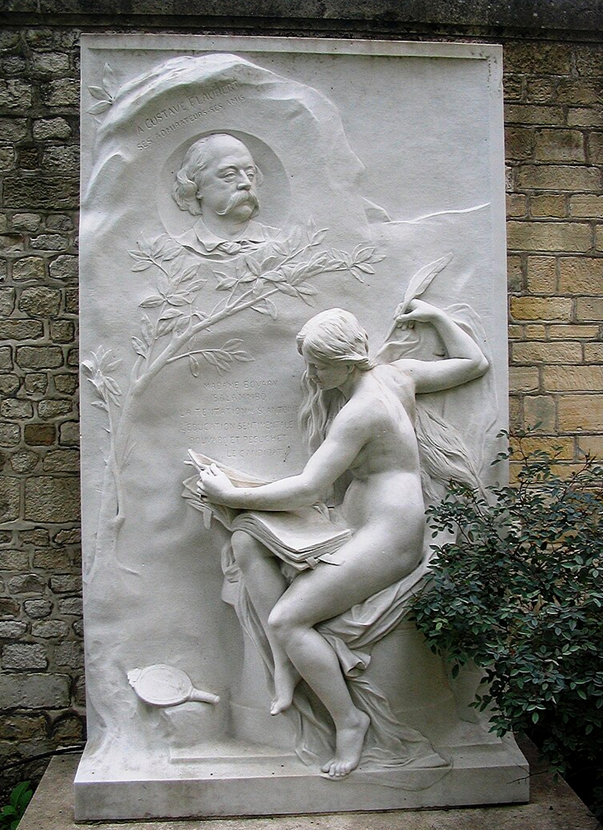
He presents perhaps a few fleeting reveries on the cheerfulness of heart – but then? Gloom, bitterness, sombreness; no, Lucretius has failed to take in the teachings he himself preaches. Deep down he is a pessimist; not without good reason has he been juxtaposed with Job, Leopardi,[3] Byron.[4] “I don’t see,” Flaubert says, “whom one could compare with him, except Byron, and Byron does not have his seriousness; nor in his sorrow is he so sincere.”[5] And Flaubert sees in him a poet of great “ancient melancholy”, deeper, in his opinion, than ours, because more unmovable and darker. And not about melancholy and sadness, but straightforwardly about the “despair” of this “terrible poet” says another master of the ideal life, who knows man profoundly, our contemporary, Unamuno.[6]
Yes, the real Lucretius is a man far from cheerful serenity. His imagination is murky, his metaphors and images are sombre. The darkness of the gathering storm is the “threatening face of black terror from on high”;[7] the atoms are the wreckage tossed over the wastes of space. And from beyond the sombre images loom even gloomier notions; the moralist is more restrained than the artist, but not more serene. With what sarcasm he speaks of the supposed “sorrows and darkness” in which the world was supposed to be plunged before “the birth of all things shone”! With what icy calmness he denies the value of these “births”! “And what was wrong for us in not being created?”[8] Life is not a blessing, and the transition from non-being to being is not a dawn of the day. Naturally, he who is once born has the will to remain in life; but this natural will is not necessarily a rational thing, nor is it necessarily morally good. Wretched is that passion of existence that condemns us only to shake in endless trepidation; wretched and contemptible are those who, “harassed by anguish”, crave that which is pure nothingness.[9]
And when one examines whence so much bitterness, it turns out that it is not in spite of, but precisely because of, the beliefs that were supposed to bring happiness. It is true that materialism has dissipated the old fears and nightmares with its truth: if the soul does not survive death, then there is no torment after death; and if the world is not governed by the gods, then neither does their capricious or fierce despotism intrude into our affairs. Hence the momentary cries of triumph. But this was only the prologue of the drama. For here we make the discovery that this nemesis of religion is himself full of the intuition of divinity, that this encomiast of the fragmentary goods of the present moment is not content either with the moment or with the fragment, but that he embraces the world as a whole with a great, restless feeling.
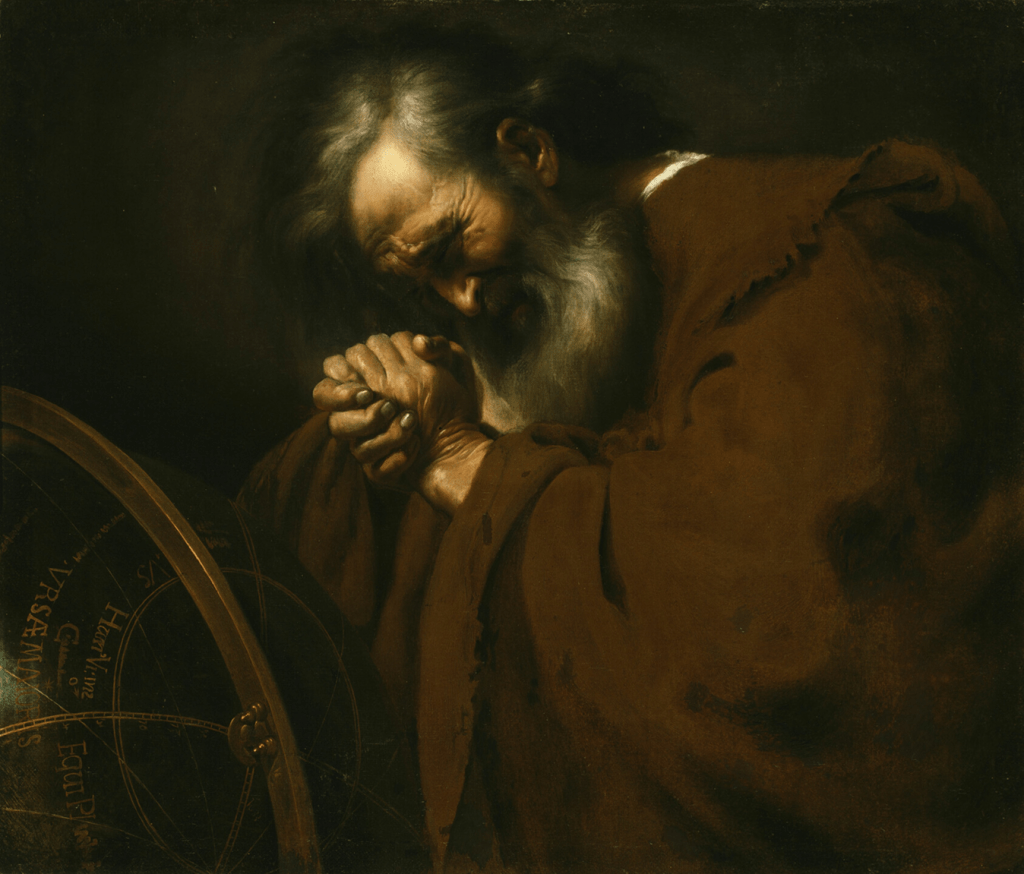
One need not be fooled by his polemical forays; if he strikes so passionately not only at specific religions, but at their very essence, it is because, in his hunger for certainty, he wants to end all hope once and for all – if it is to be merely hope. But when he has finished, and is left alone with the silent world of atoms, the evil he chased away returns in a different form. Gone was the old fear of the gods; it is not their strength that is the secret force that “grinds to dust the things of men”,[10] and seems to scoff at power and trample over all lofty aspirations. But in the end who else, if not he himself, taught us that the horror of the world does not arise from the gods, but rather that the gods arise from the horror of the world? They have disappeared, but one glance at where their mythical dwellings were reminds us that the power that breaks, tramples and taunts has not disappeared.
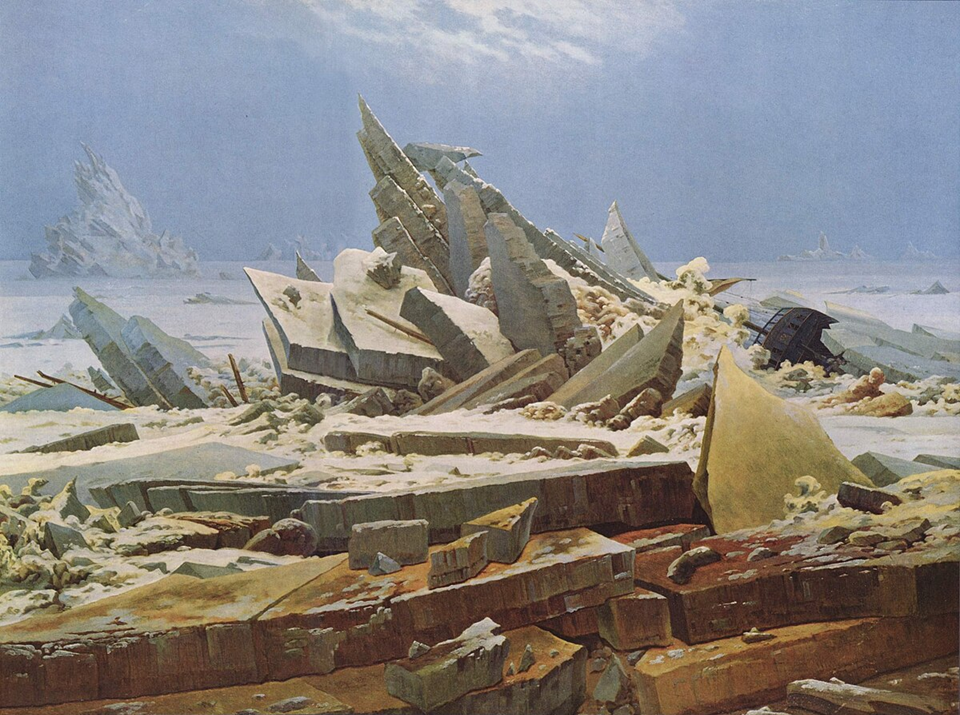
Does nature have good, nice things in it? Yes, but how much more abundant are the granaries from which she sows destruction! From her vicious tenacity there is no escape. Man is tossed to her outer limits, like a castaway by a storm, and these “shores of light” become for him a second Tartarus, where he is to undergo an immensity of suffering. No wonder, then, that a shudder of horror seizes man; no wonder that with a “mournful wailing” he greets his first hour.[11] And in a poem, again and again we hear, sounding like a bell, this one and always the same: “in vain”, nequiquam, whenever any intention, desire, or hope is being mentioned. And although Lucretius the thinker maintains a haughty calm (numquis enim miratur? – “is anyone surprised by this?” – he asks in the face of the most terrible catastrophes),[12] he cannot restrain himself; in the famous, twice-recurring verses, which resound loudly above his sober arguments, he speaks about the culpa, “guilt”, of nature.
And we did not even mention what is expressed by means inaccessible to the translator: sound and rhythm, imagery, metaphor, syntactical construction. We have not tried to convey either the cold fierceness beating from this culpa in its rigid setting of unapologetically logical phrases, or the dark tone of his words about the “mournful wailing” of an infant, or the aggrandising power of a certain terrible instance of immensi, in the paragraph speaking about the amount of evil in the world, or, that final vivunt, drawn hard towards the end of the period like a string of a bow and shot in the face of the cowards who are afraid to leave life. And only all of this completes the picture as it really is. Lucretian pessimism conceptually dares only short, though robust, formulas; the rest of its intensity and force must be read from his style.

III
Lucretius has not trodden any of those paths of supposed wisdom where, along with suffering, we get rid of the ideal. Despite his advice to enjoy worldly goods, there is not a trace in him of some savoring of the present moment, tricked out of pessimism, while the Horatian dum licet [“while it is allowed”] has in him,[13] in advance, a bitter lampoonist and ironist. And he hasn’t given in to despair either: he has his religion, and with it his refuge. The only question is whether the path along which he achieves his goal is possible for other people.
For there are different paths here. Basically two, because in the face of the war between nature and the human spirit, the ultimate refuge can be sought either on one side or the other of this great divide: on the side of nature, or on the side of man. The natural human inclination is to seek it on the side of man. Natural, because it simultaneously satisfies in us our other, more selfish needs: our pride and lust for prominence. Weaker than the enemy, we become, instead, superior to him. We: that is, our thought, our ability to create, our power to break out from under the rule of instinct – in a word, our “spirit” (not in the sense of a substantive element – which we know does not exist – but in the empirical and humble sense that the philosophy of culture knows and which nothing can destroy).
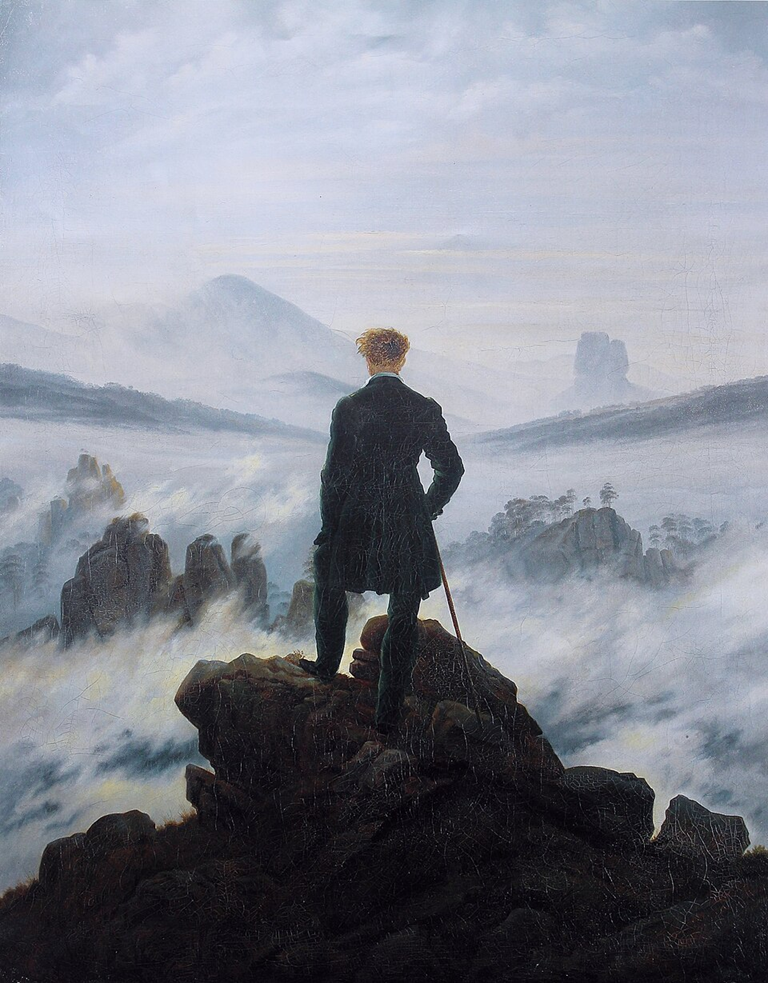
We can be lifted from doubt by every activity and every effort in which our spirit comes to the fore. When, examining the structure of the very act of cognition, we achieve not only peace of mind, but – amidst so many images reminding us of our nothingness – also the inebriation of the greatness and sublimity of our own experience. How many unabashed researchers derive from this some refreshing joy without which they could not explore! Similarly, it happens in poetry, too, that the work is a reflection of the gloom and horror of the universe, and that the act of artistic creation itself is what liberates one from the curse. Let us recall Leopardi. Why can these despairing poems, these seemingly endless laments, so completely capture the whole of us, better than many a hymn of faith? We are captured by the fact that pessimism is overcome by the will to beauty. A man completely hypnotised by the despair of existence is nevertheless a creator, an artist in love with beauty, who embodies this beauty in his works. In this lies his victory.
Now comes an understanding of the work of creative artistry and the cognitive mind as twin manifestations of the spirit that creates the meaning of life. Here we have entered the realm of the self-deification of the spirit; it is light shining over darkness, the redeemer of the evils of the world, the only reason for the existence of creation. It was this faith – speaking as yet in lay terms and not lifting yet the veil of higher revelation – that Pascal had in mind when he sketched his aphorism about the “thinking reed”.[14] No less famous today is the maxim with which the final reckoning between man and the world was closed by Henri Poincaré in The Value of Science: that thought is one lightning flash between two eternities of nothingness, and that this lightning flash is everything.[15]
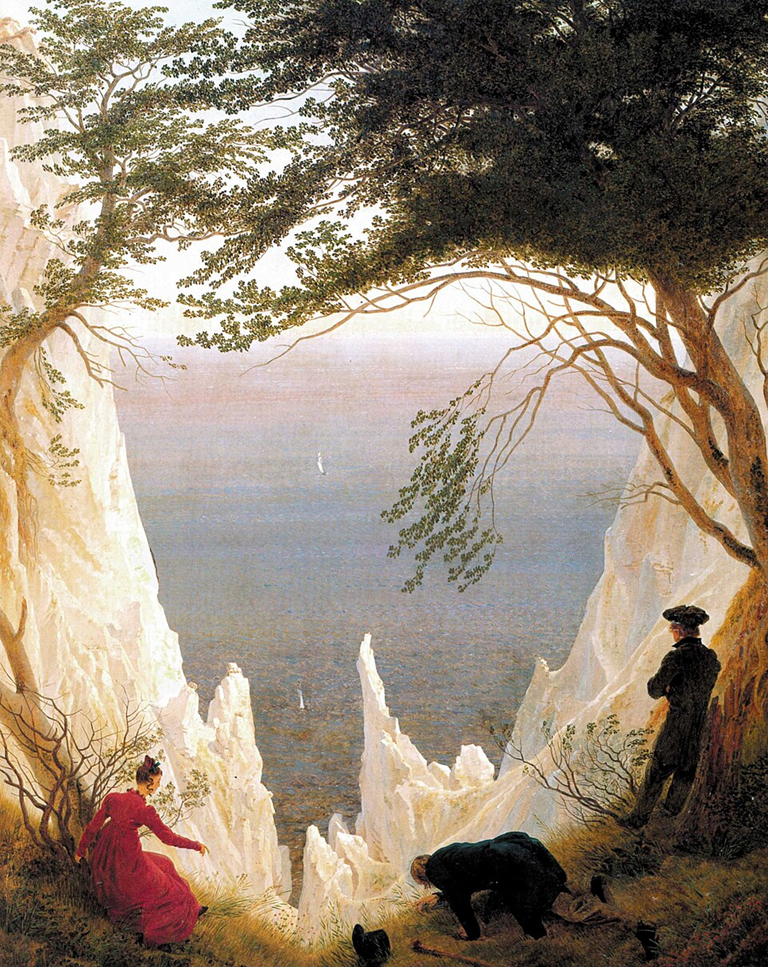
A comprehensive gospel of this belief was proclaimed by another great thinker of our time, a genius of knowledge not far from being a master in the ethical sphere as well: Russell,[16] who sees in it precisely what he did not hesitate to call “the religion of the free man”. The world is inhuman and dull, meaningless and purposeless, and after the mindless play of several aeons doomed to flow back into the nebula from which it was born. Where is the star that can be celebrated in this night and restore meaning to life? The star is thought and knowledge, judgment and creativity, the vision of goodness, holiness and beauty. Attaching us to each other with a love stronger than all instinct, these powers know how to make us stronger than nature in this most important struggle with her. Nature continually throws her entire force against the good, the sacred and the beautiful; she does everything to draw us away from them, and sets rewards for treachery, while we, unwavering in allegiance, worship them as we have always worshipped them. The realm of the spirit is like a fortress against which the overbearing enemy beats in vain with the battering rams of his might; here what nature annihilates persists. Here the reed, which breaks, learns its invincibility; here the lightning, which goes out, learns its eternity; here is the fortress that nothing can defeat.

IV
Traces of this way of thinking can also be found in Lucretius. He is filled with pride of knowledge, which is that excelsior [loftier element] of human freedom, that irrepressible “flight of the spirit” soaring untethered above earthly and otherworldly obstacles. He adores art, and that glory which radiates from beauty, and which he exalts in his great rivals with such royal grandezza [grandeur], trusting that with the “perpetual allure” of his poems he will gain it as well.[17] But since Lucretius does not complain and does not lament, he lacks that contrast which, in less tenacious spirits, makes the beauty of the poem and the creative drive of the artist so inebriating to us. Above all, none of these raptures becomes a religion, none of these stiffens into a well-carved-out religious-philosophical attitude. Lucretius does not exalt the spirit above nature, he does not try to find the value of existence in it. He seeks this value – and here is the point where his path branches off – on the opposite side, in the hostile camp of nature. It is in her, not in the spirit, that he sees qualities capable of arousing, if not the pure and unadulterated reverence given to goodness and holiness, then the enthusiasm and deification which, in their own way, sate religious hunger.
There is already a paradox in this position; a more dangerous one lies in the choice of adjectives. This dignity of nature – despite the poet’s love of the visible – is not, for him, sensual, perceptible beauty. Dreamers who forgive the deceitful coldness and heartlessness of their lover – nature – simply for her blue eyes and charming smile would seem childish to him in their exuberance. And this dignity is not, as it so often is in the ancients, the constancy of laws, the regularity of heavenly courses, the impersonal, objective reason (as it were) of nature, of which ours is a reflection. That would still be too human. It could be the life-giving power, that inexhaustible force of creation which is mentioned in the invocation to Venus and in so many ecstatic images of growth, multiplication, fertility, abundance, flourishing.
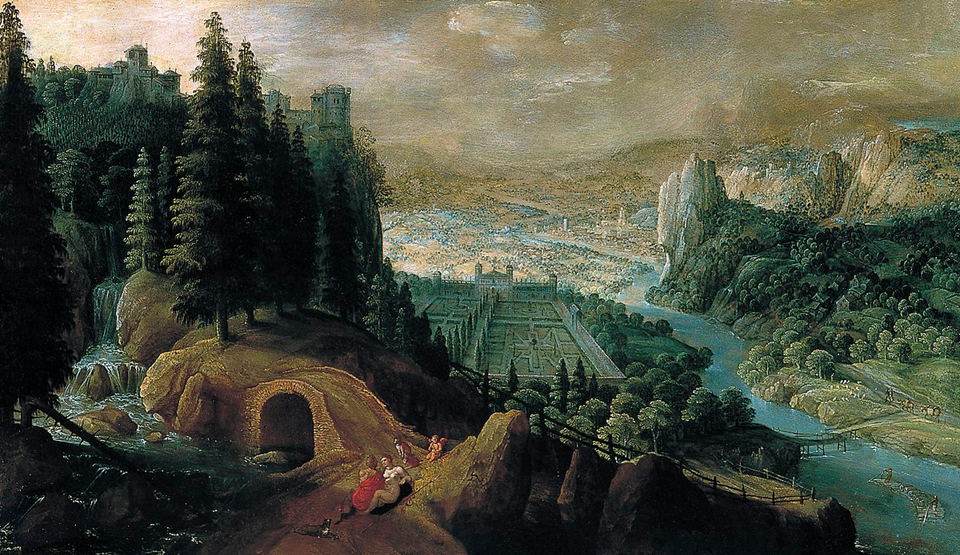
Here the emphases are already religious; in the paragraphs about Mother Earth and the symbolic Cybele,[18] the worship of fertile nature reaches a downright mystical tone. Lucretius, however, is far from that form of deification of nature to which we have been accustomed by various simple-minded followers of evolutionary philosophy. They worship nature for life, and worship life for having been finally incarnated, at the peak of development, in their own and their fellow men’s glorious existence. Lucretius does not worry about man, and sees in life-giving power only one manifestation of the all-powerful majesty of nature, which he worships even when it is alien to life, even in its deadness and immovability. Let’s call a spade a spade: he worships nature religiously – purely material nature – for her eternity, greatness and power. The world, as a whole, is eternal; secondly, it is spatial immensity; and finally, it is an invincible power: it is these three qualities that make it worthy of adoration and worship.
Demonstrating this is not that easy, since Lucretius nowhere gives a theoretical formulation of it; he never happens to say, “I worship nature because she is eternal”, or “I consider the power of nature something to be adored”. Also, he never strays into the tone of a hymn. And yet, once one has penetrated into his poem, there can be no doubt about it. Lucretius is in love with these qualities; he knows no greater delight than to immerse himself into the contemplation of them. It is with them that all the highest states of exaltation and inspiration are connected. The poet does not sing hymns, but when he touches on this subject, the simplest remark becomes a hymn; his description turns into a dithyramb, the sheer naming of things is their glorification.
There is aconstant recurrence of epithets characteristic of these, as it were, deities: aeternus, “eternal”, “everlasting”; magnus, “great” and, related to it, immensus; and finally validus, “strong”, “powerful”. These epithets are full of an almost ceremonial solemnity. Magnus in Latin is, in general, more magnificent than our “great”,[19] and yet as used by other poets it is pale and common compared to that force of conviction and powerful suggestion with which Lucretius uses it. Aeternus is used at times uncannily. In De rerum natura by “eternity” he does not mean “existence without beginning or end”, but “sublime and holy as eternity”. And to earthly and human affairs it is sometimes transferred in order to sanctify them. In this sense, exploiting the magic of rhythm masterfully, Lucretius speaks of “the eternal wound of love”[20] and “the eternal poems of Ennius”,[21] although he knows well that the poems of Ennius are not eternal, and no poems will be.
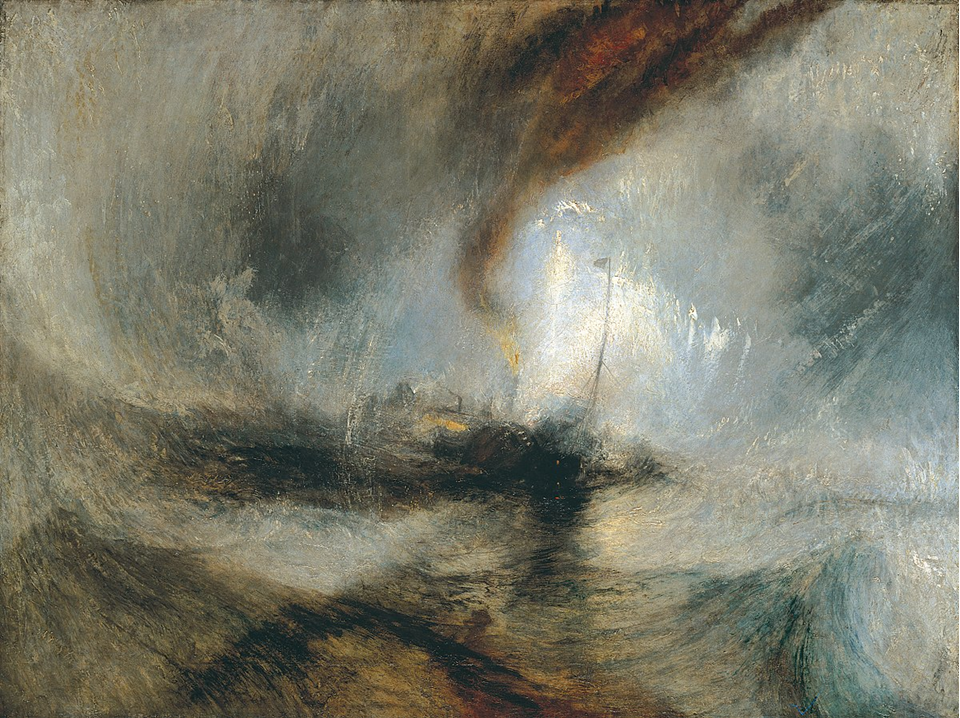
The strength and power of nature are imitated, as if from the inside, by the rhythm of the verse itself; the rhythm is rushing but heavy, as if someone had contained the rumble of rolling thunder in this hexameter. And from outside the verse, this strength and power is painted by means of descriptions: mighty winds blowing, rivers overflowing, floods tearing down bridges and houses, storms that plunge ships. The most terrifying powers, however, are the laws of nature themselves. Lucretius sees in them not so much what is most often seen in them – that is, order and harmony – but irresistible violence; the laws of existence are something against which nothing can stand. He delights in setting them before our eyes, as they break the real (or merely imaginary) desires of beings or things. He gives personality to atoms themselves so that, having ascribed to them a will, he can then slam in their faces the gate of his iron nequiquam. And when the force of necessity lets go and a peculiar freedom arises from the deviation of the atoms – which is, to our instinct, incompatible with the spirit of the system – it is presented literally as a breach, a breach forcibly made in the place where the law has “broken through” and freedom has been “snatched away” from destiny.
This orgy of unleashed power is nothing less that an orgy of immensity. Behold, “the seas spread out their boundless expanses beneath the realms of the immeasurable ether”; behold, “multitudinous thousands of lands inhabited by manifold tribes”; behold, above sea and earth, the sky where the stars roll “through the world’s immeasurable plains”.[22] And then the “walls of the world” crumble, and through the infinity of the skies, behold, in the void you can see the swirls of atoms.[23] Whichever way you turn – upward, downward, to the right, to the left – there is only one all-encompassing space without boundary or end, not contained in number or measure, impossible to embrace by thought.
This vastness is the backdrop of all events, of all even purely human images. Immediately the second line of the poem, speaking of how, through the agency of Venus, the lands and seas are populated, shows them to us as spread out “beneath the moving signs of heavens”, and when Hannibal’s incursion into Italy is mentioned, the clash of the two powers takes place not simply on the ground, but sub altis aetheris oris, “beneath the ether’s lofty trails”.[24] A puddle between the cobblestones of the street, which is “a finger deep”, is enough to reflect the celestial abyss and the distant bodies in it.[25] “The eternal stars of the universe”,[26] “the world’s widely spread plains”:[27] there are plenty of these perspectival phrases, open to the immensity of space. Literally or with variations, they are woven into the work like Homer’s formulas, but they are fuller with pathos and weight. And this constant repetition of formulas – as, indeed, of epithets – concerning a small number of things of prime importance, gives the poet’s emphasis something intensely hieratic.
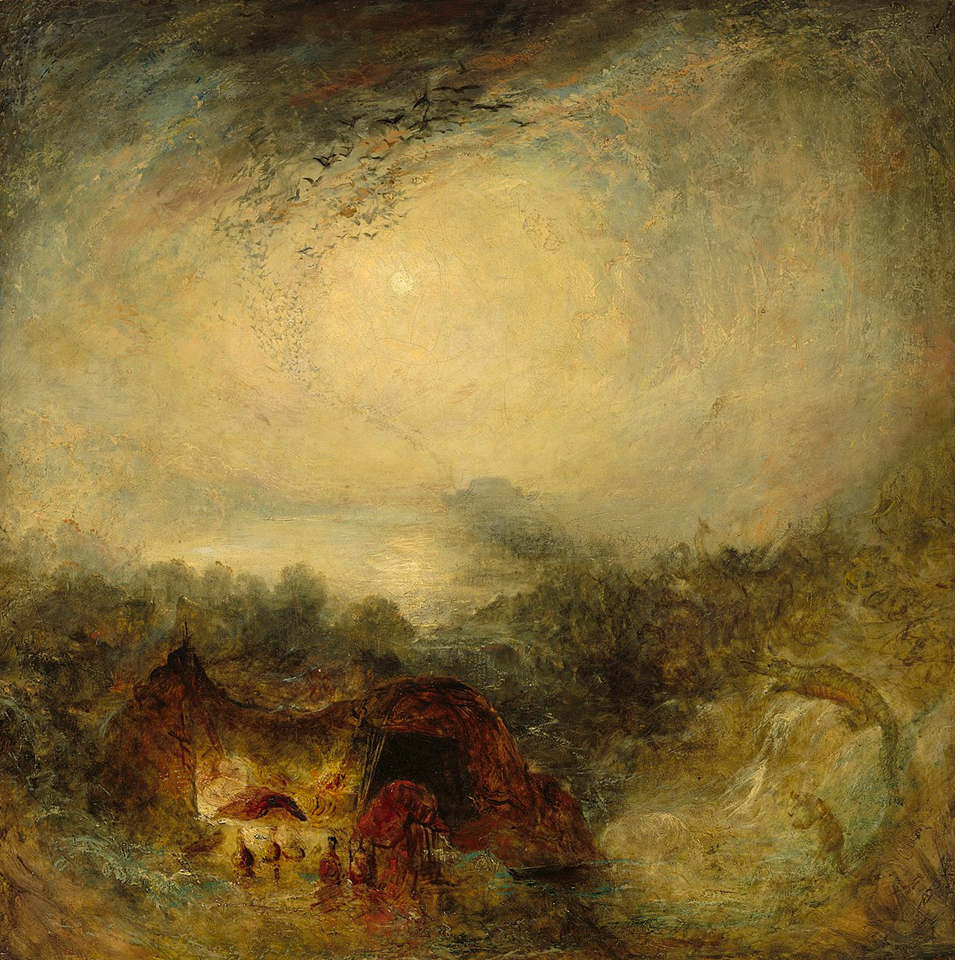
But behold, this world – eternal and great, powerful and invincible – is a world hostile to us humans. Its vastness is a desert; its eternity is death. Its force is rape perpetrated over us: not for nothing do all the greatest images depicting this force show the crushing of man. Now if a worshipper of nature wants to be consistent, he must leave the human position, and take the side of nature in the struggle between nature and man; he must unite his will with her will and consider her victories to be his own. And indeed, few, worshippers of nature seem to have drawn this consequence as Lucretius draws it. Having found the highest values on that side of the great divide, he, who knew how to find warm words about the aspirations of man, goes over to the camp of the enemy with his banners unfurled. And when victory tilts to nature’s side, instead of suffering over the defeat of man, he glorifies the violence and superiority of nature.
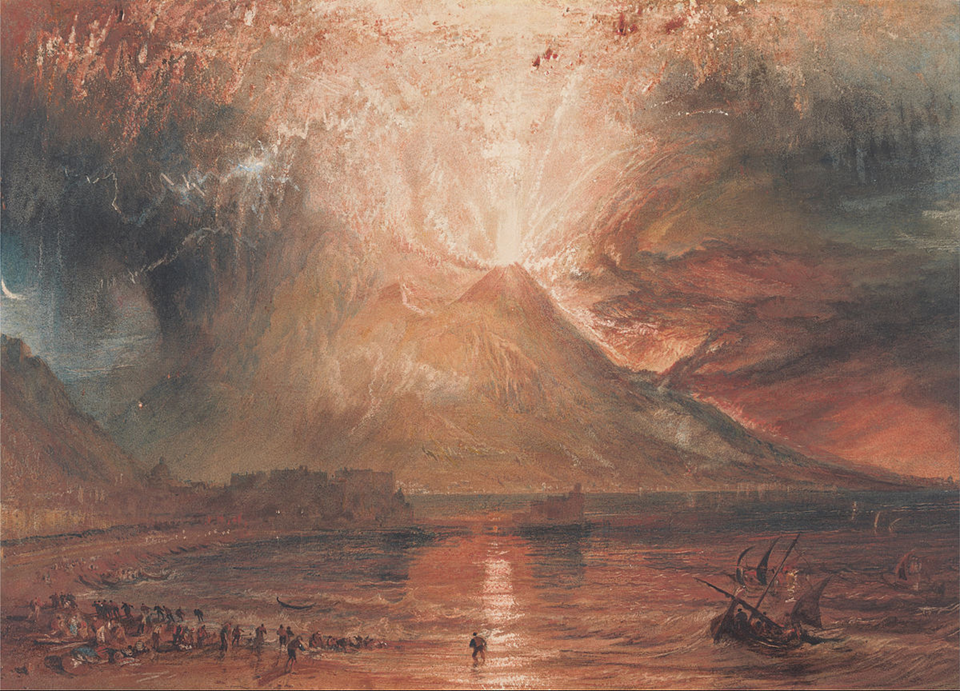
Let us listen to the sound of the word with which he always states this defeat: this nequiquam of his is more triumphant than despairing. And this triumph rings out in every description of the various acts of violence – those natural pogroms, destructions, catastrophes, where “a multitude of fortified strongholds collapse with mighty shocks, a multitude of cities are drowned in the sea, and with them their citizens.”[28] We mentioned Leopardi, whom his own countrymen have already juxtaposed against Lucretius; here we can compare them once again to state their great difference. Leopardi has pity for man, while he rages and curses at nature. In his poem Ginestra, the lyrical force at the sight of the desolation caused by volcanos is famous. In the face of the same destruction, listening to the rumble of the same collapsing houses of his fellow men, Lucretius exclaims in awe: “extraordinary was the calamity!”

When he describes the nations who with a fearful heart are listening to “what kind of upheaval this mighty effort of nature is preparing”,[29] one can feel the pride that his nature has manifested herself in such glory. It’s no different in the face of widespread destruction, when “in the likeness of volatile flames the walls of the world will burst suddenly and be scattered across immeasurable void”.[30] “The thunderous temples will collapse over the heads of the heavens, and the earth will suddenly remove itself from underfoot, and the whole of it, amidst the collapsing debris of the heavens, will depart into a vast void, so that in an instant not a single remnant will remain except for desolate space and invisible atoms.” “Look at the sea, and the earth, and the sky. Their threefold essence, O Memmius, their three bodies, three such different forms, three such huge structures, one day will plunge into destruction, and the building of the world, sustained for so many years, will collapse.”[31]
The last paragraph is the most powerful; no translation can convey that roaring fanfare of victory, which is, at the height of its momentum, the announcement of doom, thrown over to the next hexameter. Roman readers – as far as we can judge from the echoes that have reached us – considered it, perhaps, the core of the poem. This somewhat fierce tone transforms into a kind of calm ecstasy and reverie over the majesty of nature, when we are no longer talking about destruction, but about what lies beyond the threshold of perdition: the state of death, abiding in nothingness. The poetic rendering of this is that “this mortal life has been cancelled by immortal death”;[32] there is in it a kind of giving wings to eternity, a kind of soaring spiritualism, rising from the very clay of matter. Lucretius was still able to captivate and fill Flaubert with awe, because he realised his program of the perfect relation of man with the world to its ultimate end: “man will love nothingness itself, because he will feel himself a participant within it.”[33]

V
This attitude, at the end of the day, is in many respects opposed to the “religion of the free man”, and it offends the normal religious feeling a hundred times more. In the “religion of the free man” there was no inner flaw; the object of worship was truly venerable, the reverence itself was without any lesser admixture, and there was an admirable compactness and concentration of man’s spiritual essence. In Lucretius, on the contrary, many things throw us off guard. Half of the charm of poetry for us is usually the poet’s rich, lush, receptive humanity, illuminating everything his gaze falls upon. But Lucretius is clearly inhuman; he even dehumanises himself. We cherish our feeling, and we consider it a great privilege to be able to put it into words. Except for a few flashes, Lucretius – at least at first glance – is hard as stone, motionless. The sight of the eternity of matter makes us fall in love even more with the passing things of the spirit; Lucretius, on the contrary, is attracted to eternity in itself, albeit as embodied in matter. We are astonished by his worship of inanimate things, when for us deadness is nothingness. We are displeased by his going over to the side of nature, which in relation to mankind is a kind of desertion and treachery, and by his deification of violence, when we are almost accustomed to consider non-violence as a measure of human ethics. It seems to us that for his religion – if it is still religion! – Lucretius is paying too great a price here.
After all, this is a one-sided judgment. Some criticism may also be levelled at this apparently noble worship of the spirit mentioned earlier. If the value of the world is entirely on the side of man, then worship is no longer a joyful stepping out of oneself and surrendering oneself to the deity, as is proper to religions. It is not even that proud yet also humble awareness of participating in something higher, but the sense of one’s own incommensurable superiority over everything. Hence the dangers of this kind of faith: anthropocentrism and hubris. On the other hand, we are not always rightly offended by Lucretius. To fuse with the world and go over to the side of nature, hundreds of sages, whom we revere for it, strived in toil; if Lucretius’ wisdom hurts us, is it not simply because it is a complete wisdom, and we hate completion, as we are so often in love with mere striving?

Likewise with the worship of matter. When those who worship God are concerned, do they always worship him only for his goodness and holiness? From how many of them can we hear that they worship God for his eternity, greatness, grandeur, power! It means that they worship eternity, greatness, and power first – and God only indirectly, because He possesses these attributes. So if someone worships these attributes as disconnected from God and transferred to another substance, it is difficult to accuse him for this reason of some religious monstrosity. And anyway – and this is the main point – what in Lucretius offends us is sometimes a source of supreme beauty. If one of the followers of ancient religion could have said that the masterpieces of tragedy are the poetic reflection of religion, the Lucretian religion has no less tragic sublimity.
Both there and here the light of values is saved from the wreckage of empirical goods, and defeat in the arena of experience accompanied by the victory in the world of values is perhaps one of the most unquestionable forms of tragedy. If it is heroic to face the entire force of nature without any other support than one’s own belief in the ideal, then what we see in Lucretius is also heroic – namely, breaking the human in oneself. Inhuman? But it is the world that is inhuman, and by the very command of art the poet who wants to be the voice of reality must be inhuman too. There is something particularly heroic in Lucretius, in which none can compete with him; it is his stony, austere, unshakeable silence of feeling.

Not that Lucretius is without feelings; there are enough sparks in him for a flame, if he wanted to blow the flame. There is enough warmth for soft effusions, if he allowed himself such things. Some of the warmest touches in Virgil, who was so rich in feeling, are derived from Lucretius. But what was he himself to do with this gift? To let loose the feeling? With such a vision of the world and human fate, it would mean to let loose despair, and to let loose despair would mean to disgrace himself through complaint. To whom would he complain anyway? To nature, which is dead and alien? Or to men, who are nothing? But, then, in the name of what? He who is nothing, has no rights whatsoever. So all that remains is silence.
No less than in the worship of nature, Lucretius fearlessly draws out all the consequences here. He restrains “the stirrings of joy and the vain cares of the heart”.[34] No relief; what he has to say to the feeling is only one great: “you must not”. Thoughts that should excite the strongest resonance of lyricism are expressed with a steady voice, as proofs or conclusions in an even, continuous argument. But for all that, there is, in this relentless self-control, in this stubborn force turned against itself, a rare moral greatness. Lucretius does not mention any “fortress of the spirit”, but he knew how to create one for himself. In the face of hostile vastness, his poems, with their heroic tenacity of silence, are like towers, battlements of poetry. Even their aesthetic splendor is largely derived from this; as usual, the spiritual attitude is reflected in art. The same moral greatness that elevated the soul to the heights becomes raw beauty in Lucretius’ poem; the same strength and will that tamed the feeling continues to work against the word. The fortitude of the man passes into the fortitude of his style.

Notes
| ⇧1 | “Lasciate ogne speranza, voi ch’intrate” is a part of the inscription on the gates of hell in the Divine Comedy (Dante Alighieri, Divine Comedy: Inferno III.9). Throughout the essay Elzenberg leaves quotations without footnotes and he quotes in Polish, often, it seems, in his own translation. I have tried to find the exact sources of quotations whenever possible. |
|---|---|
| ⇧2 | et iam cetera, mortalis quae suadet adire / ipsaque deducit dux vitae dia voluptas (Lucr. 2.171–2). |
| ⇧3 | Giacomo Leopardi (1798–1837) was an Italian poet and philosopher of the Romantic period, one of the greatest figures in the history of Italian literature. |
| ⇧4 | George Gordon Byron, 6th Baron Byron (1788–1824), one of the greatest British poets of the Romantic period. Here is a piece on Byron and the classical tradition. |
| ⇧5 | Gustave Flaubert (1821–80), one of the greatest French novelists of the 19th century. This is a quotation from his letter to Madame Roger de Genettes. The entire passage is: “You are right; we must speak with respect of Lucretius. I see no one who can compare with him except Byron, and Byron has not his gravity nor the sincerity of his sadness. The melancholy of the ancients seems to me more profound than that of the moderns, who all more or less presuppose an immortality of the yonder side of the black hole. But for the ancients this black hole was the infinite itself; the procession of their dreams is imaged against a background of immutable ebony. The gods being no more and Christ being not yet, there was between Cicero and Marcus Aurelius a unique moment in which man stood alone. Nowhere else do I find this grandeur; but what renders Lucretius intolerable is his physics, which he gives as if positive. If he is weak, it is because he did not doubt enough; he wished to explain, to arrive at a conclusion!” (G. Flaubert, Correspondence, troisième série (1854–1869) [Paris, 1910], quoted in M. de Unamuno, Tragic Sense of Life, trans. J.E. Crawford Flitch [New York, 2006; originally published in 1912) 83–4). |
| ⇧6 | Miguel de Unamuno (1864–1936) was a Spanish philosopher, writer, and Classicist, Rector of the University of Salamanca, a towering cultural figure of his time. Elzenberg quotes from his famous 1912 essay Tragic Sense of Life. “That terrible Latin poet Lucretius, whose apparent serenity and Epicurean ataraxia conceal so much despair, said that piety consists in the power to contemplate all things with a serene soul – pacata posse mente omnia tueri [Lucr. 5.1204]. And it was the same Lucretius who wrote that religion can persuade us into so great evils – tantum religio potuit suadere malorum [1.101].” (Unamuno, Tragic Sense of Life, p.83). |
| ⇧7 | usque adeo taetra nimborum nocte coorta / inpendent atrae Formidinis ora superne (4.172–3). |
| ⇧8 | respice item quam nil ad nos ante acta vetustas / temporis aeterni fuerit, quam nascimur ante. / hoc igitur speculum nobis natura futuri / temporis exponit post mortem denique nostram. / numquid ibi horribile apparet, num triste videtur / quicquam, non omni somno securius exstat? (3.971–7). |
| ⇧9 | sed Tityos nobis hic est, in amore iacentem / quem volucres lacerant atque exest anxius angor / aut alia quavis scindunt cuppedine curae. (3.992–4). |
| ⇧10 | usque adeo res humanas vis abdita quaedam / opterit et pulchros fascis saevasque secures / proculcare ac ludibrio sibi habere videtur. (5.1233–5). |
| ⇧11 | nunc hic nunc illic superant vitalia rerum / et superantur item. miscetur funere vagor, / quem pueri tollunt visentis luminis oras. (2.575–7). |
| ⇧12 | numquis enim nostrum miratur, siquis in artus / accepit calido febrim fervore coortam / aut alium quemvis morbi per membra dolorem? (6.655–7). |
| ⇧13 | Elzenberg refers to Horace’s Satires (2.6.93–7): carpe viam, mihi crede, comes, terrestria quando / mortalis animas vivunt sortita neque ulla est / aut magno aut parvo leti fuga: quo, bone, circa, / dum licet, in rebus iucundis vive beatus, / vive memor, quam sis aevi brevis. |
| ⇧14 | “Man is only a reed, the weakest thing in nature; but he is a thinking reed.” (B. Pascal, Pensées, ed. L. Brunschvicg [Paris, 1909] VI.347). |
| ⇧15 | “And yet –strange contradiction for those who believe in time – geologic history shows us that life is only a short episode between two eternities of death, and that, even in this episode, conscious thought has lasted and will last only a moment. Thought is only a gleam in the midst of a long night. But it is this gleam which is everything.” (H. Poincaré, The Value of Science [New York, 2001; originally published in 1913] 353). |
| ⇧16 | Bertrand Russell, 3rd Earl Russell (1872–1970), a British philosopher and atheist, one of the greatest logicians and mathematicians of the 20th century. |
| ⇧17 | quo magis aeternum da dictis, diva, leporem (1.28). |
| ⇧18 | DRN 2.600–60. |
| ⇧19 | Or “big”, or “large”: Elzenberg is referring here to the adjective “wielki” in Polish. |
| ⇧20 | nam tu sola potes tranquilla pace iuvare / mortalis, quoniam belli fera moenera Mavors / armipotens regit, in gremium qui saepe tuum se / reiicit aeterno devictus vulnere amoris, / atque ita suspiciens tereti cervice reposta / pascit amore avidos inhians in te, dea, visus / eque tuo pendet resupini spiritus ore. (1.31–7). |
| ⇧21 | etsi praeterea tamen esse Acherusia templa / Ennius aeternis exponit versibus edens (1.120–1). |
| ⇧22 | inter eos solemque iacent immania ponti / aequora substrata aetheriis ingentibus oris, / interiectaque sunt terrarum milia multa, / quae variae retinent gentes et saecla ferarum. (4.410–14). |
| ⇧23 | ne volucri ritu flammarum moenia mundi / diffugiant subito magnum per inane soluta / et ne cetera consimili ratione sequantur / neve ruant caeli tonitralia templa superne / terraque se pedibus raptim subducat et omnis / inter permixtas rerum caelique ruinas / corpora solventes abeat per inane profundum, / temporis ut puncto nihil extet reliquiarum / desertum praeter spatium et primordia caeca. (1.1102–10). |
| ⇧24 | omnia cum belli trepido concussa tumultu / horrida contremuere sub altis aetheris auris (3.834). |
| ⇧25 | at coniectus aquae digitum non altior unum, / qui lapides inter sistit per strata viarum, / despectum praebet sub terras inpete tanto, / a terris quantum caeli patet altus hiatus, / nubila despicere et caelum ut videare videre, / corpora mirande sub terras abdita caelo. (4.415–19). |
| ⇧26 | inde alium supra fluere atque intendere eodem / quo volvenda micant aeterni sidera mundi. (5.513–14). |
| ⇧27 | quanta quoquest tanta hinc nobis videatur in alto / nam licet hinc mundi patefactum totius unum / largifluum fontem scatere atque erumpere lumen (5.596–8). |
| ⇧28 | multaque praeterea ceciderunt moenia magnis / motibus in terris et multae per mare pessum / subsedere suis pariter cum civibus urbes. (6.588–90). |
| ⇧29 | nunc ratio quae sit, per fauces montis ut Aetnae / expirent ignes inter dum turbine tanto, / expediam; neque enim mediocri clade coorta / flammae tempestas Siculum dominata per agros / finitimis ad se convertit gentibus ora, / fumida cum caeli scintillare omnia templa / cernentes pavida complebant pectora cura, / quid moliretur rerum natura novarum. (6.639–44). |
| ⇧30 | ne volucri ritu flammarum moenia mundi / diffugiant subito magnum per inane soluta / et ne cetera consimili ratione sequantur / neve ruant caeli tonitralia templa superne / terraque se pedibus raptim subducat et omnis / inter permixtas rerum caelique ruinas / corpora solventes abeat per inane profundum, / temporis ut puncto nihil extet reliquiarum / desertum praeter spatium et primordia caeca. (1.1102–10). |
| ⇧31 | quod superest, ne te in promissis plura moremur, / principio maria ac terras caelumque tuere; / quorum naturam triplicem, tria corpora, Memmi, / tris species tam dissimilis, tria talia texta, / una dies dabit exitio, multosque per annos / sustentata ruet moles et machina mundi. (5.91–6). |
| ⇧32 | mortalem vitam mors cum inmortalis ademit. (3.869). |
| ⇧33 | Letter to Louise Colet, 27 August, 1853, readable here. |
| ⇧34 | laetitiae motus et curas cordis inanis. (3.116). |