Mateusz Stróżyński
In Plato’s Apology, his famous defence speech delivered in 399 BC, Socrates imagines the Athenians giving him an ultimatum concerning his public philosophizing:
“ἐὰν δὲ ἁλῷς ἔτι τοῦτο πράττων, ἀποθανῇ”—εἰ οὖν με, ὅπερ εἶπον, ἐπὶ τούτοις ἀφίοιτε, εἴποιμ᾽ ἂν ὑμῖν ὅτι ἐγὼ ὑμᾶς, ὦ ἄνδρες Ἀθηναῖοι, ἀσπάζομαι μὲν καὶ φιλῶ, πείσομαι δὲ μᾶλλον τῷ θεῷ ἢ ὑμῖν, καὶ ἕωσπερ ἂν ἐμπνέω καὶ οἷός τε ὦ, οὐ μὴ παύσωμαι φιλοσοφῶν καὶ ὑμῖν παρακελευόμενός τε καὶ ἐνδεικνύμενος ὅτῳ ἂν ἀεὶ ἐντυγχάνω ὑμῶν.
“If you are caught doing so again you shall die”—and if you should let me go on this condition which I have mentioned, I should say to you, “Men of Athens, I respect and love you, but I shall obey the god rather than you, and while I live and am able to continue, I shall never give up philosophy or stop exhorting you and pointing out the truth to any one of you whom I may meet.” (Apology 29c–d).

The phenomenon of parrhēsiā, or open, truthful speaking, is one of the key issues in the history of the relationships between tyranny, totalitarianism, and freedom.
It is of utmost important for a Christian to become aware that the source of justice is God himself. However, everyone without an exception has a duty to act justly and to cry for justice because, as Plato said, “these are evil times when justice keeps her mouth shut.”
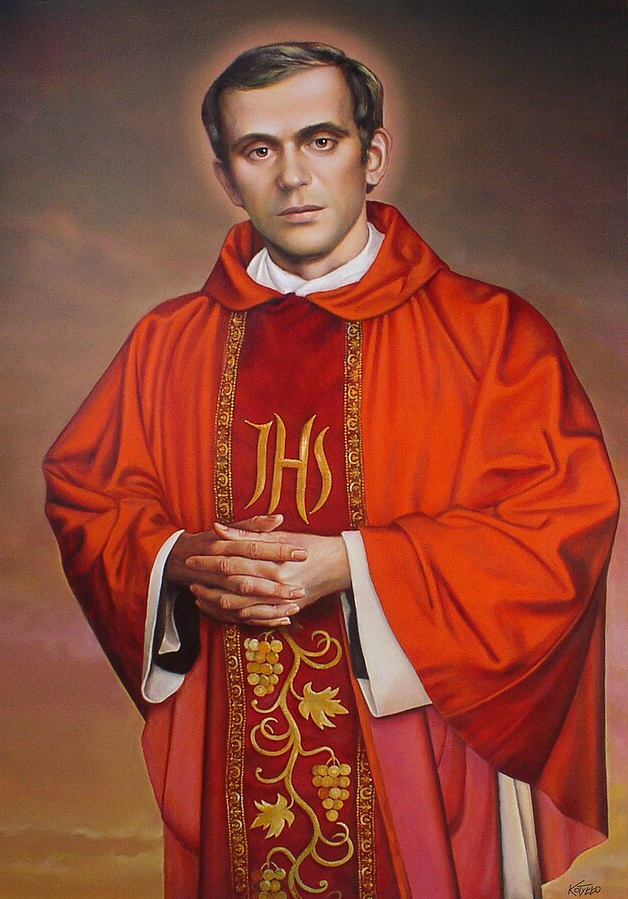
These words come from a homily delivered by a Polish priest, Blessed Father Jerzy Popiełuszko, on 24 June 1984. I would like to offer some thoughts on the references to Plato that we find in the public preaching of Father Popiełuszko. The occasion for that is the fact that 19 October 2024 marks the fortieth anniversary of his murder by agents of the Polish Communist Security Service (Służba Bezpieczeństwa, or SB).
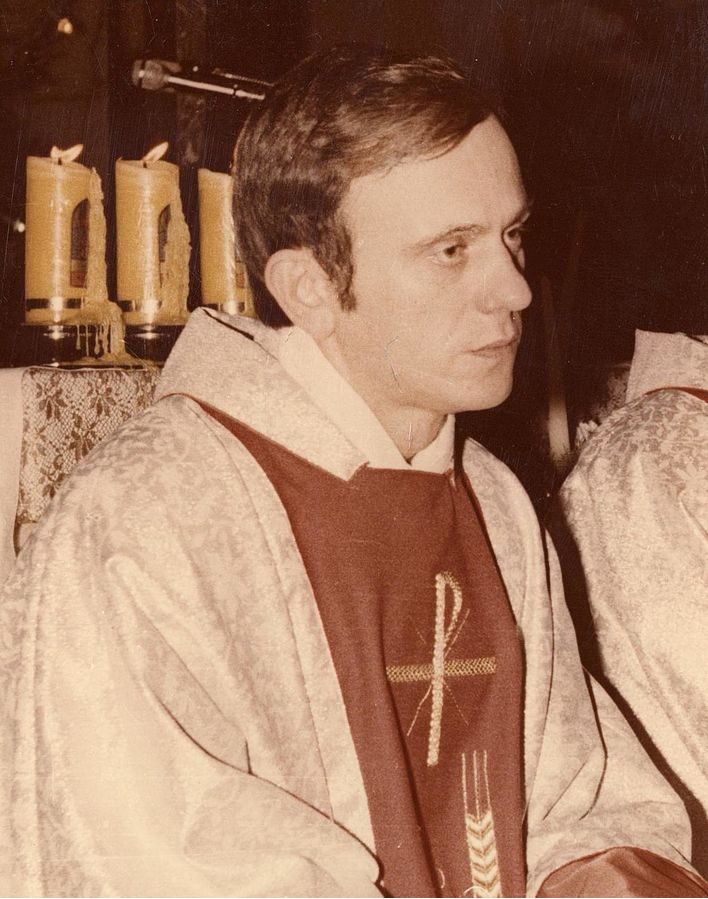
Popiełuszko may be familiar to a Western audience through Agnieszka Holland’s 1988 movie To Kill a Priest, in which Christopher Lambert plays a young priest modelled on Popiełuszko. Father Popiełuszko was born in 1947 to a family of poor farmers living in northeastern Poland. He began to study for the priesthood in 1965, and was taken for two years of obligatory military service in 1966. In the army, he was constantly humiliated and physically abused for being a cleric, which resulted in life-long damage to his health.
He became a priest in 1972. With the rise of the Solidarity movement in Poland in 1980 he started to minister to the protesting workers. He became the famous, widely-beloved, unofficial “chaplain of Solidarity”, not only celebrating numerous masses for the workers, and providing them with spiritual guidance, but also helping to obtain material and legal support for those who were being persecuted by the Communist regime. He didn’t stop these activities even when martial law was introduced in 1981, the leaders of Solidarity were imprisoned, and the movement itself was stifled by the regime.
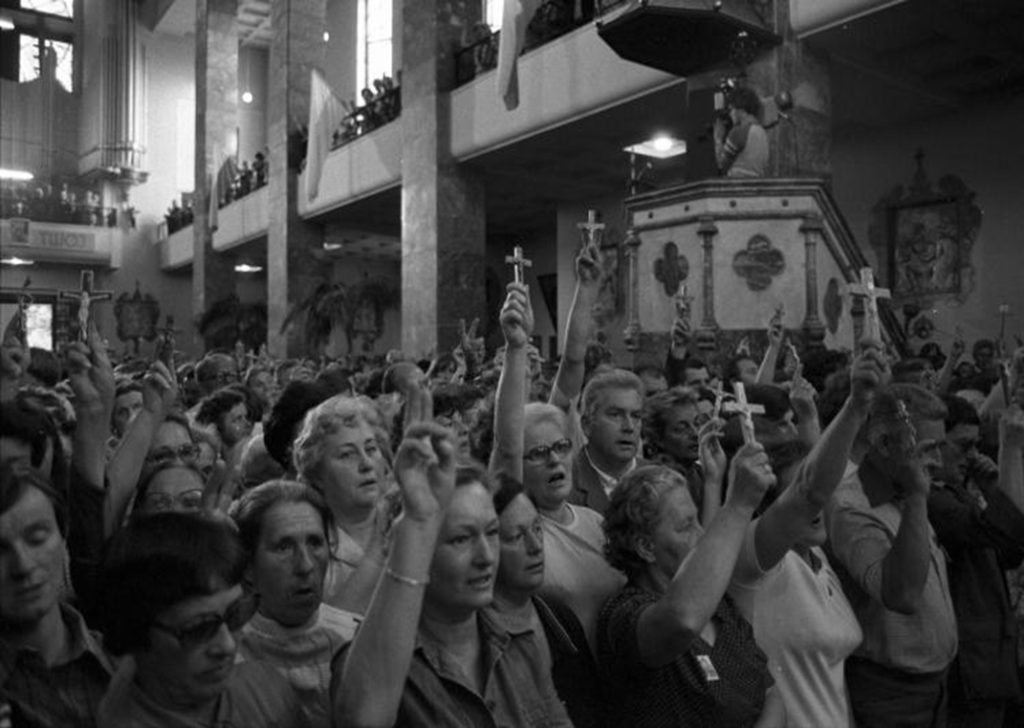
On 28 February 1982 Father Popiełuszko began to celebrate regular “holy masses for the fatherland” in St Stanislaus Kostka church in Warsaw. These attracted large crowds of worshippers. His homilies were recorded and transcribed, and served to inspire those who opposed the regime in the early 1980s. In September 1983 the Communist regime began actively persecuting Popiełuszko, due to his popularity among the opposition and his considerable influence as a preacher.
Charges were brought against him for “abusing freedom of conscience and religious freedom”. The perverse nature of these charges is that the Polish constitution, just like other constitutions of the Communist countries, preserved these liberties in writing, while in practice the regime drastically limited them on a regular basis. An example of what the authorities considered to be the abuse of freedom of conscience was Father Popiełuszko’s insistence on the importance of Justice and Truth, and his criticism of the lies and hypocrisy that pervaded the political and social life of Communist Poland.
That Truth was under constant attack by the Communist regime, and yet was the ultimate foundation for human dignity and human rights, was one of the great themes of Father Popiełuszko’s homilies. For him Truth was inseparable from Justice, and both were grounded in love and freedom. That totalitarianism is a system based on lies was a motif that we find in many great Communist dissidents, from Alexander Solzhenitsyn (1918–2008) to Vaclav Hável (1936–2011). Hannah Arendt (1906–75) wrote: “The ideal subject of totalitarian rule is not the convinced Nazi or the convinced Communist, but people for whom the distinction between fact and fiction (i.e., the reality of experience) and the distinction between true and false (i.e., the standards of thought) no longer exist.”
Father Popiełuszko wasn’t an intellectual, but he carefully prepared his homilies to read them out during Holy Mass. He often referred to the crucial events of Polish history, and the importance of Western culture and tradition, and preached with the aid of ample citations, not least from the words of two towering figures of the Polish Catholic Church and heroes of anti-Communist resistance: Blessed Stefan Cardinal Wyszyński (1901–81), the Primate of Poland from 1948, and St John Paul II (1920–2005), who had been elected pope on 16 October 1978.
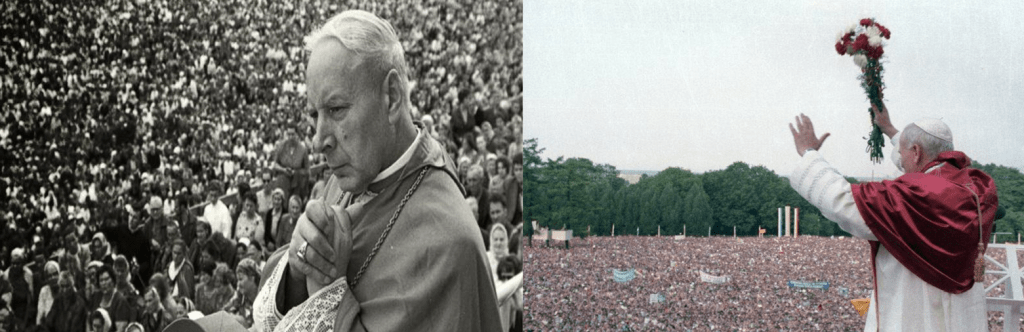
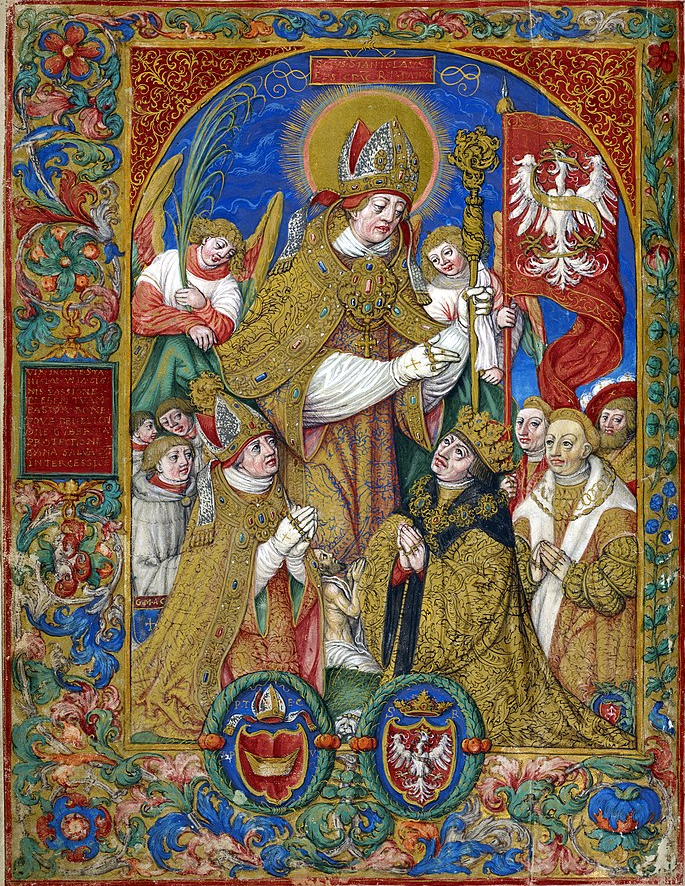
That was understandable, since Wyszyński had been held in prison during the Stalinist era in 1953–6, but remained bravely opposed to the regime. After his release during a brief 1956 political “thaw”, Wyszyński started to organize, to the annoyance of the regime, a great national celebration of the thousandth anniversary of the Baptism of Poland in 966. During John Paul II’s visit to Poland in June 1979, his public celebrations of Holy Masses were attended by millions of people, and were perceived as a major factor in the rise of Solidarity and the general resistance against the Communists. The date of his first visit was chosen to celebrate the anniversary of the martyrdom in 1079 of St Stanislaus, the 12th-century bishop of Cracow and “Polish Thomas à Becket”, who was assassinated on the orders of Prince Bolesław III Wrymouth.
On rare occasions, however, Popiełuszko would quote from literary or philosophical sources. An intriguing example is his reference to Plato in a homily delivered during a Holy Mass for the fatherland that he celebrated on 24 June 1984, which I repeat from above:
It is of the utmost importance for a Christian to become aware that the source of justice is God himself. However, everyone without an exception has a duty to act justly and to cry for justice because, as Plato said, “these are evil times when justice keeps her mouth shut.”
Popiełuszko repeated that quotation twice, as we will see below, in the days preceding his death. Yet it is nowhere to be found in Plato’s dialogues. The editors of Father Popiełuszko’s homilies admit they couldn’t find the source.[1] But it doesn’t even look like something any of the protagonists in Plato’s dialogues might have said. The mention of “evil times” sounds rather modern; and Justice as a personified figure who should speak up but refuses to doesn’t appear anywhere in Plato (although it is embodied in the figure of the Just Man in the Republic, about which I wrote in an earlier Antigone essay).
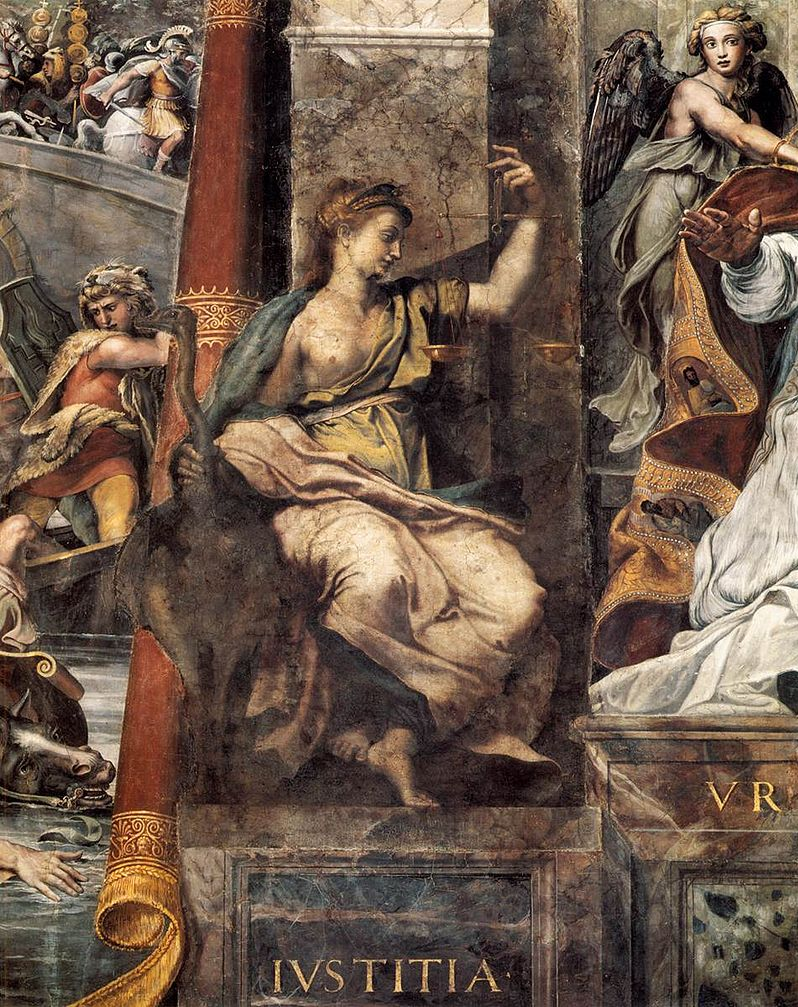
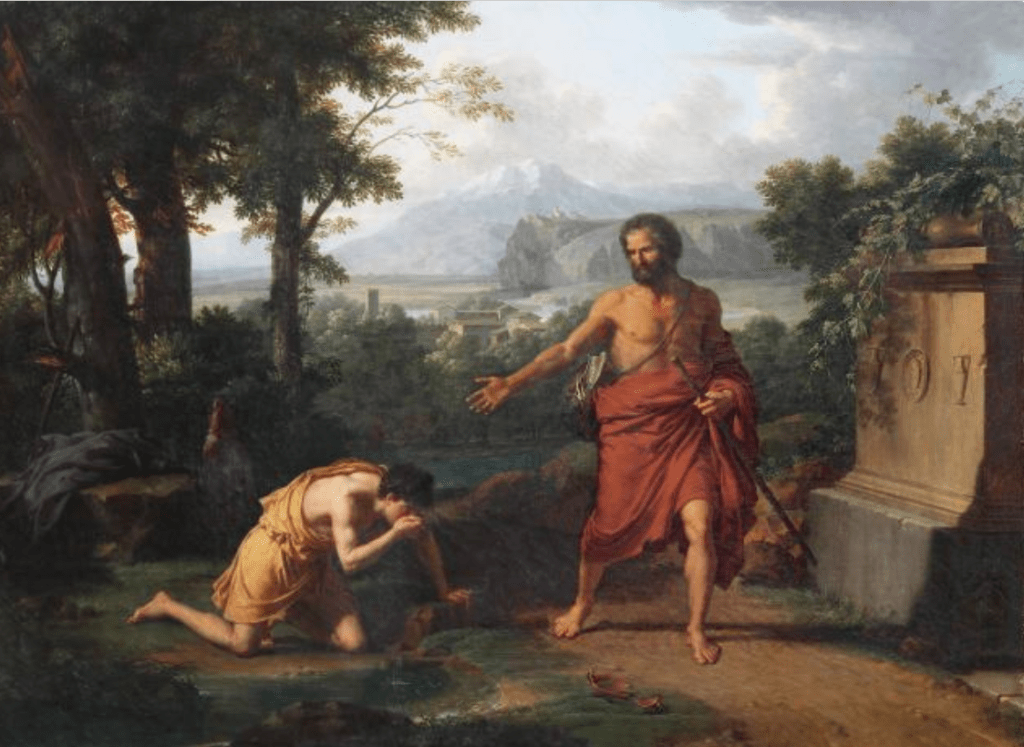
Finally, there is a Polish idiom that appears in the sentence. “Nabrać wody w usta”, which means literally “to take water into one’s mouth”. It means to refuse to speak when it is necessary or expected; there is no equivalent Greek idiom. In the biography of Popiełuszko that was published in French by Bernard Brien (2016), and its English translation by M.J. Miller (2017), the expression is misunderstood. The French version (Mauvais sont les temps quand la justice prend de l’eau dans la bouche) seems to be a verbatim translation, but it sounds strange since in French there is a similar phrase (mettre l’eau à la bouche) which means something vastly different: to make someone’s mouth water, to incite envy or desire.[2]
The English translation is even more odd: “The times are evil when justice drinks water [instead of wine].”[3] Here we see an attempt to give a meaning to the quotation by linking it somehow to antiquity (drinking wine); however, it turns out to be even more confusing, not only because it has nothing to do with the maxim quoted by Father Popiełuszko, but also because the Greeks wouldn’t drink pure water even in “evil times”. They condemned drinking undiluted wine as a barbarian, immoderate custom, but they would also add wine to water on a regular basis, unless they were drinking from a spring or a lake.
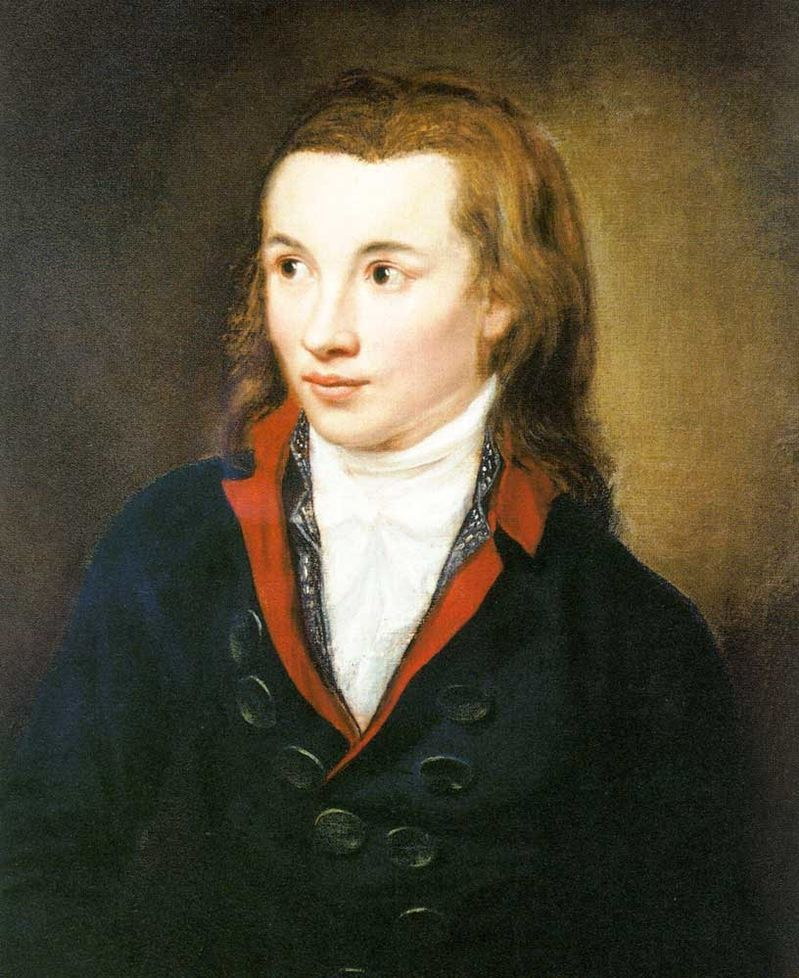
So we have a quotation from Plato which is not by Plato. But why would a simple Polish priest, who was not particularly interested in antiquity or philosophy, refer to Plato in that way? There are very occasional literary references scattered throughout the corpus of Popiełuszko’s homilies. For instance, on 29 January 1984 he quoted the German poet and philosopher Novalis (Friedrich von Hardenberg, 1770–1801), who was hardly a well-known figure in Poland of 1980s: “Man has his being in truth… Whoever betrays truth betrays himself.” This, in fact, is a real and identifiable quotation.[4]
Interestingly, a Polish translation of Novalis’ Novices’ of Sais, along with some selected aphorisms (including the one quoted by Popiełuszko) was in fact published in 1984,[5] although we don’t know whether Father Jerzy read it himself, or if someone suggested the quotation as a good fit for what he was trying to say.
There is also a reference to the Roman historian Tacitus (55–120), in a homily that he delivered on 25 April 1983:
Corruptissima re publica plurimae leges.
Laws were most numerous when the commonwealth was most corrupt. (Annales 3.27)
Finally, there is another reference to Plato, in a homily delivered on 28 August 1983, where Father Popiełuszko criticized the Communist regime for breaking the law and oppressing the workers: “Has nothing changed for centuries, that is, since the time of Plato, who said: ‘every government makes laws to his own advantage’?” This one comes from Book One of the Republic, although, in fact, it’s not Plato’s opinion (which would be typically voiced by Socrates), but that of Thrasymachus of Chalcedon (5th century BC), a sophist whom Plato clearly detested for his “might is right” position. Thrasymachus says in the Republic:
τίθεται δέ γε τοὺς νόμους ἑκάστη ἡ ἀρχὴ πρὸς τὸ αὑτῇ συμφέρον, δημοκρατία μὲν δημοκρατικούς, τυραννὶς δὲ τυραννικούς, καὶ αἱ ἄλλαι οὕτως· θέμεναι δὲ ἀπέφηναν τοῦτο δίκαιον τοῖς ἀρχομένοις εἶναι, τὸ σφίσι συμφέρον, καὶ τὸν τούτου ἐκβαίνοντα κολάζουσιν ὡς παρανομοῦντά τε καὶ ἀδικοῦντα.
Each form of government enacts the laws with a view to its own advantage, a democracy democratic laws and tyranny autocratic and the others likewise, and by so legislating they proclaim that the just for their subjects is that which is for their – the rulers’ – advantage and the man who deviates from this law they chastise as a law-breaker and a wrongdoer. (Republic, 1.338e)
It seems likely that Popiełuszko read at least Book One of the Republic, either on his own initiative, or because of some external suggestion. Plato’s dialogue is a lengthy answer to the question: “What is justice?” – and Popiełuszko emphasised the universal relationships between Justice and Truth, between politics, freedom and the dignity of man. His typical claim, that Justice is Truth and Truth is Justice, and that they are both grounded in God, isn’t the least bit alien to the spirit of Plato’s Republic.
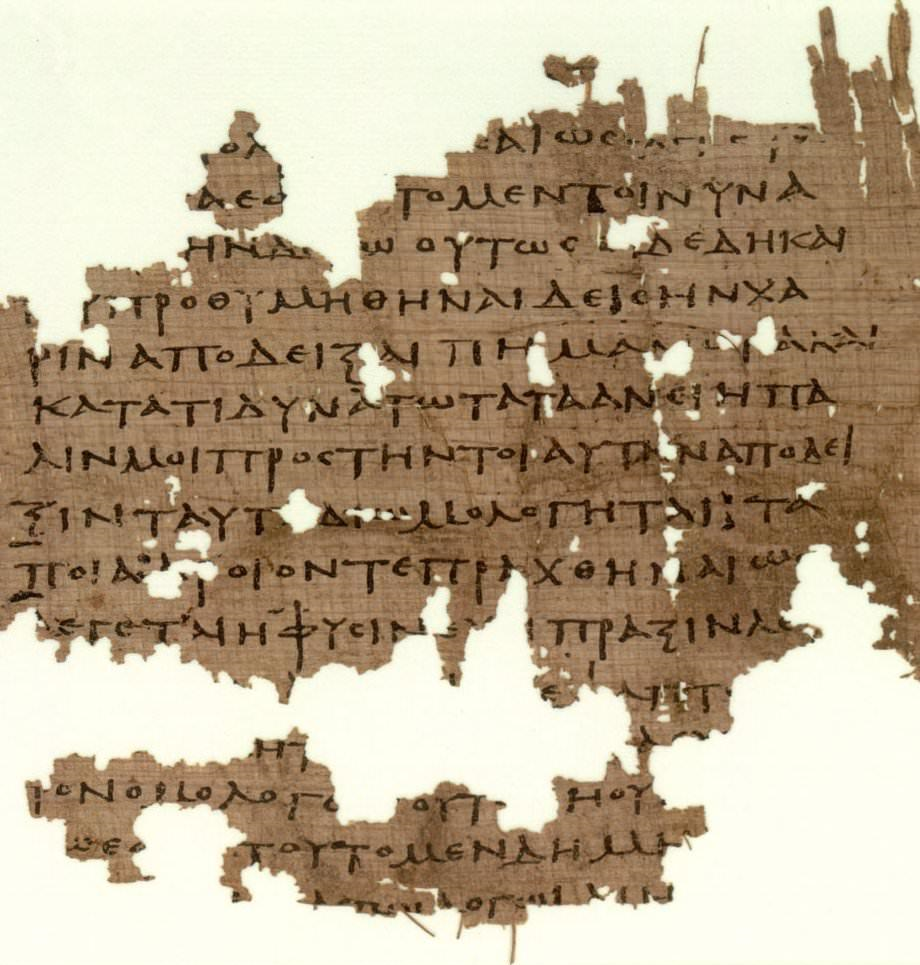
A few pages before Thrasymachus makes his claim that all governments rule to their own advantage, Socrates says to his friend Cephalus:
τοῦτο δ᾽ αὐτό, τὴν δικαιοσύνην, πότερα τὴν ἀλήθειαν αὐτὸ φήσομεν εἶναι ἁπλῶς οὕτως καὶ τὸ ἀποδιδόναι ἄν τίς τι παρά του λάβῃ;
But speaking of this very thing, justice, are we to affirm thus without qualification that it is truth-telling and paying back what one has received from anyone? (Republic 1.331c, trans. P. Shorey).
In Greek, Socrates simply says that Justice (δικαιοσύνη, dikaiosunē) is Truth (ἀλήθεια, alētheia), although the Greek term for Truth has a much broader application than ours, and includes truthfulness or telling the truth, which was one of the key messages of Father Popiełuszko’s preaching.

The “Platonic” maxim about Justice keeping her mouth shut appeared for the first time in Father Jerzy’s 24 June 1984 homily, delivered for the feast of the Nativity of St John the Baptist. Popiełuszko focused on St John’s brave condemnation of Herod Antipas’ immorality, for which he was eventually killed in prison (Matthew 14:3–12; Mark 6:17–29). It’s difficult to determine the source of that quotation. The most likely explanation seems to be that he saw it in some published selection of ancient maxims, or that someone simply suggested it to him.
An even more curious mystery is why Father Popiełuszko no longer attributed this line to Plato in two sermons which he delivered a few months later, in October 1984, shortly before his death. On these two occasions he referred not to Plato, but to “an ancient thinker”. The first occasion was a Holy Mass in Bytom on 8 October 1984, during which he asserted that lying turns people into slaves, and that Christians could not be slaves, being inherently free, as sons of God. He spoke about the necessity for courage, and overcoming fear for the sake of Truth and Justice:
Everyone without an exception has a duty to act justly and to cry for justice because, as an ancient thinker said: “These are evil times when justice keeps her mouth shut.”
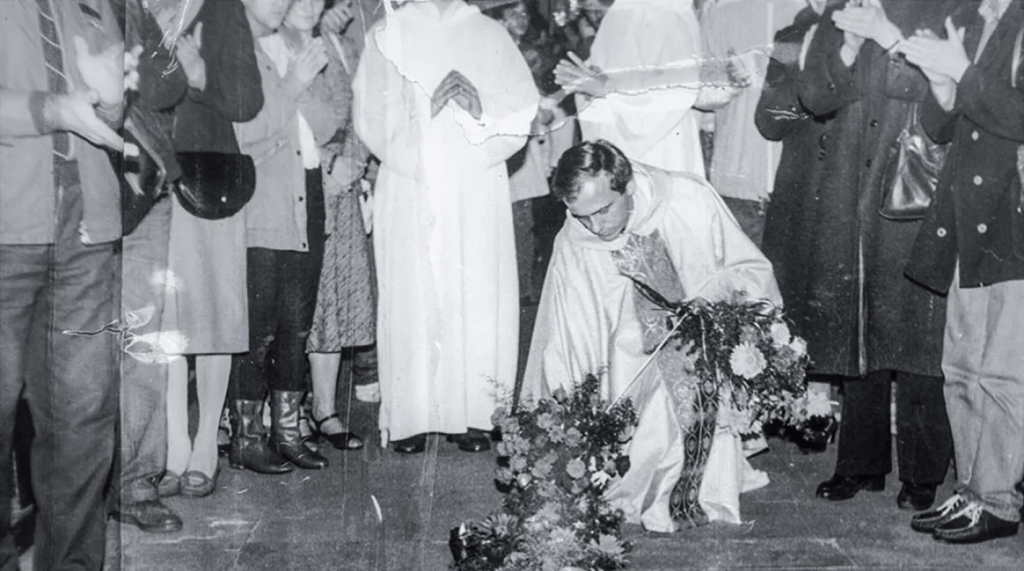
Did someone point out to him that Plato didn’t actually write these words? Even if that were the case, Popiełuszko still wanted to use that aphorism and emphasise that it was true not only in the Communist Poland of his day, but in all “evil times”. Father Popiełuszko was already receiving anonymous phone calls and letters, threatening him with violent death (“bullet in the head”, “slit throat”, “crucifixion”) and calling him a “fascist”. His bravery didn’t mean that he was immune to fear.
People who attended the mass on 8 October 1984 remembered this slim young priest smoking cigarettes, and looking exhausted and nervous. He had reasons to be afraid. Some witnesses claimed that Security Service agents had tried to push him out of a train the day before. A couple of days later, on 13 October 1984, there was an attempt on his life: a Security Service agent threw a rock through the windshield of his car while he was driving, but Popiełuszko barely survived the accident.
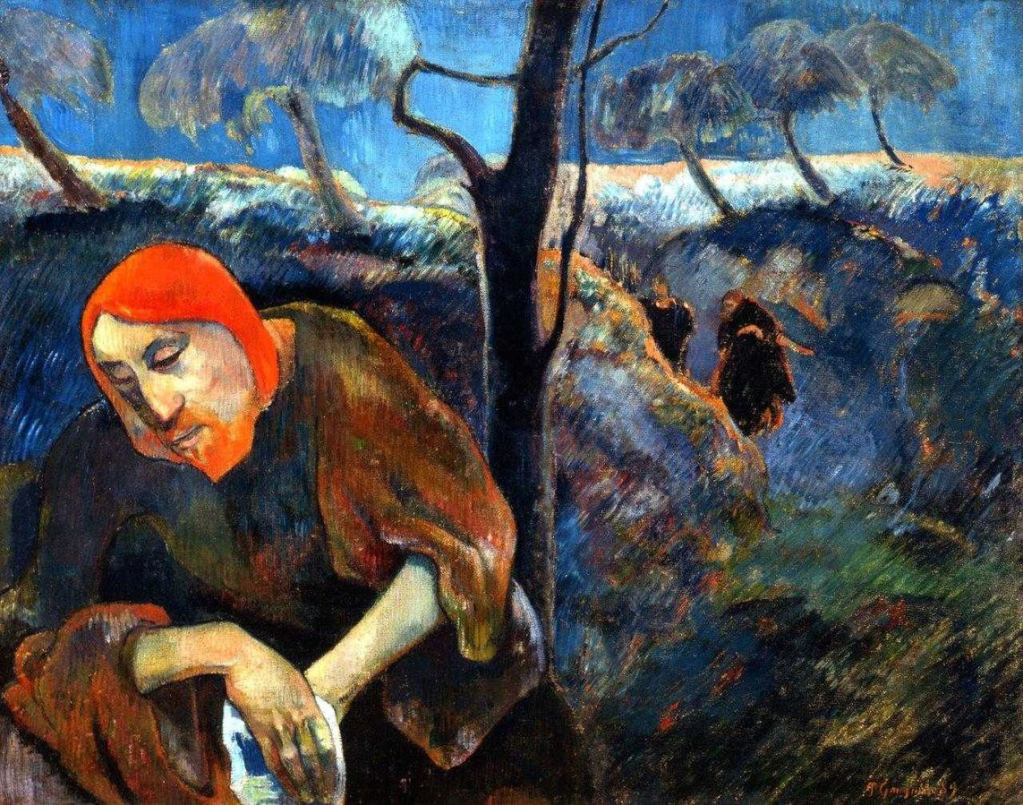
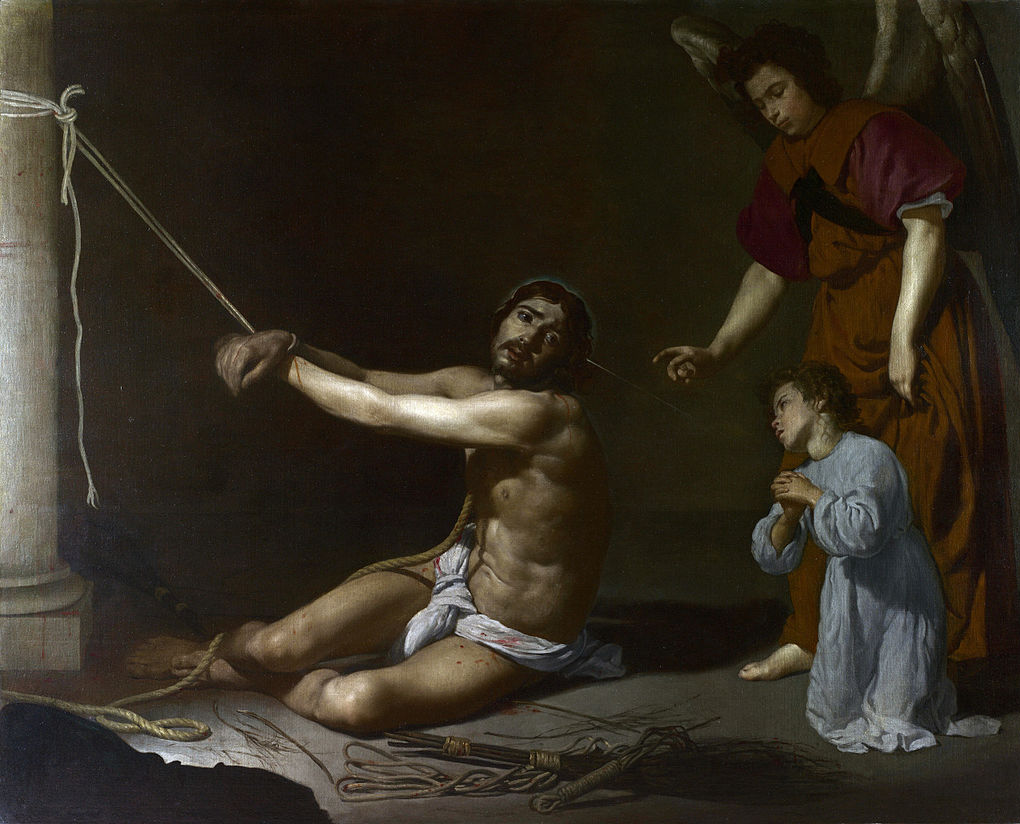
He didn’t stop preaching. On 19 October 1984 he went to Bydgoszcz, where he led a rosary service at church. During the meditations on the Sorrowful Mysteries of the rosary, Father Jerzy returned once more to his favorite, Platonic theme of Justice and truth-telling, while commenting on the second mystery, the Scourging at the Pillar:
Truth, like justice, is united with love, and love costs. True love is sacrificial, so Truth also has its price. Truth always unites people and bonds them together. The greatness of Truth terrifies small, scared people because it exposes their little lies. A continuous war against truth has been going on for centuries. Truth, however, is immortal, whereas lies die quickly.
Hence, as the late primate Wyszyński said: “There need not be many people who tell the truth. Christ chose only a few to proclaim it. The words of liars, on the other hand, must always be numerous, because a lie is petty and mercantile, and changes all the time like new stock on the shelves. It always has to be new, it always needs a lot of servants who will memorise the agenda, for today, for tomorrow, for the next month. And then they will have another, hasty workshop to train them in yet another lie.”
It takes a great many people to create a technology of planned lies. But you don’t need as many people to tell the truth. People will find them, will come searching for the words of Truth, because in man there is a natural longing for Truth.
In a society permeated by lies, he perceived his duty to speak the truth at whatever cost, because he believed that even a few truth-telling people have an essential role to play in this war against Truth and Justice waged through the centuries. Again he used his quotation from “an ancient thinker”: “the duty of a Christian is to stand by Truth, no matter the cost. Because one pays for telling the truth” – and added for the last time – on this last day of his earthly life: “These are evil times when justice keeps her mouth shut.”
On his return from Bydgoszcz that night of 19 October 1984, forty years ago, he paid the ultimate price for telling the truth. Near Toruń his car was stopped by Security Service agents, who tied him, beat him, and drowned him in the Vistula River near Włocławek. Water filling his lungs was the only thing that could have made him keep his mouth shut.
His driver managed to escape by jumping out of the kidnappers’ speeding car. Communist authorities interfered with the kidnappers’ subsequent trial in 1985, but they were afraid of social unrest, so the murderers were convicted, and sentenced to long terms in prison.
Father Popiełuszko’s funeral on 3 November 1984 gathered hundreds of thousands of people, and became one of the largest-ever peaceful demonstrations during the entire period of the Communist regime. Popiełuszko was beatified by the Catholic Church on 6 June 2010.

Mateusz Stróżyński is a Classicist, philosopher, psychologist, and psychotherapist, working as an Associate Professor in the Institute of Classical Philology at Adam Mickiewicz University in Poznań, Poland. He is interested in ancient philosophy, especially the Platonic tradition. His most recent books are The Human Tragicomedy: the Reception of Apuleius’ Golden Ass in the Twentieth and Twenty-First Century (ed., Brill, Leiden, 2024) and Plotinus on the Contemplation of the Intelligible World: Faces of Being and Mirrors of Intellect (Cambridge UP, 2024).
Notes
| ⇧1 | E.g. J. Popiełuszko, Kazania 1982–1984, ed. J. Sochoń (Wydawnictwo Archidiecezji Warszawskiej, Warsaw, 1992), or, more recently, J. Popiełuszko, Kazania 1982-1984: delivered in the church of St. Stanislaus Kostka in Warsaw (several editors) (Wydawnictwo Sióstr Loretanek, Warsaw, 2010). |
|---|---|
| ⇧2 | Bernard Brien, Jerzy Popieluszko. La vérité contre le totalitarisme (Artège, Paris, 2016). |
| ⇧3 | B. Brien, Blessed Jerzy Popiełuszko: Truth versus Totalitarianism trans. M.J. Miller (Ignatius Press, San Francisco, 2018). |
| ⇧4 | Novalis, Miscellaneous observations 38, in: Philosophical Writings, trans. M.M. Stoljar (State Univ. of New York Press, Albany, NY, 1997) 29. |
| ⇧5 | Novalis, Uczniowie z Sais. Proza filozoficzna — studia — fragmenty, trans. J. Prokopiuk (Czytelnik, Warsaw, 1984) 99. |