Matthew Gluckman
Proponents of artificial intelligence (AI) argue that its ability to tackle previously insurmountable problems will enhance productivity and foster innovation. They suggest that AI could not only accelerate the pace of research and development but also drive substantial economic growth and improve the quality of life globally. Jeff Bezos, the founder and former CEO of Amazon, for example, discussed in a Forum on Leadership at the Bush Center how
because of artificial intelligence and its ability to automate certain tasks that in the past were impossible to automate… not only will we have a much wealthier civilization but… the quality of work will go up very significantly and… a higher fraction of people will have callings and careers relative to today.[1]

Not everyone agrees with Bezos. Critics caution against the unchecked expansion of AI capabilities, highlighting the potential for significant societal disruption, such as the displacement of workers, the erosion of privacy, the subjugation of humans, and potentially other dangers we cannot currently discern. [2] For example, Stephen Hawking, the renowned theoretical physicist, told the BBC that “the development of full artificial intelligence could spell the end of the human race”, because AI systems could redesign themselves at an ever-increasing rate, surpassing human intelligence and control, making them unpredictable and potentially harmful.[3]
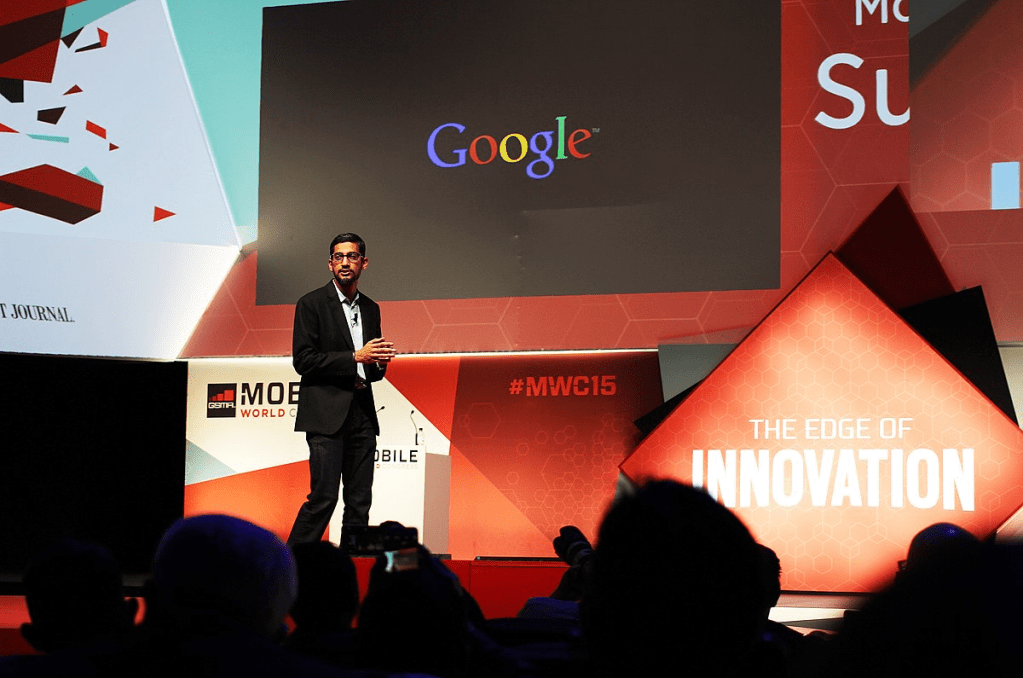
What links both proponents and critics is an implicit agreement that AI is not to be taken lightly. Sundar Pichai, the CEO of Google, noted that “AI is the most profound technology humanity is working on—more profound than fire or electricity.”[4] By drawing a parallel with the transformative power of fire in ancient mythological texts, Pichai evokes Classical philosophical debates on paradigm-shifting technologies and their profound impact on society.
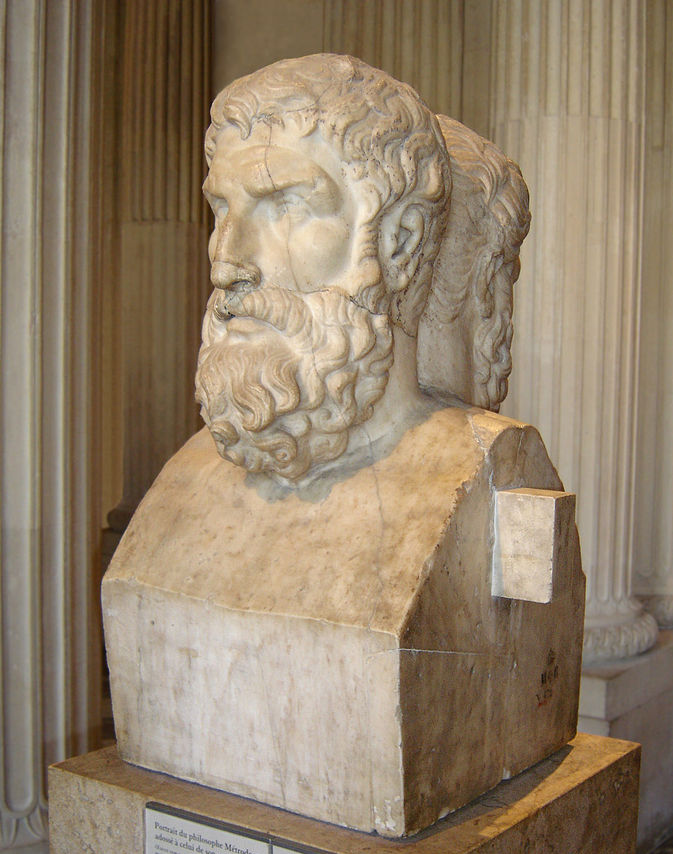
Just as society today grapples with the implications of AI, ancient philosophers such as Epicurus and Lucretius explored innovation, disruptive technologies, their impact on human life, and the ethical considerations of employing then-new tools in society.
Lucretius’ work not only preserved and clarified Epicurean philosophy, but also delved into the implications of technological advancements. By examining how Lucretius addressed the benefits and risks of new technologies, we can use his thinking to navigate the moral and existential questions posed by modern AI.
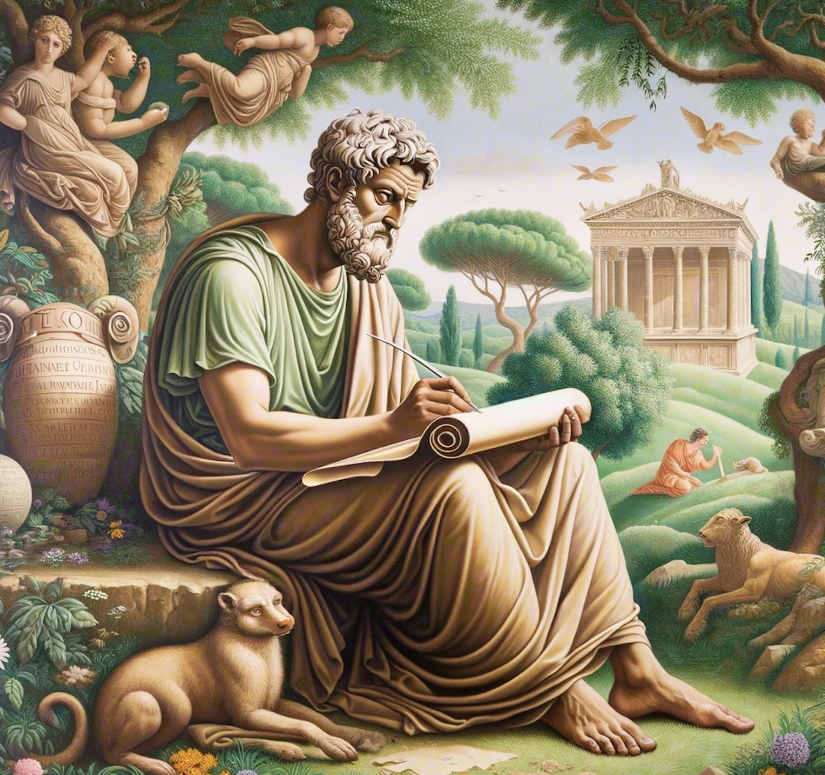
Lucretius (c.94–55 BC), living two and a half centuries after Epicurus (341–271 BC), played a pivotal role in transmitting Epicurean-thought, while also providing a path towards a modern understanding of Epicurus. His great didactic poem, De Rerum Natura (“On the Nature of Things”), offered to the Romans a detailed but accessible exposition of Epicurean atomism, illustrating how the random motions of invisible bodies – atoms – within the void (space) support the physical reality that surrounds us.
This atomic theory provided a scientific framework that challenged contemporary supernatural explanations of natural phenomena. Lucretius used this theory to argue that natural events were the result of chance atomic interactions rather than divine interventions, thereby attacking the prevailing mystical interpretations of the physical world.
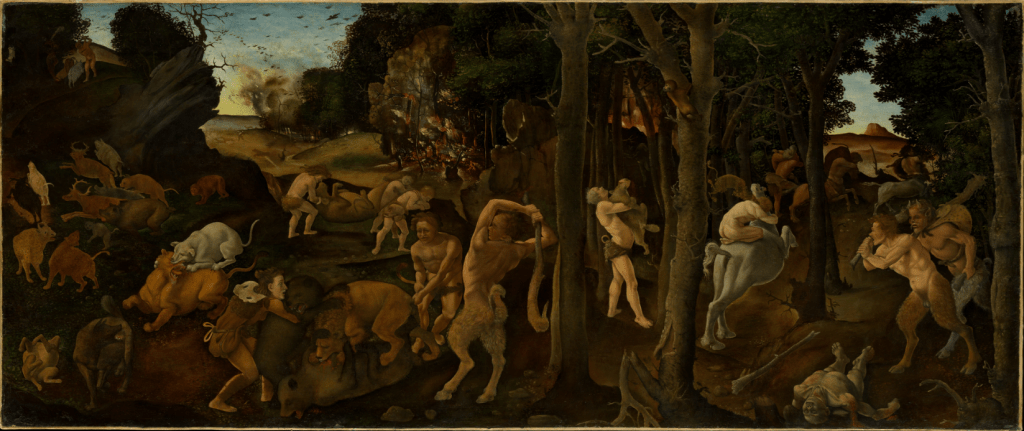
In Book 5, when describing how humans first discovered fire, Lucretius captures not only the physical process through which humanity harnessed fire but also the philosophical associations between natural phenomena and human progress and knowledge. The lines fulmen detulit in terram mortalibus ignem / primitus (“‘Lightning was first to send down fire to men’,” 5.1092–3)[5] depict a transformative event where lightning, a force of nature, becomes the conduit for the gift of fire to humanity. This moment of transmission, detulit (“‘brought down’”), echoes the myth of Prometheus who, defying the gods, brought fire to mankind.

However, Lucretius alludes indirectly to Prometheus’ myth without explicitly naming him. In writing this Titan out of the story, Lucretius offers a wholly materialist and natural explanation for the origin of fire. This approach is consistent with his goal of having readers look to science as explanation for the natural world rather than divine intervention.

Lucretius continues with the words, inde omnis flammarum diditur ardor (“‘Whence blazing flames spread out across the world’,” 5.1093). This line suggests the diffusion of this lightning into all-encompassing flames, symbolizing the spread of knowledge into civilization. The verb diditur (third-person singular present passive indicative form of dido, translated here as “spread out”) conveys the proliferation of fire’s promises and pitfalls across the world, mirroring the spread of ideas and innovation through human societies. However, with fire’s newfound benefits came risks, especially with its unpredictable and devastating effects on the natural world when left untamed or used in indiscriminate warfare.
In detailing the natural generation of fire through friction, et ramosa tamen cum ventis pulsa vacillans / aestuat in ramos incumbens arboris arbor (“‘And yet, also, if a tree with many branches happens to rest against another tree, fire is pressed from it by friction’,” 5.1096–7) Lucretius highlights the interaction between the elements: trees swaying in the wind and branches rubbing together to produce fire.

Lucretius also mentions the sun’s role in teaching humans to use fire: inde cibum coquere ac flammae mollire vapore / sol docuit, quoniam mitescere multa videbant / verberibus radiorum atque aestu per agros (“The sun then taught us how to cook and soften food with flame, since people saw that many things became mellow, defeated by the blazing rays of heat amid the fields’,” 5.1102–4). This perhaps encapsulates a broader theme of learning from nature: Lucretius could be said to characterize the sun as a teacher who taught (docuit). The sun, through its “‘rays’” (radiorum, genitive plural of radius), not only physically softens substances but metaphorically represents insight, guiding humanity to harness and understand the natural world. So often does Lucretius use the phrase lucida tela diei (“the bright shafts of daylight”) to describe the light of reason that the natural world shines upon us – if we have the eyes to see them.
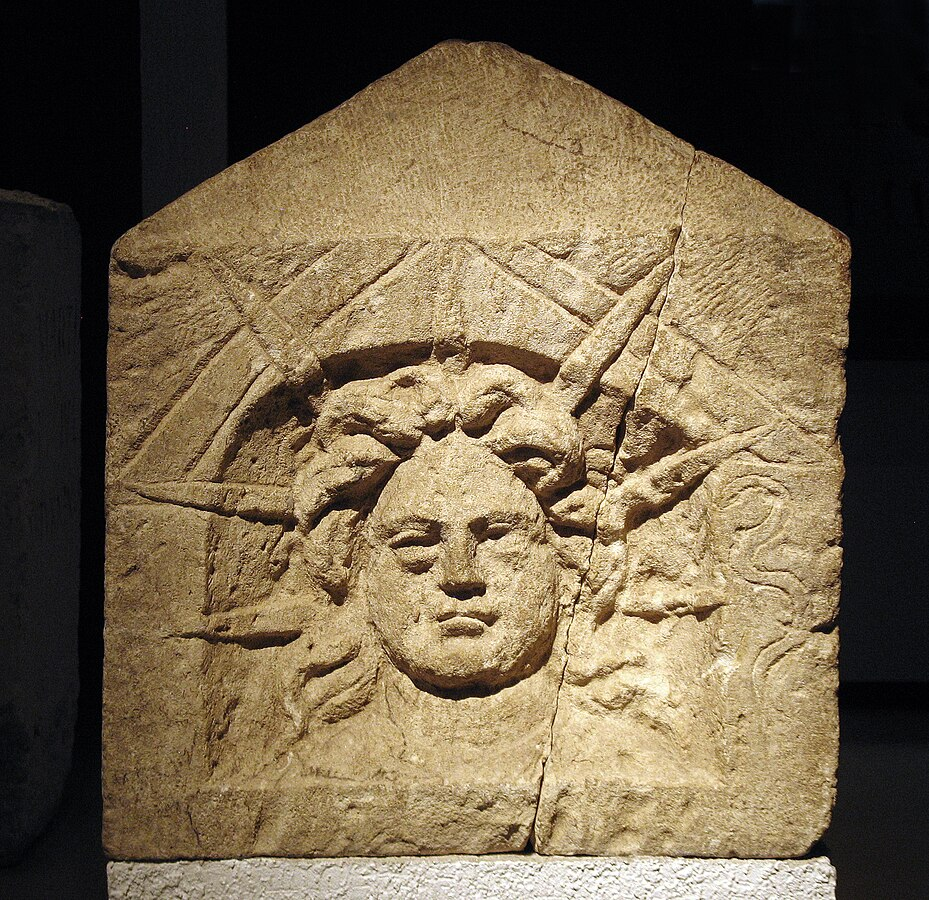
Fire, as described by Lucretius, fits neatly into the definition of technology. It represents “the application of scientific knowledge for practical purposes”,[6] fundamentally transforming human life. Initially, as Lucretius describes, fire led to significant advancements: humans learned how to cook food, which improved their diet and health; it enabled the founding of cities and the creation of defensive structures, contributing to societal stability. Fire also led to the discovery and use of metals for tools and weapons. This revolutionized agriculture and warfare alike, allowing humans to manipulate their environment and defend their communities effectively.
However, these advancements came with unintended consequences. The use of fire in warfare introduced new levels of violence and destruction from weapons made of gold, iron, and bronze. The development of complex tools and weapons contributed to societal inequalities, as those with weapons could take cattle, land, and other resources from those without these advantages, resulting in conflicts and enabling the powerful to dominate the unarmed.
During the Peloponnesian War (431–404 BC), the flooding of refugees into Athens created conditions ripe for diseases including the notorious Athenian plague of 430–426 BC which, as described by the Ancient Greek historian Thucydides, killed a significant proportion of the Athenian population.[7] Some scholars have estimated 75,000 to 100,000 deaths, or more than a quarter of the city’s residents. Whether Lucretius consciously intended this as the poem’s ending or not, the final section (6.1138–1286) of De Rerum Natura in the form we have it vividly depicts the Athenian Plague. This closure is one of deep pessimism.

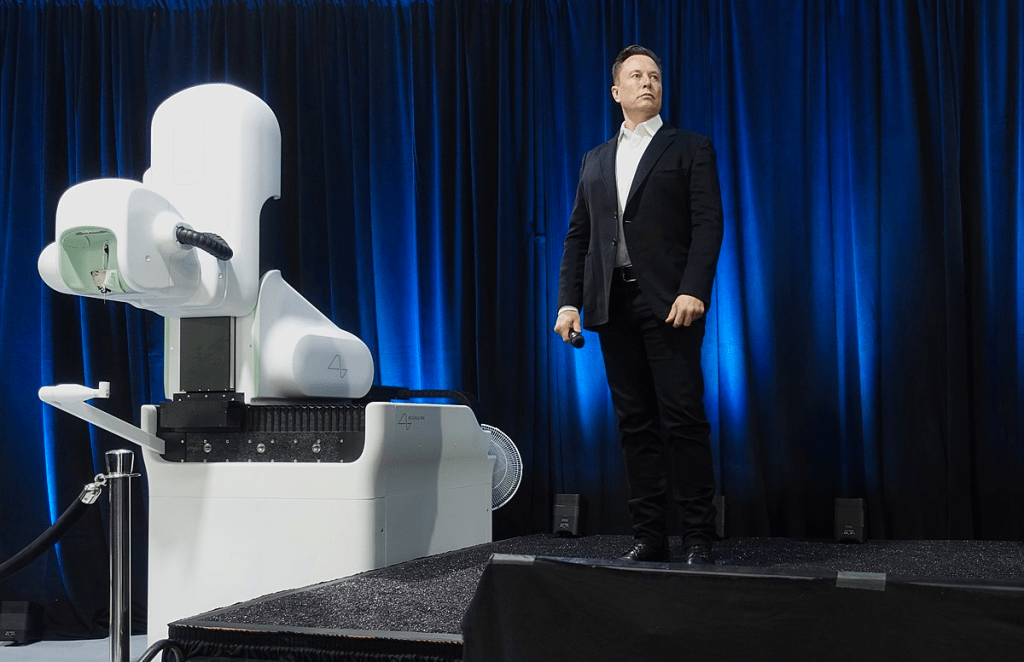
Lucretius’ perspectives on not just the technology of fire – highlighting its benefits but also its detrimental outcomes – but also metallurgy, seafaring and new forms of trade can be applied to the merits and risks of AI technology as well. AI, like fire, helps us now by improving productivity, accelerating research, and enhancing humans’ quality of life. However, these benefits come with risks that could eventually cause significant harm, such as job displacement, privacy violations, the potential misuse of AI in warfare, biological weapons, or autonomous weapon systems, among others, particularly if the goals of a superintelligent AI do not align with those of humans. As Elon Musk has warned: “I think we should be very careful about artificial intelligence. If I were to guess at what our biggest existential threat is, it’s probably that.”[8]
In De Rerum Natura, Lucretius argues that atomic deviations from straight-line pathways foster new, spontaneous interactions to form various intricacies and differences within the universe. While this randomness can lead to new and beneficial interactions, it also introduces a level of unpredictability that can destabilize patterns and expectations, potentially causing chaos where stability is needed. In Book 2 of De Rerum Natura, Lucretius initially describes the descent of atoms through a void in linear, predetermined motions. In describing the atoms, Lucretius writes corpora cum deorsum rectum per inane feruntur / ponderibus propriis (“‘while the first bodies [=atoms] are being carried downwards by their own weight in a straight line through the void,” 2.217–18). The phrase sets the scene for a further depiction of deterministic motion (which Lucretius later argues isn’t true), where each atom’s path is governed by its intrinsic nature, reflected in the term ponderibus propriis (“‘their own weight’”).
Yet if atoms simply followed their own linear movements, there would be no scope for novel movements to occur that break the chain of causation; more importantly, how can humans have free will, as the Epicureans were adamant we do? Lucretius at this point introduces the “‘swerve” (clinamen), whereby an atom moves a subatomic degree of distance, with the words incerto tempore ferme / incertisque locis (“‘at times quite uncertain and / in uncertain places’,” 2.218-19).

The phrases incerto tempore (“‘at uncertain times’”) and incertisque locis (“‘in uncertain places’”) inject an element of unpredictability into the atomic narrative, suggesting that the motion of atoms is not necessarily deterministic but subject to spontaneous deviations. Motion can be both predictable and unpredictable at the same time. This swerving is a very subtle movement, paulum (“‘a little,” 2.219), in which the deviation is minimal but sufficient to alter the course of the atom – potentially significantly – leading to new interactions and possibilities, whether positive or negative.
Similarly, AI systems can exhibit “uncertain” behavior due to their adaptive algorithms[9] and the addition of new, complex datasets. While certain algorithms operate in a deterministic manner, processing inputs according to predefined rules, the adaptive nature of other AI allows for learning and adjustments based on new data and evolving code, introducing ever more complex elements of unpredictability.

This adaptability means that, while the system may follow a set structure, its ability to change and learn from varied data and the new code can lead to unexpected outcomes, combining predictability with the potential for innovative, unforeseen results. This can lead to breakthroughs, such as identifying new patterns in data that humans might overlook, but can also pose significant risks, especially when outcomes deviate from the expected or desired results, leading to goal misalignment or loss of control.
Lucretius finalizes his discussion of the “swerve” with an analogy: quod nisi declinare solerent, omnia deorsum / imbris uti guttae caderent per inane profundum (“For if they were not apt to swerve, all would fall downwards like raindrops through the profound void’,” 2.221–2). This metaphor conveys the consequences of the absence of the “‘swerve’”. Without the capacity to “swerve” (declinare), everything would descend uniformly “downwards” (deorsum) “like raindrops” (imbris uti guttae), through the “profound void” (inane profundum). This comparison to raindrops illustrates the monotony and lack of interaction that would prevail in a universe devoid of the “swerve”, with every atom falling vertically and without the prospect of forming new connections; the image highlights the essential role that these deviations or “swerves” play in creating complexity and diversity within the cosmos.

We see this same philosophy manifested in AI. The absence of deviation and adaptability would result in rigid, predictable systems incapable of learning and innovation. Therefore, applying the “swerve” in Lucretius’ atoms highlights the importance of flexibility and spontaneity in AI, driving both progress and complexity while also necessitating careful consideration of the potential for unforeseen consequences.
Lucretius’ (and his master Epicurus’) insights, particularly his reflections on the implications of technological advancements, offer valuable guidance for navigating the complexities of modern AI. Just as the introduction of fire brought both profound benefits and significant risks, AI holds the promise of remarkable advancements alongside potential dangers. Lucretius’ concept of the atomic “swerve”, which introduces both predictability and randomness, mirrors the dual nature of AI systems that operate within deterministic frameworks but also adapt and learn unpredictably. Reading Lucretius helps us stay attuned to the randomness that comes with any technology, including AI, and to better foresee its possible implications.

Matthew Gluckman is a student at the Hackley School in Tarrytown, New York, USA. He has been studying Classics since the sixth grade.
Notes
| ⇧1 | “Jeff Bezos on Artificial Intelligence,” YouTube, 12 May 2018, available here. |
|---|---|
| ⇧2 | “What are the advantages and disadvantages of artificial intelligence (AI)?” Tableau, available here. |
| ⇧3 | Rory Cellan, “Stephen Hawking warns artificial intelligence could end mankind,” BBC News, 2 December 2014, available here. |
| ⇧4 | “Google CEO: AI impact to be more profound than discovery of fire, electricity,” CBS News, 16 April 2023, available here. |
| ⇧5 | All English translations from Christopher Kelk (“On the Nature of Things”, Poetry In Translation; Latin text from W.H.D Rouse’s and M.H. Smith’s Loeb Classical Library (Cambridge, MA, University Press, 1992). |
| ⇧6 | “Technology”, as defined by Merriam-Webster. |
| ⇧7 | See further R.J. Littman, Robert J. “The plague of Athens: epidemiology and paleopathology,” 2009, available here. |
| ⇧8 | S. Gibbs, “Elon Musk: artificial intelligence is our biggest existential threat,” The Guardian, 27 October 2014, available here. |
| ⇧9 | An adaptive algorithm is a type of algorithm that can adjust its behavior or parameters in response to new data or learn from existing data. |