Peter Hulse
A young Venetian aristocrat arrived in the Bay of Messina on 4 May 1492. His name was Pietro Bembo (1470–1547). Later appointed a Cardinal, he would soon be the author of the elegant neo-Latin dialogue De Aetna, and later become a major figure in the development of the Tuscan dialect into the Italian language; But in May 1492 he was set on becoming a greculo tuto (his father’s words in a letter to Lorenzo de’ Medici) and had gone to Messina to learn Ancient Greek, making the journey from Naples by sea.
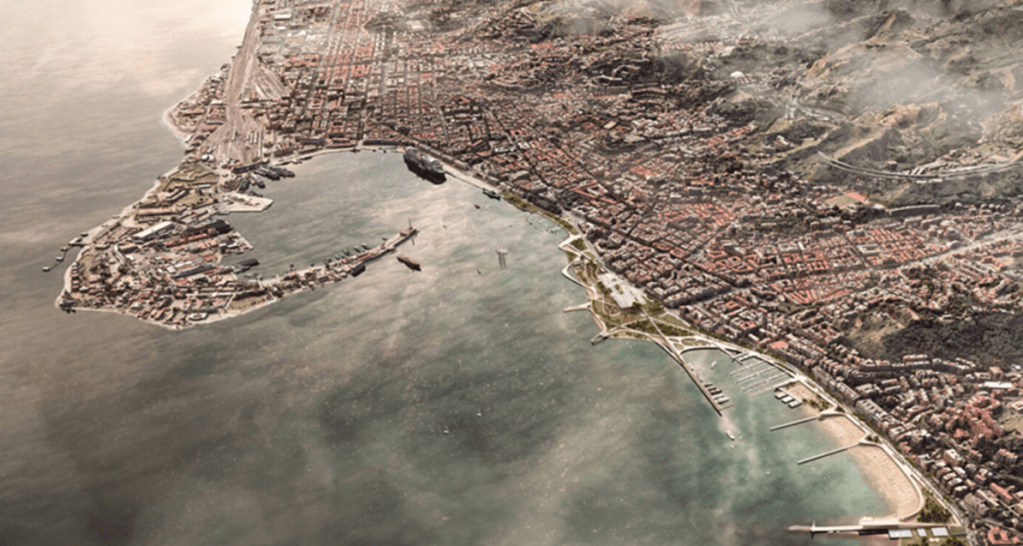
On the way he had been seasick. All this, however, was compensated by the fact that in Sicily there resided Constantine Lascaris (1434–1501), one of the most significant of the Byzantine Greek scholars who migrated to Italy after the fall of Byzantium in 1453.
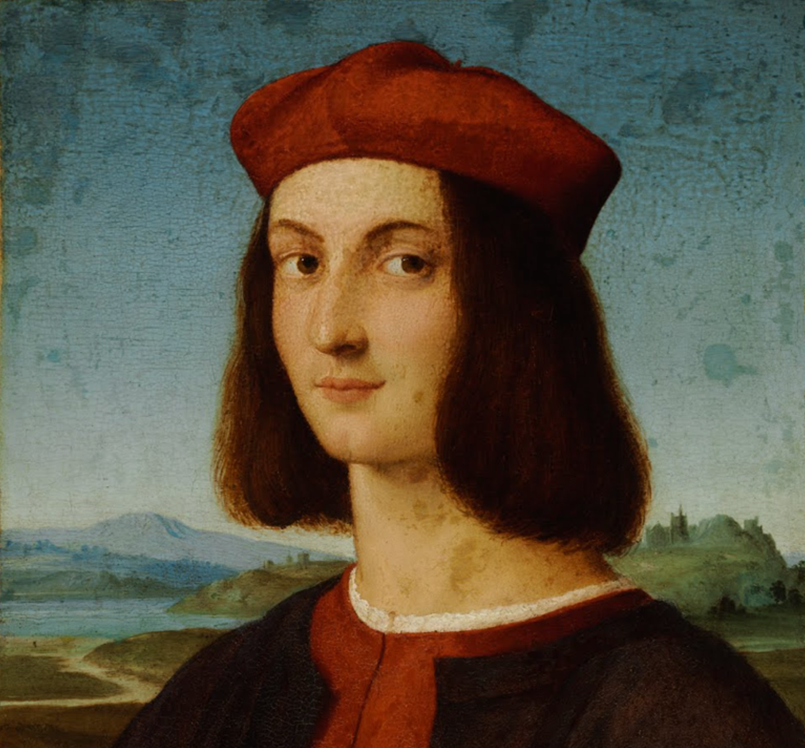
There are many famous names among these scholars: Cardinal Bessarion (1403–72), Georgios Gemistos Plethon (c. 1355/60–1452/54). A long list could follow, among which Constantine Lascaris holds a prominent place. Much is known of his career. He had been appointed in 1467 to a professorship attached to the monastery of San Salvatore in Messina. Bembo remained under his tutelage for two years. However, in contrast to Lascaris and the other ‘heroes’ of Greek studies in Renaissance Italy, there is one figure who is less well known.
This is the addressee of a letter that Bembo wrote (in Ancient Greek – he was obviously making remarkable progress) in the second year of his stay on Sicily. That addressee was the learned Demetrios Moschos of Sparta (c. 1450 ‒ post 1519).[1]
The letter is worth quoting in full:
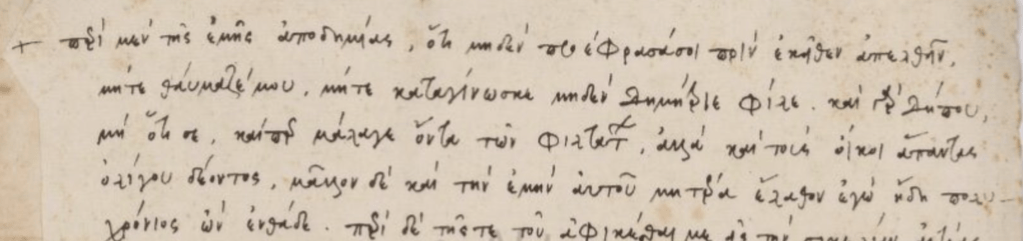
περὶ μὲν τῆς ἐμῆς ἀποδημίας ὅτι μηδὲν προέφασά σοι πρὶν ἐκεῖθεν ἀπελϑεῖν, μὴτε ϑαύμαζέ μου, μήτε καταγίνωσκε μηδὲν, Δημήτριε φίλε· καὶ γὰρ δήπου, μὴ ὅτι σε, καίπερ μάλα γε ὄντα τῶν φιλτάτων, ἀλλὰ καὶ τοὺς οἴκοι ἅπαντας, ὀλίγου δέοντος, μᾶλλον δὲ καὶ τὴν ἐμὴν αὐτοῦ μητέρα ἔλαθον ἐγὼ ἢδη πολυχρόνιος ὤν ἐνθάδε.
That I did not tell you about my departure before leaving from there, do not wonder or think anything less of me, dear Demetrios. For indeed, not only you, despite being one of my dearest friends, but also nearly everyone at home, and even nearly my own mother, were unaware of it, as I have been here for a long time.
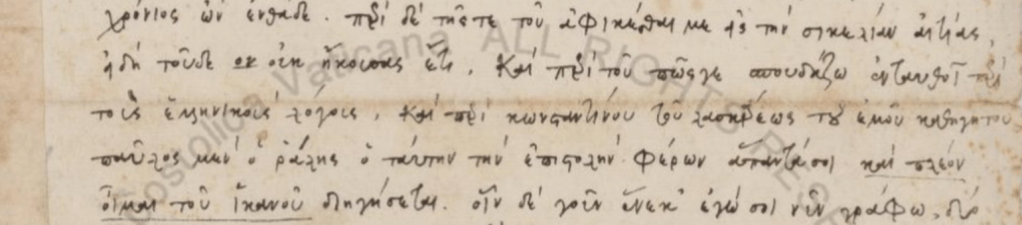
περὶ δὲ τῆς τε τοῦ ἀφικέσθαι με εἰς τὴν Σικελίαν αἰτίας, εἰ δὴ τοῦδε οὐκ ἤκουσας ἐτι, καὶ περὶ τοῦ πῶς γε σπουδάζω ἐνταυθοῖ περὶ τοὺς ἑλληνικοὺς λόγους, καὶ περὶ Κωνσταντίνου τοῦ Λασχάρεως τοῦ ἐμοῦ καϑηγητοῦ, Παῦλος μὲν ὁ Ῥάλης ὁ ταὐτὴν τὴν ἐπιστολὴν φέρων, ἅπαντα σοι καὶ πλέον οἴμαι τοῦ ἱκανοῦ διηγήσεται. Οἷν δὲ γοῦν ἕνεκ᾽ ἐγώ σοι νῦν γράφω, δύο ταῦτ᾽ ἐστί.
Regarding the reason for my arrival in Sicily, if you have not yet heard about it, and about how I am diligently studying Greek here, and about Constantine Lascaris, my instructor, Paul Ralis, the bearer of the same letter, will tell you everything and, I think, more than enough. Now, the reasons why I am writing to you now are twofold.

πρῶτον μέν, ὅτι περὶ μὲν τοῦ φιλεῖν σε ἀμνημόνως ἔχειν φαίνεσθαί σοι, μηδὲποτ᾽ ἂν ἐγὼ ζῶν ἐθελοίμην, περὶ δὲ τοῦ ὠφελεῖν τι σαυτόν τε καὶ τὰ σά, εὖ ἴσθι, ὅτι σου χάριν μεγάλα πῶς ποιεῖν δύνασθαι μάλιστ᾽ ἂν ἐπιθυμοίην.
First, that as long as I live I would never want to seem to you to be negligent in my affection for you, and as regards benefiting you and your affairs, know that I would most desire to be able to do something significant for you.

δευτερονί, μή σε τοῦτ᾽ οὐ λήθῃ, ὅτι πέμψας ἡμῖν τὸ παρὰ σοῦ περὶ τῆς Ἑλένης πεποιημένον ποίημα, πράγμ᾽ ἂν ἐμοὶ μὲν ὡς χαριέστατον ποιήσειας, τῷ δέ μου καϑηγητῇ Κωνσταντίνῳ ἡδὴ προσδοκώμενον. ἐκεῖνος μὲν γὰρ ποῖος εἶ σὺ ποιητής, εἰδέναι, ὡς σε ποθῶν, ἐφίεται, ἐγὼ δ᾽ ἐκείνῳ χαρίζεσθαι, ὡς ἅπαντα ὀφείλων, τοῦτο καὶ περὶ πάντων ἀγαπῶ. Ἔρρωσο, Γαμηλιῶνος πρώτῃ, ἔτει ἀπὸ θεογονίας ᾳυηγ ἐν Μεσσήνῃ.
Πέτρος ὁ Βέμβος.
Secondly, do not forget this, that by sending us the poem you composed about Helen you would be doing me the greatest favour, and it is also something my instructor Constantine already anticipates. For he, desiring to know what kind of poet you are, desires it, and I, who owe him everything, love to grant him this above all else. Farewell, on the first day of Gamelion, in the year from the theogony, 1493, in Messina.
Pietro Bembo.
Perhaps the first point to be made about this letter is that it is difficult to believe that this is the work of a Greek language beginner! The script is that of someone who is used to writing in the Greek Alphabet and, although one might quibble with some of the vocabulary, grammar and syntax, it is a very sophisticated piece of writing in an easy and colloquial style. Did Lascaris check his pupil’s work before he sent it, and this is the fair copy? (though there are crossings out and corrections). Had Bembo been taught by his friend the great Angelo Poliziano (Politian: 1454–94) before he came to Sicily? Or was he just very good at soaking up languages? We will never know, as this is the only surviving piece of Greek that we have from Bembo.

However, one thing that is evident from the letter is that the recipient is high in his favour and well known to him:
“Dear Demetrios. For indeed, not only you, despite being one of my dearest friends… I constantly remember you with affection, which I would never want to lose as long as I live, and regarding benefiting yourself and your affairs.”
All of this leads up to the chief point of the note: both Bembo and Lascaris want to see Moschos’ poem.
Before we sample his literary output, two questions may be posed: who was Demetrios Moschos and was he worthy of so much interest? He receives not even a passing mention whenever Greek scholars of the Renaissance are listed, though he can sometimes be found in a footnote or paragraph. He did come from Sparta and was a member of a family of scribes and Greek teachers (his father John and brother George were similarly employed). He certainly found much employment as a scribe and his scribal habits have been much studied. Above all, there can be no doubt that his handwriting was a thing of beauty (see below)!
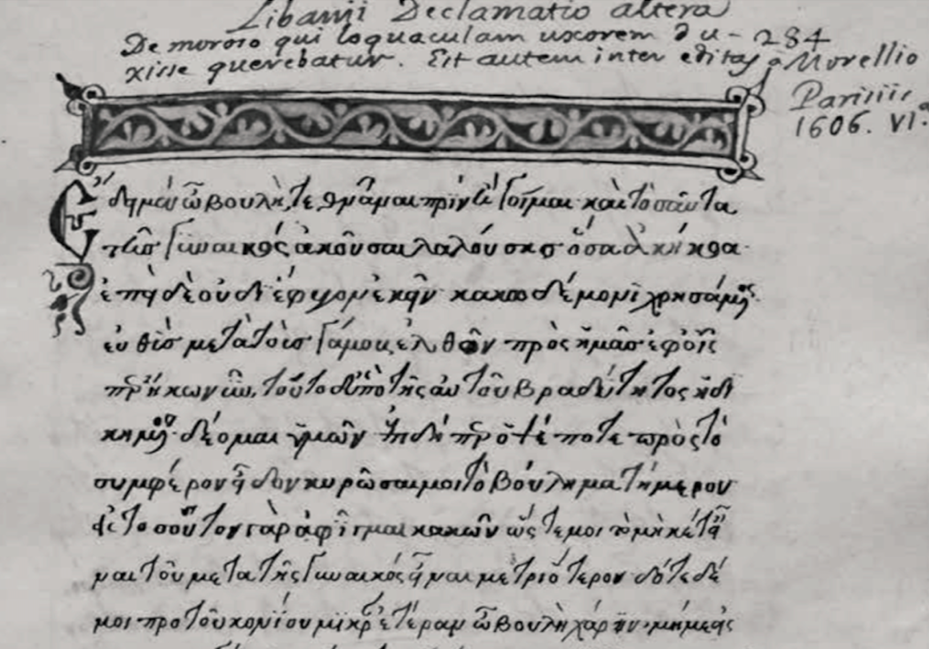
But what about his poetry? This is how his epyllion (462 lines) about Helen and Alexander opens:
πρῶτον Μουσάων ἱερὸν χορὸν εὔχομ’ ἀοιδῆς
τῆσδε χάριν τεῦξαι καὶ ἐς τέλος εὐκλεὲς ἐλθεῖν·
αὐταὶ πάντα φέρουσιν ἐπήρατα ἀνθρώποισιν,
αὐταὶ [καὶ] ἀθανάτοισιν ἀκήρατον ὕμνον ἱεῖσαι
θέντο χοροὺς ἐρόεντας ἐπ’ ἀκροτάτου Ἑλικῶνος. 5
χαίρετε ὑμνοδότειραι, ἀνοίξατε δ’ οἶμον ἀοιδῆς.
ὡς μάλα καὶ προτέροισι περικλυτὸν οὔνομα πᾶσι
θήκατε, ὧν τε γένος Διὸς ἔπρεπεν ἄμβροτον αἰέν,
καὶ νῦν λισσομένῳ μοι ἐνείπατε τοῖο θύγατρα,
ὥς τε παλιντροπίῃ μετεβήσετο πατρίδος αἴης, 10
Κύπριδος ἐννεσίῃσιν Ἀλεξάνδροιο ἄκοιτις.
“I pray first to the sacred chorus of the Muses to compose the beauty of this song and to reach a glorious conclusion. They are the ones who bring every joy to men; they are the ones who, releasing a pure hymn to the immortals, make lovely dances on the summit of Helicon. Hail, inspirers of hymns, open the path of song. Just as you already made glorious the name of all the ancients, to whom descent from Zeus gave immortal splendour, so now, I beg you, tell me about his daughter, how in her anguish she left her fatherland, the bride of Alexander, by the will of Cypris.”
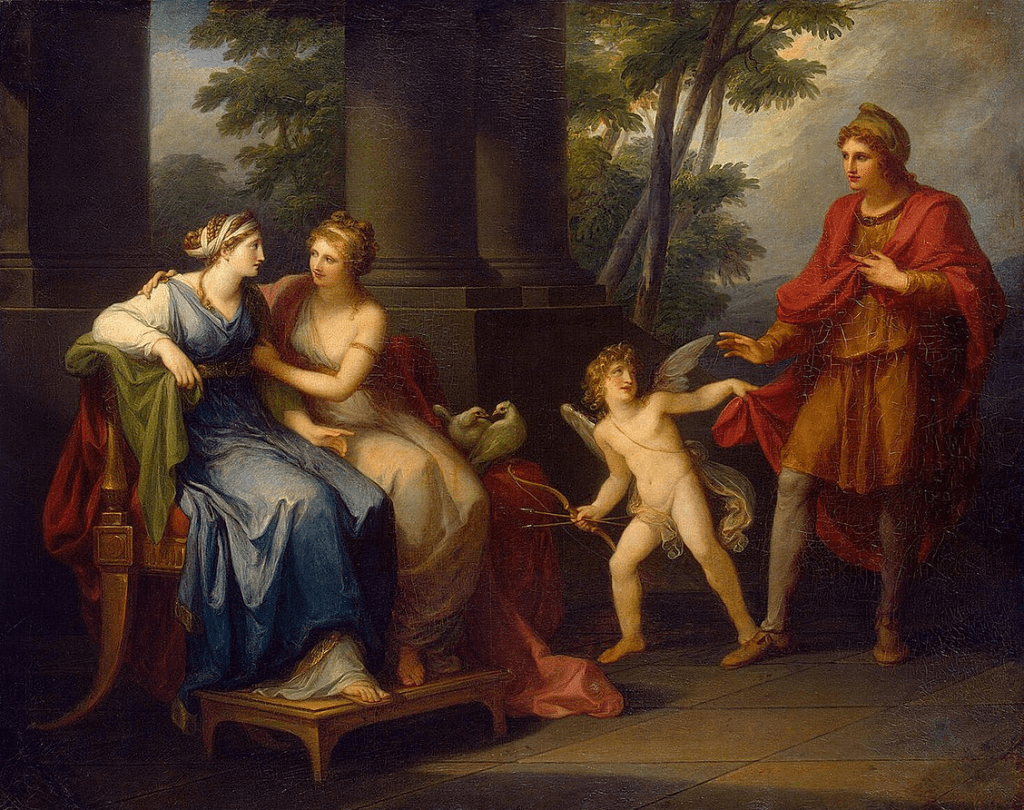
There’s a hint of Hesiod about this passage (line 5), perhaps a touch of Pindar (line 6 : Olympians 9.47 ἐπέων σφιν οἶμον λιγύν via the Homeric Hymn to Hermes 451 οἷμος ἀοιδῆς), a neat chiasmatic effect in lines 3-4, and an interesting verbal rarity in line 6: ὑμνοδότειραι.
Throughout the poem the author shows a deep knowledge of Homeric and post-Homeric epic (he is steeped in Apollonius Rhodius, probably because he made so many copies of him) and towards the end of the poem he alludes to Euripides’ Orestes (lines 457–60), a play that was extremely popular in Byzantium (from the so-called ‘Byzantine triad’ of three Euripidean plays selected for study in Byzantine schools: Hecuba, Orestes and Phoenician Women). His command of the finer points of epic language sometimes leave something to be desired.
That said, the poem is a fine effort. There many sonorous lines and, one feels sure that if Lascaris ever saw it, he would have been impressed.
Here is another extract, which seems to be very relevant considering recent discoveries at Pompeii:
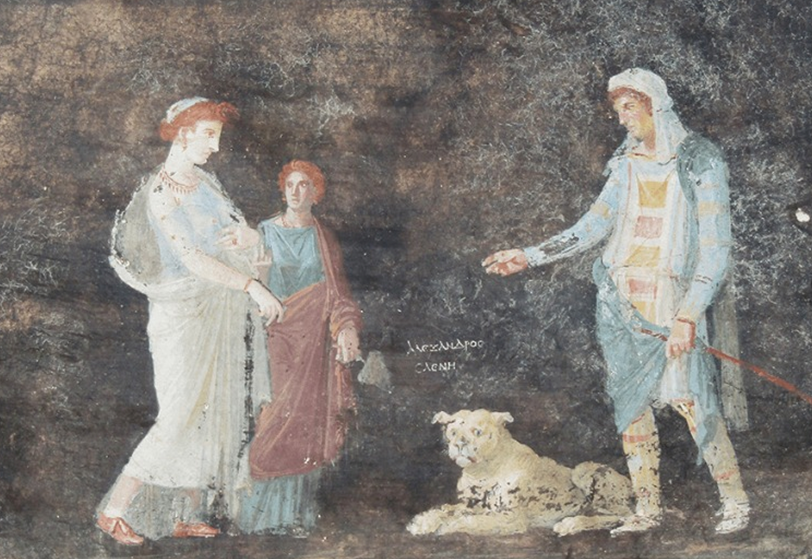
Menelaus has left for Crete under the influence, according to Demetrios’ poem, of “unavoidable fate”. Paris is alone with Helen (except for the obligatory maidservant and famous Spartan Hunting dog):
δὴ τότε τήν γ’ ἐπέεσσι παρέτρεπε τοῖο νόοιο
οὐδὲ μὲν οὐκ ἐθέλουσαν Ἀλέξανδρός περ ἀκούειν·
“κλῦθι, Διὸς μεγάλοιο πανευκλεές ἄμβροτον ἔρνος· 245
πρῶτον δ’ οὐκ ἀέκητι θεῶν πλόον ἄμμι γενέσθαι
Τροίης στελλομένοις αὐτοσχεδόν, ἀλλ’ Ἀφροδίτη
σεῦ κλέος ὑμνείουσα πανέξοχον εἶδος ἔφασκε
καὶ φρένας ἔμμεν ἀμύμονας, οἷα πάρεστιν ὁρᾶσθαι,
ὡς πρέπει ἀθανάτοισιν ἀληθέα πάντ’ ἀγορεύειν. 250
καὶ δ’ ἡμᾶς χάριν εὐμενεούσης στεῦτο ἐπαυρεῖν
σεῖο, Διὸς θύγατερ, κλέος ἄφθιτον ἀντιβολοῦντας,
ὁππότε τὴν ἔκρινα θεῶν περὶ κάλλεος ἄλλων
ἐξ ἔριδος προφέρουσαν Ἀθηναίης τε καὶ Ἥρης.
τὴν δή μοι νῦν Ἀφροδίτη χάριν (ὡς ὄφελόν γε 255
μήποτε τήν γε κρίσιν ἐπήρατον αὖθι τελέσσαι)
ἦλθεν ἀμειβομένη καί μοι φίλον υἱὸν ἐπῶρσεν
ἀμφὶ τεαῖς χαρίτεσσι δαμάσσαι, πότνια νύμφη.”
ἴσκε παρατροπέων, τῆς δ’ ἐξ ἔρος ἔσχετο θυμόν.
αὐτὴ γὰρ τάδε πάντα συνήρατο δῖ’ Ἀφροδίτη. 260
“Just then, Alexander with his words made her lose her mind, as she was not unwilling to listen: ‘Listen to me, most glorious, divine daughter of great Zeus. First of all, it was not without the will of the gods that we sailed, nor did we leave Troy on our own initiative. It was Aphrodite who extolled your glory, saying that you had a beautiful appearance and an impeccable spirit, as can be seen, since it is fitting for the immortals to speak the truth. She promised that I would enjoy your benevolent favours, daughter of Zeus, having part of an immortal glory, when I judged her superior to the other goddesses, Athena and Hera, in the dispute over beauty. Now Aphrodite has come to repay me that favour (if only I had never pronounced that welcome verdict!); and she has raised against me her son, to tame me with his charms, honoured lady.’ He spoke seductively, and love seized her heart, for in all this was the work of the goddess Aphrodite.”
The verses flow fairly smoothly. In fact, it reads and sounds a lot like When Jason met Medea in Book 3 of Apollonius’ Argonautica. Demetrios shows himself to be a worthy heir to the tradition of Greek hexameter epic poetry, singing in honour of a Spartan ancestor. Bembo might have been interested in the poem, not only because of its innate qualities and the fact that it was written by a friend but also because he himself was working on a translation (into Latin from the Greek) of Gorgias’ Encomium of Helen.

We do not know what Bembo’s and Lascaris’ final judgment on Demetrios’ poem was but the work was published with a Latin translation by Demetrios’ friend Ponticus Virunius at Reggio Emilia, perhaps as early as 1497. A later literary critic, Lilio Gregorio Giraldi (1479–1552) has this to say about the Spartan poet and the eventual publication of his Helen:
heroicum vero carmen aggressus de Helena palam omnibus excussum typis legendum tradidit, in quo mira est facilitas.
After undertaking an epic poem on Helen, he allowed this to be printed for all to read. It has marvellous fluidity of style.
He also remarked that “Demetrius composed many poems: epigrams and elegies. As for his comedies, he did not allow them to be performed publicly, limiting acquaintance with them to intimate friends.” These remarks are not a hundred percent accurate. Demetrios’ comedy Neaira wasprobably performed at Mantua for Duke Ludovico Gonzaga (1412–78), and more about that work can be found here and here (at the foot of the page). They do, however, seem to show, that Demetrios played a substantial part in the literary life of Renaissance Italy and that a full modern reassessment may be long overdue.

Peter Hulse is an Honorary Research Fellow at the University of Nottingham. He has made a special study of Apollonius of Rhodes but has a wide-ranging interest in all aspects of the Classical world. He has written previously for Antigone about a medieval Latin poem about chess, about the tale of some American Argonauts, about the arrival of the celebrity Caecilius in Blighty, about the Helen Episode of Aeneid 2, and about Prudentius’ Psychomachia. He used to teach Latin, Greek and IT.
Further Reading
While accessible works on Demetrios Moschus are yet to be written, for a good introduction to Bembo, see Gareth D. Williams’ Pietro Bembo on Etna: The Ascent of a Venetian Humanist (Oxford UP, 2017).
The image at the head of this article is of a copy of Apollonius Rhodius’ Argonautica, copied by Demetrios Moschos (Bibliothèque Nationale, Paris, France: MS grec 2729 ff. 1r-2v).
Notes
| ⇧1 | He might have been in Italy as early as 1470, and was certainly teaching in Venice in 1492/3; he then taught in Ferrara and Mantua but we lose trace of him after 1519. |
|---|