John Godwin
The Power of Love
Love is scary. It turns the world upside-down, and its force can seem more than human. A woman who may appear to be gentle and unthreatening can destroy a man with a single glance:
Cynthia prima suis miserum me cepit ocellis.
Cynthia was the first to ensnare me – love-lorn as I am – with her little eyes.
(Propertius 1.1.1)

Just as the war hero Mark Antony was undone by the wiles of Cleopatra, Catullus (Poem 76) is floored by a disease (pestis) called love, and Aeneas’ mission to found Rome is almost blown off course by the love of Dido (with a little help from Venus and Juno). The misogyny which you find in that hate-letter to every ovary-bearing person on the planet – Juvenal’s 6th Satire – does not exist in a vacuum, and it may be that the harshness is masking deep anxiety.
Why (and how) does the “weaker sex” wield such power? Are men not supposed to be the armour-clad rulers of the world, the family and everything in between? Could it be that these women have supernatural powers which can kill or cure, heal or maim, liberate or enslave the man who falls into their spider’s web?

One extreme version of this cunning female is the sorceress – a witch working magic for good or for evil – which starts with Circe in Homer’s Odyssey 10: she can turn Odysseus’ men into pigs with her “wicked potions”, and turn them back into men again. She openly states that she wants to bed Odysseus (who is afraid that she will “unman” him in doing so), and the hero only foils her plots with a little herbal help from Hermes.
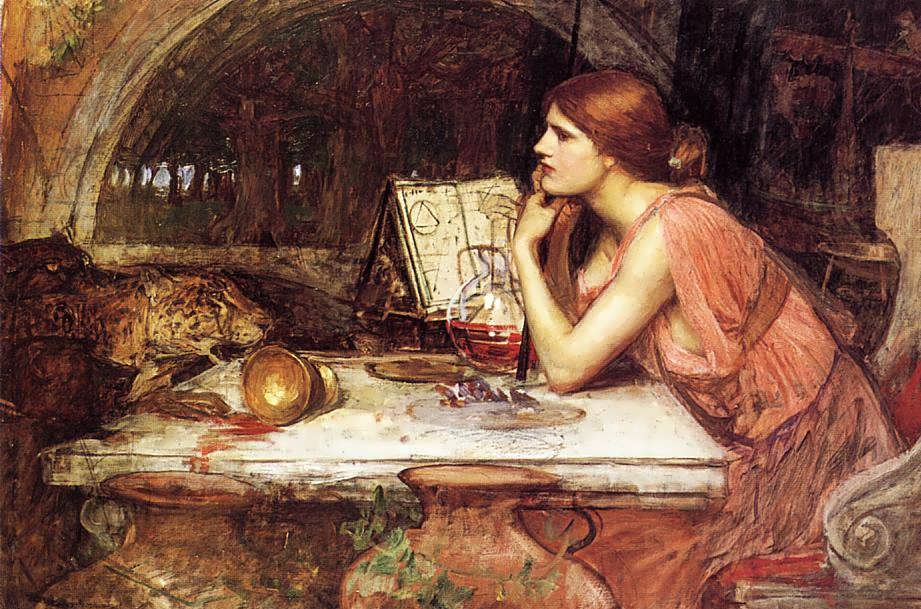
Some 300 years after Homer (in Euripides’ tragedy Medea) we find the Colchian witch Medea doing similar things: we see how she helped Jason secure the Golden Fleece, and could rejuvenate both animals and people back to youth from old age. Jason thought that he could abandon her and marry the daughter of the king of Corinth, and he gets it wrong on every count. He foolishly imagined that he could do this with impunity – had he learned nothing from her formidable past? – and then adds insult to injury by telling her that she was sex-mad.
Medea plays him (and the other men in the play) like the virtuoso she is: she gulls all of them into going along with her plans and then creates a caustic brew which (when smeared onto clothing) kills the wearer; this enables her to dispatch Jason’s new bride as well as his new father-in-law in one go. Even more terribly, she murders her own children with the very unmagical means of a sword.
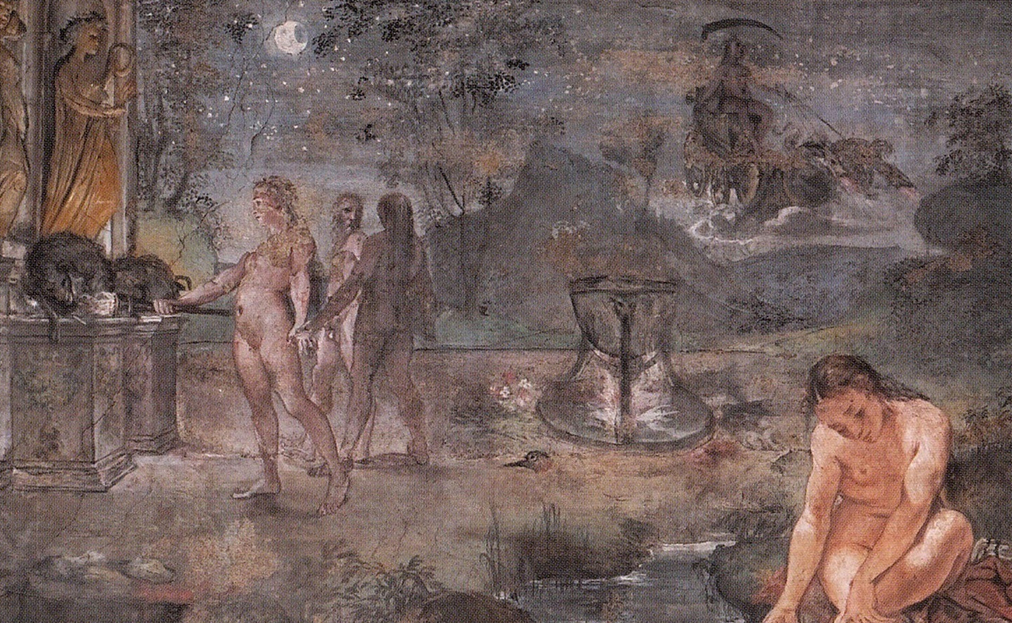
The psychology of Medea, the scorned-woman-turned-killer, made her into a well-rehearsed character in Greek and Latin poetry. Two hundred or so years after Euripides, Apollonius of Rhodes made her central to his Argonautica. Roman writers found her story one worth exploring afresh – see for instance Ovid (in his Metamorphoses 7.224–33 and his lost tragedy Medea) and the great Neronian dramatist and philosopher Seneca. All these writers, in their different ways, explored the baffling combination in Medea of the feminine and the brutal. Murderous men are commonplace in ancient literature; here, by contrast, we have a killer who is as charming as she is deadly, and the irony of a male actor playing a female character who is acting out so devious role was hugely exciting to ancient playwrights.
Ancient literature often brings the gods into the action, and it is interesting that Medea prays to “three-headed” Hecate – a mysterious goddess of the Underworld – as her patron goddess (Ovid Metamorphoses 7.194–5; Seneca Medea 6–7, 833–42). This divinity seems to have had three manifestations: Hecate herself, Diana/Artemis (the goddess of the hunt) and Luna/Selene (the goddess of the Moon).

The Dark Side of the Moon
The moon in June is a modern romantic cliché, suggestive of strangers in the night exchanging glances under a balmy lunar glow; but this is less so in Roman literature. When Niceros sees his fellow-traveller change into a werewolf in Petronius’ Satyricon (62.3), luna lucebat tanquam meridie (“the moon was shining like it was midday”) – the moon was working its magic of turning the night into day, in other words. Everyone knows the superstition of full moons and wolves: Propertius claims that the female pimp whom he hates is bold enough to lay down the law for the moon and disguise herself as a night-prowling wolf (Propertius 4.5.13–14).
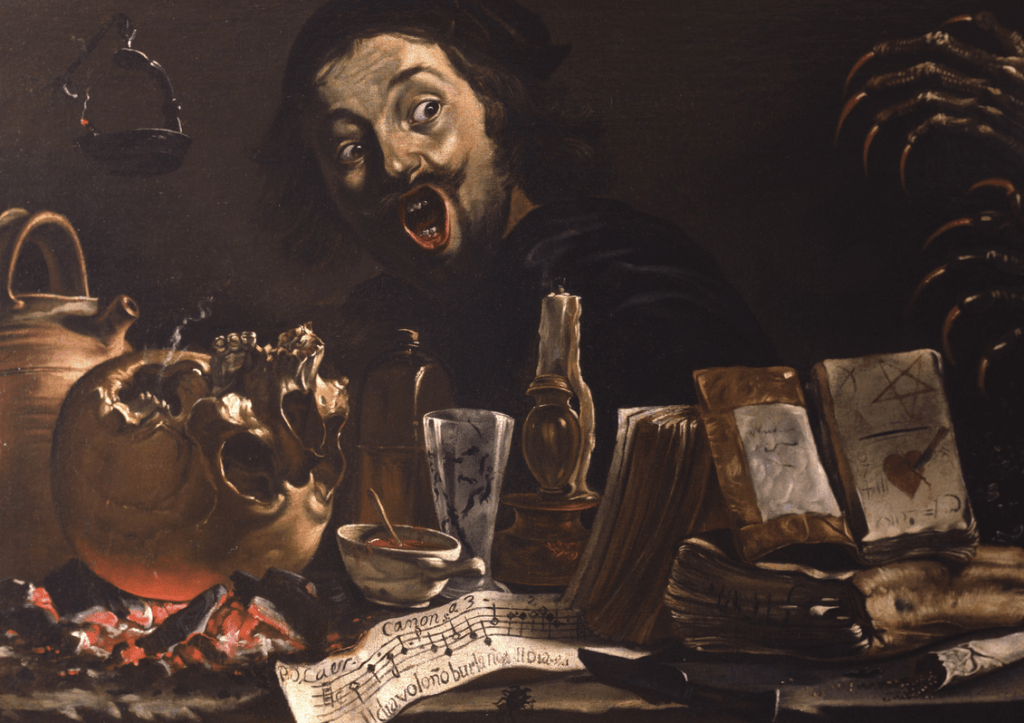
The moon is a key part of ancient magic: witches are said to be able to draw down the moon by their skills, such as Medea claims in Ovid (Metamorphoses 7.207):
te quoque, Luna, traho…
You too, Moon, do I drag [down from the sky]…

Propertius in his love-sick distress asks (1.1.19–22) such women for their help:
at vos, deductae quibus est pellacia lunae
et labor in magicis sacra piare focis,
en agedum dominae mentem convertite nostrae,
et facite illa meo palleat ore magis!
You women who trick the moon down to earth, whose task is to perform sacred rites on magic hearths, come now and change the heart of my mistress and make her face grow more pale than my own!
The prayer is a fortiori – if they can move celestial bodies, then how much more easily can they move the heart of a human being?
This trick of lunar leverage is ascribed to “Thessalian women” by Plato (Gorgias 513a); Horace (Epodes 5.45–6) describes how Folia sidera excantata voce Thessala | lunamque caelo deripit (“with her Thessalian voice enchants the stars and draws the moon down from the sky”). Mundane scholarship argues that “drawing down the moon” means causing a lunar eclipse rather than any more exotic sci-fi trickery, but what is the point of this trick? To stop the moon (who, like the sun, sees everything being done on earth) illuminating the earth and so ensure the safety of darkness?

Theocritus’ 2nd Idyll gives the microphone to Simaetha who is seeking to “bind” her lost lover to her with the use of magic, and this also involves both the moon and Hecate:
“Σελάνα,
φαῖνε καλόν: τὶν γὰρ ποταείσομαι ἅσυχα, δαῖμον,
τᾷ χθονίᾳ θ᾽ ῾Εκάτα, τὰν καὶ σκύλακες τρομέοντι
ἐρχομέναν νεκύων ἀνά τ᾽ ἠρία καὶ μέλαν αἷμα.
χαῖρ᾽ ῾Εκάτα δασπλῆτι, καὶ ἐς τέλος ἄμμιν ὀπάδει.
15φάρμακα ταῦτ᾽ ἔρδοισα χερείονα μήτέ τι Κίρκης
μήτέ τι Μηδείας μήτε ξανθᾶς Περιμήδας.”
“Shine bright, Moon, for I will sing to you, goddess, softly and also to Hecate of the underworld whose coming is greeted by dogs shivering as she comes over the graves and the black blood of dead folk. Dread Hecate, hail to you and serve me with a view to making these drugs of mine no less potent than those of Circe nor those of Medea nor those of fair-haired Perimede.” (2.10.16)
Love makes people desperate, and it is not surprising that these sorceresses are said to create and dispense love-philtres – the kind of thing which features in Tristan and Isolde and A Midsummer Night’s Dream – which can “bind” or “loosen” the hearts of lovers. St Jerome even records that Lucretius took his own life after drinking a love-philtre, although that idea has long been debunked as an instance of the biographical fallacy gone mad.

Dido, in desperation about losing her lover Aeneas, finds a “Massylian priestess” who can charm the heart as well as the stars and the “ghosts of night”:
haec se carminibus promittit solvere mentes
quas velit, ast illis duras inmittere curas;
sistere aquam fluviis et vertere sidera retro;
nocturnosque movet Manes: mugire videbis
sub pedibus terram et descendere montibus ornos.
With her spells she claims to unloose any hearts she wishes, but on others to let loose harsh pains of love; to stop rivers from moving and to turn stars back on their course; she stirs the ghosts of the night, and you will see the earth lowing under our feet and ash trees walking down from mountains. (Virgil, Aeneid 4.487–91)

It is interesting that men try to tap into these female power-sources when looking to get one over on their rivals: the elegist Tibullus tells his reluctant mistress that an “honest witch” (verax saga) has invented incantations which will bewitch Delia’s husband into not seeing what she is up to, even if he sees them in flagrante delicto:
ille nihil poterit de nobis credere cuiquam,
Non sibi, si in molli viderit ipse toro.
He will not be able to believe anyone telling him about us, and he will not even believe himself, if he sees us on the cosy bed. (1.2.55–6)
Conveniently for Tibullus, this trick will only work as far as he is concerned; Delia is not to get any fancy ideas of playing away elsewhere:
tu tamen abstineas aliis: nam cetera cernet
omnia, de me uno sentiet ipse nihil.
Keep clear of other men, however: he (your husband) will see everything else you do and it is only in my case that he will not see anything. (1.2.57–8)
This is quite possibly a trick to persuade Delia into bed, of course; and Delia is not stupid.

Worse comes when the wife/lover is herself wielding the magic over the moon-struck man. Juvenal (6.610–12) describes how the wicked wife gets hold of “Thessalian potions which enable her to confuse her husband’s mind and smack his buttocks with her slipper” (hic magicos adfert cantus, hic Thessala vendit | philtra, quibus valeat mentem vexare mariti | et solea pulsare natis.). Women, say men, drive their husbands mad and so make them powerless; this supposedly explained how the great war-hero Mark Antony came to give everything up for love of the Egyptian queen Cleopatra (Plutarch Antony 37.6, 60.1).
Juvenal also makes much of the potion allegedly given to Emperor Caligula by his wife Caesonia, which drove him to “mangle indiscriminately senators and men of equestrian blood” (haec lacerat mixtos equitum cum sanguine patres, 6.625), and so cause murder and mayhem: but Juvenal also claims that women are themselves prone to extreme superstition, and thus are easy prey for unscrupulous quacks and conmen (6.512–91).
Men in Love
The speaker in Latin love elegies is often not afraid to confess his own inadequacies. In Tibullus 1.5, for instance, the poet and his girlfriend Delia have quarreled and she has quickly moved on to a new lover who just happens to be rich. The poet describes how he tried to divert his pain and his affections with wine and other women, only to find that he is now impotent:
saepe aliam tenui: sed iam cum gaudia adirem
admonuit dominae deseruitque Venus.
Often I held another woman: but when coming towards my climax Venus reminded me of my mistress and deserted me. (1.5.39–40)
This couplet was also used as the epigraph to Goethe’s wonderful poem Das Tagebuch (The Diary) in which a travelling businessman finds himself beset with impotence when he tries to take advantage of a compliant chambermaid in his hotel. Goethe’s chambermaid is sweet and understanding and falls asleep: Tibullus’ disappointed lover rails at him that he has been spellbound (devotum) by his witch of an ex-girlfriend. Delia’s door remains shut and the poem ends with a warning to her new lover that his days are also numbered.

There is a pattern here. If things do not go the way men want, they may blame somebody else rather than themselves. Impotence is then said to be the result of witchcraft, and so is infidelity: if a male lover’s girlfriend cheated on him and/or replaced him with another lover, the man could always blame the girl – usually claiming that her new man was richer than him, and therefore more attractive to this venal Venus. Often, however, he blamed the figure of the lena – an elderly woman who made money by arranging relationships between available men and young women, as described (and cursed) in Propertius (4.5) and Ovid (Amores 1.8).
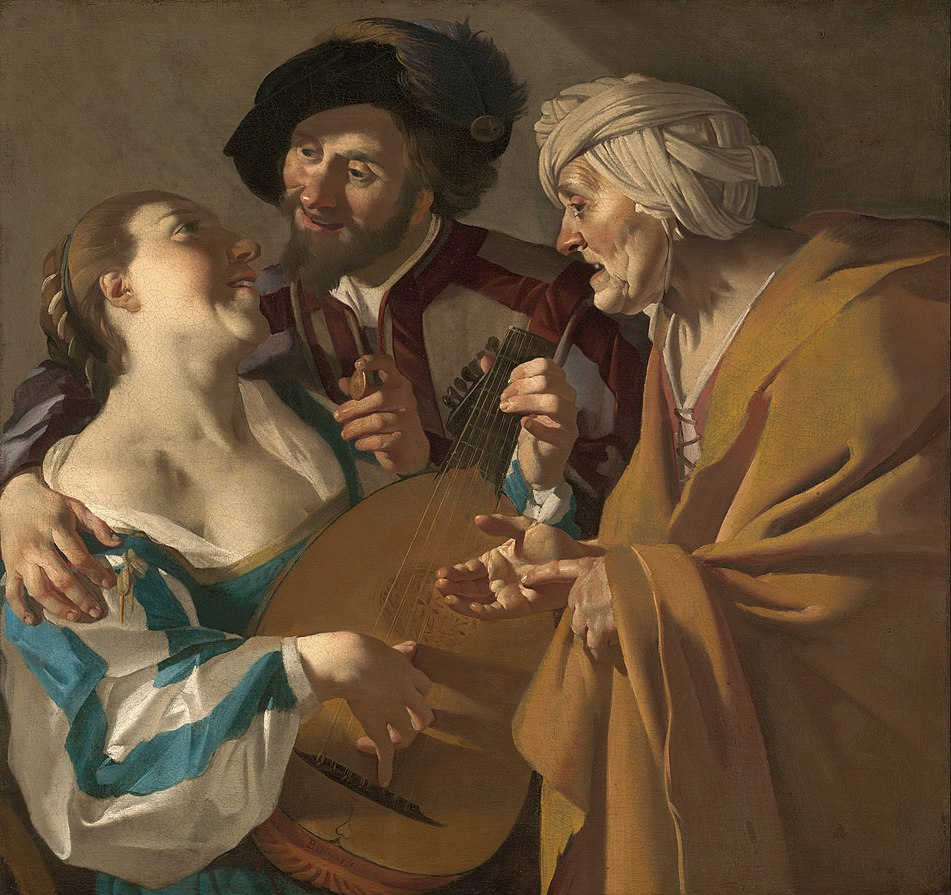
Tibullus combines both these ideas, blaming the lena for introducing Delia to a nameless “rich lover” (dives amator) who has supplanted him, but then also firing hideous curses at the lena with the language of witchcraft:
sanguineas edat illa dapes atque ore cruento
tristia cum multo pocula felle bibat;
hanc volitent animae circum sua fata querentes
semper et e tectis strix violenta canat;
ipsa fame stimulante furens herbasque sepulcris
quaerat et a saevis ossa relicta lupis;
currat et inguinibus nudis ululetque per urbes,
post agat e triviis aspera turba canum.
Let her eat food mixed with blood and with a bloody mouth drink bitter cups full of bile. Let ghosts constantly fly around her, bemoaning their fate, let the fierce screech-owl sing from her roof. Let her be mad with gnawing hunger and go to find grasses from tombs and bones which even savage wolves have left behind. Let her run with naked groin through the cities and let an angry pack of dogs from the crossroads chase her from behind. (1.5.49–56)
Tibullus 1.5 is a fascinating study in self-recrimination. The rejected lover is seen struggling to deal with his feelings towards his ex-lover, her new boyfriend, an (imaginary?) older woman who may have broken them up, and himself. The text is a psychological dramatisation of a man in the throes of bitter remorse, jealousy and sexual passion: and the irrational side of his nature finds ready expression in the irrational world of the occult.

Similarly, when Tibullus’ beloved boyfriend Marathus takes up with a girl, the poet wonders whether the youth has been subject to magical interference from some nameless “old woman” (ănus, 1.8.18) who knows the black arts. This is surprising, since this same Tibullus is also madly in love with not one, but two women (Delia and Nemesis) over the course of his two books of Elegies, and so should not have been surprised at the boy’s bisexual leanings.
When the poet falls in love with the ominously-named Nemesis, he tells us (2.4.57–60) that he would gladly consume all the poisons of Circe and Medea and all the herbs grown in Thessaly – the home of witchcraft – if only his new mistress would smile on him. He shows himself as a pathetic, emasculated, and deluded male: abused and exploited by his beloved. This figure is one which we find again and again in elegy: Catullus (Poem 76) begs for the gods to cure him of the disease of love: despite the flagrant infidelity of his mistress, he cannot stop loving her.

Propertius (1.1) is reduced to a pathetic figure after meeting his mistress Cynthia; and the self-revelatory poetry of Tibullus shows us a man admitting his own weakness in what is to us an emotionally abusive relationship. This turns upside-down the cliché of hard macho dominance of the weaker sex, and later feeds into two of the great novels of the 20th century – Vladimir Nabokov’s Laughter in the Dark (1932) and Heinrich Mann’s Professor Unrat (1905; famously adapted for the screen in 1930 as The Blue Angel, starring Marlene Dietrich and Emil Jannings).
In Laughter in the Dark, the respected art critic Albinus falls in love with Margot, who works at the local cinema: she manipulates him, breaks up his marriage, betrays him sexually and finally shoots him dead. Heinrich Mann’s Professor Unrat features a pillar-of-society schoolteacher who falls in love with the ironically-named Rosa Fröhlich (“Pink Happy”), and loses everything for his infatuation. Desperate men look for desperate measures, and it is no surprise that the Roman lover both blames and invokes witches in his pathetic state.

Turning the Tables – Or Not
Witches, then, can be the Roman man’s worst nightmare in his dealings with the female sex. It must have been satisfying for the Roman male sometimes to imagine these figures of august terror being taken apart, as happens in Horace Satires 1.8, where the sinister hags end up being stripped of their false teeth and fake hair. They run off when the statue of the fertility god Priapus fires at them a “fart which splits [his] figwood buttocks” (pepedi | diffissa nate ficus, 1.8.46–7).
The figure of Canidia in this poem (and in Horace Epodes 5 and 17) is especially interesting: her name suggests “white-haired” (cana) but also “bitch” (canis) – which is apt, as dogs are proverbially shameless, as Helen of Troy tells us of herself (Homer Iliad 3.180). “Shameless” in this context indicates sexual incontinence, and it is a short step from this to seeing Canidia as a sexually voracious and unsatisfied older woman like Neobule (Odes 3.12). Canidia in Horace Epode 5 is planning to dismember an unfortunate child so that his organs might be used in a love-charm to restore the love of her ex-lover Varus. There is more than a touch of old-school misogyny in the depiction of the elderly woman trying to cheat her way back into the affections of a younger man – a misogyny which finds full-throated expression in Horace Epodes 8 and 12 and harks back at least to Aristophanes Ecclesiazusai (887–1111).

Canidia is unsuccessful, Varus does not return and the male figure – who is only a child – gets the last word over this desperate and ridiculous hag: but the final poem in the collection (Epode 17) sees the poet apologise to Canidia for his mockery, only to find her mercilessly unforgiving. Any victory over her has been short-lived, and she gets the last word: her arts may not have worked on him in the past, but his future is one of never-ending torment. He will pray for death to come quickly:
voles modo altis desilire turribus,
frustraque vincla gutturi innectes tuo
modo ense pectus Norico recludere
fastidiosa tristis aegrimonia.
Now you will wish to leap down from high towers, now to split open your heart with a Noric sword, in vain will you weave a noose around your neck, despising life and sick at heart. (Epodes 17.70–3)

John Godwin was for many years Head of Classics at Shrewsbury School. He has just finished writing the OCR Anthology of Latin Verse (Bloomsbury, London) which contains extracts from Lucretius, Ovid (Metamorphoses 7) and Tibullus (1.2, 1.5, 2.4). These texts will be set as an option for A level Latin in 2027–8. He has also published editions of Catullus, Lucretius, Ovid, Horace and Juvenal and is the editor of the Ad Familiares website for the educational charity Classics for All.
Further Reading
On ancient magic, the best recent treatments are Lindsay Watson’s Magic in Ancient Greece and Rome (Bloomsbury, London, 2019) and Philip Matyszak’s Ancient Magic: A Practitioner’s Guide to the Supernatural in Greece and Rome (Thames and Hudson, London, 2019).
There are many books on Roman Elegy. See for instance: D.G. Kennedy The Arts of Love (Cambridge UP, 1993), G. Luck The Latin Love Elegy (Methuen, London, 1969), R.O.A.M Lyne, The Latin Love Poets (Oxford UP, 1980), J.P. Sullivan (ed.) Critical Essays on Roman Literature: Elegy and Lyric (Routledge & Kegan Paul, London, 1962).
There is a good translation of Tibullus by A.M. Juster, with facing Latin text and notes by Robert Maltby, in the Oxford World’s Classics series (2012).