Jo Ball
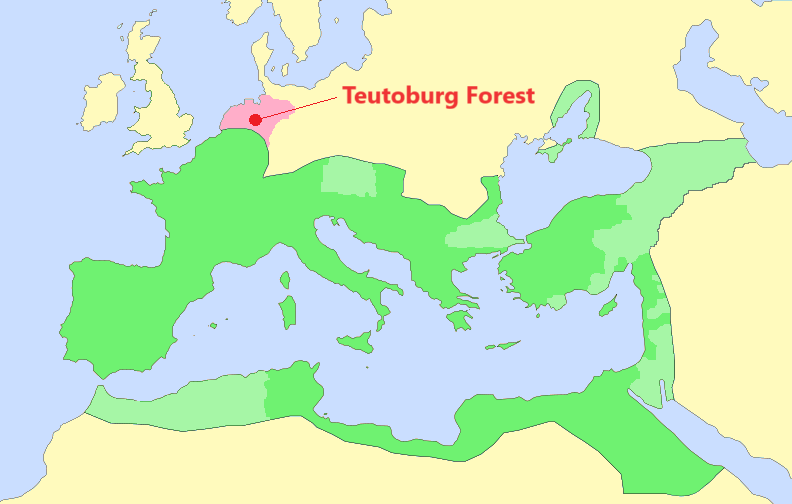
In AD 9, during the last years of Augustus’ reign, the Roman empire suffered a devastating military defeat in Germany’s Teutoburg Forest. A three-legion army marched unawares into a large-scale ambush, orchestrated by Arminius, chieftain of the Cherusci tribe, who had previously lived in Rome as a hostage and served in the Roman auxilia. More than 10,000 Roman soldiers were killed or taken into captivity during the battle, alongside an unknown number of camp-followers. The battle had a significant impact on Roman imperial ambitions to incorporate the German territories east of the Rhine into the Empire. Following a series of revenge campaigns under Germanicus in AD 14–16, Tiberius evidently decided to abandon the idea of re-establishing Roman administration in these regions, a policy which was never reversed.
The legions destroyed in the Teutoburg were under the command of Publius Quinctilius Varus (46/45 BC–AD 9), an individual whose story became so defined by the battle that it was referred to in antiquity as the Varus Disaster (Clades Variana), a name which still persists in some quarters today. He was the commander of the five Rhine legions, and probably also the first governor of a newly-established province of Germania; although these territories had been under general Roman authority since around 7 BC, they had previously been overseen only by a Rhine legion commander with a largely military agenda, rather than a governor with additional administrative responsibilities.
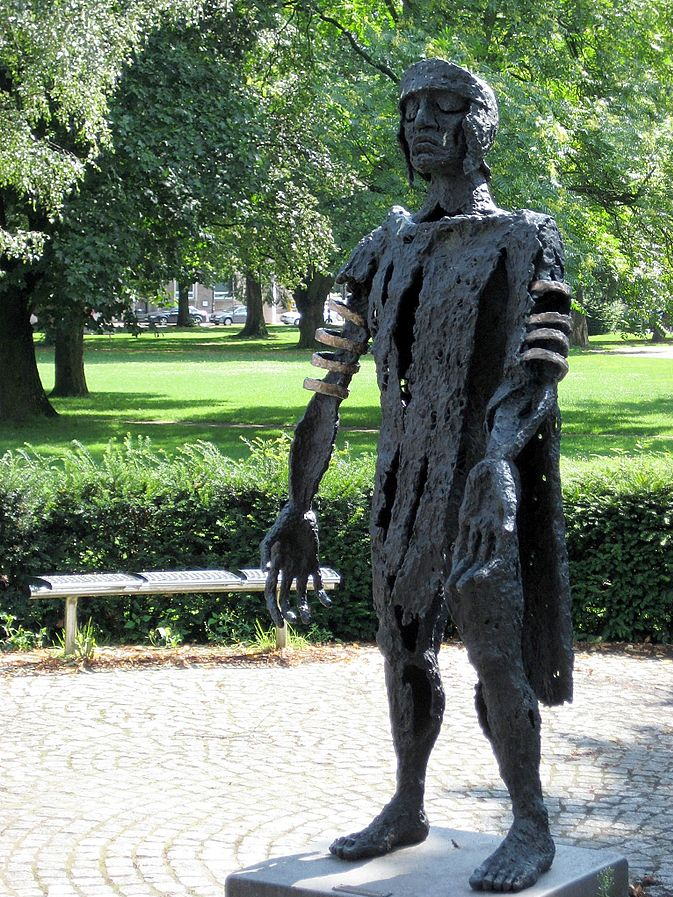
Many of the Roman sources blame Varus personally for the disaster, suggesting that he was an incompetent administrator who was way out of his depth in the complex situation presented by Germany, with little military experience and even less ability. Most modern historians have followed this line. But if this was the case – if Varus was so unsuited to the governorship of Germania – then why did Augustus appoint him to such an important role, one which demanded the best that Rome had to offer?
An exploration of Varus’ previous life and career, much of it reconstructed from archaeological sources, provides a very different picture from the traditional characterisation, and explains why he found himself appointed to such an important position.
Publius Quinctilius Varus was born in the mid-40s BC (probably around 46/45 BC) to Sextus Quinctilius Varus and an unknown mother. The Quinctili Varii family had a long aristocratic pedigree, but were not particularly prestigious in terms of actual power, and no member of the family had risen especially high in the Roman political structure for centuries. Sextus Quinctilius Varus had fought against Julius Caesar in the civil wars of the Late Republic (49–48 BC), later fleeing Rome with Brutus and Cassius after the assassination of Caesar in 44 BC, eventually committing suicide after the Battle of Philippi (42 BC). Varus and his three younger sisters were left without a father from a young age, relying on other relatives to raise them.
Fortunately for Varus, Augustus did not bear grudges against the children of those who had fought against his adopted father Caesar, presumably in the interests of smoothing over the factionalism which had torn the Republic apart. Varus was therefore able to launch himself onto the cursus honorum around the age of 20, starting as would be customary with a military tribuneship around 26/25 BC.
While there is no direct evidence to suggest which region he was posted to, it was almost certainly to Hispania, where the Cantabrian Wars (29–19 BC) were raging and much of the available manpower was needed. Augustus himself spent a year in Hispania overseeing the conduct of the war, where he was shaken by the experience of irregular warfare to the point that he became ill and had to leave.
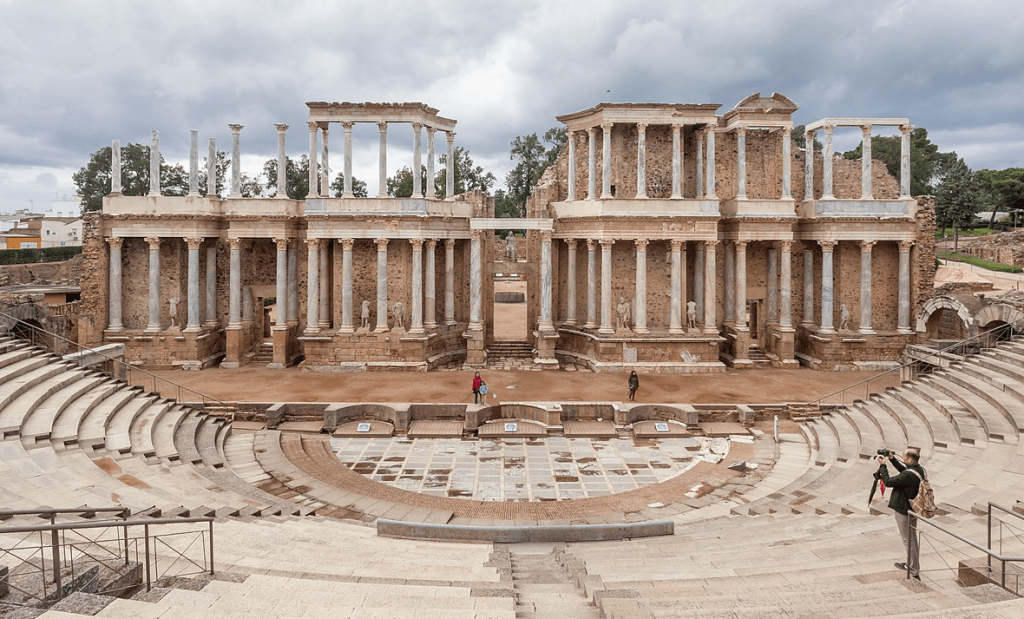
The conflict was a brutal one which exposed a new generation of Roman tribunes to the reality of warfare against the tribes of northern Europe, laying excellent foundations for their future careers. Although it is not certain that Varus served in Hispania, it is likely that at some point around this time he would have caught Augustus’ attention – the most logical place for this to have happened is in Hispania, where they were potentially both serving in 25 BC, although there are other possibilities. But what is known is that, in 22 BC, Augustus set out on a three-year journey around the eastern provinces of the empire with a small retinue of staff, one of whom was Varus.
He served as a quaestor during the trip, and was thus charged with responsibility for addressing financial issues in several cities in the eastern regions. His services were recognised through public monuments dedicated to him, traces of which survive in statue bases from Athens, Pergamon, and Tenos. Whether these statues were genuine expressions of gratitude, or just a way to pander to Augustus by praising one of his young favourites, is unclear; either way, they indicate a man who was beginning to make inroads in the inner circles of the Imperial regime.

Around this same time Varus probably got married, although there is no indication of his wife’s identity. At any rate, he had a legitimate adult son by around 4 BC, necessitating a marriage around this time. Marriage in the early twenties had previously been unusual for Roman elite males, but it was encouraged by Augustus as part of his drive towards re-establishing moral values in Rome; going along with this new trend, as Varus evidently did, could only help the career of an ambitious young man.
The next known stage in Varus’ career was as the legate of the 19th Legion, stationed at the time at Dangstetten (now in southern Germany, close to the Swiss border), probably in 15 BC; a metal luggage-tag from the site names him as the legate of the legion. In 15 BC, the 19th was heavily involved in fighting the Alpine War under the overall command of the future emperor Tiberius.
Archaeological excavation in the region suggests that the conflict was a difficult one, with lots of irregular fighting in mountain passes against a stubborn and resistant population. The involvement of the 19th is suggested by the discovery of catapult-bolts bearing their unit name on the Döttenbichl (Oberammergau). This presents the likely scenario that Varus was in command of the legion during the Alpine War, giving him more valuable experience in challenging military circumstances, with which he appears to have coped admirably.

On returning to Rome, Varus was honoured with a second marriage (what happened to the first wife is unknown), this time a union which brought significant political prestige: he married Vipsania Marcella, the daughter of Marcus Agrippa. At the time, Agrippa – the long-term friend of Augustus, one of the few people entirely trusted by the emperor – was Augustus’ preferred heir, making Varus the son-in-law of the next emperor – a significant advance for someone from a less-than-powerful background.
The marriage made Varus the brother-in-law of Tiberius, who had married another of Agrippa’s daughters, Vipsania Agrippina. Varus also became the step-brother-in-law of Gaius and Lucius Caesar, Agrippa’s children by a later marriage to Julia the Elder (Augustus’ only biological child), who were intended to take over as Augustus’ heirs once they were old enough.
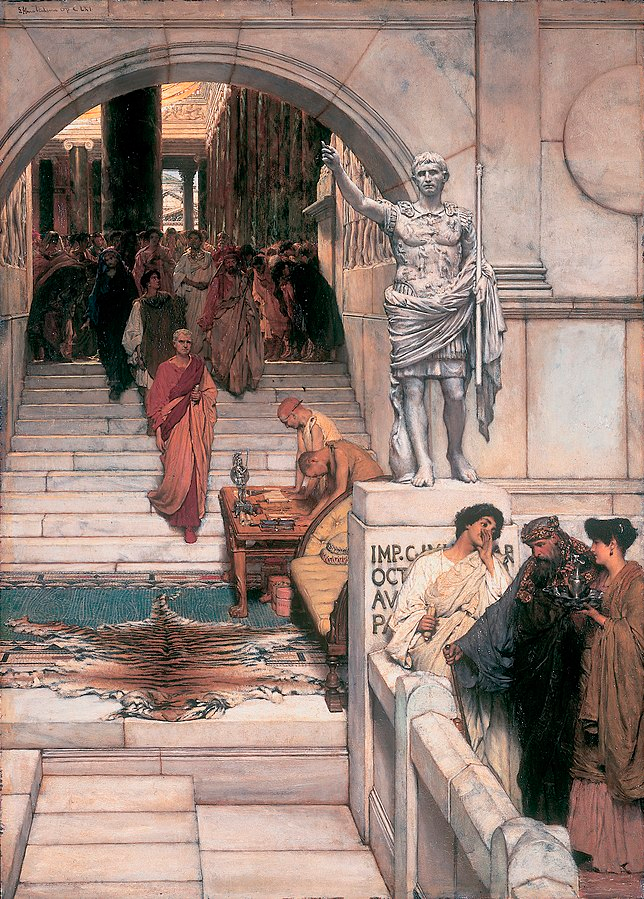
Varus’ status was elevated further in 13 BC when he was appointed to the consulship, which he held jointly with Tiberius. Although this annual office had lost much of the power it held during the Republican period, since it was still the pinnacle of a Roman political career, it was undoubtedly a prestigious position to hold.
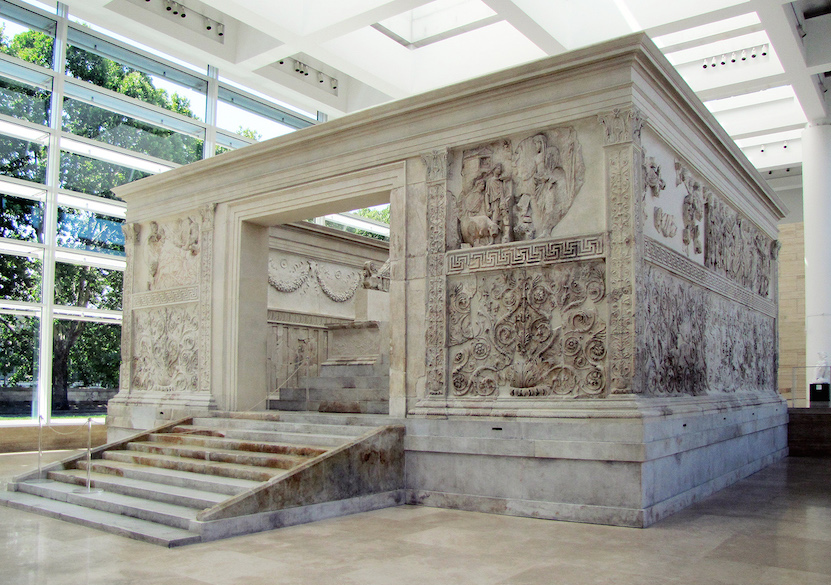
During his consulship, Varus was responsible for welcoming Augustus home from a tour of the northern provinces, an event which was commemorated by the commissioning of the Ara Pacis, which still stands in Rome today. One of the altar’s friezes depicts the reception of Augustus back in Rome, and the two figures flanking the emperor may well be Varus and Tiberius as the consuls greeting him, thus providing one of the only surviving portraits of Varus. The following year, Marcus Agrippa died, and Varus co-delivered his eulogy alongside Tiberius; despite the loss of his famous father-in-law, Varus was still very much part of the inner Imperial circle.
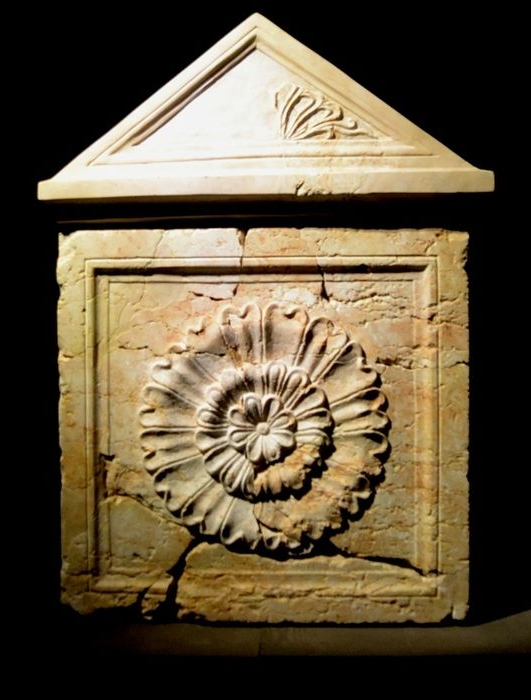
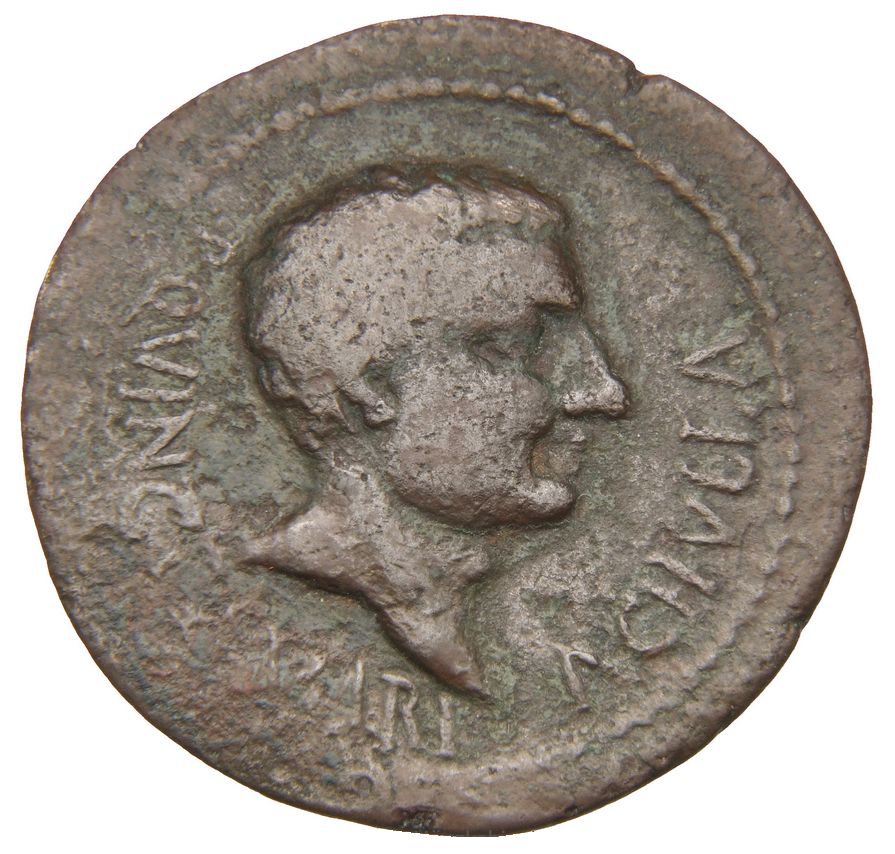
In 8 BC, Varus received the first of three known provincial appointments, becoming proconsul of Africa Proconsularis. This was a prestigious position, although not one involving a great degree of military responsibility: the main aim of the proconsul was to ensure that the North African grain supply was not disrupted. While there would be problems later in Augustus’ reign with nomadic tribes in the region that would lead to a legion being stationed in Africa, during the time Varus was there no permanent military garrison was thought to be necessary. This posting was therefore an opportunity for Varus to demonstrate his skills in civic administration, which will have been necessary for the next steps of his career.
Indeed, immediately after his proconsulship, Varus was appointed governor of the province of Syria, a much more senior position. Syria was one of the largest military commands in the empire at this time, with a permanent garrison of three legions serving as a buffer region between Rome and the Parthian Empire. The governor of Syria also had to manage diplomatic relations in the region between Rome and the client kings of the region, the most significant of which at this time was Herod I (r. 37–4 BC), King of Judaea.
When Varus arrived in Syria, Herod was coming to the end of a long reign and an even longer life, and was worn down by a chronic and debilitating illness, which had also led to several plots against him in recent years. As Rome’s most important representative in the region, Varus was called upon to arbitrate on the punishment of several plotters, including Herod’s own sons; he sent frequent letters to Augustus to ensure that the emperor would approve of his decisions. But as invaluable as Varus’ presence was in Herod’s law-courts, it is likely that his primary purpose was to prepare for Herod’s death, in particular to face any rebellions or conflict between rival heirs which might spring up afterwards.
When Herod died in 4 BC, trouble did indeed flare up, just as Augustus had expected. There was disagreement over his succession, and Varus wrote to Augustus to ask his advice on what should happen. While waiting for a reply, an uprising began among parts of the population of Judaea, exacerbated by a Roman official named Sabinus who began seizing portions of Herod’s estate – despite Varus’ calls to do nothing until they heard back from Augustus. Sabinus ended up besieged in Jerusalem along with most of the Roman troops who had been posted to Judaea as support; meanwhile disorder broke out through much of the kingdom, with numerous individuals gathering a war-band and declaring themselves king.
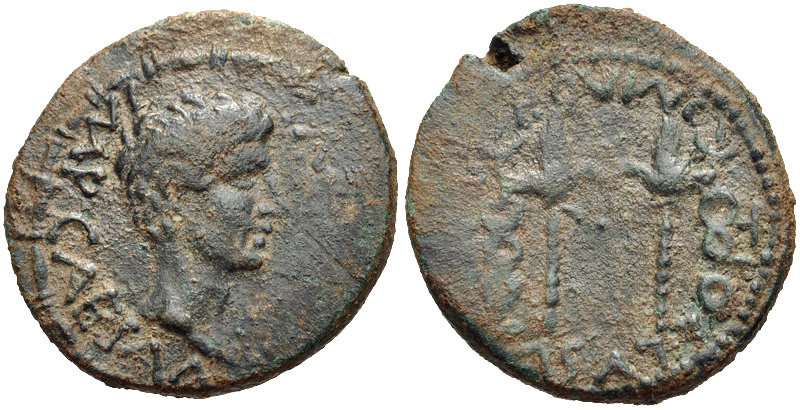
Varus was forced to lead two of the Syrian legions into Judaea to restore order, progressing across the kingdom and dispersing rebels as he went – but avoiding over-use of violence where possible – before he eventually relieved the stranded Romans in Jerusalem. He then punished the ringleaders of the violence, with some 2,000 men being crucified, but the majority of the population was able to go free without punishment – an act of mercy that Varus was later praised for. In quelling the rebellion, he showed himself to be an astute military commander, able to handle complex irregular fighting and end a rebellion. In addition, he bolstered the diplomatic skills that he had already practised earlier in his governorship. His successes were commemorated with a coin issue bearing his name and two military eagles, probably the standards of the two legions he had led into Judaea.
Varus remained in Syria until somewhere between 4 BC and AD 1, as there is no known successor in the position until Gaius Caesar took it up in AD 1. If he did serve throughout that period, it was an unusually long governorship – three years was more typical – but one not without precedent for those trusted by Augustus (Agrippa had also served as governor of Syria for a lengthy position). Accusations were later made by the historian Velleius Paterculus that Varus had embezzled money from Rome’s imperial revenues when he was in Syria. But since there is no evidence of this, it is probably just a standard corruption charge typically levelled against people who later fell from public favour.
Augustus clearly had no worries about Varus’ loyalty, as around this time he sanctioned a third marriage (again, what happened to Vipsania Marcella is unknown), this time to Claudia Pulchra, Augustus’ great-niece. Although the marriage was perhaps not as politically prestigious as his previous one, it did for the first time make Varus an in-law relative of Augustus himself, bringing him closer into the imperial family. There were few individuals in Rome who had risen so far, certainly not without family assistance, and with every appointment that he had been entrusted with, Varus had excelled.
It was this Varus who was appointed to Germany in AD 7 – not the incompetent administrator described by a hostile historical record. Rather, Varus was an experienced commander and governor who had served in several irregular wars, and managed complex diplomatic situations, responding effectively to rebellions when called upon. This was the Varus who became a trusted part of Augustus’ regime, who was invited into the imperial family, and who seems to have been friends with figures such as Tiberius. It was this Varus that Augustus correctly trusted with one of the most volatile new regions of the Empire.

When it came, the disaster in the Teutoburg Forest was very much a German victory rather than a Roman defeat, orchestrated by a former ally of Rome who used his insider knowledge to entrap Rome in an attack they could not escape. Varus did everything right once the ambush began – but unfortunately for him, Arminius knew every protocol the Romans would follow, and had already taken measures to render them ineffective. Varus would end up committing suicide in the late stages of the battle to avoid capture, after valiantly keeping his men trying to outpace the attack for more than three days, something which most commanders would struggle to do.

Varus was out-mastered by Arminius in the end, but there was little he could do to avoid that, and other commanders would fall into the same trap before the dangers of disloyal auxiliaries were fully dealt with. The defeat in the Teutoburg came at the end of a long and distinguished career for Varus, one that has been completely and unjustly overshadowed by those events in Germany during the last four days of his life.

Jo Ball is currently a University Teacher and Honorary Research Fellow at the University of Liverpool, where she completed a PhD on the archaeology of Greek and Roman battlefields. She has been researching Varus for about 20 years now, and recently wrote the first full biography of his life.
Further Reading:
J. Ball, Publius Quinctilius Varus: The Man Who Lost Three Roman Legions in the Teutoburg Disaster (Pen & Sword Military, Barnsley).
A. Murdoch, Rome’s Greatest Defeat: Massacre in the Teutoburg Forest (Sutton, Gloucestershire, 2006).
P. S. Wells, The Battle that Stopped Rome: Emperor Augustus, Arminius and the Slaughter of the Legions in the Teutoburg Forest (W.W. Norton & Company, New York, 2003).